Key Takeaways
- Albania’s transport has transformed dramatically — new highways, ride-hailing apps, and growing bus networks make getting around easier than ever.
- Furgons (shared minibuses) remain the backbone of intercity travel, especially to smaller towns — no fixed schedules, just show up and go.
- Tirana International Airport (TIA) connects to major European cities, with ground transport options from €3 buses to €25 taxis.
- Renting a car gives maximum freedom but Albanian driving culture requires confidence — especially on mountain roads.
- Budget tip: combine intercity buses for major routes with furgons for smaller destinations and ride-hailing within cities.
Table of Contents
- The Truth About Albanian Transport
- Flying to and Within Albania
- Intercity Buses — The Backbone of Albanian Travel
- Furgons — Albania’s Secret Transport System
- Ferries — Domestic and International
- Trains — An Honest Status Update
- Getting Around Tirana
- Renting a Car
- Key Highways and Road Routes
- Cross-Border Travel
- Transport Apps and Booking Platforms
- My Top Transport Tips
- Frequently Asked Questions
Getting around Albania is not like getting around Western Europe. There are no sleek train networks, no unified ticketing apps, and no tidy timetables pinned to every station wall. But here is the thing — the system works. It has worked for decades, and it is getting better fast.
I have been navigating Albanian roads, buses, and furgons for over 40 years. I have watched donkey carts share the road with Mercedes sedans, survived bus rides through mountain passes with no guardrails, and celebrated when our first real highway opened. Today, in 2026, Albania’s transport landscape looks nothing like it did even five years ago.
This guide covers everything you need to know: airports, intercity buses, furgons (minibuses), ferries, taxis, car rental, cross-border routes, and the apps that tie it all together. I have included real prices, honest opinions, and the kind of advice you only get from someone who actually lives here.
If you are planning your trip, check our interactive Albania transport map — it shows routes, terminals, and ferry ports across the country.
The Truth About Albanian Transport
Want to explore Albania at your own pace? A rental car is the single biggest upgrade to a trip here. When friends ask, I send them to DiscoverCars — it compares the local Albanian agencies (not just the big chains) and usually finds the cheapest rate.
Compare car rentals in Albania →Let me set your expectations right from the start. Albanian public transport is fragmented. There is no single national operator. No central booking system covers everything. Buses are run by dozens of independent companies. Furgons (minibuses) are run by individual drivers. Schedules exist, but they are more like guidelines than rules.
Sound chaotic? It can feel that way on your first day. But once you understand how the system works, you will find it surprisingly effective and very affordable.
Here is what has changed recently:
- New airports: Kukës airport is open, and Vlora airport is set to open mid-2026
- Better highways: The A1 to Kosovo and A2 to Durrës are modern motorways
- The Llogara Tunnel: Opened in 2024, cutting 30+ minutes off the Riviera route
- Online booking: Platforms like eTransport.al and Gjirafa Travel now let you book bus tickets online
- Rail revival: The Tirana-Durrës-Airport rail line is under construction
- Taxi apps: Three reliable apps have replaced the old street-hailing chaos
The period from 2024 to 2026 has brought more transport upgrades than the previous decade combined. Albania is not there yet, but it is moving fast.
Flying to and Within Albania
Planning a Trip to Tirana?
Get my free Tirana in 48 Hours checklist with day-by-day itinerary, prices, and local tips.
Get the Free Checklist →Albania has gone from a one-airport country to having three airports in just a few years. This is a big deal for travelers, especially those heading to the south.
Tirana International Airport (TIA)
Tirana International Airport Nënë Tereza (Mother Teresa) is the main gateway. It sits about 17 km northwest of Tirana’s city center, near the town of Rinas. Most international flights land here.
Airlines serving TIA include Wizz Air, Ryanair, Turkish Airlines, Aegean Airlines, Air Albania, Transavia, Lufthansa, and many seasonal carriers. You can fly direct to most major European cities and Istanbul.
Getting from TIA to Tirana city center:
- Rinas Express Bus: Runs every hour, costs 400 ALL (about €3.50), takes 25-35 minutes to the city center. Departs from outside the arrivals terminal.
- Taxi apps: Use Speed Taxi, Clust, or VrapOn. Expect to pay 2,500-3,500 ALL (€22-30). Do NOT take an unlicensed taxi from the arrivals area — they will overcharge you.
- Pre-booked transfer: Many hotels offer airport pickup. Convenient if you arrive late at night.
Kukës International Airport
Kukës Airport (also called Zayed-Northern Wings Airport) opened in 2021 in northeastern Albania. It mainly serves as a connection point for travelers heading to Kosovo. Flights are limited — mostly seasonal and charter — but the airport is growing. If you are heading to the Albanian Alps (Valbona, Theth), Kukës is closer than Tirana.
Vlora International Airport (Opening Mid-2026)
This is the game-changer. Vlora International Airport is expected to open by mid-2026, and it will transform how tourists reach the Albanian Riviera. Instead of a 3-4 hour drive from Tirana, you will be able to fly directly to Vlora and be on the beach within an hour. Watch this space — once it opens, Riviera tourism will change completely.
| Airport | IATA Code | Status | Key Routes |
|---|---|---|---|
| Tirana (Rinas) | TIA | Fully operational | London, Rome, Milan, Istanbul, Vienna, Munich, Athens, and 50+ destinations |
| Kukës | KFZ | Operational (limited) | Seasonal/charter flights, Kosovo region |
| Vlora | TBD | Opening mid-2026 | Expected: major European cities, Riviera access |
Did you know?
Albania has been navigating a transport revolution. In 2026, the landscape looks nothing like it did even five years ago — new highways, ride-hailing apps, and a growing intercity bus network have transformed how people get around.
Intercity Buses — The Backbone of Albanian Travel
If you only use one form of transport in Albania, it will probably be an intercity bus. Buses connect every major city and most smaller towns. They are cheap, reasonably comfortable, and run frequently on popular routes.
How the Bus System Works
There is no single national bus company. Instead, dozens of independent operators run their own routes. Some have modern coaches with air conditioning and WiFi. Others are older vehicles that get the job done but will not win any comfort awards. On major routes like Tirana-Vlorë or Tirana-Sarandë, you will generally get decent buses.
Tirana’s Bus Terminals
This is where it gets confusing for visitors. Tirana does not have one central bus station. Instead, there are multiple departure points depending on your destination:
- South and East Terminal (Terminali i Jugut): Located near the former Stadiums area. Buses to Berat, Vlorë, Sarandë, Gjirokastër, Korçë, Elbasan, Pogradec, and southern destinations.
- North Terminal: Buses to Shkodër, Lezhë, and northern destinations.
- TEG Terminal: The large TEG shopping center on the Tirana-Durrës highway has become a major departure point, especially after the 2024 terminal reorganization. Many intercity buses now stop here.
- Kamza Terminal (coming soon): A new organized terminal in the Kamza area north of Tirana is under development to consolidate the scattered departure points.
My advice: When in doubt, ask your hotel or guesthouse where to catch your specific bus. They will know the current situation better than any website.
How to Find Your Bus
When you arrive at a terminal, look for destination signs on the front of buses. Drivers and assistants often stand outside calling out destinations. Do not be shy — walk up and say where you want to go. Someone will point you to the right bus.
Important: Most domestic buses are cash only. Carry Albanian Lek (ALL) in small bills. ATMs are easy to find in Tirana and other cities, so withdraw cash before heading to the terminal.
Online Booking Platforms
- eTransport.al: The newest platform, growing fast, covers many domestic routes
- autobus.al: Another domestic booking option
- Gjirafa Travel: Excellent for cross-border routes to Kosovo and North Macedonia
Not all routes are available online yet, so for smaller destinations, you may still need to show up at the terminal and buy a ticket in person.
Major Bus Routes, Prices, and Durations
| Route | Price (ALL) | Duration | Frequency |
|---|---|---|---|
| Tirana – Durrës | 150 | 30 min | Every 15-20 min |
| Tirana – Shkodër | 300 | 2 hours | Every 30-60 min |
| Tirana – Berat | ~600 | 2 hours | Several daily |
| Tirana – Vlorë | ~1,000 | 2.5 hours | Hourly |
| Tirana – Sarandë | 1,500-1,700 | 5 hours | Several daily |
| Tirana – Korçë | ~1,000 | 3.5 hours | Several daily |
| Tirana – Gjirokastër | ~1,200 | 4 hours | Several daily |
Prices are approximate and may vary by operator. 100 ALL ? €0.85 as of early 2026. For context on what things cost in Albania, see our cost of living guide.
Furgons — Albania’s Secret Transport System
If buses are the backbone of Albanian travel, furgons are the nervous system — smaller, faster, and reaching places buses do not go. The word “furgon” comes from the Italian “furgone” (van), and that is exactly what they are: minibuses seating 8 to 14 passengers that run on most intercity routes.
How Furgons Work
Furgons do not run on a fixed schedule. They depart when full. You show up at the terminal, find the furgon going to your destination, take a seat, and wait until enough passengers have gathered. On busy routes this might take 10-15 minutes. On quiet routes you could wait an hour or more.
This is why I always tell visitors: go early. Furgons are most frequent in the morning, especially before 10 AM. By early afternoon, service on many routes thins out considerably. By 3-4 PM, you might not find a furgon at all on less popular routes.
Where to Find Furgons
Furgons depart from the same terminals as buses in most cities. In Tirana, they share space at the South Terminal, North Terminal, and TEG area. In smaller towns, furgons often gather in the main square or near the town’s market area. There are rarely signs — you need to ask.
Pro tip: When you arrive at a terminal, say your destination loudly and clearly. “Berat?” “Shkodër?” Drivers and other passengers will immediately point you in the right direction. This is how the system works — it runs on human communication, not digital signs.
Tips for Riding Furgons
- Cash only: Always. No exceptions.
- No luggage fees: Most drivers will store your bag in the back or on the roof without extra charge.
- They stop on request: If you need to get off before the final destination, just tell the driver.
- Expect close quarters: These are small vans. You will be sitting close to other passengers. It is part of the experience.
- Don’t panic: The system looks chaotic from the outside. Once you are in the furgon, it is just a ride. Sit back and enjoy the scenery.
Furgons are loved by budget travelers and feared by those who like structured schedules. If you are the flexible, go-with-the-flow type, you will enjoy them. If you need to catch a flight or make a connection, take a scheduled bus instead.
The furgon — Albania’s iconic shared minibus — is still the backbone of rural transport. No fixed schedules, no tickets — just show up, squeeze in, and trust the driver knows the way.
Ferries — Domestic and International
Albania’s coastline and proximity to Greece and Italy make ferries an important part of the transport picture. There are three main ferry experiences worth knowing about.
Koman Lake Ferry — The Must-Do Experience
This is not just transport — it is one of Albania’s top experiences. The Koman Lake ferry takes you through a narrow canyon with towering cliffs, emerald water, and almost no sign of human life. People compare it to Norwegian fjords. I think it is better because you will have it almost to yourself outside of peak summer.
The route: Koman to Fierza (or reverse), crossing Lake Koman and Lake Fierza.
- Schedule: The main ferry departs Koman at 9:00 AM and Fierza at around 1:00-2:00 PM
- Duration: About 2.5-3 hours
- Price: Around 800-1,500 ALL depending on the boat and operator
- Book online in summer: The ferry fills up quickly from June to September. Book through Berisha or Dragobia ferries online. Do not show up without a reservation in July or August.
Most travelers use the Koman ferry as part of the famous Valbona-Theth hiking loop: hike from Valbona to Theth (or vice versa), then take the ferry across to connect back to Shkodër. It is one of the best multi-day adventures in the Balkans.
Sarandë to Corfu (Greece)
The quick hop from Sarandë to Corfu is one of the easiest international crossings in Europe. The Greek island of Corfu is visible from the Sarandë waterfront — it is that close.
- Duration: 25-30 minutes by fast ferry
- Frequency: Up to 10 departures per day in summer, fewer in winter
- Price: From €15-19 one way
- Operators: Finikas Lines, Ionian Seaways, Joy Lines
- Note: Both Albania and Greece are not in Schengen (Albania) / are in Schengen (Greece), so you will go through passport control. EU/US/UK citizens can do this easily.
Italy Ferries (Durrës and Vlorë)
Albania has regular ferry connections to Italy, which is just across the Adriatic Sea:
- Durrës – Bari: 7-9 hours overnight, from €40-60, operated by Adria Ferries and Ventouris Ferries
- Durrës – Ancona: 18-20 hours, from €50-80, operated by Adria Ferries
- Vlorë – Brindisi: 6-7 hours, from €35-55, operated by Red Star Ferries and European Ferries
Booking tip: Use Ferryhopper or Direct Ferries to compare prices and book online. Summer prices are higher, and popular dates sell out, so book early if you are traveling in July or August.
Trains — An Honest Status Update
I will be straight with you: do not count on trains in Albania right now.
HSH (Hekurudha Shqiptare, Albanian Railways) has been essentially non-functional for passenger service for several years. A combination of derailments, safety suspensions, and decades of underinvestment brought the network to a standstill. At its peak in the 1980s, Albania had rail lines connecting most major cities. Today, those tracks are overgrown, bridges are crumbling, and stations sit empty.
But there is good news on the horizon:
- Tirana-Durrës-Airport rail line: This is the big one. A modern railway connecting Tirana’s city center to Durrës and Rinas Airport is under construction. Funded by the EU and EBRD, it is expected to open in mid-2026 or 2027. This would be a genuine game-changer for daily commuters and airport travelers.
- Durrës-Rrogozhinë rehabilitation: This section of track is being rehabilitated with EU and EIB funding, which could eventually extend rail service toward the south.
- Vorë-Hani i Hotit line: The line running north toward the Montenegro border is under renovation, with the long-term goal of connecting Albania’s rail network to Montenegro’s.
- New Montenegro crossing: A third road border with Montenegro is opening near Shkodra — part of why the north is suddenly so much easier to reach. I covered it in my night in Shkodra.
My honest prediction: by 2027 or 2028, Albania might actually have a functioning rail network again — at least on the Tirana-Durrës corridor. Until then, stick to buses, furgons, and cars.
Getting Around Tirana
Tirana is a city best explored on foot. The center is compact, and most attractions, restaurants, and cafes are within walking distance of Skanderbeg Square. But if you need to go further, here are your options. For more on what daily life in Tirana looks like, check our dedicated guide.
City Buses
Tirana has a network of city buses operated by various companies. The fare is 40 ALL (about €0.35), paid in cash to the driver or conductor when you board. No need for a transit card — just have exact change or small bills ready.
The Moovit app is your best friend for navigating Tirana’s bus network. It shows real-time routes, stops, and arrival times. Download it before you arrive.
Key bus routes for tourists:
- L2: Connects the city center to TEG shopping mall (useful for catching intercity buses)
- L8: Another route to TEG and the western suburbs
- Various lines along Rruga e Kavajës and Rruga e Durrësit: The two main commercial streets
Taxi Apps
There is no Uber or Bolt in Albania. Instead, you have three local taxi apps that work well:
- Speed Taxi: The most established, largest fleet, works across multiple cities
- Clust: Newer, modern app, competitive prices
- VrapOn: Another solid option with good coverage in Tirana
All three apps show the price before you book, so there are no surprises. A typical ride within central Tirana costs 300-500 ALL (€2.50-4.25). To the suburbs or TEG, expect 500-800 ALL.
Never hail a taxi on the street without agreeing on a price first. Some drivers will try to overcharge tourists. Using an app eliminates this problem entirely.
Walking and E-Scooters
Central Tirana is very walkable. The Blloku neighborhood, the New Bazaar, Skanderbeg Square, the Park of the Artificial Lake — all are within 15-20 minutes of each other on foot. Tirana has also invested heavily in pedestrian zones and bike lanes in recent years.
E-scooter sharing services come and go in Tirana. Check what is currently available when you arrive — the landscape changes frequently. If you want to explore the Tirana area more in depth, check our interactive Tirana map.
Renting a Car
Renting a car makes sense in some situations, but it is not always necessary. Here is when I recommend it and when I do not.
When to Rent a Car
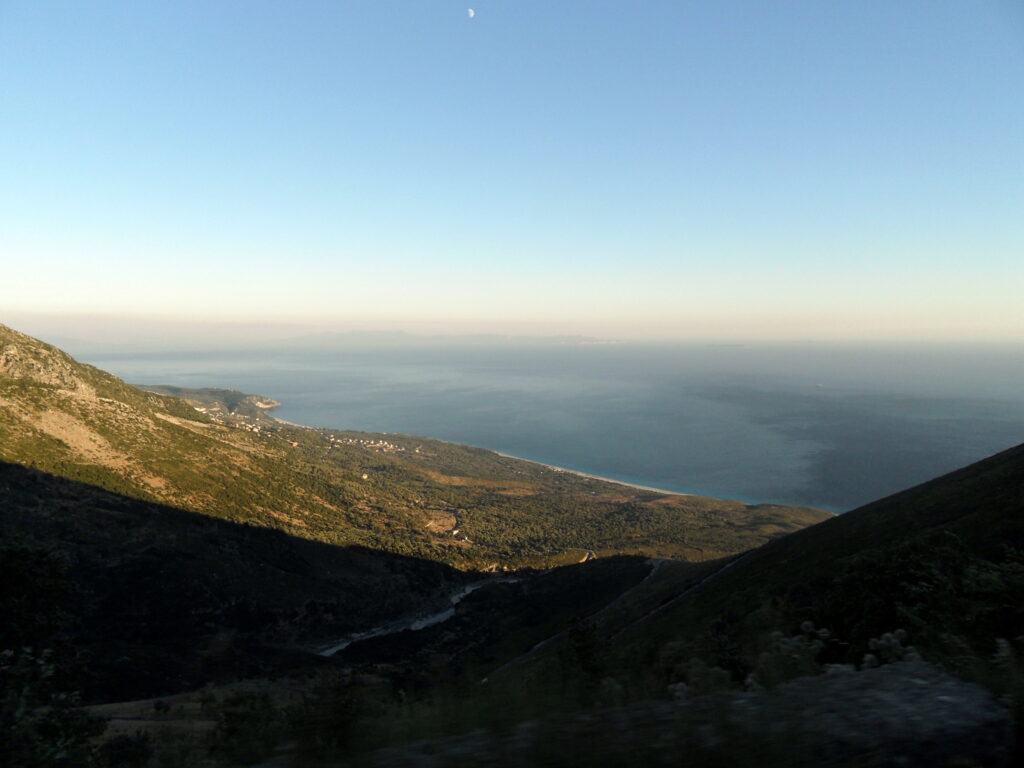
- Albanian Riviera road trip: The SH8 coastal road from Vlorë to Sarandë is Albania’s most scenic drive. Having your own car lets you stop at every hidden beach and viewpoint.
- Mountain destinations: Places like Theth, Valbona, or remote villages in the south are much easier with a car, especially off-season when furgon service drops.
- Flexible schedule: If you want to visit multiple places in a single day or stay late at a beach without worrying about the last bus.
- Families with kids: Wrangling children onto furgons is possible but not fun.
When You Don’t Need a Car
- Staying in Tirana: The city is walkable and taxis are cheap.
- City-hopping on major routes: Buses between Tirana, Berat, Vlorë, Gjirokastër, and Shkodër are frequent and affordable.
- Budget travel: Between fuel, tolls, and rental fees, a car costs significantly more than public transport.
Practical Driving Info
- Traffic side: Right-hand traffic (same as continental Europe and North America)
- Headlights: Must be on at all times, even during the day
- Speed limits: 40 km/h in towns, 80 km/h on main roads, 110 km/h on highways
- Tolls: Only on the A1 highway (Tirana-Durrës-Kosovo). Expect €2.50-5.00 per toll point.
- International driving permit: Recommended for non-EU license holders. EU licenses are accepted.
- Fuel: Widely available on main roads. Fill up before heading into remote mountain areas.
- Road conditions: Highways are excellent. Rural and mountain roads can be rough, narrow, and unpaved. A standard rental car handles 90% of routes fine. For off-road destinations, consider a 4×4.
Where to rent: TIA airport has all the major agencies (Sixt, Europcar, local companies). City agencies in Tirana often offer better rates. Compare prices on rentalcars.com or directly with local companies.
Key Highways and Road Routes
Albania’s road network has improved dramatically in the last decade. The main highways are modern and well-maintained. Secondary roads vary from decent to adventurous.
| Highway | Route | Length | Notes |
|---|---|---|---|
| A1 | Durrës – Tirana – Kosovo border | ~170 km | Modern motorway with tolls. Main link to Kosovo and Pristina. |
| A2 | Tirana – Durrës | ~35 km | Albania’s busiest road. Dual carriageway, heavy traffic at rush hour. |
| A3 | Tirana – Elbasan | ~60 km | Modern highway through the mountains. Connects to Korçë and North Macedonia. |
| SH8 | Vlorë – Sarandë (Riviera Road) | ~120 km | Albania’s most iconic drive. Cliffs, beaches, mountain passes. Not for nervous drivers. |
| SH1 | Tirana – Shkodër | ~100 km | Good two-lane road. Passes through Lezhë. |
The Llogara Tunnel: Opened in 2024, this tunnel bypasses the old Llogara Pass on the road from Vlorë to the Riviera. It saves 30+ minutes and eliminates the nerve-wracking mountain switchbacks. The old pass road is still open if you want the dramatic views — and honestly, it is worth driving at least once.
Cross-Border Travel
Albania’s location in the western Balkans makes it a natural hub for regional travel. Cross-border buses are surprisingly comfortable, affordable, and well-organized. Here are the main routes:
| Route | Frequency | Price | Duration | Booking |
|---|---|---|---|---|
| Tirana – Pristina (Kosovo) | Every 1-2 hours | €15 | 3.5 hours | Gjirafa Travel, eTransport.al |
| Tirana – Skopje (N. Macedonia) | 7-8x per day | €20 | 5 hours | Gjirafa Travel, bus terminal |
| Tirana – Ohrid (N. Macedonia) | 2x per day | ~€15 | 3.5 hours | FlixBus, bus terminal |
| Shkodër – Podgorica (Montenegro) | ~2x per day | €15-20 | 4 hours | Bus terminal |
| Tirana – Athens (Greece) | Several per day | €30-40 | 8-10 hours | Bus terminal, travel agencies |
| Tirana – Thessaloniki (Greece) | Several per day | €25-35 | 6-7 hours | Bus terminal, travel agencies |
Tips for cross-border buses:
- Bring your passport. Border checks happen on every route.
- Buses to Kosovo and North Macedonia are modern coaches, often with WiFi and air conditioning.
- Buses to Greece tend to be older and the journey is longer, but they are reliable.
- The Tirana-Pristina route via the A1 highway is fast and scenic. Gjirafa Travel is the best platform for booking.
- FlixBus has entered the Albanian market with select routes, including Tirana-Ohrid. More routes are expected.
Transport Apps and Booking Platforms
Here is a quick reference of the apps and platforms that will make getting around Albania much easier:
| App / Platform | What It Does | Download / Link |
|---|---|---|
| Moovit | Tirana city bus routes with real-time tracking | iOS and Android app stores |
| eTransport.al | Intercity bus booking (domestic routes, growing coverage) | etransport.al |
| Gjirafa Travel | Best for Kosovo and N. Macedonia cross-border routes | gjirafa.com/travel |
| Ferryhopper | International ferry booking (Corfu, Italy routes) | ferryhopper.com |
| Speed Taxi | Taxi app, largest fleet in Albania | iOS and Android app stores |
| Clust | Taxi app, modern interface, good prices | iOS and Android app stores |
| VrapOn | Taxi app, strong in Tirana | iOS and Android app stores |
| Google Maps | Driving directions (works well). Public transport info (less reliable). | Pre-installed on most phones |
My Top Transport Tips
After four decades of getting around this country, here are the tips I give every visitor:
- Always carry cash. Most transport in Albania is cash-only. ATMs are everywhere in cities, but do not count on finding one at a bus terminal. Withdraw before you go.
- Learn to say your destination in Albanian. “Ku shkon autobusi për Berat?” (Where does the bus to Berat go?) will get you pointed in the right direction immediately. Even just saying “Berat?” loudly at a terminal works.
- Go early. Furgons and buses are most frequent before noon. If you are heading to a smaller destination, aim to leave by 9-10 AM.
- Book the Koman Lake ferry online in summer. It sells out. Do not show up without a reservation in July or August.
- Download Moovit before arriving in Tirana. It is the only app that reliably shows Tirana’s bus routes and stops.
- The Riviera road is worth every minute. Whether you drive it yourself or take a bus, the SH8 from Vlorë to Sarandë is unforgettable. Check the weather guide to pick the best season for a coastal trip.
- Cross-border buses are great. Comfortable, affordable, and well-organized. The Tirana-Pristina route is one of the best bus rides in the Balkans.
- Skip the trains (for now). Until the new Tirana-Durrës line opens, there is no functional passenger rail service worth taking.
- Taxi apps over street hailing. Always. Speed Taxi, Clust, or VrapOn will save you from overcharging and language barrier issues.
- Use our transport map. The interactive Albania transport map on this site shows bus routes, terminals, ferry ports, and airports in one place. Bookmark it before your trip.
And one bonus tip: relax. Albanian transport might not be as polished as what you are used to, but it gets you where you need to go. The drivers know the roads, the furgons run on Albanian time (which is its own kind of reliable), and the scenery along the way is almost always spectacular.
Planning your first trip? Grab our free Tirana arrival checklist — it covers everything you need to know for your first 48 hours in the city.
Frequently Asked Questions
How do I get from Tirana Airport to the city center?
The cheapest option is the Rinas Express bus, which runs every hour and costs 400 ALL (about €3.50). The ride takes 25-35 minutes. For more comfort, use a taxi app like Speed Taxi, Clust, or VrapOn — the fare will be around 2,500-3,500 ALL (€22-30). Avoid unlicensed taxis at the arrivals terminal — they will overcharge you.
Is there Uber in Albania?
No. There is no Uber, Bolt, or Lyft in Albania. Instead, locals and visitors use three Albanian taxi apps: Speed Taxi, Clust, and VrapOn. They work the same way — you see the price before booking, you can pay by cash or card (depending on the app), and you can track your driver in real time.
How do I get from Tirana to Sarandë?
The most common way is by bus. Direct buses run several times daily from Tirana’s South Terminal to Sarandë. The journey takes about 5 hours and costs 1,500-1,700 ALL (€13-15). You can also rent a car and drive via the A2 to Vlorë, then take the SH8 Riviera road — one of the most beautiful drives in Europe. In summer 2026, you may also be able to fly to Vlora’s new airport and take a shorter bus or drive from there.
Are Albanian buses safe?
Yes. Intercity buses on major routes are generally safe and reliable. The buses themselves range from modern coaches to older vehicles, but serious accidents are rare on the main routes. Drivers know the roads well. That said, mountain roads can be narrow and winding, which might feel intimidating if you are not used to it. Furgons are also safe — the driving style may feel aggressive by Western European standards, but it is normal for Albania.
Can I take a bus from Albania to Greece?
Yes. Several buses run daily from Tirana to Athens (8-10 hours, €30-40) and Tirana to Thessaloniki (6-7 hours, €25-35). You can also take a ferry from Sarandë to Corfu in just 25-30 minutes (from €15). Bring your passport — you will go through border control on all routes.
Do I need a car to travel around Albania?
No, not necessarily. Albania’s bus and furgon network covers most destinations tourists want to visit. You can reach Berat, Gjirokastër, Shkodër, Vlorë, Sarandë, and Korçë by public transport without any trouble. A car is most useful for the Riviera road trip, remote mountain destinations, or if you want maximum flexibility. For city-hopping between major towns, buses are cheap and frequent enough.
Subscribe to monthly updates
Get honest Albania travel tips, local guides, and new posts straight to your inbox. No spam, unsubscribe anytime.
