
Key Takeaways
- Albania’s digital nomad visa grants a 1-year stay for remote workers earning at least EUR 2,880/month from foreign sources
- A comfortable nomad lifestyle in Tirana costs EUR 900-1,400/month — a fraction of Lisbon, Barcelona, or even Tbilisi
- Fiber internet (50-1000 Mbps) is widely available in Tirana, and coworking spaces start at EUR 80/month
- No Uber or Bolt in Albania — use Speed Taxi, Clust, or VrapOn apps for rides
- The nomad community is growing fast but still small enough that you’ll actually know people
Table of Contents
- 1. Why Albania Is a Digital Nomad Hotspot in 2026
- 2. The Albania Digital Nomad Visa
- 3. Cost of Living Breakdown
- 4. Internet & Connectivity
- 5. Best Coworking Spaces in Tirana
- 6. Best Neighborhoods for Nomads
- 7. Daily Life & Culture Tips
- 8. Healthcare & Insurance
- 9. Getting Around
- 10. Banking & Money
- 11. The Nomad Community
- 12. Is Albania Right for You?
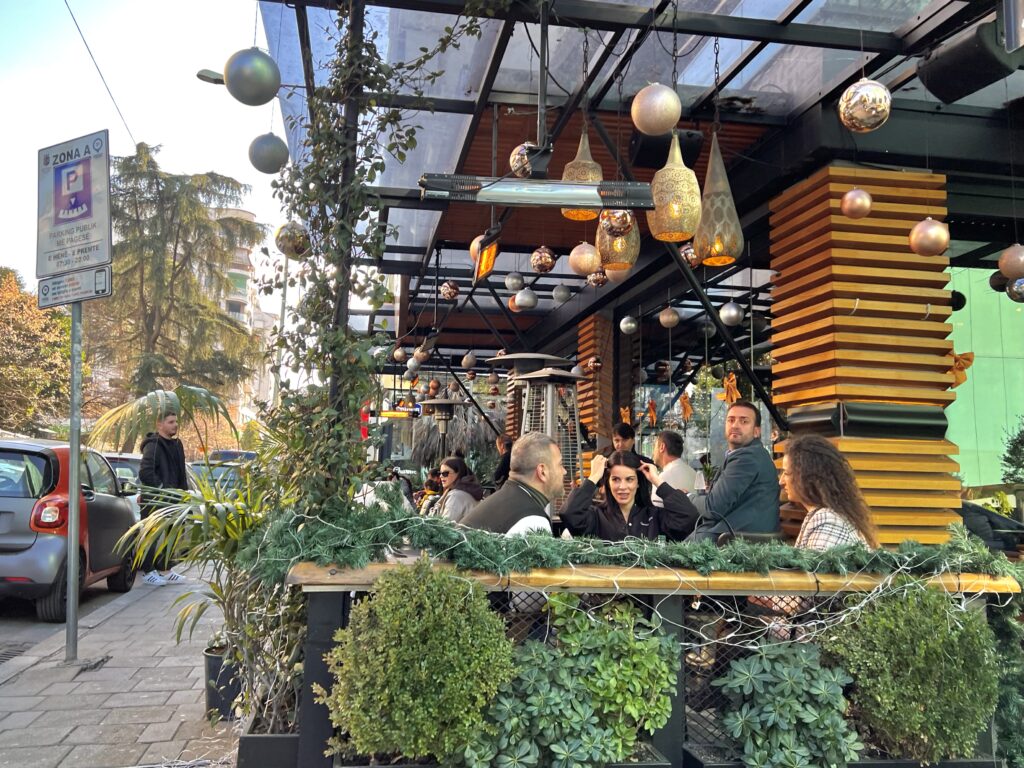
I’ve lived in Tirana for over 40 years, and I’ve never seen the city change as fast as it has in the past three. Every month, I run into another American, German, or Brazilian at my favorite coffee spot in Blloku, laptop open, working on something for a company halfway around the world. Albania has quietly become one of Europe’s most interesting digital nomad destinations — and as someone who builds websites and runs a tech business here, I have a few things to share that the generic “top 10 nomad cities” lists won’t tell you.
This is the guide I wish I could hand to every remote worker who messages me on LinkedIn asking, “Is Albania worth it?” Short answer: yes. Long answer: keep reading.
Basing yourself in Albania as a nomad?
SafetyWing is the go-to insurance for remote workers here: monthly billing, worldwide cover, cancel anytime.
See SafetyWing plans →1. Why Albania Is a Digital Nomad Hotspot in 2026
Albania went from “where is that?” to “I heard it’s amazing” in record time. A combination of factors turned this small Balkan country into a legitimate nomad destination, and it’s not just the low prices (though those help).
Here’s what’s driving the trend:
- Cost of living 50-60% lower than Western Europe — your remote salary stretches dramatically further
- A real digital nomad visa — Albania launched its program in 2022 and refined it through 2025, making it one of the more straightforward processes in Europe
- Fiber internet expansion — Tirana now has widespread fiber coverage with speeds from 50 Mbps to 1 Gbps
- Mediterranean climate — 300+ days of sunshine, mild winters, and stunning summers along the Riviera
- EU candidate status — Albania is actively negotiating EU accession, which means infrastructure, regulations, and services keep improving
- No language barrier for daily life — most Albanians under 40 speak solid English, many speak Italian or German too
But here’s the thing most articles won’t tell you: Albania still has rough edges. The bureaucracy can be maddening. Construction noise is a fact of life in Tirana. And if you need everything to work perfectly every single day, you might get frustrated. But if you can roll with a few quirks, you’ll find a place with incredible energy, genuine hospitality, and a cost of living that lets you actually save money while living well.
Did you know?
Albania welcomed over 10 million tourists in 2025 — more than three times its own population of 2.8 million. For a country that was virtually sealed off from the world until 1991, that’s a staggering transformation.
2. The Albania Digital Nomad Visa
Planning a Trip to Tirana?
Get my free Tirana in 48 Hours checklist with day-by-day itinerary, prices, and local tips.
Get the Free Checklist →Albania’s digital nomad visa (officially the “Unique Permit for Remote Workers”) is one of the more practical options in Europe. Unlike some countries that created flashy programs with impossible requirements, Albania’s is designed to actually work.
Key Requirements (2026)
- Minimum income: EUR 2,880/month (approximately ALL 317,000) from foreign sources — employment or freelance
- Duration: Up to 1 year, renewable
- Proof of remote work: Employment contract or freelance contracts with clients outside Albania
- Health insurance: Valid coverage for the duration of your stay
- Clean criminal record: From your country of residence
- Accommodation proof: Rental agreement or property ownership in Albania
How to Apply
- Gather your documents — apostilled and translated into Albanian by a certified translator (budget ALL 5,000-10,000 / EUR 45-90 for translations)
- Apply at the Albanian embassy or consulate in your home country, or at the Migration Directorate (Drejtoria e Migracionit) in Tirana if you entered visa-free
- Processing time: 30-60 days in practice, though officially it should be 30
- Fee: ALL 5,000 (approximately EUR 45) for the application
Tax Implications
This is where it gets interesting — and where you need to be careful. Digital nomad visa holders are not automatically exempt from Albanian taxation. If you stay more than 183 days in a calendar year, Albania may consider you a tax resident. Albania’s personal income tax is a flat 15% on income over ALL 200,000/month (approximately EUR 1,815), which is lower than most of Western Europe but not zero.
My strong recommendation: consult with an Albanian tax advisor before your stay crosses the 183-day mark. A good English-speaking accountant in Tirana charges ALL 3,000-5,000 (EUR 27-45) per consultation. It’s the best EUR 45 you’ll spend.
Pro tip for Americans and EU citizens: Many nationalities can enter Albania visa-free for up to one year (yes, one year — not 90 days). This means you can technically live here without the nomad visa, but you won’t have a formal residency permit, which can complicate things like opening a bank account or signing a long-term lease. The visa gives you legitimacy.
3. Cost of Living Breakdown
This is the section everyone skips to, so let me give you real numbers — not 2019 numbers repackaged for 2026. Tirana has gotten more expensive over the past three years, especially in trendy areas like Blloku. But it’s still remarkably affordable by any European standard.
For a detailed deep-dive with neighborhood comparisons, check out our full cost of living guide for Tirana in 2026.
| Expense | Monthly Cost (ALL) | Monthly Cost (EUR) |
|---|---|---|
| 1-bedroom apartment (Blloku) | 55,000 — 77,000 | 500 — 700 |
| 1-bedroom apartment (Komuna e Parisit) | 38,500 — 55,000 | 350 — 500 |
| 1-bedroom apartment (outskirts/suburbs) | 27,500 — 38,500 | 250 — 350 |
| Coworking space (monthly) | 8,800 — 22,000 | 80 — 200 |
| Groceries | 22,000 — 33,000 | 200 — 300 |
| Eating out (lunch, mid-range) | 550 — 1,100 per meal | 5 — 10 per meal |
| Espresso / macchiato | 80 — 150 | 0.70 — 1.30 |
| Fiber internet (home, 100 Mbps) | 1,100 — 2,200 | 10 — 20 |
| Mobile plan (unlimited data) | 1,100 — 2,200 | 10 — 20 |
| Gym membership | 3,300 — 5,500 | 30 — 50 |
| Utilities (electricity, water, gas) | 5,500 — 11,000 | 50 — 100 |
| Total (comfortable lifestyle) | 99,000 — 154,000 | 900 — 1,400 |
A few notes on these numbers. The Blloku rents have jumped about 30% since 2023 — landlords know foreigners will pay more. If you’re staying 3+ months, negotiate hard. Albanian landlords respect a good negotiator. And if you’re open to living slightly outside the center, you can cut your rent in half without sacrificing much convenience.
I personally spend about ALL 110,000 (EUR 1,000) per month on everything, and I live comfortably in a central neighborhood — eating out several times a week, good apartment, fiber internet. That’s my reality after 40+ years here, not a backpacker estimate.
4. Internet & Connectivity
Let’s address the elephant in the room: yes, Albania has good internet in 2026. This surprises people, but Tirana’s fiber infrastructure is genuinely impressive. Because the country built much of its telecom infrastructure recently (rather than upgrading legacy copper networks), many buildings have direct fiber-to-the-home connections.
Home Internet
The three main ISPs you’ll encounter:
- Digicom — the largest fiber provider, plans from 50 Mbps (ALL 1,100/month / EUR 10) to 1 Gbps (ALL 3,300/month / EUR 30). My personal choice. Reliable, good customer service in English.
- Abissnet — strong fiber coverage in central Tirana, similar pricing to Digicom. Good reputation among tech-savvy users.
- One Albania — the merged entity of Vodafone Albania and the old ALBtelecom. Offers fiber + mobile bundles that can be good value if you want both.
Realistic speeds: I consistently get 200-300 Mbps download on my Digicom fiber connection. Upload speeds typically mirror download on fiber plans. For video calls, streaming, and even uploading large files, you’ll have zero issues. Packet loss and latency to European servers are excellent — I regularly get 20-30ms ping to Frankfurt.
For more details on internet providers, packages, and TV bundles, see our comprehensive Internet & TV guide for Albania.
Mobile Data
All three major operators (One Albania, Vodafone, ALBtelecom) offer prepaid and postpaid plans with generous data. A typical plan with unlimited calls and 30-50 GB of 4G data runs ALL 1,100-1,650 (EUR 10-15) per month. 5G is being rolled out in Tirana but coverage is still limited to central areas.
Cafe WiFi
Here’s an honest assessment: cafe WiFi in Albania is hit-or-miss. The trendy spots in Blloku usually have decent connections (20-50 Mbps), but many traditional cafes have slow or unreliable WiFi. My advice: don’t rely on cafe WiFi for important calls. Use your mobile hotspot as a backup, or work from a coworking space when reliability matters.
5. Best Coworking Spaces in Tirana
Tirana’s coworking scene has matured significantly since 2023. You now have legitimate options beyond just “that one place everyone goes to.” Here are the spaces worth knowing about:
Destil Coworking
The most polished space in Tirana. Modern design, excellent chairs (your back will thank you), reliable 200+ Mbps fiber, meeting rooms, and a cafe downstairs. Popular with both local startups and international nomads. Gets busy after 10am.
Price: ALL 16,500/month (EUR 150) for a hot desk, ALL 22,000/month (EUR 200) for a dedicated desk. Day passes ALL 1,650 (EUR 15).
Tirana Coworking Center
The OG of Tirana coworking. Slightly less flashy than Destil but very functional. Great community atmosphere — this is where you’ll meet people. Regular events, workshop nights, and social hours. Central location near the Pyramid.
Price: ALL 11,000/month (EUR 100) for a hot desk. Day passes ALL 1,100 (EUR 10). Best value-for-money option.
Salt Coworking
Smaller, quieter space that attracts freelancers who need deep-focus time. No loud phone calls at the communal table — there’s an unwritten rule here that everyone respects. Beautiful natural light, plants everywhere.
Price: ALL 13,200/month (EUR 120) for a hot desk. Limited seats — book ahead if you want a monthly spot.
Impact Hub Tirana
Part of the global Impact Hub network. Geared more toward social enterprises, NGOs, and purpose-driven businesses. If your work has a social impact angle, you’ll find kindred spirits here. They also run excellent workshops and mentoring programs.
Price: ALL 8,800/month (EUR 80) for community membership, ALL 16,500/month (EUR 150) for full access. Most affordable entry point for coworking.
Kata Hub
The newest addition to Tirana’s coworking scene. Tech-focused, with fast internet (500+ Mbps), private phone booths, and a small podcast studio. Popular with developers and content creators. Located in the emerging tech corridor near the university.
Price: ALL 15,400/month (EUR 140) for a hot desk, ALL 19,800/month (EUR 180) for a dedicated desk with storage.
6. Best Neighborhoods for Nomads
Where you live in Tirana will shape your entire experience here. The city is compact enough that you can walk or bus between most neighborhoods in 15-20 minutes, but each area has a distinct personality. For a broader city overview, check our Tirana 72-hour city guide.
Blloku — The Vibrant (and Expensive) Center
The former communist-era block reserved for party elites is now Tirana’s trendiest neighborhood. Packed with cafes, restaurants, bars, and boutiques. You’ll never be bored, but you’ll pay for the privilege. Expect higher rents (ALL 55,000-77,000 / EUR 500-700 for a 1-bedroom) and more noise. This is where most nomads land first. Read our complete Blloku neighborhood guide for the full picture.
Best for: Social nomads, nightlife lovers, first-timers who want to be in the middle of everything.
Komuna e Parisit — The Artsy Sweet Spot
My personal recommendation for nomads staying 3+ months. It’s a 10-minute walk from Blloku but significantly cheaper (ALL 38,500-55,000 / EUR 350-500). Growing cafe scene, art galleries, and a more residential feel. You get the convenience of being central without the Blloku price tag or tourist crowds.
Best for: Longer-term nomads, creatives, anyone who wants a neighborhood that feels like home.
Pazari i Ri — The Foodie Hub
Built around the renovated New Bazaar, this area is heaven for anyone who loves food. Fresh produce markets, traditional restaurants, and an increasingly cool bar scene. Apartments here tend to be older but spacious. Central location with easy access to everything.
Best for: Food lovers, photographers, people who want to experience “real” Albanian daily life. Check out our complete Albanian food guide before you visit.
Myslym Shyri — Local Vibes, Great Value
Named after the main street that runs through it, this is a genuinely local neighborhood with excellent value. Tree-lined streets, family-run restaurants, and rents that are 30-40% lower than Blloku (ALL 33,000-44,000 / EUR 300-400). The tradeoff is fewer trendy cafes, but that’s also kind of the charm.
Best for: Budget-conscious nomads, introverts, people who want to integrate with Albanian daily life rather than hang out in the expat bubble.
You can explore all these areas on our interactive Tirana map.
7. Daily Life & Culture Tips
Albanian culture has a rhythm that will either enchant you or drive you crazy — hopefully the former. Understanding a few key things will make your time here dramatically smoother.
Coffee Culture
I cannot overstate how important coffee is in Albania. We don’t grab a quick espresso and rush back to our desks. A coffee meeting can last two hours, and that’s normal. When an Albanian invites you for “a coffee,” they’re inviting you for a conversation. The coffee itself — almost always espresso or macchiato — is just the medium.
For nomads, this is actually a superpower. Many cafes won’t blink if you sit for three or four hours nursing a single macchiato (ALL 80-100 / EUR 0.70-0.90). It’s part of the culture. Just don’t be that person who takes up a table during peak lunch hours without ordering food.
The Pace of Life
Things move at a different speed here. Meetings start 15-30 minutes late. Government offices operate on their own mysterious timeline. But the upside is that people have time for you. Nobody rushes a conversation. Nobody checks their watch while you’re talking. After years of living in this culture, I find the Northern European rush-rush-rush pace genuinely stressful when I travel.
Safety
Albania is remarkably safe. I walk around Tirana at 2 AM without a second thought. Violent crime against foreigners is virtually nonexistent. Petty theft exists (as in any city), but it’s less common than in Barcelona, Rome, or Athens. The main safety concern for nomads is aggressive driving — always look both ways, even on one-way streets. We cover this in detail in our Albania safety guide.
Language
Albanian (Shqip) is a unique Indo-European language with no close relatives, so you won’t pick it up from context. The good news: most Albanians under 40 speak English at a conversational level, and many speak Italian, Greek, or German as well. In Blloku and other central areas, you can get by entirely in English. Learn a few Albanian phrases (faleminderit = thank you, mirëdita = good afternoon) and locals will love you for it.
Hospitality (Besa)
Albania has an ancient code of honor called besa — essentially a sacred promise of hospitality and protection for guests. While the formal code belongs to an older era, the spirit is very much alive. If you visit an Albanian home, you’ll be fed until you can’t move. If you need help, strangers will go out of their way. This isn’t performative friendliness — it’s cultural DNA. Read more about Albanian besa and hospitality and our Albanian culture guide.
“In Albania, a guest is sacred. We have a saying: ‘The house of an Albanian belongs to God and the guest.’ I’ve seen my father give up his own bed for a visitor he’d met that same day. That hospitality isn’t something we perform — it’s something we simply are.”
8. Healthcare & Insurance
Healthcare in Albania is a tale of two systems. The public system is affordable (often free for residents) but can be overcrowded and outdated. The private system is excellent and still extremely cheap by Western standards.
Private Healthcare
Private hospitals and clinics in Tirana — like the American Hospital, Hygeia Hospital, and Salus Hospital — offer modern facilities with English-speaking doctors, many of whom trained in Italy, Germany, or Greece. Costs:
- GP consultation: ALL 2,200-3,300 (EUR 20-30)
- Specialist visit: ALL 3,300-5,500 (EUR 30-50)
- Blood work panel: ALL 2,200-4,400 (EUR 20-40)
- Dental cleaning: ALL 3,300-5,500 (EUR 30-50)
- MRI scan: ALL 11,000-22,000 (EUR 100-200)
Yes, those numbers are correct. An MRI for EUR 100. A specialist visit for EUR 30. This is why some nomads schedule their medical checkups specifically during their Albania stay.
Pharmacies
Pharmacies (farmaci) are everywhere in Tirana — you’re never more than a 5-minute walk from one. Many medications that require prescriptions in Western countries are available over the counter in Albania (antibiotics being the notable exception since 2024). The pharmacists are generally knowledgeable and many speak English or Italian.
Travel Insurance
Even with affordable local healthcare, you want insurance. For nomads, I recommend [AFFILIATE_PLACEHOLDER: SafetyWing] — their Nomad Insurance plan is designed specifically for location-independent workers, covers you in Albania, and costs about USD 45/month. It’s the most popular option in the Tirana nomad community for good reason.
9. Getting Around
Here’s the thing every nomad needs to know immediately: Uber and Bolt do not operate in Albania. This trips up literally every newcomer. But don’t worry — Albania has its own ride-hailing ecosystem that works perfectly fine.
Ride-Hailing Apps
- Speed Taxi — the most popular option. Works like Uber. Download the app, set your pickup and destination, get a price estimate, and a driver shows up. Reliable in central Tirana.
- Clust — growing competitor to Speed Taxi, sometimes cheaper. Worth having both apps on your phone.
- VrapOn — newer entrant with competitive pricing and a slicker app interface.
A typical ride within central Tirana costs ALL 300-500 (EUR 2.70-4.50). From the center to Mother Teresa Airport is about ALL 2,200-2,750 (EUR 20-25).
Public Transport & Furgons
Tirana has city buses, but the real experience is the furgon — shared minibuses that connect Tirana to every other Albanian city. They’re cheap (ALL 300-400 / EUR 2.70-3.60 to most nearby destinations), leave when full (not on a schedule), and are a crash course in Albanian social life. They depart from various stations around the city — ask a local or check Google Maps for the right departure point.
For getting around other parts of Albania, read our complete transportation guide.
Rental Cars
If you plan to explore beyond Tirana — and you should, because the Albanian Riviera, Berat, and Gjirokaster are stunning — renting a car is the way to go. Rates start at ALL 2,750-3,850/day (EUR 25-35) for a basic car. International licenses are accepted. A word of warning: Albanian driving is… spirited. If you’ve driven in Italy, you’ll manage. If your only driving experience is in Scandinavia, prepare for a culture shock.
10. Banking & Money
The Albanian Lek (ALL) is the local currency, and while Albania is moving toward more digital payments, cash is still king in many situations.
ATMs & Cash
ATMs are plentiful in Tirana (Credins Bank, Raiffeisen, OTP, Intesa Sanpaolo are the main banks). Most accept international Visa and Mastercard. Typical withdrawal fees are ALL 220-550 (EUR 2-5) per transaction from your bank’s side. Daily limits vary but are usually around ALL 55,000-110,000 (EUR 500-1,000).
Card payments are accepted at most modern restaurants, supermarkets, and chains. But many smaller shops, traditional restaurants, and services (like furgon tickets or market vendors) are cash-only. Always carry some cash.
Money Transfers
For moving money in and out of Albania, [AFFILIATE_PLACEHOLDER: Wise] (formerly TransferWise) is the nomad standard. It offers real exchange rates and low fees for sending EUR, USD, or GBP to Albanian accounts — or keeping your money in your home currency and withdrawing locally with the Wise debit card. The Wise card works at Albanian ATMs and most card terminals.
Opening an Albanian Bank Account
It’s possible but not always straightforward as a nomad. You’ll need your passport, proof of address (rental contract), and proof of income. Raiffeisen and Credins are the most foreigner-friendly banks. The digital nomad visa makes this process smoother — another reason to get one if you’re staying long-term. But honestly, most nomads do fine with Wise + a home country card for their entire stay.
11. The Nomad Community
Albania’s nomad community is at that sweet spot — big enough to have regular events and a support network, small enough that you’ll actually become friends with people. It’s nothing like the thousands-strong scenes in Lisbon or Bangkok, and personally, I think that’s a feature, not a bug.
Where to Connect
- Facebook Groups: “Digital Nomads Albania” and “Expats in Tirana” are the most active. Good for apartment hunting, visa questions, and meetup announcements.
- WhatsApp Groups: Several nomad-specific WhatsApp groups exist — you’ll get invited once you meet a few people at coworking spaces or meetups. These tend to be more active and personal than Facebook.
- Meetups: Tirana Coworking Center and Impact Hub host regular nomad meetups, usually monthly. Destil does informal Friday evening socials. There’s also an active hiking group that organizes weekend trips to Albania’s mountains.
- Coworking Spaces: The easiest way to meet people. Show up, sit down, say hello. Albanians are friendly, and other nomads are always happy to meet someone new.
The community skews toward Europeans (especially Germans, Dutch, and Italians), with a growing contingent of Americans and South Americans. You’ll also find a lot of Albanian diaspora who have returned — people who grew up in Italy or Germany and came back to work remotely from their parents’ homeland. Their perspective is fascinating.
One thing I love about the Tirana nomad community: it’s not dominated by crypto bros or Instagram influencers. Most people here are quietly building real businesses or doing solid remote work. The vibe is more “let’s grab a coffee and talk about actual work” than “let’s take photos for content.”
12. Is Albania Right for You?
After 40+ years in this country and hundreds of conversations with nomads who’ve come (and some who’ve left), here’s my honest assessment.
Albania Is Perfect For You If:
- You want an affordable European base that lets you save money while living well
- You value genuine human connection over polished services
- You’re curious, adaptable, and don’t mind occasional chaos
- You want to explore a country that’s still being “discovered” — not overrun by tourists
- You appreciate good food, strong coffee, and warm people
- You’re looking for a slower pace without sacrificing good internet
- You enjoy nature — mountains, beaches, and lakes are all within a few hours
Albania Might Not Be For You If:
- You need everything to work perfectly, on time, every time
- You require a large, established nomad infrastructure (dozens of coworking spaces, nomad-specific housing)
- You need a thriving nightlife scene beyond Tirana (other cities are much quieter)
- You’re uncomfortable with a cash-heavy economy
- You need direct international flights to many destinations (Tirana’s airport is growing but still limited)
- Cold winters bother you — Tirana’s January averages 6-7°C, and Albanian buildings aren’t always well-insulated
The Bottom Line
Albania in 2026 is where Portugal was in 2016 — on the cusp of becoming the next big thing, but still authentic, affordable, and uncrowded enough to give you a real experience. The window of “hidden gem” won’t stay open forever. Tirana already feels noticeably more international than it did three years ago, and rents are rising to match.
If anything in this guide resonated with you, my advice is simple: book a one-way ticket, commit to a month, and see for yourself. Worst case, you’ve spent EUR 1,000 on a month in a beautiful Mediterranean country. Best case, you’ve found your new home base.
And if you see a 40-something Albanian guy typing furiously on a laptop at a Blloku cafe, come say hello. It’s probably me.
Got questions about digital nomad life in Albania? Drop a comment below or send me a message. I answer everything.
What do you think?
Are you a digital nomad considering Albania? Or are you already working remotely from Tirana? I would love to hear what brought you here and how you are finding it!
Coworking spaces on the map
Subscribe to monthly updates
Get honest Albania travel tips, local guides, and new posts straight to your inbox. No spam, unsubscribe anytime.
