

Key Takeaways
- Pazari i Ri is Tirana’s historic bazaar, fully renovated in 2017 into a thriving food and market destination
- The morning market sells fresh produce, cheese, olives, honey, and spices at local prices
- By evening, it transforms into one of Tirana’s best restaurant and wine bar districts
- It’s the best place in the city to eat, shop, and feel the everyday rhythm of Albanian life
Quick Facts — Pazari i Ri
| Address | Sheshi Avni Rustemi, Tirana 1001 |
| Morning market hours | 07:00 – 14:00 (Mon – Sat) |
| Evening district hours | 18:00 – 23:30 (every day) |
| Best day to visit | Saturday morning |
| Entry | Free — open public space |
| Cash needed | Yes — small stalls take ALL only |
Table of Contents
I remember Pazari i Ri before the renovation, and I want to be honest about this: it wasn’t charming. It was crowded, muddy in winter, hot and smelly in summer, and the infrastructure hadn’t been updated in decades. The produce was great — it was always great — but the experience of buying it involved stepping over puddles and negotiating with vendors in a space that felt like it belonged to a different century.
Then they rebuilt it. And for once, a renovation in Tirana actually worked.
Taste your way through Pazari i Ri with a local guide
A food tour turns the market below into a tasting trail: cheese, honey, raki, and street food, with the stories behind them.
See Tirana food tours →A Market With Centuries Behind It
Want to eat your way through Tirana? A local-led food tour hits the bazaar stalls and byrek spots most visitors walk right past.
Find a Tirana food tour →Pazari i Ri is an easy stop on any Tirana itinerary — pair it with a self-guided walking tour of the old centre, then head up to one of Tirana’s best rooftop bars for sunset.
The bazaar tradition in Tirana goes back to the Ottoman period. When Sulejman Pasha Bargjini founded Tirana in 1614, a market was one of the first things established — along with a mosque, a bakery, and a hammam. That’s how you built a city in the Ottoman Empire: you built a market.
Over the centuries, the bazaar grew, shrank, moved slightly, burned, and was rebuilt in various forms. During the communist period, private commerce was illegal, so the market operated as a state-run affair with all the personality and selection you’d expect from a centrally planned economy (which is to say, very little). After communism fell in 1991, the market roared back to life as vendors claimed stalls and the chaotic, wonderful mess of Albanian free enterprise took over.
By the 2000s, the area was functional but crumbling. Everyone agreed something needed to be done. For once, something was.
The 2017 Renovation
Planning a Trip to Tirana?
Get my free Tirana in 48 Hours checklist with day-by-day itinerary, prices, and local tips.
Get the Free Checklist →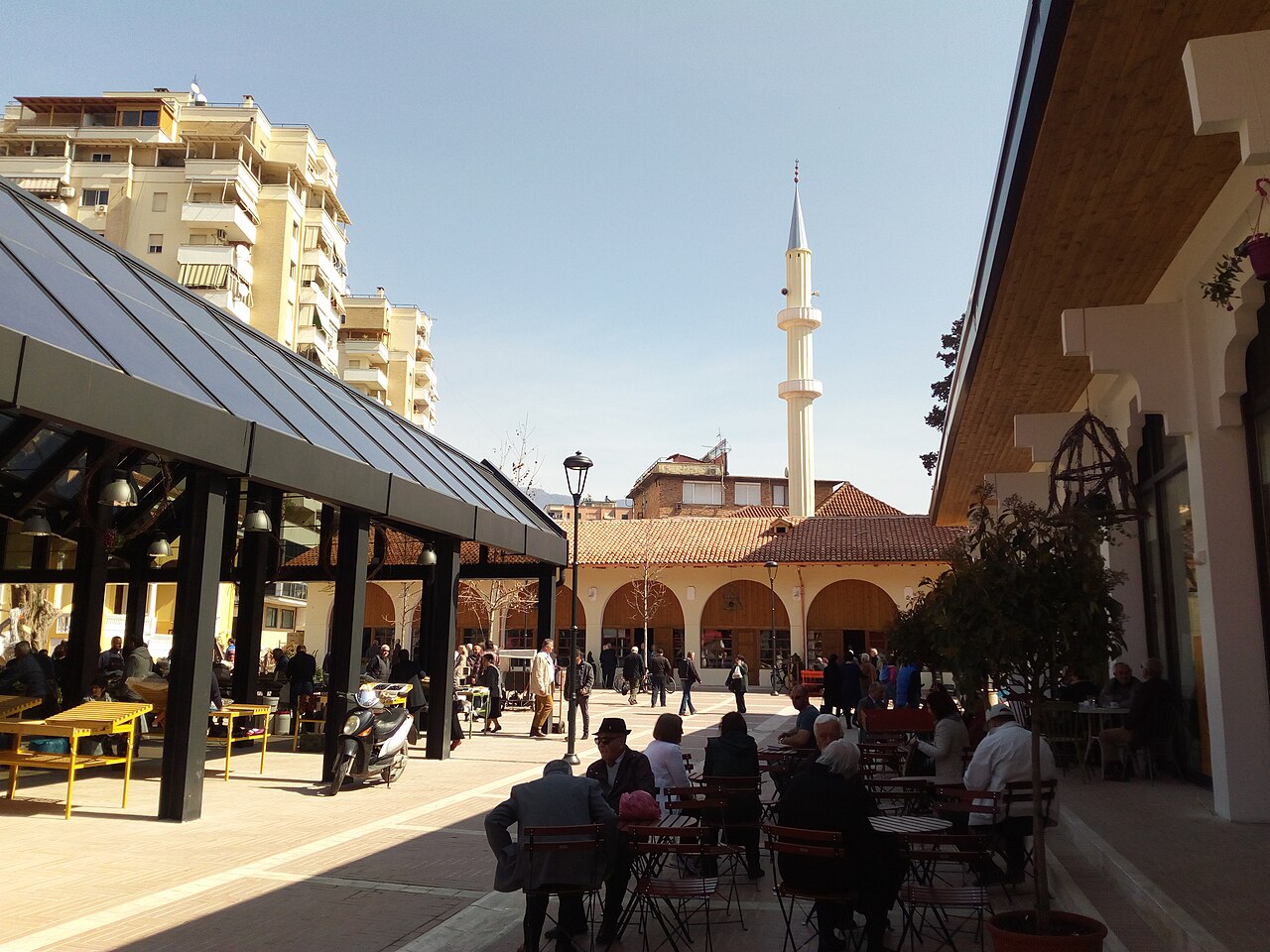
The renovation of Pazari i Ri was completed around 2017 as part of a broader effort to revitalize Tirana’s historic center. The project preserved the market’s traditional function while completely rebuilding the physical infrastructure. New covered market halls with modern steel-and-glass roofing replaced the old structures. The surrounding streets were pedestrianized, paved with cobblestones, and lined with restored buildings painted in the bright, sometimes clashing colors that have become Tirana’s signature.
Did you know?
The colorful painted buildings around Pazari i Ri are part of a city-wide initiative started by former mayor Edi Rama (now Prime Minister), who began painting Tirana’s grey communist-era buildings in bold colors in the early 2000s. The bazaar area is one of the best examples of this transformation.
The result is a space that feels both authentically Albanian and genuinely pleasant to spend time in. The covered halls keep the rain off in winter and provide shade in summer. The cobblestone streets are wide enough for strolling without feeling overcrowded. And the mix of old market vendors alongside new restaurants and wine bars creates a layered atmosphere that works for tourists and locals alike.
The Morning Market
If you want to see Pazari i Ri at its most authentic, come in the morning. By 7 or 8 AM, the produce vendors are set up and the market is in full swing. This is where Tirana’s grandmothers do their shopping — women who’ve been buying tomatoes from the same vendor (or his father) for thirty years.
The market is organized roughly by product type. The covered halls hold the butchers, cheese sellers, and specialty food vendors. Outside, the open-air stalls display seasonal fruits and vegetables in arrangements that look almost deliberate in their beauty — pyramids of tomatoes, baskets of figs, bundles of fresh herbs. In summer, the selection is extraordinary. Albanian produce is still largely seasonal and local, which means the tomatoes actually taste like tomatoes (a novelty for anyone coming from Northern Europe).
The atmosphere is social. Vendors call out to regular customers. People stop to chat. There’s a rhythm to it that you can feel even if you don’t speak Albanian. This isn’t a supermarket. It’s a community.
What to Buy
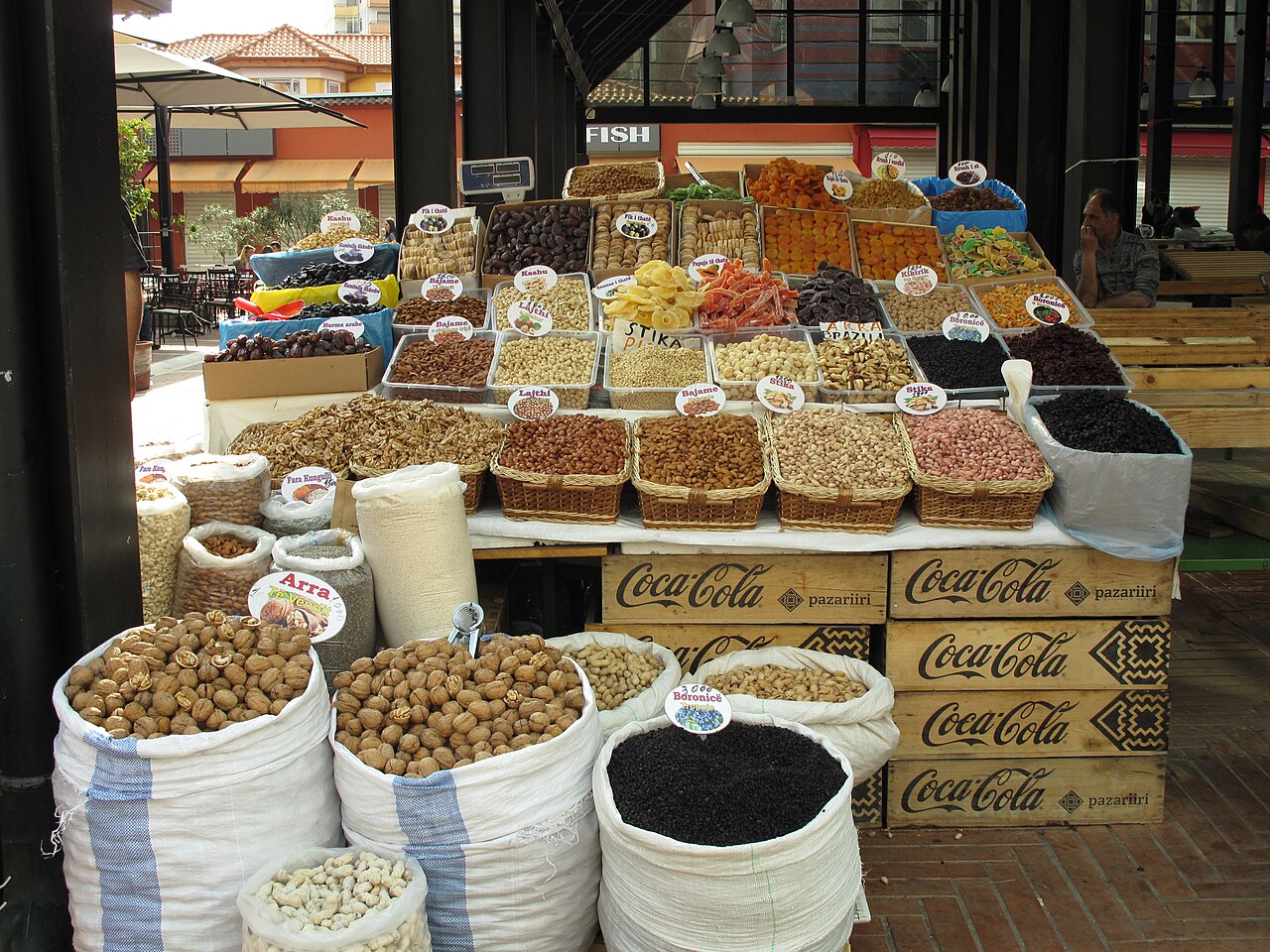
| Product | What to Look For | Price Range |
|---|---|---|
| Djathë (cheese) | White brined cheese, aged kaçkavall, fresh ricotta-style gjizë | 400–800 lek/kg |
| Olives | Albanian olives are underrated — try the small dark Elbasani variety | 300–500 lek/kg |
| Mjaltë (honey) | Mountain wildflower honey, thyme honey, chestnut honey | 800–1,500 lek/jar |
| Raki | Homemade grape or plum raki — Albania’s national spirit | 500–1,000 lek/liter |
| Spices & herbs | Mountain tea (çaj mali), oregano, sage, bay leaves — all locally foraged | 100–400 lek/bag |
| Seasonal fruit | Figs (Aug-Sep), watermelon (summer), pomegranate (fall), citrus (winter) | 100–300 lek/kg |
A tip: don’t be afraid to point and gesture if you don’t speak Albanian. The vendors are used to tourists and most will weigh, bag, and price things with a smile. Some speak Italian or basic English. And the prices are already low enough that you don’t need to haggle aggressively — though a friendly back-and-forth is part of the experience.
Where to Eat
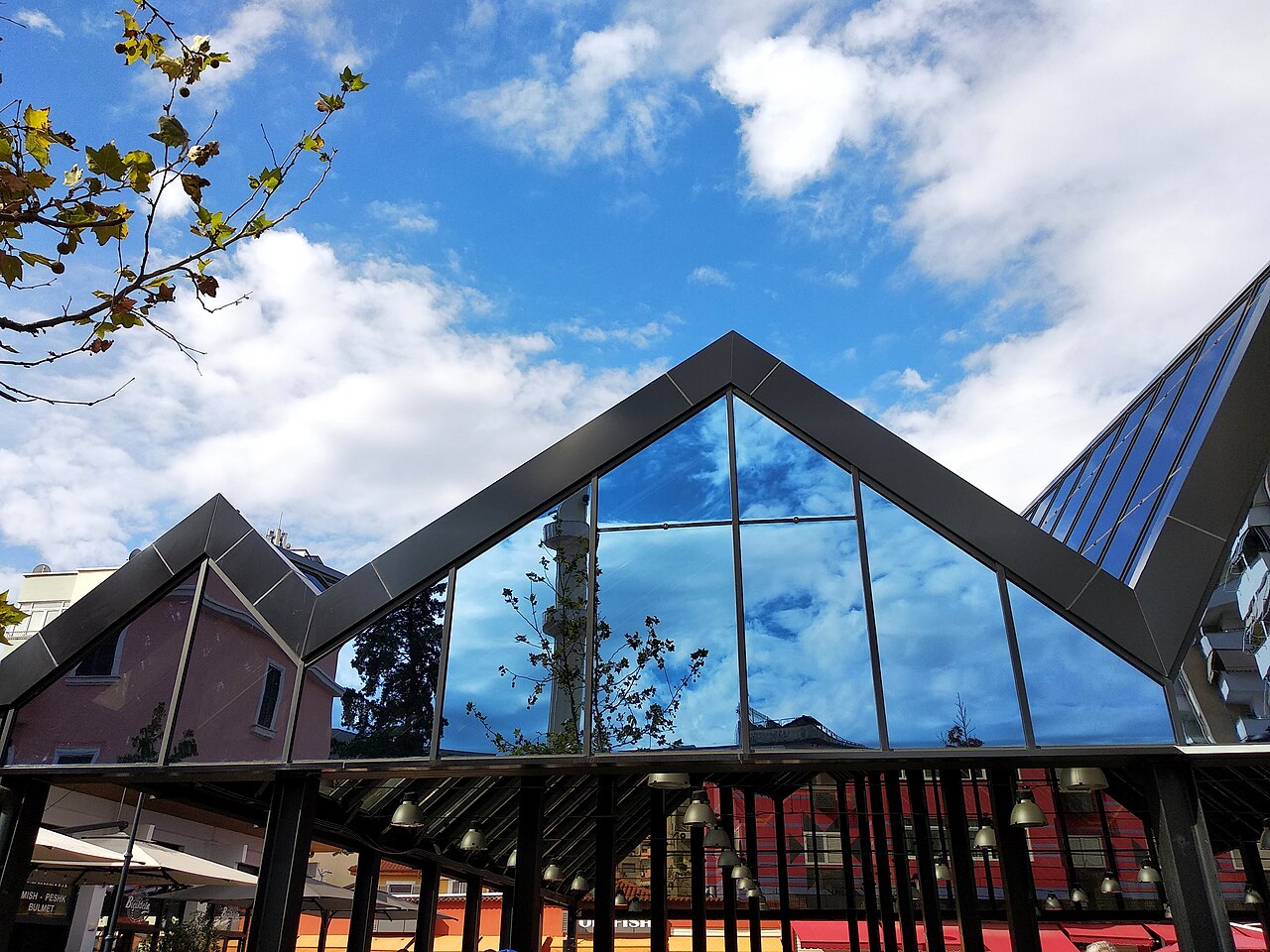
This is where Pazari i Ri really shines for visitors. The streets surrounding the market have become one of Tirana’s best restaurant districts, with options ranging from traditional Albanian to modern Mediterranean.
For traditional food, look for restaurants serving tavë kosi (lamb baked in yogurt — Albania’s national dish), fergese (peppers and tomatoes baked with cheese), qofte (grilled meatballs), and grilled meats. A full meal at a traditional restaurant here costs about 1,000–1,800 lek (€9–€16) per person.
The wine bars that have opened in the renovated buildings around the bazaar are worth a stop. Albanian wine has improved dramatically in the last decade, and several of these bars focus exclusively on local varieties — Shesh i Bardhë (white) and Shesh i Zi (red) are the indigenous grapes you should try. A glass of wine runs 300–500 lek (€2.70–€4.50).
The Evening Scene
Pazari i Ri has a split personality, and that’s what makes it interesting. In the morning, it’s a working market. By late afternoon, the produce stalls close and the restaurants, wine bars, and cafés take over. The cobblestone streets fill with tables. String lights come on. The atmosphere shifts from commercial to social.
Friday and Saturday evenings are the peak. Families with kids, couples, groups of friends, and tourists all mix together in a way that feels unforced. There’s live music at some venues. The restaurants set up their best outdoor seating. It’s one of the few places in Tirana where the tourist experience and the local experience genuinely overlap.
The best thing about Pazari i Ri is that it hasn’t become a museum or a tourist trap. It’s still a real market where real people buy real food. The restaurants grew up around it naturally, not the other way around.
Practical Info
| Detail | Info |
|---|---|
| Location | East of Skanderbeg Square, about a 5-minute walk along Rruga Luigi Gurakuqi |
| Market hours | Fresh produce: ~7 AM – 2 PM daily (busiest 8–11 AM) |
| Restaurants | 11 AM – midnight (later on weekends) |
| Best for produce | Weekday mornings before 10 AM |
| Best for dining | Friday or Saturday evening, 7–10 PM |
Pazari i Ri is one of those rare places that improves on its past without pretending the past didn’t exist. The vendors are still here. The produce is still local. The grandmothers still haggle. They just do it now under a proper roof, with a wine bar next door. I’ll take that trade-off every time.
Subscribe to monthly updates
Get honest Albania travel tips, local guides, and new posts straight to your inbox. No spam, unsubscribe anytime.
