
I came across an article on Reporter.al last week and it sent me down a rabbit hole I didn’t expect.
The story was short, the way news stories about culture usually are. A handful of villages in western Sicily — five of them, all sitting in the mountains near Palermo — have been quietly campaigning for a direct low-cost flight from Tirana to Palermo. Their mayors want it. Their cultural associations want it. The diaspora coordination council in Tirana is backing it. Because for the first time in five centuries, these towns are openly inviting Albanians and Kosovars to come and see what’s left of us there.
I knew the Arbëreshë existed, the way most Albanians “know” — vaguely, in passing, the way you know your grandfather had cousins somewhere. What I didn’t know was the scale of it. The fact that there are still, in 2026, towns in Sicily where the streets have Albanian names, the Easter Mass is sung in old Albanian, and the man on the corner can hold a conversation with you in a language that hasn’t been spoken in Albania in 500 years.
This is the story of who they are, why they’re there, what they’ve kept alive, and why I think you should put one of their towns on your travel list — especially if you’re Albanian and you’ve never thought to.
Why I’m writing this
I’ll be honest with you. I’m writing this partly to learn it myself.
I live in Albania. I’ve written about this country for more than 20 years on this blog. And the Arbëreshë are one of those topics that sit in the corner of every Albanian’s awareness — you hear the word, you nod, you move on. We talk about diaspora as if it’s a 20th-century thing. America. Italy. Greece. Germany. The boats of 1991. The migration waves of the 90s and 2000s.
But the Arbëreshë left in the 1400s and 1500s. They left in wooden boats, fleeing the Ottomans, after Skanderbeg died and the resistance collapsed. They settled in the south of Italy. And they’re still there. Still Albanian. Five hundred years.
That’s a question I keep coming back to since I read the Reporter.al piece: what stays Albanian when Albanians scatter? What’s the minimum kit you need to still be your people, hundreds of years later, on someone else’s island?
The Arbëreshë are the long-form answer to that question. So I went and learned what I could, and I’m sharing it with you here.
Who the Arbëreshë actually are
Planning a Trip to Tirana?
Get my free Tirana in 48 Hours checklist with day-by-day itinerary, prices, and local tips.
Get the Free Checklist →The short version: the Arbëreshë are the descendants of Albanians who fled Albania between the 15th and 18th centuries, mostly settling in the south of Italy — Sicily, Calabria, Puglia, Basilicata, Molise, Campania, Abruzzo.
The biggest waves came after 1468. That’s the year Gjergj Kastrioti Skënderbeu — Skanderbeg — died, and with him died organized Albanian resistance to Ottoman expansion. Towns fell. The Ottoman conquest of the Albanian lands accelerated. Families with means, families with networks, families that had fought alongside Skanderbeg — many of them got into boats and crossed the Adriatic and the Ionian.
They didn’t go random. The Kingdom of Naples, then ruled by the House of Aragon, had been Skanderbeg’s ally. There was an existing relationship. So they were given land — mostly mountainous, marginal, the kind of land local Italians didn’t want — and they founded villages.
In Sicily alone, they founded five towns west of Palermo:
- Piana degli Albanesi — the largest and most culturally Albanian of the five
- Santa Cristina Gela
- Contessa Entellina
- Mezzojuso
- Palazzo Adriano
Combined with the Arbëreshë who later moved into Palermo itself, the population of this community in western Sicily today is over 30,000 people. There are roughly 100,000 Arbëreshë across all of Italy, though the number of fluent Arbërisht speakers is much smaller.
These are not “Italians of Albanian origin” the way I’m “American of Albanian origin” if I move to Boston. These are a recognized ethnolinguistic minority of Italy, protected by Italian Law 482 of 1999, with their own language, their own church rite, their own school traditions, and their own continuous unbroken identity since 1488.
Piana degli Albanesi — Hora e Arbëreshëvet
The town the Reporter.al article focuses on is Piana degli Albanesi. In Arbërisht, the language they still speak, the town’s name is Hora e Arbëreshëvet — “the town of the Arbëreshë.”
“Hora” is an old Albanian word for homeland or town. You won’t hear it much in modern Albanian. You will hear it on every street sign in Piana.
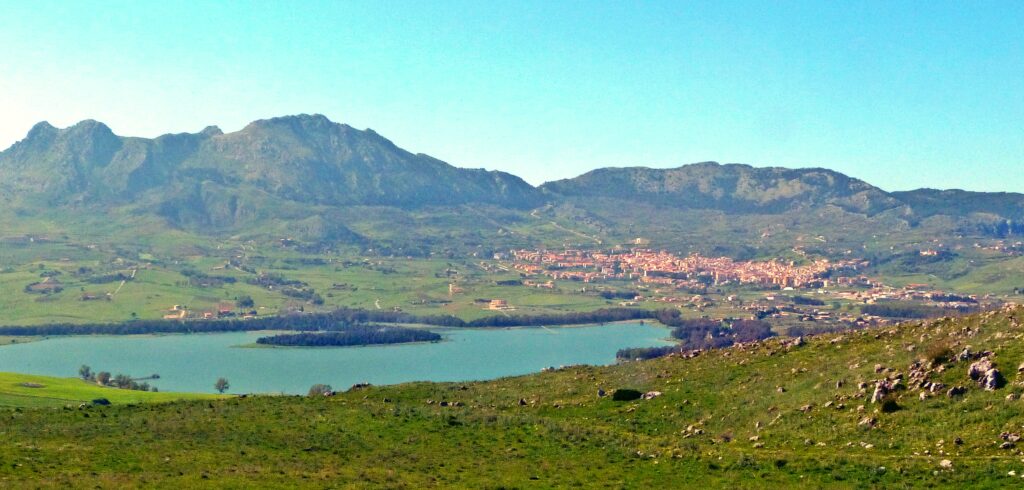
About 6,200 people live there today. The town sits in the mountains roughly 25 kilometers south of Palermo, overlooking a lake, surrounded by countryside. It was officially founded on 30 August 1488 — the founding documents are still preserved, signed in both Albanian and Italian, with the official concession of land granted by Cardinal Juan de Borja, archbishop of Monreale, following a brief issued by Pope Sixtus IV.
That date matters because the town still celebrates it every year. Every 30 August, there’s a festival commemorating the foundation. And there are 6 or 7 other major festivals across the rest of the year — Shën Gjergji (Saint George) in April, the spectacular Byzantine-rite Easter, traditional weddings where the bride wears the centuries-old costume with the gold thread and the embroidered headpiece.
This past April, according to Mayor Rosario Peta, about 400 tourists came specifically for the Shën Gjergji festival — most of them from Italy, Albania, and Kosovo. That number is up significantly from previous years. The town has noticed. They’re investing.
What’s still Albanian after 500 years
This is the part that broke my brain a little when I dug into it.
The language is still alive. The Arbëreshë speak Arbërisht, which linguists classify as a variant of Tosk Albanian — the southern dialect spoken in central and southern Albania and Epirus. But it’s a 15th-century Tosk Albanian. It froze in time when they left. So they kept words and grammatical forms that don’t exist in modern standard Albanian anymore, while losing words for things invented after 1488. (Try explaining “smartphone” or “highway” in 500-year-old Albanian.) For Albanian linguists, Arbërisht is a living archive — like meeting your great-great-great-great-grandfather’s vocabulary, in conversation, with a Sicilian accent.
The church rite is Byzantine, not Roman. This is one of the most striking things. The Arbëreshë are Catholic, but their liturgy is Byzantine — meaning their churches look more like Greek Orthodox churches than Italian Catholic ones. Iconostasis. Icons. Chanted liturgy. They’re in full communion with Rome, but they pray in the Eastern way. On Holy Saturday in Piana, the Easter Gospel is read in seven languages, one after the other. Albanian is one of them. So is Arabic.
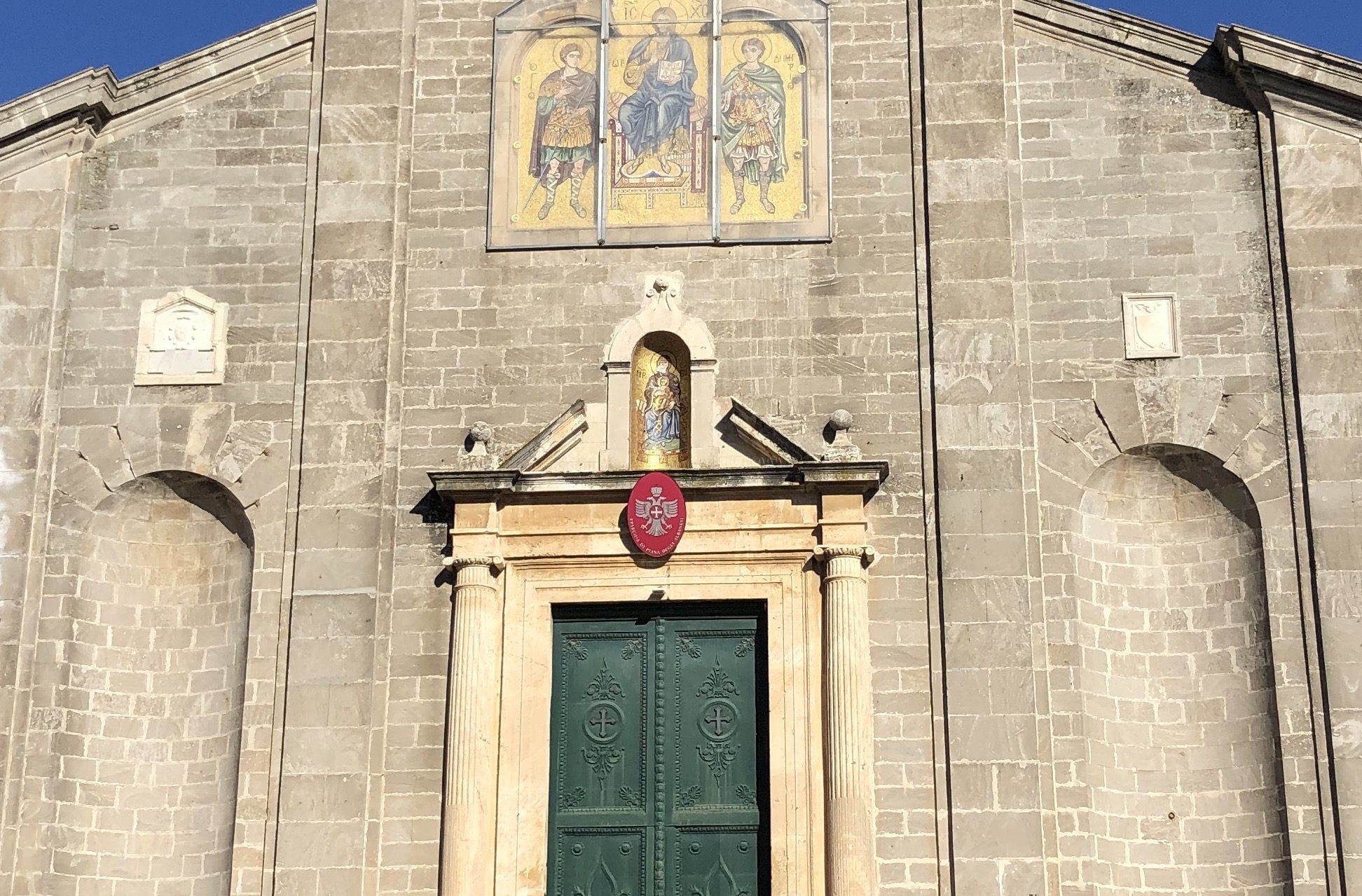
The costumes are real. When I say traditional Arbëreshë costume I don’t mean costume-shop fake. I mean clothing patterns and embroidery techniques that have been kept inside families since before Columbus sailed. Women still wear them at the major festivals. The gold-threaded bridal costume of Piana is one of the most photographed traditional outfits in southern Italy.
The food is recognizably ours-but-not. And — here’s a fact I genuinely did not know — Piana degli Albanesi has some of the most celebrated cannoli in all of Sicily. There are Sicilians who drive an hour out of Palermo just to eat cannoli in an Albanian town. There’s a joke in there about Albanian hospitality migrating better than people give it credit for.
Two of the five towns — Mezzojuso and Palazzo Adriano — have actually lost the Albanian language over the centuries, but they kept the Byzantine rite. They’re still Arbëreshë by identity and by liturgy, even if Italian replaced Arbërisht in daily speech. That’s its own kind of story.
The Skanderbeg statue, and how a Kosovar engineer in Switzerland made it happen
This is the part of the Reporter.al article that made me sit up.
In the main square of Piana degli Albanesi, there is now a statue of Skanderbeg. Not a small bust — a full bronze statue, 2.96 meters tall, sword raised. It was unveiled on 30 August 2024, exactly 536 years after the town was founded.
The sculptor is Gëzim Muriqi, a Kosovo-born artist. He spent a year on the bronze.
But here’s what got me: the statue wasn’t commissioned by the Italian state, or by the Albanian government, or by the town’s budget. It was paid for by the Albanian and Kosovar diaspora in Switzerland. An association called “Hora e Skënderbeut” — yes, named in deliberate echo of Piana’s own Albanian name — based in Zurich. The man behind it, Veli Berisha, is a Kosovo-born engineer who lives in Bern. He fell in love with Piana, kept going back, and decided that this town deserved a Skanderbeg.
Stop and look at that chain of connection. Kosovars in Switzerland fundraising to put up a statue of the 15th-century Albanian national hero in a Sicilian town founded by his refugees. That’s the diaspora story compressed into one bronze.
Berisha told Reporter.al: “We feel at home there.” That’s the line that stuck with me.
The flight problem
Here’s the practical thing the towns are now asking for: a low-cost direct flight from Tirana — and ideally also from Prishtina — to Palermo.
Right now, if you want to visit Piana from Albania, you have two options:
- Fly Tirana ? Rome or Milan, connect onward to Palermo. Long, expensive.
- Fly Tirana ? Catania (there’s a direct route), then drive three hours across Sicily to Palermo and Piana.
Roberto Ferrara, an Italian activist for the Albanian cause who flies the Tirana–Catania route several times a year, told Reporter.al that the drive from Palermo to Catania airport takes longer than the flight from Tirana. He’s not wrong.
A direct Tirana–Palermo (or Prishtina–Palermo) route would unlock weekend cultural tourism. Right now, going to Piana is a logistical commitment. With a direct flight it becomes a long weekend. And these are towns that already know how to receive a few hundred visitors — they do it for every festival.
Mayor Rosario Peta of Piana sits on the Albanian government’s Coordination Council for the Diaspora. He’s been making this case officially. Whether Wizz Air or Ryanair listens is a different question — but the political will exists on both sides.
Bonus: the Nuovo Cinema Paradiso connection
This one is for the cinephiles. Palazzo Adriano — one of the five Arbëreshë towns — is where Giuseppe Tornatore filmed most of Nuovo Cinema Paradiso. The piazza in the film, the church, the village square that won an Oscar in 1990 — that’s an Albanian-founded village. Almost nobody who loves that film knows that.
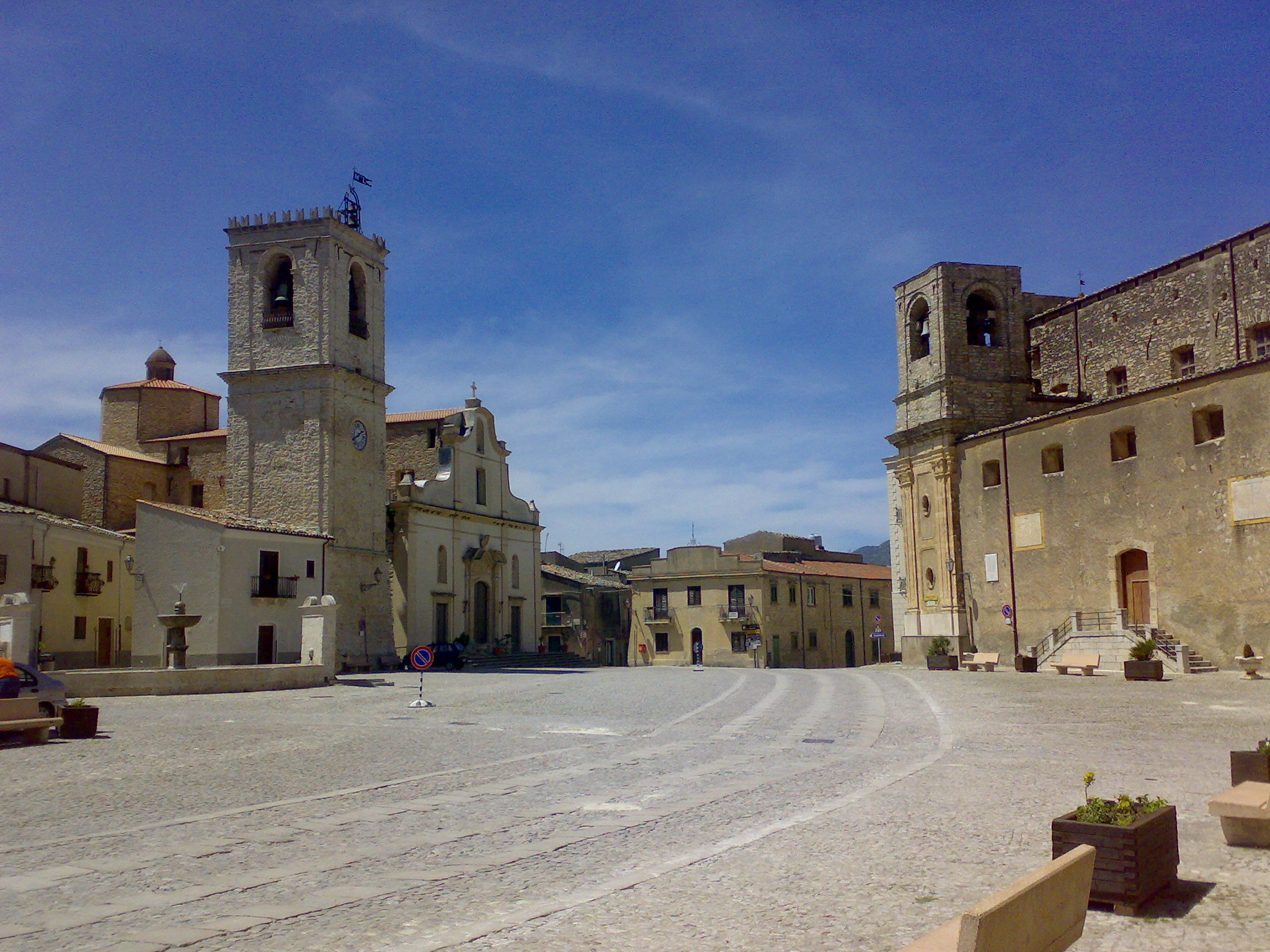
If you’ve ever rewatched the scene where young Salvatore walks across the piazza, you’ve been looking at Albanian Sicily without realizing it.
How to actually visit
Here’s what I’d tell anyone reading this who’s curious enough to go:
Getting there from Albania (right now): Fly Tirana to Catania (Wizz Air runs the route directly), rent a car, drive west across Sicily to Palermo — about 3 hours on the autostrada. Piana degli Albanesi is another 30 minutes into the mountains south of Palermo.
Getting there from Kosovo: No direct option yet. Easiest path is via Rome, Milan, or Vienna with a connection to Palermo or Catania.
When to go:
- Easter week — the Byzantine-rite liturgy in Piana is genuinely unique in all of Italy. If you can only go once, go for Pasqua.
- 30 August — the town’s founding day. Big festival, full traditional dress.
- April — Shën Gjergji (Saint George), the festival that drew 400 tourists from Albania and Kosovo this year.
- All year — Piana now runs 6 or 7 major events on the festival calendar, so off-peak still works.
Where to stay: Small B&Bs in Piana itself, or stay in Palermo and day-trip up. Palermo has the full city infrastructure; Piana has atmosphere.
What to eat: Cannoli in Piana — non-negotiable. Locally, the bakeries in the town center are the reason people drive from Palermo. Beyond that, expect Arbëreshë variations of Sicilian food: pasta, bread, sheep cheeses, lamb dishes that quietly echo southern Albanian cooking from 500 years ago.
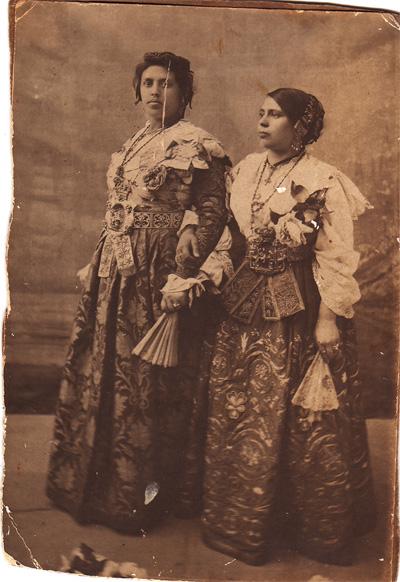
What to see in Piana itself: The main square with the Skanderbeg statue. The cathedral of San Demetrio Megalomartire. The lake. The old town with its bilingual street signs.
A short cluster tour: If you have a full weekend, hit Piana plus one or two of the other four — Santa Cristina Gela is closest. Palazzo Adriano if you want the Cinema Paradiso pilgrimage. Mezzojuso and Contessa Entellina round out the picture.
The bigger picture (or rather, the invitation)
When I started reading about the Arbëreshë I expected to find a quaint museum-piece community. What I found instead is a living one — five towns that quietly kept the language, the church, the festivals, the food, and a sense of who they were, while their cousins back home went through 500 years of Ottoman rule, independence, dictatorship, transition, and EU candidacy.
They’re not the past version of us. They’re a parallel version. An Albanian identity that took a different path five centuries ago and kept walking.
The fact that they’re now openly inviting Albanians and Kosovars to come visit is, in its own way, a closing of a long circle. We left them. They kept us. Now they’d like us to come see.
So here’s where I want to throw it back to you. If you’re reading this and you live in the diaspora — in Italy especially, but anywhere — have you ever been to Piana degli Albanesi, or to one of the other four Arbëreshë towns? What did it feel like to hear Albanian spoken in a Sicilian accent? Did anything surprise you about how much, or how little, felt familiar?
Drop a comment below, or just reply to my next newsletter — I read every one. I’d love to put together a follow-up piece based on the experiences of people who’ve actually walked those streets. The Arbëreshë kept us for 500 years. The least we can do is keep noticing them.
Frequently Asked Questions
Who are the Arbëreshë?
The Arbëreshë are an ethnolinguistic minority in Italy descended from Albanians who fled the Ottoman conquest of the Albanian lands between the 15th and 18th centuries. They settled primarily in southern Italy and Sicily, where they have preserved the Albanian language (Arbërisht), the Byzantine Catholic rite, and traditional customs for over 500 years.
How many Arbëreshë villages are there in Sicily?
There are five historically Arbëreshë towns in western Sicily: Piana degli Albanesi, Santa Cristina Gela, Contessa Entellina, Mezzojuso, and Palazzo Adriano. Including the Arbëreshë community in Palermo, the population is over 30,000.
Do the Arbëreshë still speak Albanian?
Yes — they speak Arbërisht, a 15th-century variant of Tosk Albanian. It is mutually intelligible with modern Albanian for most everyday conversation, though it has preserved older forms and lacks modern vocabulary. Mezzojuso and Palazzo Adriano have largely lost the language but maintain the Byzantine rite.
When was Piana degli Albanesi founded?
Piana degli Albanesi was officially founded on 30 August 1488, when Albanian refugees received the official land concession from Cardinal Juan de Borja, archbishop of Monreale, following a brief from Pope Sixtus IV. The town still celebrates 30 August as its founding day every year.
Is there a direct flight from Tirana to Palermo?
Not currently. As of 2026, the closest direct route is Tirana–Catania (about 3 hours by car from Palermo). The mayors of the Arbëreshë towns and the Albanian Diaspora Coordination Council are publicly campaigning for a direct low-cost route between Tirana and Palermo, and ideally one from Prishtina as well.
What is the Skanderbeg statue in Piana degli Albanesi?
A 2.96-meter bronze statue of Gjergj Kastrioti Skënderbeu, sculpted by Kosovo-born artist Gëzim Muriqi and unveiled in Piana’s main square on 30 August 2024. It was financed by the Albanian and Kosovar diaspora in Switzerland through the “Hora e Skënderbeut” association, led by Kosovo-born engineer Veli Berisha.
Subscribe to monthly updates
Get honest Albania travel tips, local guides, and new posts straight to your inbox. No spam, unsubscribe anytime.
