
Key Takeaways
- Albania is statistically safer than most Western European capitals for violent crime and street crime
- The biggest real danger is traffic — aggressive drivers, poor sidewalks, and scooters on pavements
- Solo female travelers are generally safe, especially in Tirana, though rural areas are more conservative
- The US State Department rates Albania at Level 2 (Exercise Increased Caution) — the same level as France, the UK, and Germany
- Albanian hospitality culture (besa) means strangers will actively go out of their way to help you
Table of Contents
I get this question more than any other. Every time I tell someone I live in Albania — at a dinner party, in an online forum, from a friend planning their first trip — the conversation inevitably lands on: “But is it safe?”
I understand the concern. Albania spent decades behind one of the most isolated communist regimes on earth. The 1990s were genuinely chaotic. If your mental image of Albania was formed from news footage of the 1997 civil unrest or a Liam Neeson movie, I don’t blame you for asking.
But here’s the thing: that was 30 years ago. And I’ve lived in Tirana for over 21 years now. I walk its streets at midnight. My wife walks home alone. My friends leave laptops at café tables while they go to the bathroom. And nobody thinks twice about it.
So let me give you the honest answer — the one I’d give you if we were sitting across from each other at a Tirana coffee bar, sipping macchiatos on Blloku.
Albania is safe, but smart travelers still get covered.
A stolen phone or a clinic visit should not wreck a trip. SafetyWing is the travel insurance most nomads and travelers use.
Check SafetyWing coverage →The Short Answer
Tirana is safer than most Western European capitals for street crime. Full stop. I know that sounds like something a tourism board would say, but it’s backed by actual numbers.
Albania has lower rates of violent crime — assault, robbery, homicide — than France, the UK, Belgium, or Sweden. The UNODC and Eurostat data consistently place Albania well below the EU average for most crime categories. You are statistically less likely to be mugged walking through Tirana at 2 AM than walking through Paris, Barcelona, or Rome at the same hour.
The US State Department rates Albania at Level 2: “Exercise Increased Caution.” That sounds ominous until you realize it’s the exact same rating they give France, the United Kingdom, Germany, Denmark, Spain, and Italy. If you’d visit Paris without a second thought, Albania deserves the same confidence.
Here’s what I tell people who ask: Albania is not dangerous. It is, however, different. And “different” can feel unsafe when you don’t know the context. That’s what this article is for — to give you the context.
What IS Safe
Planning a Trip to Tirana?
Get my free Tirana in 48 Hours checklist with day-by-day itinerary, prices, and local tips.
Get the Free Checklist →Let me start with what works, because there’s a lot.
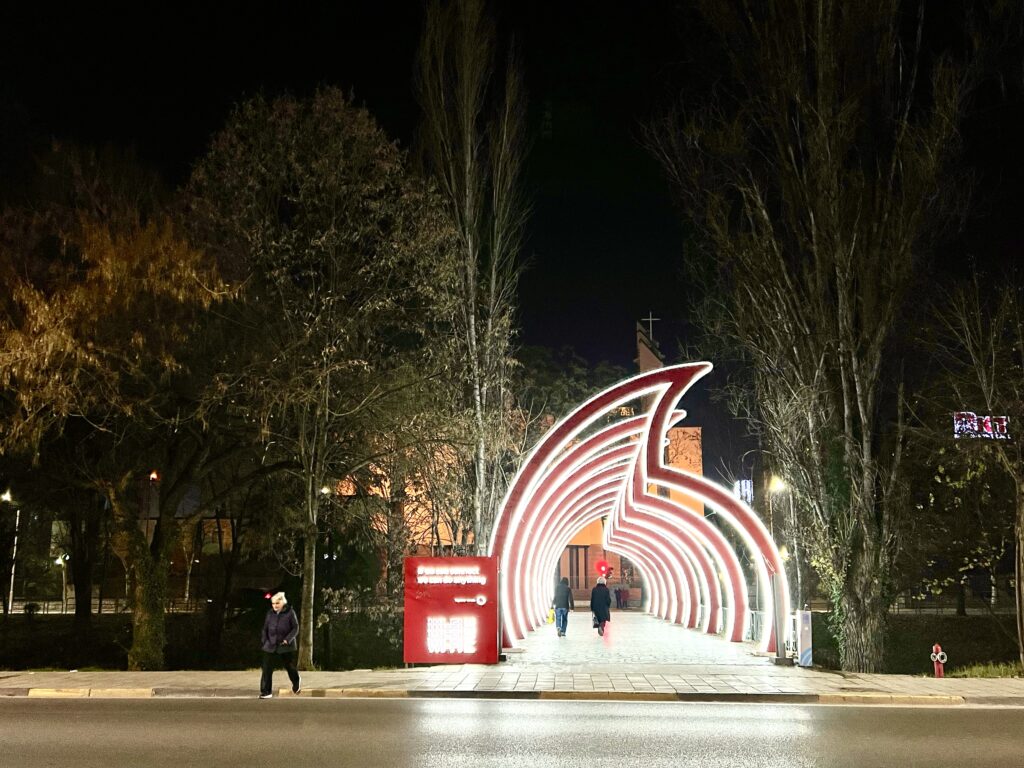
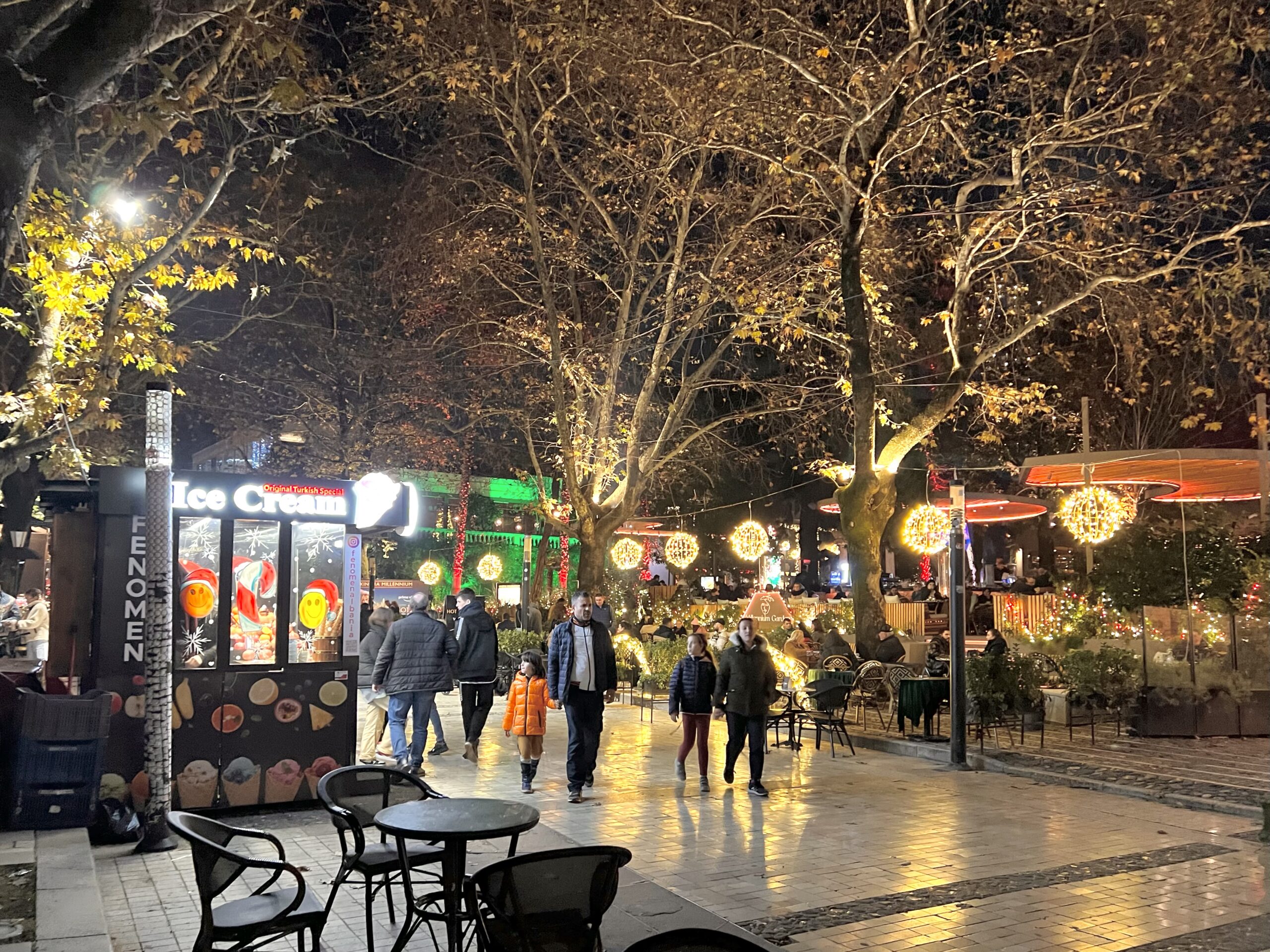
Walking at night. I walk through central Tirana at midnight regularly. The main boulevard, Blloku, the Lake Park area — all completely fine. You’ll see families out walking with kids at 10 PM in summer. Old men sitting on benches at 11 PM. Teenagers on the pedestrian street. Tirana has a street culture that keeps public spaces populated (and therefore safe) well into the night.
Leaving things at café tables. This one surprises visitors the most. Albanians routinely leave their phone on the table, their bag on the chair, and walk to the counter to order. It’s not that theft doesn’t exist — it does, everywhere — but there’s a cultural norm around respecting others’ belongings that’s stronger here than in most places I’ve been.
Public transport. The new bus system in Tirana is clean, modern, and perfectly safe. The furgën (FOOR-guhn) — those shared minivans that connect cities — are chaotic but not dangerous. You might get squeezed in, and the driver might negotiate turns like he’s in a rally, but you won’t get robbed.
Tourist areas. Sarandë, Ksamël, Bërat, Gjirokastër, Vlorë, Durrës — all the places tourists actually go are safe and welcoming. These towns depend on tourism revenue, and locals know it. You’ll be treated well.
Asking for help. This is where Albanian culture really shines. The concept of besa (BEH-sah) — a code of honor rooted in Albanian tradition — means that hospitality toward guests isn’t just polite, it’s practically sacred. If you look lost on a Tirana street, someone will approach you to help before you even ask. I’ve seen strangers walk tourists five blocks out of their way to make sure they found the right address.
“In Albania, a guest is next to God.” — This isn’t a tourist slogan. It’s something Albanian grandmothers actually say, and Albanian families actually practice. The tradition of besa has deep roots here — during World War II, Albanian families sheltered Jewish refugees at personal risk, because besa demanded it. That same instinct to protect guests is alive and well today.
What to Watch Out For
Now for the honest part. Albania has real hazards — they’re just not the ones you’re imagining.
Traffic is the number one actual danger. I cannot stress this enough. Forget pickpockets. Forget scams. The single most dangerous thing in Albania is crossing the street. Drivers here are aggressive, unpredictable, and often deeply creative in their interpretation of traffic rules. Red lights are sometimes treated as suggestions. Pedestrian crossings exist but are not always respected. Scooters ride on sidewalks. Cars park on pedestrian paths. Right of way is a philosophical concept, not a practical one.
The statistics back this up. Albania has one of the highest road fatality rates in Europe — roughly 3 to 4 times the EU average per capita. Most of those are pedestrians and drivers in rural areas. As a visitor, your biggest risk isn’t crime. It’s stepping off a curb without looking both ways (and then looking again).
My advice: Cross streets at traffic lights. Look left, right, and left again. Make eye contact with drivers before stepping out. And never, ever assume a car will stop for you just because you’re on a crosswalk.
Did you know?
Albania’s road fatality rate has actually improved dramatically — dropping over 40% in the last decade thanks to better roads, increased enforcement, and new speed cameras. But it’s still significantly above the EU average, and pedestrian safety in cities remains a real issue. Always stay alert when walking near roads.
Taxi overcharging. This is the most common “scam” visitors encounter, and it’s really more of a hassle than a danger. Unlicensed taxis (especially at the airport and bus stations) will quote inflated prices. The fix is simple: use ride-hailing apps. Speed Taxi, Clust, and VrapOn all work in Tirana and most major cities. The price is set before you get in. Problem solved.
Petty theft in crowds. It happens, but honestly less frequently than in Rome, Athens, or Barcelona. Tourist-heavy areas during peak summer — Sarandë, Durrës beach, Tirana’s New Bazaar — are the places to keep your valuables close. Use common sense: don’t flash expensive jewelry, keep your phone in a front pocket, and use a crossbody bag. Standard stuff for any European destination.
Stray dogs. You’ll see them everywhere in Albania. Most are friendly or indifferent. The government runs neutering programs, and many strays are fed by locals. That said, don’t approach or try to pet unfamiliar dogs, especially at night or in packs. They’re rarely aggressive, but it’s not worth testing.
Solo Female Travel in Albania
This is probably the question I get asked most after the general safety one, so let me be direct: Albania is generally safe for solo female travelers.
Women walk alone at night in Tirana. They travel solo on buses. They sit alone in cafés. This is normal, everyday Albanian life — not a brave act.
That said, there are cultural nuances worth knowing. Albania is still a relatively conservative society, especially outside Tirana. In rural villages and smaller towns, a woman traveling alone is unusual enough to attract curious looks. These looks are almost always just curiosity, not hostility. But they can feel uncomfortable if you’re not expecting them.
Some practical notes:
- Tirana, Sarandë, and Bërat are the most comfortable destinations for solo female travelers
- In rural areas, modest dress reduces unwanted attention (this isn’t about religion — it’s cultural)
- Cat-calling exists but is less common than in Italy, Turkey, or Egypt
- Albanian men can be forward in their friendliness — it’s usually genuine warmth, not predatory behavior, but trust your instincts
- Bars and nightlife in Tirana are safe; the Blloku area is where most locals go out and it’s well-populated until late
- Many solo female travel bloggers have written about positive Albania experiences — search Reddit or travel forums and you’ll find overwhelmingly positive reports
I’ve had female friends from the US, UK, and Germany visit solo and all came away feeling safer than they expected. The Albanian instinct to protect guests extends double to women traveling alone — you’re more likely to be adopted by a concerned grandmother than harassed.
Scams and Tourist Traps
Albania is not a “scam country.” You won’t encounter the organized tourist-targeting operations you might in some Southeast Asian cities or even parts of Western Europe. But a few things are worth knowing.
Taxi overcharging. I mentioned this above, but it bears repeating because it’s the number one complaint from visitors. Always use Speed Taxi, Clust, or VrapOn in Tirana. For intercity trips, agree on the price before you get in. A taxi from Tirana Airport to the city center should cost 2,500–3,000 ALL (roughly €22–27). If someone quotes you €50, walk away.
Currency confusion. Albania uses the lek (ALL), but many Albanians also quote prices in “old lek” — a relic of a 1965 currency reform that removed a zero. So when someone says “one thousand” for a coffee, they mean 100 new lek (about €0.90), not 1,000 lek (€9). This is not a scam — Albanians use old lek among themselves too — but it confuses every single tourist. When in doubt, ask: “Lek të reja?” (lek tuh REH-yah) — “New lek?”
Restaurant pricing. Most restaurants in tourist areas display prices on menus. But a few beachside spots in Sarandë or Durrës might bring you fish “by the kilo” without clear pricing. Always ask how much per kilo before ordering seafood, and confirm whether the price is per person or per plate. This is a Balkan-wide issue, not uniquely Albanian.
The “friendly stranger.” Occasionally in tourist areas, someone overly friendly will offer to show you around, practice their English, or take you to “the best restaurant.” Nine times out of ten, this is genuinely a friendly Albanian. But occasionally it’s someone earning a commission from a restaurant or shop. There’s no danger here — just the possibility of overpaying for a meal. Use your judgment the same way you would anywhere.
Rental car deposits. If renting a car, photograph everything before driving off. Some small agencies try to charge for pre-existing damage. Use reputable agencies and pay by credit card for protection.
Natural Hazards
Albania sits in a seismically active zone, and earthquakes happen. The big one in recent memory was November 26, 2019 — a 6.4 magnitude quake centered near Durrës that killed 51 people and displaced thousands. It was the deadliest earthquake in Albania in decades.
I was in Tirana that night. I remember the shaking, the power cutting out, people running into the streets in their pajamas. It was frightening. And it was also a rare event. Major earthquakes like that happen once every few decades. Minor tremors are more common — maybe a few times a year — but rarely strong enough to cause damage.
Since 2019, building codes have been tightened significantly. New construction is held to higher seismic standards. Modern hotels and apartments are built to withstand strong quakes. Older buildings (especially communist-era blocks) are less reassuring, but most tourist accommodations are in newer or renovated structures.
Summer heat. July and August in Tirana regularly hit 35–40°C (95–104°F). The city sits in a basin, and the heat can be oppressive. Stay hydrated, avoid midday sun, and do what the locals do: take things slow between 1 and 5 PM. The coast is cooler, and the mountains even more so.
Road conditions. While main highways have improved enormously (the Tirana–Elbasan highway and the A2 to Kosovo are genuinely modern), secondary roads — especially in mountain areas — can be narrow, winding, potholed, and unlit. Driving at night on mountain roads is inadvisable unless you know the route well. During winter, snow can close mountain passes (Qafë e Thanes, the road to Thëth) without much warning.
Swimming safety. Albania’s beaches are beautiful but many don’t have lifeguards. Currents along the Ionian coast can be strong, particularly near Palasa and Dhërmi. The Adriatic side (Durrës, Shëngjin) has calmer waters but can have undertows. Swim where locals swim, and don’t venture out far if you’re unfamiliar with the area.
Health and Medical Safety
Medical care in Albania is a tale of two systems.
Private clinics are good. Genuinely good. Tirana has several modern private hospitals — American Hospital, Hygeia Hospital, Salus Hospital — staffed by doctors who trained in Italy, Germany, Greece, or the US. A general consultation costs €20–40. Lab work is affordable. Dental care is excellent and a fraction of Western European prices (which is why medical tourism is growing here).
Public hospitals are less reliable. They’re underfunded, often crowded, and the facilities can be dated. For anything beyond basic treatment, expats and informed travelers go private. The cost difference is modest, and the quality gap is significant.
Pharmacies are everywhere. You’ll find a farmaci (far-mah-TSEE) on practically every block in Tirana. Many medications that require prescriptions in Western countries are available over the counter here. Pharmacists are knowledgeable and often speak some English or Italian. Common medications — antibiotics, pain relief, allergy meds — cost a fraction of what they do in the US or UK.
Travel insurance is strongly recommended. I’ll say this plainly: do not visit Albania (or anywhere) without travel insurance that covers medical evacuation. In a serious emergency, you may need transport to Greece, Italy, or Turkey for specialized care. Medevac without insurance can cost €20,000+. Insurance covering it costs €30–50 for a two-week trip. Do the math.
Get covered before you go: I recommend SafetyWing Nomad Insurance, flexible travel-medical cover that includes emergency evacuation and is popular with visitors and digital nomads in Albania. (Affiliate link, supports this site at no extra cost to you.)
Tap water. In Tirana, the tap water is technically safe but most locals (including me) drink filtered or bottled water. Outside Tirana, stick to bottled water. A 1.5-liter bottle costs 50–80 ALL (€0.45–0.70) at any shop.
Emergency number: 112 works throughout Albania and connects you to police, ambulance, or fire services. There’s also a dedicated police tourist helpline available during summer months in major tourist areas.
Safety by Region
Not all of Albania is the same, and your experience will vary depending on where you go.
| Region | Safety Level | Notes |
|---|---|---|
| Tirana | Very Safe | Albania’s safest city. Active nightlife, well-lit streets, visible police presence |
| Coastal Towns (Sarandë, Vlorë, Durrës, Ksamël) | Safe | Tourist-friendly, well-serviced. Peak summer can be crowded. Watch for petty theft on busy beaches |
| UNESCO Towns (Bërat, Gjirokastër) | Very Safe | Small, walkable, welcoming. Among the most pleasant places for tourists in all of Albania |
| Albanian Riviera (Dhërmi, Himara, Borsh) | Safe | Rapidly developing. Safe but infrastructure still catching up. Mountain roads require caution |
| Northern Mountains (Thëth, Valbona, Shkodër) | Safe (basic infrastructure) | Extremely welcoming locals. Limited medical facilities. Mountain roads challenging. Phone signal spotty |
| Rural Interior | Safe (conservative) | Very low crime. More conservative culture. Language barrier likely. Genuinely hospitable people |
Tirana is the safest and easiest. It’s where most travelers start, and for good reason. It has the best infrastructure, the most English speakers, the most diverse food scene, and the most cosmopolitan atmosphere. If you’re nervous about visiting Albania, start here. You’ll relax within hours.
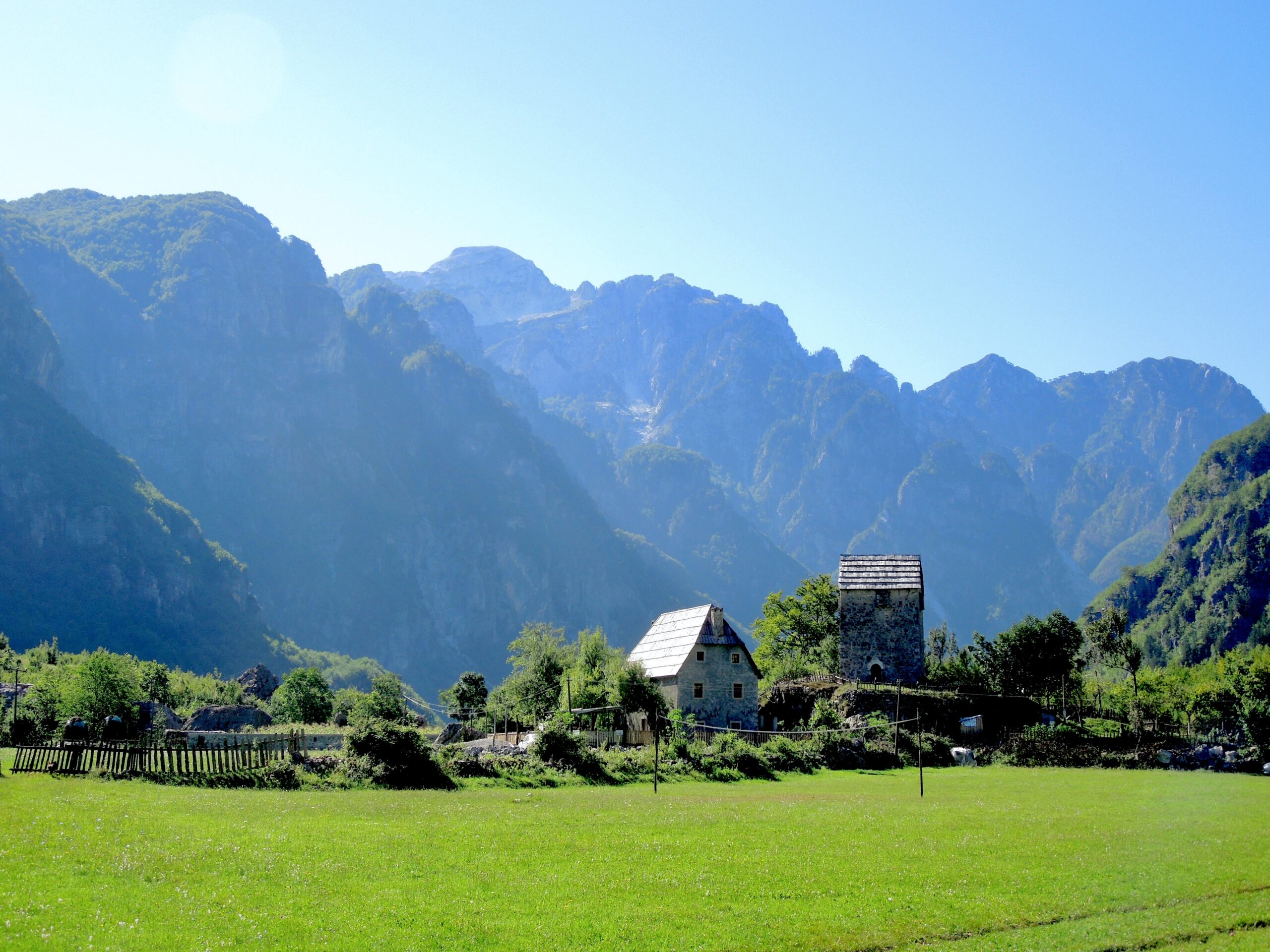
The northern mountains (Thëth, Valbona) are safe from a crime perspective — arguably the safest part of the country, since there’s essentially no crime — but the infrastructure is basic. Medical help can be hours away. Roads are unpaved. Phone signal comes and goes. Come prepared for adventure, not resort comfort. The people, though, are among the most generous and welcoming I’ve met anywhere in the world.
Rural areas are conservative but warm. You might be invited into a stranger’s home for coffee and raki (RAH-kee) — Albania’s potent grape or plum brandy — before you even learn their name. This is besa in action. Accept the coffee. It’s one of the best parts of traveling here.
What I Tell Friends Before They Visit
After 21+ years here, this is the practical list I send every friend before their first Albania trip.
- Get travel insurance with medical evacuation coverage. Non-negotiable. It’s cheap, and you’ll need it if something serious happens.
- Download Speed Taxi before you arrive. It’s the easiest way to avoid taxi scams and get fair prices. Works in Tirana, Durrës, Vlorë, and other cities.
- Carry cash. Albania is still cash-heavy. ATMs are everywhere in cities, but many restaurants, shops, and taxis outside Tirana are cash-only. The lek is the local currency — and remember, locals often quote in “old lek” (add a zero to convert to the actual price).
- Look both ways. Then look again. Traffic is the one thing that can genuinely hurt you. Cross at lights, make eye contact with drivers, and never assume a car will stop.
- Learn “faleminderit” (fah-leh-meen-DEH-reet). It means “thank you” in Albanian, and saying it will make every interaction warmer. Albanians light up when foreigners try even one word of their language.
- Don’t confuse head nodding. Albanians nod their head up and down for “no” and shake it side to side for “yes.” (Yes, it’s the opposite of what you’re used to.) This will confuse you at least once. Probably more.
- Try the byrek. Albania’s savory pastry, filled with spinach, cheese, or meat. Available everywhere for 50–150 ALL (€0.45–1.35). It’s breakfast, lunch, and emergency snack, all in one.
- Be flexible with time. Albania doesn’t run on Swiss precision. Buses leave “when full.” Restaurants might take a while. Shops close when the owner feels like it. Relax into it — you’re on Albanian time now.
- If invited for coffee, say yes. Albanian hospitality is genuine and generous. Refusing an offer of coffee or food can be seen as rude. And honestly, the coffee here is excellent — we take it very seriously.
- Keep your passport accessible. You probably won’t need it beyond the airport, but hotels are required to register guests. A photo on your phone works for most situations.
Where to stay in Tirana
Staying central is the simplest safety decision you can make. Set your dates to see live availability and rates in one view.
Affiliate map. I earn a small commission if you book; it does not change your price.
Frequently Asked Questions
Is Albania safe for American tourists?
Yes. The US State Department rates Albania at Level 2 (Exercise Increased Caution) — the same rating as France, the UK, Germany, Spain, and Italy. Thousands of American tourists visit Albania each year without incident. Albanians generally have a very positive attitude toward Americans. You’ll see a statue of Woodrow Wilson in Tirana and George W. Bush Boulevard — Albania is one of the most pro-American countries in Europe.
Is it safe to walk around Tirana at night?
Yes, central Tirana is safe at night. The main boulevard, Blloku, and the area around the Lake Park are all well-populated after dark, especially in spring and summer when Albanians socialize outdoors until late. Use standard city-walking precautions — stay in lit areas, be aware of traffic — but violent street crime against tourists is extremely rare.
Is Albania safe for solo female travelers?
Generally yes, especially in Tirana, Bërat, Sarandë, and other tourist destinations. Albanian culture is protective of guests, and women traveling alone are usually treated with extra courtesy. Rural areas are more conservative; modest dress is appreciated. Cat-calling is less common than in many Mediterranean countries. Check solo female travel forums — reports from Albania are overwhelmingly positive.
What is the most dangerous thing about visiting Albania?
Traffic, without question. Albania’s road fatality rate is among the highest in Europe. Aggressive driving, poor pedestrian infrastructure, and scooters on sidewalks are daily realities. Cross streets carefully, use ride-hailing apps instead of random taxis, and exercise extra caution if driving yourself — especially on mountain roads.
Do I need travel insurance for Albania?
Strongly recommended. While private medical care in Albania is affordable and good (a doctor visit costs €20–40), serious emergencies may require medical evacuation to Greece, Italy, or Turkey. Medevac without insurance can exceed €20,000. A two-week travel insurance policy with medical evacuation coverage typically costs €30–50 — a small price for enormous peace of mind.
Final Thoughts
After 21 years of living here, I can tell you this with absolute confidence: Albania is safe.
Not perfect. Not without its quirks and challenges. But safe in the way that matters — you can walk the streets, talk to strangers, explore freely, and go home with your wallet, your health, and a phone full of photos you can’t wait to show people.
The irony is that most people who ask “Is Albania safe?” end up falling in love with the place. They come expecting danger and find warmth. They come braced for scams and get invited into someone’s home for coffee. They come clutching their bags and end up leaving their hearts.
Albania’s biggest “danger”? You might not want to leave.
Look both ways when you cross the street, download Speed Taxi, get travel insurance, and come with an open mind. That’s really all you need.
And if you get lost? Just ask anyone. They’ll walk you there personally. That’s Albania.
Have questions about visiting Albania? Drop them in the comments or join our community forum where locals and travelers help each other out.
What do you think?
Have you visited Albania? Did you feel safe? I would love to hear your honest experience in the comments!
Subscribe to monthly updates
Get honest Albania travel tips, local guides, and new posts straight to your inbox. No spam, unsubscribe anytime.
