
12 Famous People You Didn’t Know Were Albanian
A few years ago, I was at a dinner in Rome with some Italian friends. When I mentioned I was Albanian, the conversation shifted the way it always does. “Oh, Albania! Isn’t that near Greece?” Then came the blank stares when I started listing famous Albanians they already knew, they just didn’t know they were Albanian. Danny DeVito? Albanian. John Belushi? Albanian. The guy whose research led to Viagra? Also Albanian.
This is a peculiar thing about being Albanian abroad. We’re roughly 10 million people worldwide, scattered across the Balkans and a massive diaspora. Yet most people couldn’t name a single famous Albanian beyond Mother Teresa. And even her, they’ll argue about. (We’ll get to that.)
So here’s my list. Twelve people whose Albanian roots you probably didn’t know about, from Hollywood actors to Nobel laureates to pop stars who top the charts right now. Some are straightforward. Others, like a certain Olympic marathon runner, are genuinely disputed. I’ll be honest about that too.
Key Takeaways
- Albanian heritage spans Hollywood, music, science, and humanitarian work across multiple continents
- The Albanian diaspora numbers roughly 10 million people worldwide (Wikipedia)
- Several household names, including Danny DeVito and John Belushi, trace their roots to Albanian communities
- Pop music has at least four chart-topping artists of Albanian heritage active right now
Table of Contents
Curious about the country behind these names?
If these stars have you wondering about Albania itself, a Tirana walk organised by Esther, our tour partner, is a good first taste.
See Esther’s tours →Esther is our tour partner; we receive a small share of the tour price.
1. Danny DeVito
The Arberesh Connection Most People Miss
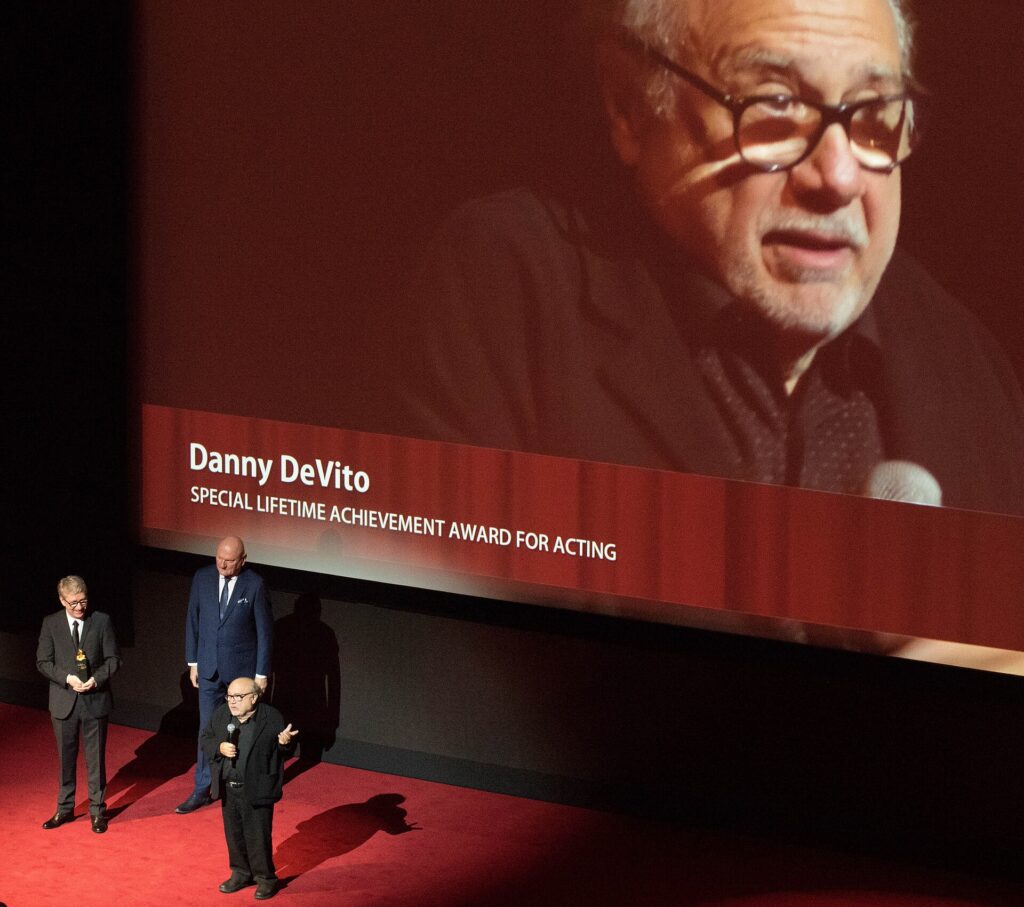
Danny DeVito’s grandmother spoke Gheg Albanian. She was Arberesh, part of the Albanian diaspora communities in southern Italy that have existed since the 15th century. According to the Arberesh Wikipedia entry, roughly 100,000 people in Italy still identify as Arberesh today. DeVito confirmed his Albanian heritage on The Always Sunny Podcast, casually dropping it into conversation the way Albanians always do.
His family came from Calabria, the toe of Italy’s boot, where Arberesh villages have maintained their language, their Orthodox faith, and their traditions for over 500 years. That’s longer than most countries have existed. When I tell Italians this, they’re often surprised. But in Albania, we’ve known about DeVito for years. He’s one of ours.
What makes this interesting is how many Arberesh Americans don’t even realize their roots are Albanian. The communities left Albania so long ago that “Italian” became the default identity. But the language, the food, the family structures? Albanian through and through.


Albanian Connection: Arberesh (Italo-Albanian) descent from Calabria. Grandmother spoke Gheg Albanian.
Known For: Actor, director, producer. Iconic roles in It’s Always Sunny in Philadelphia, Batman Returns, Twins, Matilda.
Surprising Albanian Fact: Confirmed his Albanian roots on The Always Sunny Podcast, noting his grandmother’s Arberesh heritage from southern Italy.
Watch: Danny DeVito discusses his Italian-Albanian roots – search YouTube for “Danny DeVito Always Sunny Podcast Albanian”
2. John Belushi
Planning a Trip to Tirana?
Get my free Tirana in 48 Hours checklist with day-by-day itinerary, prices, and local tips.
Get the Free Checklist →From Qyteze to Saturday Night Live
John Belushi’s parents were Albanian immigrants from Qyteze, a village near Korce in southeastern Albania. His father Adam emigrated to the US before World War II, and his mother Agnes (born Demetri) was of the same Albanian community. Albania honored Belushi with a postage stamp in 2008, 26 years after his death. Not many countries issue stamps for comedians, but Albanians take their famous diaspora seriously.
I’ve always found it interesting that Belushi grew up in Wheaton, Illinois, in a tight-knit Albanian-American community. His family attended the Albanian Orthodox church. He ate byrek and tavë kosi at family gatherings. The wild energy he brought to Saturday Night Live and Animal House? Some of us like to think that’s pure Albanian spirit. (I’m only half joking.)
Belushi died at 33, which makes the Albanian stamp feel like a bittersweet tribute. But in Korce, they’re proud of him. His family’s village is small, and everyone there knows the name.
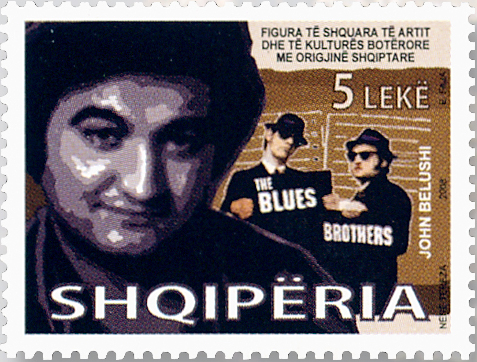

Albanian Connection: Both parents from Qyteze, near Korce, Albania. Grew up in Albanian-American community.
Known For: Saturday Night Live original cast, The Blues Brothers, Animal House. One of the greatest comedians of the 20th century.
Surprising Albanian Fact: Albania issued a postage stamp in his honor in 2008, and his family still has connections to Korce.
Watch: John Belushi’s legendary Blues Brothers performances – search YouTube for “John Belushi Blues Brothers”
3. Ferid Murad
The Albanian Nobel Laureate Who Changed Medicine
Ferid Murad won the Nobel Prize in Physiology or Medicine in 1998, and his father was an Albanian immigrant. According to his Nobel Prize biography, his father Jabir Murad Ejupi came from Gostivar (now in North Macedonia, historically an Albanian-speaking area) and arrived at Ellis Island in 1913. Murad’s research on nitric oxide signaling directly led to the development of Viagra.
Here’s the thing about Murad’s story. His father changed the family name from Ejupi to Murad to assimilate in America. This is a pattern I’ve seen dozens of times in the Albanian diaspora. Names get shortened, simplified, Anglicized. The roots get buried under a couple of generations. But the connection remains.
In my 20+ years of blogging about Albania, Murad is the person who surprises people the most. A Nobel Prize winner with Albanian blood? People genuinely don’t believe it at first. But there he is on the Nobel Prize website, his father’s Albanian origins clearly documented.

.jpg)
Albanian Connection: Father was Albanian immigrant from Gostivar who arrived at Ellis Island in 1913.
Known For: Nobel Prize in Medicine (1998) for discoveries on nitric oxide signaling in the cardiovascular system.
Surprising Albanian Fact: His Nobel-winning research directly led to the development of Viagra. His father changed the family name from Ejupi to Murad upon arriving in America.
4. Mother Teresa
The Most Famous Albanian in History
Mother Teresa was born Anjeze Gonxhe Bojaxhiu on August 26, 1910, in Skopje, to Albanian parents from Kosovo. She is, without question, the most recognized Albanian who ever lived. Yet decades of media coverage almost never mentioned her Albanian identity. According to her own words, documented in numerous biographies, she was explicit about who she was.
“By blood, I am Albanian. By citizenship, Indian. By faith, I am a Catholic nun. As to my calling, I belong to the world. As to my heart, I belong entirely to the Heart of Jesus.”
Her father, Nikola Bojaxhiu, was a successful businessman and Albanian political activist. There’s strong evidence he was poisoned or assassinated in 1919 because of his activism for Albanian national causes. The family went from comfortable to impoverished overnight. Young Anjeze’s path toward religious service started in that devastation.
I grew up in Albania hearing Mother Teresa’s name constantly. Every Albanian knows she’s Albanian. The airport in Tirana is named after her. There’s a massive statue of her in the city center. But talk to someone in London or New York, and they’ll say she was “from India” or “from Macedonia.” It’s one of those small frustrations of being from a small country.
Her Albanian name, “Gonxhe,” means “flower bud” in Albanian. Bojaxhiu means “house painter.” These are deeply Albanian names from a deeply Albanian family.


Albanian Connection: Born in Skopje to Albanian parents from Kosovo. Named Anjeze Gonxhe Bojaxhiu.
Known For: Nobel Peace Prize (1979). Founded the Missionaries of Charity. Canonized as Saint Teresa of Calcutta in 2016.
Surprising Albanian Fact: Her father was likely assassinated for his Albanian political activism. Tirana’s international airport bears her name.
5. Eliza Dushku
From Buffy to a Documentary About Her Albanian Roots
Eliza Dushku’s father was from Korce, Albania, and she’s been one of the most vocal Albanian-Americans in Hollywood about her heritage. In 2015, she produced a documentary called Dear Albania, raising $65,000 on Kickstarter to fund the project. The city of Korce later granted her honorary citizenship.
Most people know Dushku from Buffy the Vampire Slayer (she played Faith) or Dollhouse. But in Albania, she’s known for something else entirely: actually caring about the connection. A lot of celebrities with Albanian roots treat it as a footnote. Dushku made a whole film about it.
Her family name, “Dushku,” literally means “oak” in Albanian. It’s a common surname in the Korce region. When she visited, locals treated her like a returning daughter. That’s very Albanian. We claim everyone, and when they claim us back, we’re thrilled.


Albanian Connection: Father from Korce, Albania. Granted honorary citizenship by the city.
Known For: Buffy the Vampire Slayer (Faith), Dollhouse, Bring It On.
Surprising Albanian Fact: Produced the documentary Dear Albania (2015), raising $65,000 on Kickstarter to explore her Albanian roots. “Dushku” means “oak” in Albanian.
6. Jim Belushi
The Belushi Who Came Back to Albania
Jim Belushi received Albania’s “Honor of the Nation” decoration from President Bamir Topi in 2008, making him one of very few Americans to hold the distinction. He’s John’s younger brother, and unlike John, he’s had the chance to actually visit Albania and connect with his roots on camera.
In 2023, Jim traveled to Albania for Discovery Channel’s Growing Belushi. The episode showed him visiting family, tasting local food, and getting visibly emotional about the connection. For Albanians watching, it was a big deal. Here was a famous American, on an American TV show, treating Albania with genuine warmth and curiosity.
But here’s the thing people forget. Jim grew up in the same Albanian-American household as John. Same parents from Qyteze. Same Albanian Orthodox church. Same byrek at Sunday lunch. He’s been publicly proud of his heritage for decades, long before the Discovery Channel trip made it TV-friendly.


Albanian Connection: Parents from Qyteze, Korce, Albania. Same Albanian roots as brother John.
Known For: According to Jim, K-9, Growing Belushi on Discovery Channel.
Surprising Albanian Fact: Received the “Honor of the Nation” decoration from Albania’s president in 2008. Visited Albania on camera for Growing Belushi in 2023.
Watch: Jim Belushi’s emotional visit to Albania on Growing Belushi – search YouTube for “Jim Belushi Albania Growing Belushi”
7. Action Bronson
The Albanian Rapper Who Cooks Byrek on Camera
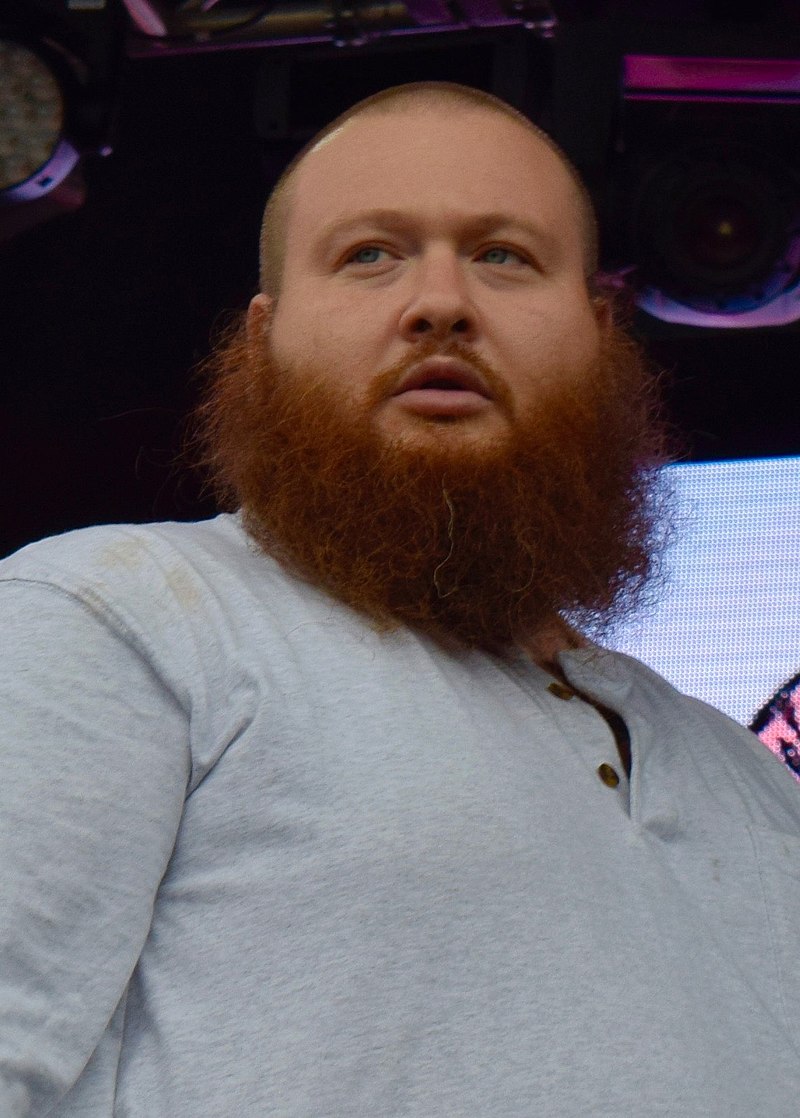
Action Bronson, born Ariyan Arslani, has an Albanian Muslim father and has made his Albanian heritage a central part of his public identity. His cookbook is dedicated to his Albanian grandmother, and he’s cooked Albanian byrek on VICE Munchies with his aunt. For a rapper-turned-chef, that’s about as Albanian as it gets.
I love Bronson’s approach to his heritage. He doesn’t treat it as an afterthought. Albanian food shows up in his restaurants, his books, his shows. He once described his grandmother’s cooking as the foundation of everything he does with food. Anyone who has eaten their Albanian grandmother’s cooking knows exactly what he means.
Action Bronson represents something interesting about Albanian identity in America. Unlike earlier generations who sometimes downplayed their roots (changing names, blending in), younger Albanian-Americans are increasingly loud about where they come from. Bronson is the most extreme example: he built an entire brand around food, and Albanian food sits at the center of it.
.jpg)
Albanian Connection: Albanian Muslim father. Born Ariyan Arslani in Queens, New York.
Known For: Rapper, chef, TV host. Fuck, That’s Delicious on VICE, cookbook Stoned Beyond Belief.
Surprising Albanian Fact: Dedicated his cookbook to his Albanian grandmother. Made Albanian byrek on VICE Munchies with his aunt.
Watch: Action Bronson making Albanian byrek with his aunt – search YouTube for “Action Bronson Albanian byrek VICE Munchies”
8. Dua Lipa
How Did a Kosovar Albanian Become the World’s Biggest Pop Star?
Dua Lipa was born in London to Kosovar Albanian parents from Pristina, and as of 2025, she holds citizenship in three countries: the UK, Albania, and Kosovo. She’s arguably the most successful Albanian-heritage musician in history. Her albums Future Nostalgia and Radical Optimism have collectively sold tens of millions of copies worldwide, according to Wikipedia.
“Dua” means “love” in Albanian. Her parents named her intentionally. And unlike some celebrities who keep their heritage quiet, Dua Lipa has been outspoken about being Albanian. She co-founded the Sunny Hill Foundation with her father Dukagjin Lipa, and together they run the Sunny Hill Festival in Pristina every summer. It’s become one of the biggest music events in the Balkans.
What I find remarkable is how naturally she moves between identities. British when she’s in London. Albanian when she’s in Pristina. Global when she’s on stage. That’s the modern Albanian diaspora experience in a nutshell, and she embodies it better than anyone.
Did you know?
Dua Lipa’s name means “love” in Albanian. Her father’s name, Dukagjin, references the Dukagjini highlands of northern Albania, the same region where the medieval Kanun (customary law code) originated.


Albanian Connection: Born in London to Kosovar Albanian parents from Pristina. Triple citizen (UK, Albania, Kosovo).
Known For: “Levitating,” “Don’t Start Now,” Future Nostalgia. Grammy Award winner. One of the world’s best-selling music artists.
Surprising Albanian Fact: Co-founded the Sunny Hill Festival in Pristina and holds Albanian citizenship alongside British and Kosovar passports.
9. Rita Ora
The Pop Star Whose Family Fled Kosovo
Rita Ora was born Rita Sahatciu in Pristina, Kosovo, in 1990, and her family fled to London in 1991 to escape the deteriorating political situation. She was barely a year old. Her stage name “Ora” means “time” in Albanian, chosen because it was easy to pronounce internationally. According to her Wikipedia biography, her grandfather served as Albanian consul to Russia.
What most people don’t realize is that Rita Ora and Dua Lipa come from the same small city. Pristina has a population of around 200,000. Producing two of the world’s biggest pop stars from one small Balkan capital is, honestly, statistically absurd. But Albanians don’t think about it that way. We just think, “Of course they’re Albanian.”
Ora’s family story is typical of the 1990s Kosovo Albanian experience. Hundreds of thousands of Kosovo Albanians left during that decade. Some returned after the 1999 war. Many didn’t. Rita’s success in the UK, while maintaining her Albanian identity, has made her a symbol for that entire generation.
Albanian Connection: Born Rita Sahatciu in Pristina, Kosovo. Family fled to London in 1991.
Known For: “How We Do,” “I Will Never Let You Down,” judge on The Masked Singer UK. Over 10 billion streams worldwide.
Surprising Albanian Fact: “Ora” means “time” in Albanian, added to her surname for international ease. Her grandfather was Albanian consul to Russia.
10. Bebe Rexha
The Albanian Pop Star Who Cried on Live TV
Bebe Rexha, born Bleta Rexha, is of Albanian heritage from North Macedonia. “Blete” means “bee” in Albanian, which is where her nickname comes from. She has been consistently vocal about her Albanian roots, and one moment in particular went viral: she spoke Albanian on live television and burst into tears, overwhelmed by the connection to her parents’ language.
That moment hit hard for a lot of Albanians. There’s something about hearing your language on international TV, spoken by someone the world actually knows. It validates something deep. Especially for a community that’s often invisible in mainstream media.
In 2024, Rexha alleged she was the victim of a hate crime at Munich airport for speaking Albanian. The incident made headlines across European media. Whether the details are disputed or not, it resonated with thousands of Albanians who’ve experienced similar prejudice abroad. Speaking Albanian in public shouldn’t be controversial. Sometimes it still is.


Albanian Connection: Parents from North Macedonia’s Albanian community. Born Bleta Rexha (“blete” = “bee” in Albanian).
Known For: “Meant to Be” (with Florida Georgia Line), “I’m a Mess,” Grammy-nominated songwriter.
Surprising Albanian Fact: Cried on live TV while speaking Albanian. In 2024, alleged a hate crime at Munich airport for speaking Albanian.
11. Ava Max
She Only Spoke Albanian Until Age 5
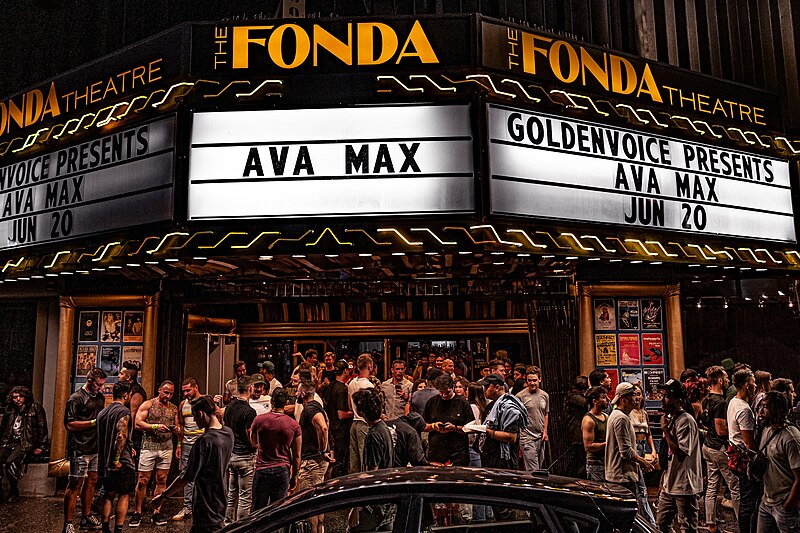
Ava Max was born Amanda Koci in Milwaukee to Albanian parents who fled the country in 1991 after communism collapsed. Her family’s escape from Albania is dramatic: they lived in a Red Cross church in Paris for a year before eventually making it to the United States. According to Wikipedia, she only spoke Albanian until she was five years old.
Her hit “Sweet but Psycho” reached number one in 22 countries. Not bad for a kid from a refugee family who couldn’t speak English until kindergarten. Koci is a common Albanian surname, and Amanda is a name that works in both languages, which was probably deliberate. Albanian parents in the diaspora often choose names that bridge both worlds.
I was in Albania in 1991 when everything fell apart. Thousands of families did exactly what the Koci family did: packed what they could and left. Some went to Italy on overcrowded ships. Some ended up in Greece. Some, like Ava Max’s parents, made it all the way to France and then America. Every Albanian family has a 1991 story. Hers just happens to have a number-one hit attached to it.
.jpg)
Albanian Connection: Parents fled Albania in 1991 after communism fell. Born Amanda Koci. Only spoke Albanian until age 5.
Known For: “Sweet but Psycho” (number one in 22 countries), “Kings & Queens,” “My Head & My Heart.”
Surprising Albanian Fact: Her family lived in a Red Cross church in Paris for a year as refugees before reaching the US.
12. Ermonela Jaho
The Albanian Soprano The Economist Called the World’s Greatest
Ermonela Jaho grew up in Tirana under one of the most isolated communist regimes on Earth, and The Economist has called her “the world’s most acclaimed soprano.” She won the International Classical Music Awards (ICMA) Artist of the Year in 2023, placing her among the very top tier of living opera performers.
Her story is almost unbelievable. She trained at the Academy of Arts in Tirana during the final years of communism, when Albania was so isolated that listening to foreign music could get you in trouble. In 1993, two years after the regime collapsed, she moved to Italy with essentially nothing. She worked odd jobs while auditioning. Eventually, she started getting roles at major opera houses across Europe.
Today she performs at La Scala, the Royal Opera House, the Met, and every major venue in between. She’s particularly known for her role as Cio-Cio-San in Madama Butterfly, which critics describe as definitive. But what I find most remarkable is how open she is about where she comes from. She doesn’t hide the hardship. She doesn’t romanticize communist Albania. She’s honest about what it took.
And that honesty, I think, is what makes her story the perfect ending to this list. Because that’s the Albanian diaspora in one sentence: people who left with nothing and made something extraordinary.
Albanian Connection: Born and raised in Tirana, Albania. Trained at the Academy of Arts during communism.
Known For: Leading soprano at the world’s top opera houses. ICMA Artist of the Year 2023. Acclaimed as “the world’s most acclaimed soprano” by The Economist.
Surprising Albanian Fact: Grew up under communist isolation in Albania, moved to Italy in 1993 with nothing. Now performs at La Scala, the Met, and the Royal Opera House.
All 12 Famous Albanians at a Glance
| Name | Albanian Connection | Field | Key Achievement |
|---|---|---|---|
| Danny DeVito | Arberesh (Calabria, Italy) | Film | Emmy-winning actor, director, producer |
| John Belushi | Parents from Qyteze, Korce | Comedy | SNL original cast, Blues Brothers |
| Ferid Murad | Father from Gostivar | Science | Nobel Prize in Medicine (1998) |
| Mother Teresa | Albanian parents, born Skopje | Humanitarian | Nobel Peace Prize (1979), sainted 2016 |
| Eliza Dushku | Father from Korce | Film/TV | Buffy, Dear Albania documentary |
| Jim Belushi | Parents from Qyteze, Korce | Film/TV | Albania’s “Honor of the Nation” (2008) |
| Action Bronson | Albanian Muslim father | Music/Food | Rapper, chef, cookbook author |
| Dua Lipa | Kosovar Albanian parents, Pristina | Music | Grammy winner, triple citizen |
| Rita Ora | Born in Pristina, fled Kosovo 1991 | Music | 10 billion+ streams worldwide |
| Bebe Rexha | Parents from North Macedonia | Music | Grammy-nominated, “Meant to Be” |
| Ava Max | Parents fled Albania 1991 | Music | “Sweet but Psycho” #1 in 22 countries |
| Ermonela Jaho | Born in Tirana, Albania | Opera | ICMA Artist of the Year 2023 |
Why Are There So Many Famous People with Albanian Heritage?
The Albanian diaspora is enormous relative to the country’s size. Albania itself has about 2.8 million people, according to the World Bank. But Albanians worldwide number roughly 10 million when you include Kosovo, North Macedonia, Montenegro, Greece, Italy’s Arberesh communities, and the massive diaspora in the US, UK, Germany, Switzerland, and beyond.
There’s also a pattern here worth noting. Many of these famous Albanians come from communities that were pushed out: Kosovo Albanians fleeing persecution, Arberesh who left 500 years ago, families escaping communism in 1991. Diaspora communities often produce outsized cultural contributions precisely because they’re driven to prove themselves in adopted countries while maintaining pride in their origins.
But here’s what I think really explains it. Albanians don’t have a large, well-known homeland to speak for them the way Italians or Greeks do. So when an Albanian makes it, the entire community amplifies it. We share the news. We claim them. We’re loud about it. That communal pride creates a feedback loop where Albanian heritage becomes more visible, which inspires the next generation, which produces more famous Albanians. It’s a beautiful cycle.
Frequently Asked Questions About Famous Albanians
Is Danny DeVito Albanian?
Yes. Danny DeVito is of Arberesh (Italo-Albanian) descent from Calabria, Italy. His grandmother spoke Gheg Albanian. He confirmed this heritage on The Always Sunny Podcast. The Arberesh are Albanian communities that settled in southern Italy starting in the 15th century, and roughly 100,000 people in Italy still identify as Arberesh today.
What nationality is Dua Lipa?
Dua Lipa holds three citizenships: British (born in London), Albanian, and Kosovar. Her parents are Kosovar Albanians from Pristina. She was raised in London, spent several teenage years in Pristina, then returned to London to pursue music. Her name “Dua” means “love” in Albanian.
Was Mother Teresa Albanian?
Yes. Mother Teresa was born Anjeze Gonxhe Bojaxhiu in Skopje (then Ottoman Empire, now North Macedonia) to Albanian parents from Kosovo. She explicitly stated, “By blood, I am Albanian.” Her father was an Albanian political activist who was likely assassinated in 1919. Tirana’s international airport is named Mother Teresa International Airport in her honor.
Are John and Jim Belushi Albanian?
Yes. Both John and Jim Belushi are of Albanian descent. Their parents, Adam and Agnes Belushi, emigrated from Qyteze, a village near Korce in southeastern Albania. Albania honored John with a postage stamp in 2008. Jim received the “Honor of the Nation” decoration from Albania’s president the same year.
What does Dua Lipa’s name mean?
“Dua” means “love” in Albanian. It’s a real Albanian word used in everyday conversation. Her surname “Lipa” is also Albanian. Her father’s name “Dukagjin” references the Dukagjini region of northern Albania, historically associated with the Kanun of Lek Dukagjini, a medieval code of customary law.
Final Thoughts on Albanian Heritage and Diaspora Pride
Writing this list, I kept coming back to the same thought. These twelve people span comedy, science, music, opera, humanitarian work, and everything in between. They come from Albania proper, Kosovo, North Macedonia, and 500-year-old communities in Italy. They speak different languages, practice different faiths, and live on different continents. But they share something: Albanian roots.
And that’s the thing about Albanian identity. It’s wider than the borders of Albania. It stretches across the Mediterranean, across the Atlantic, across centuries. It shows up in Danny DeVito’s grandmother’s kitchen and Dua Lipa’s sold-out arenas and Ferid Murad’s Nobel Prize laboratory.
I’ve been writing about Albania since 2004, and this particular topic, famous people with Albanian heritage, always generates the most passionate responses. Albanians love to claim their own. Sometimes we stretch a bit (I’ll admit that). But the people on this list? They’ve claimed us back. And that makes all the difference.
If I’ve missed someone important, and I’m sure I have, tell me in the comments. Albanians are not shy about correcting each other.
What do you think?
Which famous Albanian surprised you the most? And who should have made the list? I’d love to hear your suggestions, especially if you know of Arberesh celebrities I might have missed.
Subscribe to monthly updates
Get honest Albania travel tips, local guides, and new posts straight to your inbox. No spam, unsubscribe anytime.
