
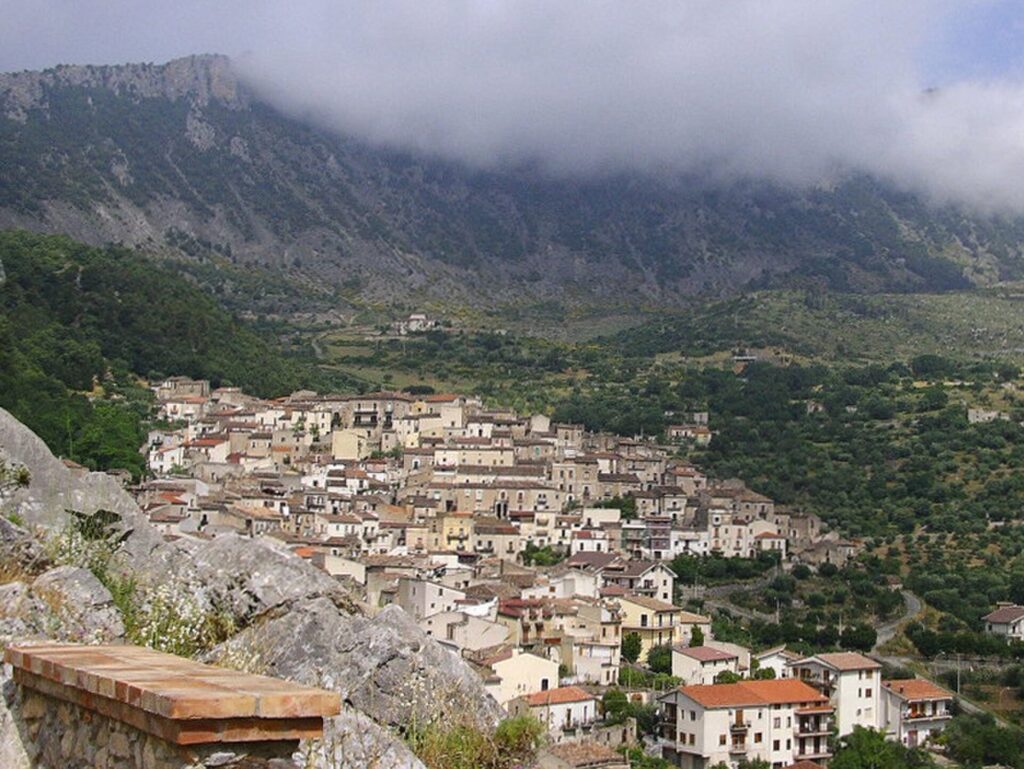
Key Takeaways
- Around 100,000 Arberesh (Italo-Albanians) still live across 44 communities in southern Italy, preserving a medieval Albanian dialect for over 500 years.
- Their ancestors fled Ottoman conquest after Skanderbeg’s death in 1468, settling in Calabria, Sicily, Basilicata, and four other Italian regions.
- UNESCO classifies the Arberesh language as “definitely endangered,” with only 70,000-100,000 native speakers remaining (UNESCO Atlas of Languages in Danger).
- Famous Arberesh include Italian PM Francesco Crispi, intellectual Antonio Gramsci, actor Danny DeVito, and Australian PM Anthony Albanese.
Table of Contents
A few years ago, I was at a conference in Tirana when I met a young woman from Calabria. She introduced herself in perfect Italian, then switched to something that stopped me cold. It was Albanian. Not modern Albanian, exactly, but something older, softer, almost musical. Words I recognized but couldn’t quite place, like hearing a song you knew as a child but forgot the lyrics to.
She was Arberesh, she said. Her family had been in Italy for over 500 years. Five centuries. And they still spoke Albanian at home, still celebrated Skanderbeg, still danced the vallje on Easter Tuesday. I honestly didn’t know what to say. I’ve lived in Albania my whole life, and here was someone from a tiny village in southern Italy who felt just as Albanian as I do.
That conversation stuck with me. So I started digging into the Arberesh story, and what I found is one of the most remarkable cases of cultural survival in all of Europe. An entire community, scattered across the mountains of southern Italy, quietly keeping alive a version of Albania that even we in Albania have largely forgotten.
Why Did Albanians Go to Italy?
The Arberesh migration to Italy spans roughly three centuries, beginning in 1448 and continuing through the 1700s. According to Britannica, approximately 44 Arberesh settlements exist across seven Italian regions today, making this one of the oldest and most enduring diaspora communities in the Mediterranean. The short answer is war, survival, and a promise made to a dying hero.
To understand why Albanians ended up in Italy, you need to understand one name: Gjergj Kastrioti Skanderbeg. He was the Albanian prince who fought the Ottoman Empire for 25 years and never lost a major battle. But when he died in 1468, everything collapsed. Without his military genius, Albanian resistance crumbled. The Ottomans swept through, and tens of thousands of Albanians faced a choice: convert to Islam, die, or leave.
Many chose to leave. And Italy, just across the Adriatic Sea, was the obvious destination. But the migration didn’t happen all at once. It came in waves.
The Five Migration Waves
1448 — First Wave: Demetrio Reres, an Albanian military commander, settles soldiers and their families in 12 villages in Catanzaro province (Calabria). This was a strategic military arrangement with the Kingdom of Naples, not yet a refugee movement.
1461 — Second Wave: Skanderbeg himself sends Albanian troops to help King Ferdinand I of Naples crush a baronial revolt. As payment, these soldiers receive land in Puglia and northern Calabria. Some never return to Albania.
1468-1506 — Third Wave (the largest): After Skanderbeg’s death, the Ottoman conquest triggers mass flight. Entire villages relocate across the Adriatic. Albanian nobles, soldiers, and peasant families settle in Calabria, Sicily, and Basilicata. This is the wave that establishes most of today’s Arberesh communities.
1500-1534 — Fourth Wave: Continued Ottoman pressure pushes more Albanians to Italy. The fall of key fortress towns like Kruja (1478) and Shkodra (1479) had already sealed Albania’s fate, but pockets of resistance held out for decades. When those fell, more refugees followed.
16th-18th centuries — Fifth Wave: Smaller, scattered migrations continue as economic decline and Ottoman administration make life increasingly difficult. Some Albanian mercenaries settle after serving various Italian kingdoms. By the 1700s, the Arberesh communities are firmly established, and new arrivals slow to a trickle.
Here’s the thing that amazes me. These weren’t just random refugees scattering wherever they could. They negotiated. Albanian leaders made deals with Italian kings and feudal lords, trading military service for land and autonomy. It was calculated, dignified, and it worked. The Arberesh were given mountain villages, often abandoned or underpopulated, and they turned them into functioning communities that survive to this day.


Where Are the Arberesh Communities Today?
Planning a Trip to Tirana?
Get my free Tirana in 48 Hours checklist with day-by-day itinerary, prices, and local tips.
Get the Free Checklist →Today, around 44 Arberesh settlements are spread across seven regions of southern Italy, with the highest concentration in Calabria, which is home to 27 communities (Britannica). The Italian government formally recognized the Arberesh as a linguistic minority through Law 482/1999, giving their language official protected status alongside Catalan, Greek, and other minority languages spoken in Italy.
So where exactly are they? If you look at a map of Italy, draw a line across the ankle and toe of the boot. That’s roughly where you’ll find them.
| Region | Number of Settlements | Notable Towns |
|---|---|---|
| Calabria | 27 | Civita, Lungro, San Demetrio Corone, Frascineto, Spezzano Albanese |
| Basilicata | 5 | Barile, San Costantino Albanese, San Paolo Albanese |
| Molise | 4 | Campomarino, Portocannone, Ururi, Montecilfone |
| Sicily | 3 | Piana degli Albanesi, Contessa Entellina, Santa Cristina Gela |
| Puglia | 3 | Casalvecchio di Puglia, Chieuti, San Marzano di San Giuseppe |
| Campania | 1 | Greci |
| Abruzzo | 1 | Villa Badessa |
Calabria is the heartland. With 27 out of 44 settlements, it’s where Arberesh culture is strongest. Towns like Lungro serve as the spiritual capital, home to the Eparchy of Lungro, the Byzantine Catholic diocese that oversees all Arberesh parishes in continental Italy. San Demetrio Corone hosts the oldest Albanian college in Europe, founded in 1794.
But don’t overlook Sicily. Piana degli Albanesi, just 30 minutes from Palermo, is arguably the most famous Arberesh town in the world. Its Easter celebrations draw thousands of visitors every year, and the traditional costumes worn there are registered in Sicily’s Intangible Heritage Register.
What strikes me is how these communities survived at all. They were mountain villages, often isolated, with little economic opportunity. But that isolation is exactly what preserved them. Cut off from mainstream Italian society for centuries, they kept speaking Albanian, kept their Byzantine faith, kept their dances and songs. Isolation, it turns out, was their greatest protection.
How Is the Arberesh Language Different from Modern Albanian?
The Arberesh language is essentially a medieval Tosk Albanian dialect that has been frozen in time for over 500 years. UNESCO’s Atlas of Languages in Danger classifies it as “definitely endangered,” with only an estimated 70,000 to 100,000 native speakers remaining (UNESCO, 2010). That number is declining with every generation as younger Arberesh shift to Italian as their primary language.
When I first heard Arberesh spoken, it felt like listening to my great-grandmother. The words were familiar but different. Vowels were rounder, consonants softer. It sounded like Albanian filtered through centuries of Italian influence and isolation.
That’s because it is. The Arberesh language preserves features of 15th-century Albanian that have long disappeared from the language spoken in Albania and Kosovo today. Modern Albanian has absorbed thousands of Turkish loanwords during 500 years of Ottoman rule. Arberesh has none of those. Instead, it borrowed from Italian and the regional southern Italian dialects.
| Feature | Arberesh | Modern Albanian |
|---|---|---|
| “Water” | ujë | ujë |
| “Good” | i mirë | i mirë |
| “Window” | finestra (Italian loan) | dritare |
| “City square” | placa (Italian loan) | sheshi (Turkish loan) |
| “Shop” | butiga (Italian loan) | dyqan (Turkish loan) |
| “Thank you” | falemënderit | faleminderit |
Notice the pattern? Where modern Albanian uses Turkish-derived words (dyqan, sheshi), Arberesh uses Italian loans instead. Both dialects replaced the same original Albanian words, just with borrowings from different empires. It’s a linguistic fingerprint of two different colonial experiences.
Italy’s Law 482/1999 formally recognizes Albanian as one of 12 protected linguistic minorities. This means Arberesh can be taught in local schools, used in municipal government, and displayed on road signs. In practice, the implementation varies wildly from town to town. Some communities have bilingual signage and school programs. Others have let the language slip away almost entirely.
Can an Albanian from Tirana and an Arberesh from Calabria understand each other? Mostly, yes. It takes a few minutes of adjustment, like an American listening to broad Scottish English. The grammar is recognizably the same. The core vocabulary overlaps heavily. But some words have drifted so far apart that you need context to figure them out.
What Makes Arberesh Culture Unique?
The Arberesh have preserved cultural practices that even Albania itself has lost, creating a living museum of medieval Albanian life blended with five centuries of Italian influence. According to research by the Endangered Language Alliance, the Arberesh maintain distinct traditions in religion, social organization, cuisine, and folk arts that set them apart from both mainstream Italian society and modern Albania.
Let me walk you through the most distinctive ones.
Gjitonia: The Neighborhood as Family
The gjitonia (pronounced jee-toh-NEE-ah) is something I wish we still had in modern Albania. It’s a social structure organized around a semicircular courtyard, where several families share communal outdoor space. Think of it as a neighborhood within a neighborhood, where everyone’s doors open onto the same courtyard.
In the gjitonia, childcare was communal. Gossip was the social media of its time. Disputes were resolved collectively. It wasn’t just architecture; it was an entire social contract. You can still see the physical gjitonia layout in towns like Civita, where the famous “case parlanti” (talking houses) have windows and doors shaped like human faces, each “expression” supposedly reflecting the family’s character.


Vallje: The Victory Dance That Never Stopped
Every Easter Tuesday, Arberesh communities perform the vallje (VAHL-yeh), a chain dance that celebrates Skanderbeg’s victories over the Ottomans. Dancers link arms and move in a long, winding line through the village streets, singing heroic ballads in Arberesh.
I’ve seen footage of the Civita vallje, and it genuinely moved me. These people have been dancing the same dance, singing the same songs, for over 500 years. The lyrics reference battles that happened in Albania in the 1440s and 1450s. It’s not a reenactment or a performance for tourists. It’s a living tradition, passed from grandparent to grandchild, unbroken.


Byzantine Catholic Faith
This is the part that confuses most people. The Arberesh are Catholic, but they follow the Byzantine rite, not the Latin rite. What does that mean? Their liturgy, their church music, their religious calendar all follow Eastern Orthodox traditions, but they recognize the Pope in Rome as their spiritual leader.
Italy has two Arberesh eparchies (dioceses): the Eparchy of Lungro for mainland Italy (founded 1919) and the Eparchy of Piana degli Albanesi for Sicily (founded 1937). The Lungro Cathedral, dedicated to St. Nicholas of Myra, is the seat of the mainland Arberesh bishop.


Why Byzantine and not Orthodox? Because when the Albanians arrived in Italy in the 15th century, most were Orthodox Christians. Over time, the Vatican brought them under Papal authority while allowing them to keep their Eastern liturgical traditions. It was a compromise, and it stuck.
Traditional Costumes
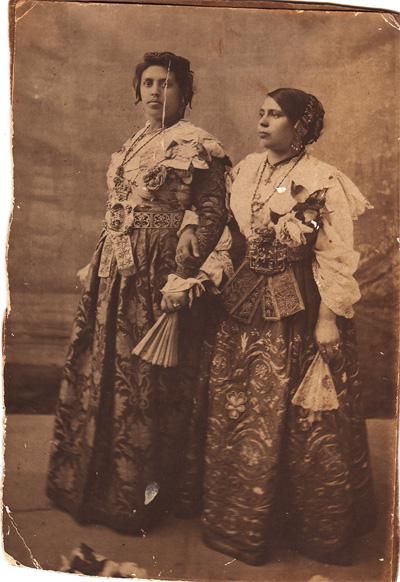
Arberesh women’s costumes are extraordinary. They’re some of the most elaborate traditional garments still worn in Europe. In Piana degli Albanesi, the bridal costume involves layers of gold-embroidered silk, intricate headdresses, and jewelry that can weigh several kilograms. These aren’t museum pieces. Women still wear them for Easter, weddings, and community festivals.



Cuisine: Albanian Roots, Italian Ingredients
Arberesh food is a fascinating hybrid. The base is Albanian mountain cuisine, but the ingredients and techniques have absorbed centuries of Italian influence. Some dishes you’ll only find in Arberesh communities:
- Dromsa (also called “groshë”) — handmade pasta granules steamed in broth, similar to couscous. This is the most distinctly Arberesh dish, with no real Italian equivalent.
- Strangujat — hand-rolled pasta similar to cavatelli, often served with a rich tomato and meat sauce.
- Kanojat — fried dough tubes filled with ricotta, chocolate, or almond paste, often served at festivals.
- Tumacë me tulë — a layered bread and pasta dish with anchovies, walnuts, and olive oil, typically prepared for Christmas Eve.
Which Famous People Have Arberesh Roots?
The Arberesh have produced an outsized number of influential figures relative to their small population. From a community of roughly 100,000 people have come prime ministers, political theorists, literary pioneers, and Hollywood actors. Some of these names will surprise you.
Francesco Crispi (1818-1901) — Prime Minister of Italy
Born in Ribera, Sicily, to an Arberesh family from the community of Palazzo Adriano. He spoke Albanian as his first language. Served as Prime Minister twice (1887-1891 and 1893-1896) and was one of the key figures in Italian unification alongside Garibaldi. Crispi never forgot his Albanian roots and publicly identified as Albanian-Italian throughout his career.
Antonio Gramsci (1891-1937) — Political Theorist and Founder of the Italian Communist Party
One of the most influential Marxist thinkers of the 20th century. His father, Francesco Gramsci, came from the Arberesh community of Plataci in Calabria. While Antonio grew up in Sardinia and identified primarily as Italian, the Albanian connection through his paternal line is well documented by historians.
“The old world is dying, and the new world struggles to be born: now is the time of monsters.” — Antonio Gramsci, whose father came from the Arberesh village of Plataci, Calabria.
Danny DeVito (1944-present) — Actor, Director, Producer
DeVito’s paternal grandparents emigrated from San Fele, a town in Basilicata with Arberesh roots. While San Fele itself is debated among scholars as to how “Arberesh” it remains today, DeVito has spoken publicly about his Italian-Albanian heritage. His surname, “DeVito,” is a common southern Italian form that appears frequently in Arberesh communities.
Anthony Albanese (1963-present) — 31st Prime Minister of Australia
His surname literally means “Albanian” in Italian. His father, Carlo Albanese, was from Barletta in Puglia, a region with historical Arberesh settlement. Whether the family’s Albanian ancestry is Arberesh-specific or simply reflected in the surname is a matter of genealogical debate, but the Albanian connection is undeniable.
Girolamo De Rada (1814-1903) — Father of Albanian Literature
Born in Macchia Albanese, Calabria, De Rada is considered the founder of Albanian literary tradition. His epic poem “Këngët e Milosaos” (The Songs of Milosao, 1836) was the first major work of Albanian Romantic literature. He spent his life advocating for Albanian national identity and language rights from his home in Italy. Without De Rada, the Albanian literary canon might look very different.
I find it fascinating that some of Albania’s most important cultural contributions came from people who never lived in Albania. De Rada wrote the foundational texts of Albanian literature from Calabria. Crispi governed Italy while identifying as Albanian. The Arberesh didn’t just preserve Albanian culture; in some ways, they created it.
Did you know?
The surname “Albanese” (meaning “Albanian” in Italian) is one of the 100 most common surnames in southern Italy, reflecting centuries of Albanian settlement. Australia’s Prime Minister Anthony Albanese carries this surname, connecting him etymologically to the Arberesh diaspora.
Can You Visit the Arberesh Villages?
Absolutely, and you should. According to Calabria’s official tourism board, the Arberesh villages of Calabria are now promoted as a dedicated cultural tourism route, drawing thousands of visitors annually to experience living Albanian heritage in Italy. The best time to visit is Easter week, especially Easter Tuesday for the vallje celebrations.
Here are the six villages I’d recommend, each offering something different.
Piana degli Albanesi (Hora e Arbëreshëvet) — Sicily
What to see: Byzantine Catholic Cathedral of San Demetrio Megalomartre, Arberesh Ethnographic Museum, elaborate Easter procession with traditional costumes, bilingual Albanian-Italian street signs.
Why it’s special: The most famous Arberesh settlement. Just 30 minutes from Palermo, it’s the easiest to reach. The Easter celebrations here are spectacular, with women wearing gold-embroidered costumes worth thousands of euros.
Best time: Easter Sunday through Easter Tuesday. The Wednesday market is also worth a visit year-round.
Civita (Çifti) — Calabria
What to see: The “case kodra” (talking houses) with their face-like facades, Raganello Gorge with Devil’s Bridge, Albanian Ethnographic Museum, the ancient gjitonia courtyard neighborhoods.
Why it’s special: Perched on a cliff above a dramatic canyon, Civita is the most photogenic Arberesh village. The Raganello Gorge offers hiking, canyoning, and breathtaking views.
Best time: Easter Tuesday for the Vallje dance. April through October for gorge hiking.
Lungro (Ungra) — Calabria
What to see: Cathedral of San Nicola di Mira (seat of the Arberesh Eparchy), Salt Museum (Lungro was a major salt-mining center), Byzantine liturgy on Sundays.
Why it’s special: The religious capital of the Arberesh. If you want to understand Byzantine Catholic tradition, attend a Sunday liturgy here. The chanting is hauntingly beautiful.
Best time: Any Sunday for liturgy. Holy Week for the most elaborate services.
San Demetrio Corone (Shën Mitri) — Calabria
What to see: Collegio di Sant’Adriano (founded 1794, the oldest Albanian college in Europe), Church of Sant’Adriano with original Norman-era frescoes, town library with Albanian manuscripts.
Why it’s special: The intellectual heart of the Arberesh. This is where De Rada and other Albanian literary pioneers studied and taught. The college played a crucial role in the Albanian national awakening.
Best time: September for the Feast of San Demetrio. The college is accessible year-round.
Frascineto (Frasnita) — Calabria
What to see: Arberesh Traditional Costumes Museum, Pollino National Park access (Frascineto sits at the edge of Italy’s largest national park), local artisan workshops.
Why it’s special: A smaller, quieter village that gives you the “real” Arberesh experience without the Easter tourist crowds. Local women still embroider traditional costumes by hand.
Best time: May through September for Pollino hiking. August for local festivals.
Barile (Barilli) — Basilicata
What to see: The “Sheshi” caves (former wine cellars carved into volcanic rock), Aglianico del Vulture wine (one of Italy’s finest reds, produced in the area since Albanian settlers brought vine-growing traditions), Holy Week “Via Crucis” reenactment.
Why it’s special: Wine lovers take note. The Arberesh of Barile helped develop the Aglianico del Vulture DOC wine region. The Holy Week procession here is one of the most dramatic in southern Italy.
Best time: Good Friday for the Via Crucis procession. September-October for wine harvest festivals.
Getting There
Most Arberesh villages are in rural, mountainous areas. A rental car is essential for Calabria and Basilicata. For Piana degli Albanesi in Sicily, you can take a bus from Palermo (AST bus, about 45 minutes). Cosenza is the best base for exploring Calabrian Arberesh villages, with most towns within 45-90 minutes by car.
There’s a film you should watch before going. “Arberia” (2021), directed by Francesca Ferrario, is the first feature film shot entirely in the Arberesh language. It follows a young Arberesh woman struggling between modern Italian life and her community’s traditions. It’s available on some streaming platforms and occasionally screens at Italian cultural events. As of 2021, Netflix Italy had it in their catalog, though availability varies by country.
What Challenges Do the Arberesh Face Today?
Despite 500 years of resilience, the Arberesh are facing threats that may prove harder to overcome than the Ottomans. Language loss is the most urgent crisis: UNESCO estimates only 70,000-100,000 Arberesh speakers remain (UNESCO Atlas of Languages in Danger, 2010), and that number has likely dropped since the assessment. In the smallest communities, Arberesh is spoken only by the elderly.
The main threats are depopulation, assimilation, and economic decline. These are interconnected, and they’re accelerating.
After World War II, Italy industrialized rapidly. Jobs were in Milan, Turin, Rome. Young Arberesh left their mountain villages for the cities. They married non-Arberesh Italians. Their children grew up speaking Italian. By the third generation, the Albanian language was often just a memory, something Grandma spoke at the dinner table.
Italy’s National Institute of Statistics (ISTAT) shows that many Arberesh municipalities have lost 30-50% of their population since 1960. Villages that once had 3,000-5,000 residents now have 1,000 or fewer. Some are approaching critical mass, where there aren’t enough young people to sustain schools, shops, or community life.
But here’s where it gets complicated. There is a revival happening. It’s small, but it’s real.
- Cultural festivals are growing. The Vallje celebrations in Civita now attract national media coverage and thousands of visitors.
- Academic programs at the University of Calabria offer courses in Arberesh language and culture.
- EU funding has supported language documentation projects and cultural preservation initiatives.
- The 2021 film “Arberia” brought unprecedented attention to the Arberesh story, generating Italian and international media coverage.
- Social media has connected Arberesh communities across Italy with each other and with Albania itself, creating a virtual community that geography once prevented.
Is it enough? Honestly, I’m not sure. Language death is notoriously difficult to reverse once it passes a tipping point. But the Arberesh have survived 500 years of pressure to assimilate. They’ve outlasted the Ottoman Empire, the Kingdom of Naples, Fascist Italy’s suppression of minority languages, and the mass emigration of the postwar era. Betting against them seems unwise.
There’s an ironic twist to this story. Since the 1990s, thousands of Albanians from Albania have migrated to Italy. Some have settled near or in Arberesh communities. Modern Albanians meeting medieval Albanians. The cultural exchange goes both ways: the newcomers bring modern Albanian language and connections to today’s Albania, while the Arberesh remind the newcomers of traditions that Albania itself forgot during 45 years of communist isolation. It’s not always smooth, but it’s a reunion 500 years in the making.
A 500-Year Mirror
I think about that woman from Calabria sometimes. She’s part of a community that left Albania before the Ottoman conquest was complete, before the centuries of Turkish rule that shaped modern Albanian identity, before communism erased so much of our traditional culture, before the chaotic transition to democracy in the 1990s.
The Arberesh preserved a version of Albania that we in Albania have largely lost. Their language is a living fossil. Their faith connects to a pre-Ottoman Christian Albania that most modern Albanians know only from history books. Their dances celebrate victories that we’ve turned into statues and street names but they still physically reenact, every Easter, in the streets of tiny Italian mountain villages.
Are they Albanian? Are they Italian? They’re both, obviously. And neither, in a way. They’re something unique, something that exists nowhere else on earth, a 500-year experiment in cultural survival that’s still running.
I’d like to visit Civita someday. Stand in a gjitonia courtyard. Watch the vallje. Eat dromsa. Hear that medieval Albanian dialect spoken in a place that looks nothing like Albania but sounds, in some deep way, like home.
If you ever find yourself in southern Italy, do yourself a favor. Skip one beach day. Drive into the mountains. Find an Arberesh village. Have a coffee. Listen. You’ll hear echoes of something very old and very alive.
Frequently Asked Questions
What does “Arberesh” mean?
Arberesh (also spelled Arbëreshë) is the name the Italo-Albanians use for themselves. It comes from “Arbër” or “Arbëri,” the medieval name for Albania and its people. Before the modern name “Shqipëria” became standard, Albanians called themselves Arbëresh. The Italo-Albanian communities preserved this older self-designation, while Albanians in the Balkans adopted the newer one.
How many Arberesh are there in Italy today?
Estimates vary. Between 80,000 and 100,000 people in Italy identify as Arberesh, though not all speak the language fluently. The UNESCO Atlas of Languages in Danger estimates 70,000-100,000 Arberesh speakers, making it one of Italy’s most significant linguistic minorities. They live across 44 communities in seven regions, with the largest concentration (27 towns) in Calabria.
Can tourists visit Arberesh villages?
Yes, and the villages welcome visitors. The most accessible is Piana degli Albanesi in Sicily, just 30 minutes from Palermo by bus or car. In Calabria, base yourself in Cosenza and explore Civita, Lungro, and San Demetrio Corone as day trips (45-90 minutes each). Easter week is the most spectacular time, but villages are accessible year-round. Bring a car for Calabria; public transport to mountain villages is limited.
Is Arberesh the same as Albanian?
Arberesh is a dialect of Albanian, specifically a medieval Tosk variety preserved from the 15th century. An Arberesh speaker and a modern Albanian speaker can generally understand each other with some effort. The main differences are vocabulary (Arberesh uses Italian loanwords where modern Albanian uses Turkish ones) and pronunciation. The grammar remains largely the same. Think of it like the difference between Shakespearean English and modern English: recognizably the same language, but with noticeable differences.
Is Danny DeVito Albanian?
Danny DeVito has Italian-Albanian heritage. His paternal grandparents came from San Fele in Basilicata, a town with historical Arberesh connections. While the town’s current Arberesh identity is debated among scholars, the Albanian roots of many San Fele families are documented. DeVito has acknowledged his Italian heritage publicly, though he doesn’t typically emphasize the Albanian connection specifically. His surname appears frequently across Arberesh and southern Italian communities.
What do you think?
Have you ever visited an Arberesh village in Italy? Or maybe you’re Arberesh yourself? I’d love to hear your story. What surprised you most about this community?
Subscribe to monthly updates
Get honest Albania travel tips, local guides, and new posts straight to your inbox. No spam, unsubscribe anytime.

Thank you for this post! My mother’s family hailed from Lungro and immigrated to the United States in the 1880’s and 1890’s. Sadly, their Arberesh culture was largely lost within two generations as they integrated to survive in American culture. I am so glad to read more about where they came from.