
Key Takeaways
- Albanian culture is built on besa — an ancient code of honor that governs everything from hospitality to business, making Albania one of the most welcoming countries you will ever visit.
- Family is the foundation of everything. Albanian social life revolves around tight-knit family bonds, shared meals, and multi-generational households that shape daily routines.
- Religious harmony is real, not just a slogan. Muslims, Orthodox Christians, and Catholics have coexisted peacefully for centuries — interfaith marriages and shared holidays are genuinely normal here.
- Coffee culture is a social institution. Albanians don’t drink coffee for caffeine — they drink it for the conversation, the connection, and the ritual of slowing down.
- Albania’s transformation since 1991 is staggering. From Europe’s most isolated communist state to a vibrant, rapidly modernizing democracy — understanding this context is essential to understanding the culture.
- Expect culture shock in the best way. Head nods mean “no,” everyone talks loudly, and time is a suggestion — but once you understand the logic behind it, Albania makes perfect sense.
Table of Contents
- What Makes Albanian Culture Unique
- Besa: The Code of Honor
- Albanian Hospitality
- Family and Social Life
- Albanian Traditions and Customs
- Albanian Weddings
- Albanian Food Culture
- Coffee Culture
- Albanian Holidays and Celebrations
- Religious Diversity
- The Albanian Language
- Music and Dance
- Albanian History at a Glance
- The Communist Period
- Modern Albania
- Culture Shock for Visitors
- Frequently Asked Questions
I remember sitting in a café in Tirana’s Blloku neighborhood back in 2005, watching an old man pour raki for a complete stranger who had just asked for directions. The stranger didn’t just get directions — he got a drink, a chair, and a 40-minute conversation about the man’s grandchildren. I had been living in Albania for about a year at that point, and I was still trying to figure this place out. Two decades later, I’m still figuring it out — but I’ve learned enough to know that what I witnessed in that café wasn’t unusual. It was just Albania being Albania.
This guide is everything I’ve learned about Albanian culture after 21 years of living here. Not from textbooks or tourist brochures, but from countless conversations over coffee, family dinners that stretched past midnight, weddings that lasted three days, and the slow, beautiful process of becoming part of a community that was never mine by birth but has become mine by choice.
Whether you’re planning your first visit, reconnecting with your Albanian roots, or just curious about a country that most people can’t find on a map — this is the guide I wish someone had given me when I first arrived.
What Makes Albanian Culture Unique
Albania sits at one of the most fascinating cultural crossroads in Europe. Geographically, it’s wedged between Greece, North Macedonia, Kosovo, and Montenegro, with Italy just a short boat ride across the Adriatic. Historically, it’s been shaped by the Illyrians, the Romans, the Byzantines, the Ottomans, and — most dramatically — one of the harshest communist regimes the world has ever seen.
What makes Albanian culture genuinely unique isn’t any single influence — it’s how Albanians absorbed all of these influences while stubbornly maintaining something that is entirely their own. The Albanian language, for example, is an isolate within the Indo-European family — it’s not Slavic, not Romance, not Germanic. It’s just Albanian. That linguistic independence mirrors a cultural independence that runs deep.
You’ll see Ottoman-era mosques standing next to Byzantine churches. You’ll eat Mediterranean food seasoned with Balkan spices and served with Italian-style espresso. You’ll meet people who follow ancient tribal honor codes while scrolling through TikTok on their phones. Albania is a place where the ancient and the modern, the Eastern and the Western, the sacred and the secular all coexist — sometimes awkwardly, sometimes beautifully, always authentically.
I’ve traveled through most of the Balkans, and I can tell you that Albania feels different from its neighbors in ways that are hard to articulate but impossible to miss once you’ve spent time here. There’s an intensity to the hospitality, a rawness to the emotional expression, and a resilience in the national character that you don’t find anywhere else. If you want to understand the broader context of how Albania got here, I’d recommend starting with my Albanian History for Beginners guide.
Besa: The Code of Honor
If you want to understand Albanian culture in a single word, that word is besa. It translates roughly as “keeping the faith” or “a pledge of honor,” but that doesn’t begin to capture what it means in practice. Besa is the foundational ethical code that has governed Albanian behavior for centuries — longer than any constitution, longer than any religion, longer than any political system.
At its core, besa means that your word is sacred. If an Albanian gives you their besa, they will follow through — period. It’s not a casual promise. It’s a moral contract that binds not just the individual but their entire family. Breaking besa is one of the most shameful things an Albanian can do.
The most powerful example of besa in action comes from World War II. Albania was the only country in Nazi-occupied Europe where the Jewish population actually increased during the war. Albanian families — Muslim and Christian alike — sheltered Jewish refugees at enormous personal risk, because besa demanded it. A guest under your roof is under your protection, and no force on earth can make you betray that trust.
Did you know?
Albania was the only European country that had more Jews after World War II than before it. Approximately 2,000 Jews were sheltered by Albanian families under the code of besa, and not a single Jewish refugee was turned over to the Nazis.
Today, besa shows up in daily life in ways you might not immediately notice. It’s why your Albanian neighbor will drop everything to help you if you’re in trouble. It’s why a handshake still means something here. It’s why hospitality isn’t just a nice gesture — it’s a moral obligation.
I’ve written a much deeper exploration of this concept in my full article on Albanian Besa and Hospitality Explained, which I’d highly recommend reading if you want to really understand the soul of this country.
Albanian Hospitality
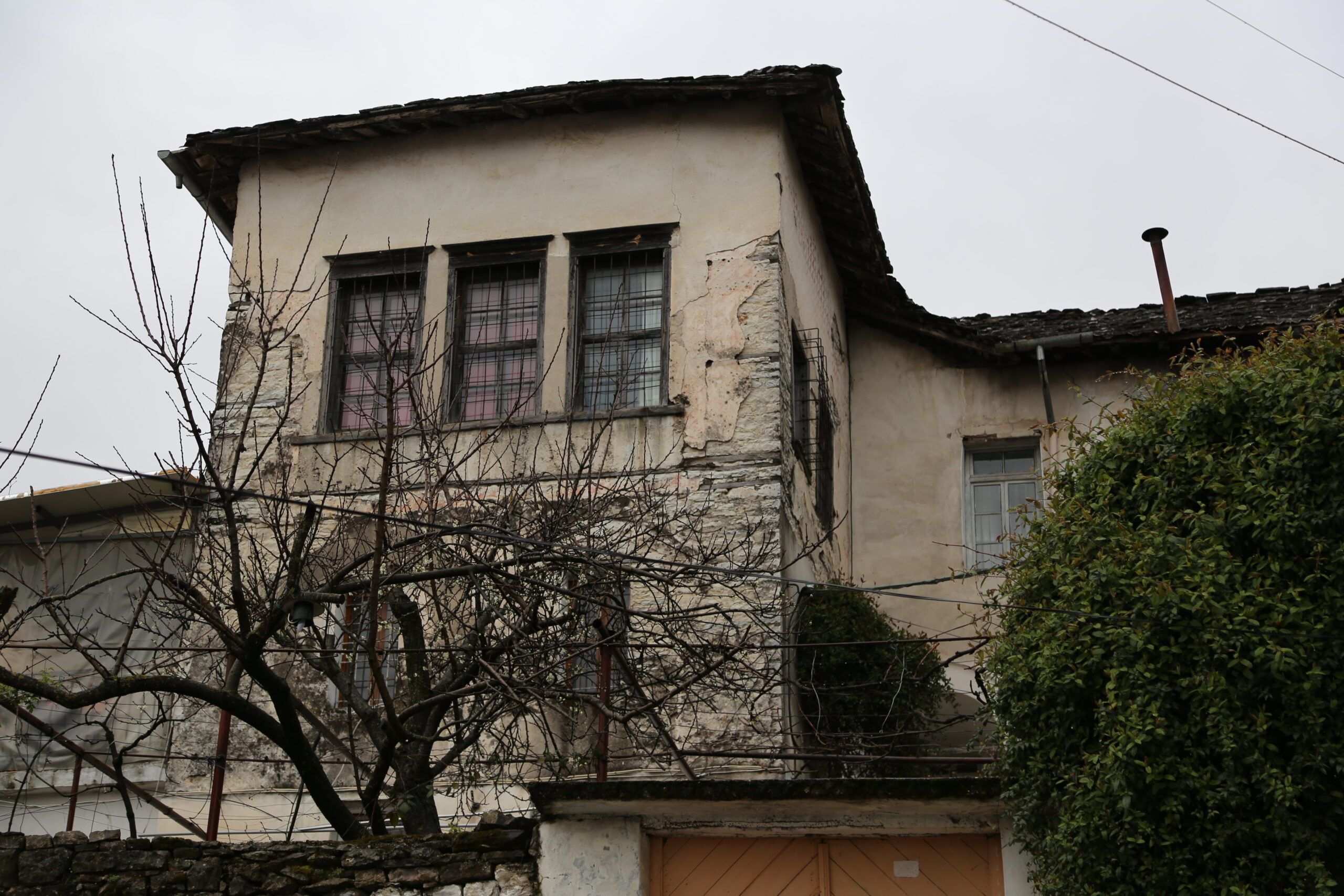
Albanian hospitality isn’t something you read about — it’s something that happens to you. From the moment you step off the plane (or cross the border), you’ll encounter a level of genuine warmth that can be disorienting if you’re coming from a culture where personal space and polite distance are the norm.
Here’s what it looks like in practice: You stop to ask someone for directions in Tirana. Instead of pointing vaguely down the street, they walk you there. When you arrive at a village guesthouse, the family has already prepared food for you — more food than you could possibly eat. If you admire something in someone’s home, there’s a real chance they’ll try to give it to you. I once complimented a painting on a friend’s wall and had to physically stop him from taking it down and handing it to me.
“In Albania, the guest is next to God. This isn’t just a saying — it’s a way of life that has survived empires, occupations, and even 45 years of state atheism. After two decades here, I still get moved by how seriously people take this.”
The phrase “Miku i shpisë është i dërguar i Zotit” (“The guest of the house is sent by God”) isn’t just a quaint proverb. It’s an operating principle. When an Albanian family invites you for dinner, expect to be fed until you can barely move, offered raki (homemade grape brandy), and questioned about your entire life story with genuine interest. Refusing food or drink can actually be slightly offensive — the trick is to accept graciously and pace yourself.
For a complete guide on what to expect as a visitor, check out my guide for tourists visiting Albania.
Family and Social Life
If besa is the soul of Albanian culture, family is the skeleton. Everything — and I mean everything — revolves around family. Career decisions, marriages, where you live, what you eat for Sunday lunch, how you spend your holidays — family is at the center of all of it.
Albanian families are close in ways that can surprise Westerners. It’s completely normal for adult children to live with their parents until they get married — and sometimes after. Multi-generational households where grandparents, parents, and grandchildren all share a home are still common, especially outside Tirana. This isn’t seen as a failure to launch; it’s the natural order of things.
The family structure is traditionally patriarchal, though this is changing rapidly in urban areas. The oldest male in the household — the kryefamiljari — traditionally holds decision-making authority. In rural Albania, you’ll still see this dynamic play out. In Tirana, you’re more likely to see young couples making their own choices, but always with heavy family input. Even the most independent young Albanians I know will tell you: “I don’t make major decisions without talking to my parents first.”
Sunday lunch is sacred. Families gather — sometimes the entire extended family — for a massive meal that can stretch for hours. If you’re invited to a Sunday family lunch, understand that you’re being given a significant honor. These aren’t casual affairs. They’re the weekly ritual that holds Albanian family life together.
Albanian social life is also deeply communal. The xhiro — the evening walk — is a tradition that goes back generations. Every evening, especially in smaller cities and towns, people get dressed up and walk the main boulevard. It’s part exercise, part socializing, part people-watching, and entirely Albanian. In Tirana, the stretch along Bulevardi Deshmoret e Kombit fills with families, couples, and groups of friends every evening around sunset.
Albanian Traditions and Customs
Albanian traditions reach back thousands of years, and many of them are still very much alive. Some have roots in the Kanun of Lekë Dukagjini, a medieval code of customary law that governed everything from property disputes to blood feuds. Others are pre-Christian and pre-Islamic traditions that have simply been absorbed into modern life.
A few traditions that still shape daily life:
Name days matter more than birthdays. In Albania, your name day (ditëlindja e emrit) — the feast day of the saint or figure your name comes from — is often celebrated with more enthusiasm than your actual birthday. Friends and family call to congratulate you, and it’s customary to treat your colleagues to coffee or sweets.
Engagement and wedding customs are elaborate. The process of getting married in Albania involves multiple steps: the families meet formally, gifts are exchanged, the engagement party itself can be as large as a wedding in other countries. Traditional Albanian weddings can last up to three days and involve the entire village or neighborhood.
Superstitions are alive and well. Many Albanians — even highly educated, urban professionals — believe in the evil eye (syri i keq) and take precautions against it. You’ll see blue eye amulets hanging in cars, homes, and businesses. If you compliment someone’s baby or new car, don’t be surprised if they say “mashalllah” or tap wood to ward off bad luck.
I’ve covered Albanian traditions in much greater depth in my article on Albanian Traditions and Customs Explained, and if you’re curious about one of the more interesting coming-of-age traditions, read my piece on Albanian circumcision traditions.
Albanian Weddings
If you ever get invited to an Albanian wedding, clear your schedule for at least two days. Albanian weddings are not events — they are experiences. They are loud, extravagant, emotional, exhausting, and absolutely unforgettable.
A traditional Albanian wedding unfolds over multiple days. The celebration typically begins with a nata e kanës (the bride’s night) held at the bride’s family home, followed by the wedding ceremony and reception, often held at large banquet halls that can seat hundreds — sometimes over a thousand — guests. Yes, you read that right. Guest lists of 300 to 500 are considered modest. Some weddings in rural areas invite the entire village.
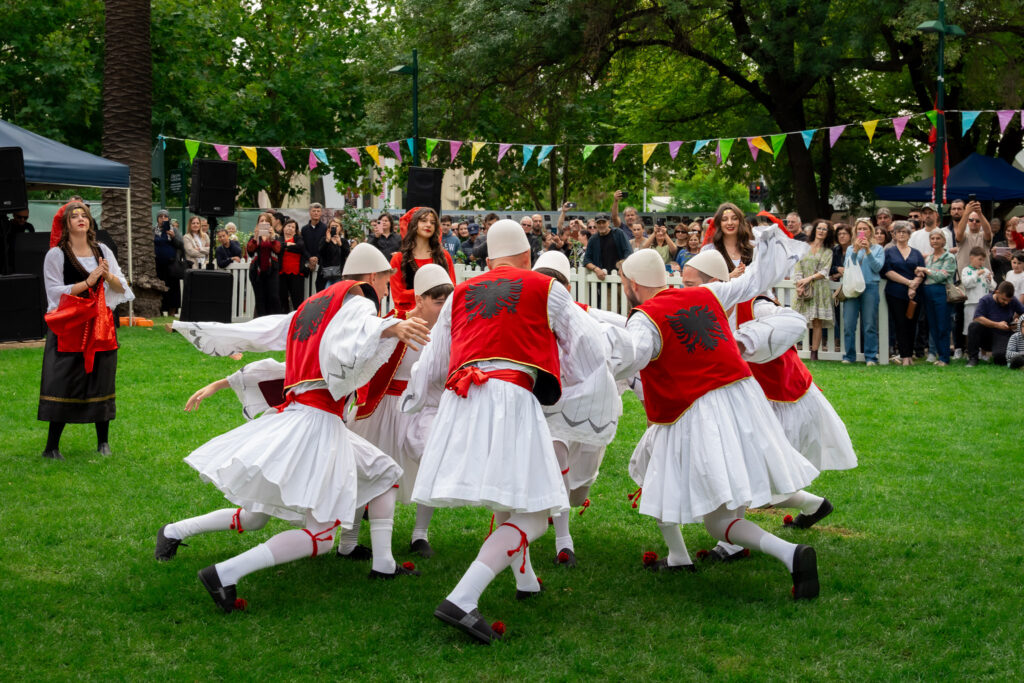
Music is the heartbeat of the Albanian wedding. Live bands playing a mix of traditional folk music and modern Albanian pop keep the dance floor packed from start to finish. The valle (traditional circle dance) is the centerpiece, and everyone participates — grandparents, children, and foreigners who have no idea what they’re doing but get pulled in anyway. I’ve been that foreigner more times than I can count, and I can tell you: just follow the person next to you and smile.
Gift-giving at Albanian weddings follows specific customs. Cash is the standard gift, typically placed in envelopes. The amount is expected to at least cover the cost of your plate at the reception — and ideally exceed it. It’s a system that actually helps the newlyweds start their life together with some financial cushion.
For the full deep dive into wedding customs — from the engagement rituals to the morning-after traditions — read my comprehensive Albanian Weddings Traditions Guide.
Albanian Food Culture
Albanian food is one of the great undiscovered cuisines of the Mediterranean. It draws from Turkish, Greek, and Italian traditions but has its own distinct identity that you won’t find anywhere else. And unlike many Mediterranean countries where traditional cooking has been commercialized beyond recognition, Albanian food is still deeply authentic — because most Albanians still cook the way their grandmothers taught them.
The foundation of Albanian cuisine is simple, high-quality ingredients. Albania’s agricultural tradition means that much of the produce, meat, and dairy is genuinely local and organic — not because of a health trend, but because that’s just how things are grown here. The tomatoes taste like tomatoes actually should. The feta cheese (djathë i bardhë) is handmade. The olive oil comes from trees that have been producing for centuries.
Some dishes you absolutely must try:
Byrek — Flaky phyllo pastry filled with spinach, cheese, meat, or pumpkin. Eaten for breakfast, lunch, or as a snack. Every bakery makes it, and every Albanian will argue that their mother’s is the best.
Tavë Kosi — Albania’s national dish: lamb baked in a yogurt-and-egg custard. Rich, tangy, and absolutely delicious. If you only eat one Albanian dish, make it this one.
Qofte — Grilled meatballs made with a blend of beef and lamb, seasoned with herbs and onions. A staple at every family barbecue and restaurant.
Flia — A labor-intensive layered crepe dish from northern Albania, baked over hot coals. Each layer is brushed with cream and cooked individually. It can take hours to prepare and is reserved for special occasions and honored guests.
Albanian meals are communal affairs. Dishes are placed in the center of the table and shared. Eating alone is considered unusual — meals are meant to be social events. And if you think you’re done eating, think again. Your host will refill your plate before you can protest.
For the full guide to Albanian cuisine — including street food, regional specialties, and restaurant recommendations — check out my Complete Guide to Albanian Food.
Coffee Culture
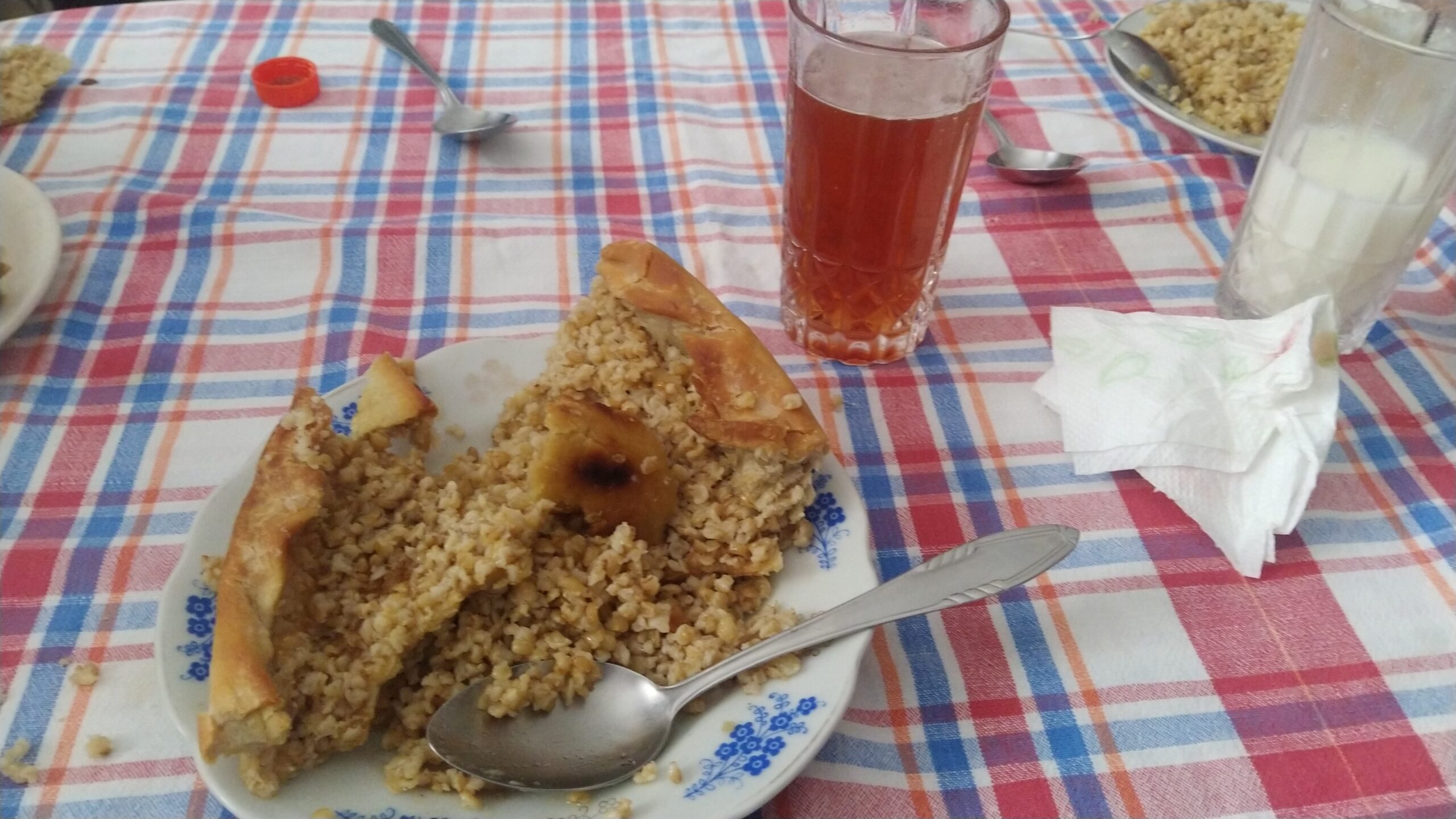
In Albania, coffee is not a beverage. It is a social institution. I cannot overstate this. Albanians don’t drink coffee for the caffeine — they drink it for the conversation, the connection, the ritual. A cup of coffee in Albania is an invitation to sit down, slow down, and be present with another human being.
The Albanian coffee ritual goes something like this: You call a friend (or they call you) and suggest “a marrë një kafe?” (“Shall we have a coffee?”). This is never about the coffee itself. It’s about spending time together. The coffee might take an hour. The conversation might take three. And nobody is in a hurry, because in Albania, relationships are more important than schedules.
Turkish-style coffee (kafe turke) was the standard for generations, but Italian-style espresso has taken over in urban areas. Tirana’s café scene is genuinely impressive — you can find excellent macchiatos and espressos for 80-150 lekë (about €0.70-1.30), which makes the café culture accessible to everyone. Walk through any neighborhood and you’ll see cafés packed at all hours — morning, afternoon, and late into the evening.
Did you know?
Albania has more cafés per capita than almost any country in Europe. In Tirana alone, there are estimated to be over 5,000 cafés and bars for a population of about 900,000. That’s roughly one café for every 180 people.
The café is where business deals are made, where couples fall in love, where political debates get heated, where old men play dominoes, and where teenagers pretend they’re not checking their phones. It’s the Albanian equivalent of the town square, the living room, and the office all rolled into one.
If you want to understand Albania, don’t visit a museum. Sit in a café for two hours and just watch. You’ll learn more about this culture from one afternoon of people-watching than from any guidebook. And if you’re curious about another institution that’s surprisingly central to Albanian life, read my article about lavazh (car washes) in Albania — it’s not what you think.
Albanian Holidays and Celebrations
Albanians love a good celebration, and the calendar gives them plenty of opportunities. The mix of secular, Muslim, and Christian holidays reflects the country’s religious diversity and its complicated history.
New Year’s Eve (Viti i Ri) is the biggest celebration of the year. If you think your country’s New Year’s is intense, you haven’t experienced the Albanian version. Fireworks start days before December 31st and continue well into January. Families gather for enormous meals. Everyone gets new clothes. Children receive gifts and money. The streets of Tirana feel electric. My comprehensive guide to Albanian New Year Traditions covers everything you need to know about this celebration.
Summer Day (Dita e Verës) on March 14th is one of Albania’s most unique holidays. It marks the end of winter and the coming of spring, and its roots go back to pagan times. The traditional food is ballokume, a rich butter-and-cornmeal cookie that you’ll find in every bakery in the weeks leading up to the holiday. Elbasan, a city about an hour from Tirana, is the epicenter of the celebration, with massive street festivals, bonfires, and traditional performances.
Independence Day (November 28th) and Liberation Day (November 29th) create a back-to-back national holiday that’s marked with flag-waving, patriotic music, and family gatherings. The Albanian flag — a black double-headed eagle on a red background — is everywhere.
Religious holidays are celebrated across faith lines in a way that surprises most visitors. Many Albanian Muslim families celebrate Christmas (at least the secular parts — tree, gifts, family dinner), and many Christian families join Bajram (Eid) celebrations. This cross-pollination of holiday traditions is one of the most charming aspects of Albanian culture.
Religious Diversity
Albania is one of the most religiously harmonious countries in Europe, and it’s not even close. The population is roughly 57% Muslim (mostly Sunni, with a significant Bektashi community), 10% Catholic, 7% Orthodox, and the rest either non-religious or unaffiliated. But those numbers only tell you part of the story.
What makes Albania remarkable isn’t the diversity itself — lots of countries have religious diversity. It’s the way Albanians live with that diversity. Interfaith marriages are common and unremarkable. A Muslim and a Catholic getting married doesn’t raise eyebrows — it’s just Tuesday. Families where the grandmother is Muslim, the mother is Orthodox, and the son married a Catholic are not unusual. I know several personally.
“There is a saying in Albania: ‘Feja e shqiptarit është shqiptarësia’ — the religion of the Albanian is Albanianism. After 21 years here, I believe this is genuinely true. National identity comes first, religion second. Always.”
Part of this religious tolerance stems from practical history. Under Ottoman rule, conversion to Islam brought economic and social advantages, but Albanian identity always superseded religious identity. The Rilindja (National Renaissance) movement of the 19th century explicitly promoted national unity over religious divisions. And then, of course, the communist regime banned religion entirely from 1967 to 1991, which had the paradoxical effect of further weakening religious divisions while strengthening national identity.
Today, most Albanians I know would describe themselves as culturally Muslim or culturally Christian rather than devout practitioners. Ramadan is observed by some families, but you won’t see the country shut down for it. Christmas and Easter are celebrated as cultural events by many families regardless of faith. The Bektashi community — a liberal Sufi order that has its world headquarters in Tirana — represents a uniquely Albanian approach to Islam that is remarkably open and tolerant.
In September 2023, Albania became the first country to announce plans for an independent Bektashi sovereign state within Tirana — a Vatican-style enclave for this unique Islamic order. Whether or not this materializes, the fact that it was even proposed tells you something about Albania’s relationship with religion.
The Albanian Language
Albanian (shqip) is one of the oldest and most unique languages in Europe. It’s a separate branch of the Indo-European language family — meaning it’s not related to any neighboring language. It’s not Slavic (like Serbian or Macedonian), not Romance (like Italian), and not Greek. It descends from ancient Illyrian through a path that linguists are still debating, but the result is a language that is genuinely one of a kind.
Albanian has two main dialects: Gheg (spoken in the north) and Tosk (spoken in the south). Standard Albanian is based on Tosk, which was the dialect spoken in southern Albania where the communist leadership originated. The differences between the two are significant — comparable to the difference between Portuguese and Spanish — but speakers of both can generally understand each other.
For visitors, here are a few essential phrases that will earn you enormous goodwill:
| English | Albanian | Pronunciation |
|---|---|---|
| Hello | Përshëndetje | Per-shen-DET-yeh |
| Thank you | Faleminderit | Fah-leh-min-DER-it |
| Please | Ju lutem | You LOO-tem |
| Yes / No | Po / Jo | Poh / Yoh |
| How are you? | Si jeni? | See YEH-nee |
| Cheers! | Gëzuar! | Geh-ZHOO-ar |
| I love Albania | E dua Shqipërinë | Eh DOO-ah Shchi-peh-REE-neh |
Learning even a handful of Albanian phrases will transform your interactions here. Albanians are incredibly appreciative when foreigners make the effort, partly because so few do. My taxi driver once gave me a free ride after I managed to say “Faleminderit” with halfway decent pronunciation.
Music and Dance
Albanian music is as diverse and layered as the culture itself. From the haunting polyphonic singing of the south to the driving rhythms of northern folk music to the absolutely thumping modern pop scene, there’s a musical tradition here that deserves far more international attention than it gets.
The crown jewel of Albanian musical heritage is iso-polyphony — a form of multi-voice folk singing that UNESCO recognized as a Masterpiece of the Intangible Cultural Heritage of Humanity in 2005. Originating in southern Albania (particularly the Labëria region), iso-polyphony features a lead singer carrying the melody while other voices weave around it with a continuous drone (the iso). The sound is otherworldly — ancient and deeply emotional. If you get the chance to hear it live, do not miss it.
Did you know?
Albanian iso-polyphony was among the very first cultural traditions recognized by UNESCO’s Intangible Cultural Heritage program in 2005. The singing style dates back centuries and is believed to have pre-Christian origins.
Traditional Albanian folk music varies dramatically by region. Northern music tends to be more rhythmic and martial, featuring the çiftëli (a two-stringed instrument), the lahuta (a one-stringed bowed instrument used by northern Albanian bards), and the def (frame drum). Southern music is more melodic, with a greater emphasis on vocal harmony.
Albanian dance is participatory, not performative. The valle — a circle or line dance — is the cornerstone of Albanian dance culture. At weddings, festivals, and family celebrations, everyone gets up to dance the valle. Each region has its own variation: the valle of Labëria is slow and stately, while the valle of Tirana and central Albania is faster and more energetic. You don’t need to know the steps. Just grab the hand of the person next to you and follow along.
Modern Albanian music has also made waves internationally. Artists like Dua Lipa (whose parents are Kosovar Albanian), Bebe Rexha, Ava Max, and Rita Ora all have Albanian heritage. Within Albania, the music scene is vibrant and diverse, spanning everything from folk-pop fusion to hip-hop to electronic music.
Albanian History at a Glance
You cannot understand Albanian culture without at least a basic understanding of Albanian history. This is a country that has been invaded, occupied, partitioned, and isolated more than almost any other in Europe — and yet it has survived with its identity intact. That survival is, itself, the defining story of Albanian culture.
Here’s the condensed version:
Illyrian Period (1000 BC – 2nd century AD): The ancestors of modern Albanians, the Illyrians, inhabited the western Balkans. Their culture, language, and territorial presence form the bedrock of Albanian national identity.
Roman & Byzantine Rule (2nd century BC – 15th century): Albania was part of the Roman and later Byzantine empires. Christianity arrived early, and the region became a crossroads between Eastern and Western Christendom.
Skanderbeg’s Resistance (1443–1468): Gjergj Kastrioti Skanderbeg, Albania’s national hero, led a 25-year resistance against the Ottoman Empire. He is the most revered figure in Albanian history, and his double-headed eagle became the symbol of the nation.
Ottoman Period (1479–1912): Over four centuries of Ottoman rule profoundly shaped Albanian culture, religion, cuisine, and language. Many Albanians converted to Islam, while others maintained their Christian faith.
Independence (1912): Albania declared independence on November 28, 1912, after the Balkan Wars. Ismail Qemali raised the Albanian flag in Vlorë.
Communist Era (1944–1991): Under Enver Hoxha, Albania became the most isolated country in Europe. Religion was banned, borders were sealed, and hundreds of thousands of bunkers were built.
Post-Communist Era (1991–present): Democratic transition, economic upheaval, mass emigration, and rapid modernization have defined the last three decades.
For a much deeper exploration of this history, read my Albanian History for Beginners guide.
The Communist Period
No conversation about Albanian culture is complete without addressing the elephant — or rather, the bunker — in the room. From 1944 to 1991, Albania was ruled by Enver Hoxha’s communist regime, which was, by any objective measure, one of the most repressive in the world.
Under Hoxha, Albania allied first with Yugoslavia, then the Soviet Union, then China, and finally nobody at all. By the 1970s, Albania had cut ties with every major power and declared itself the world’s only true Marxist-Leninist state. The borders were sealed. Foreign travel was forbidden. Religion was officially banned in 1967 — Albania became the world’s first (and only) constitutionally atheist state. Churches and mosques were converted into warehouses, sports halls, and stables.
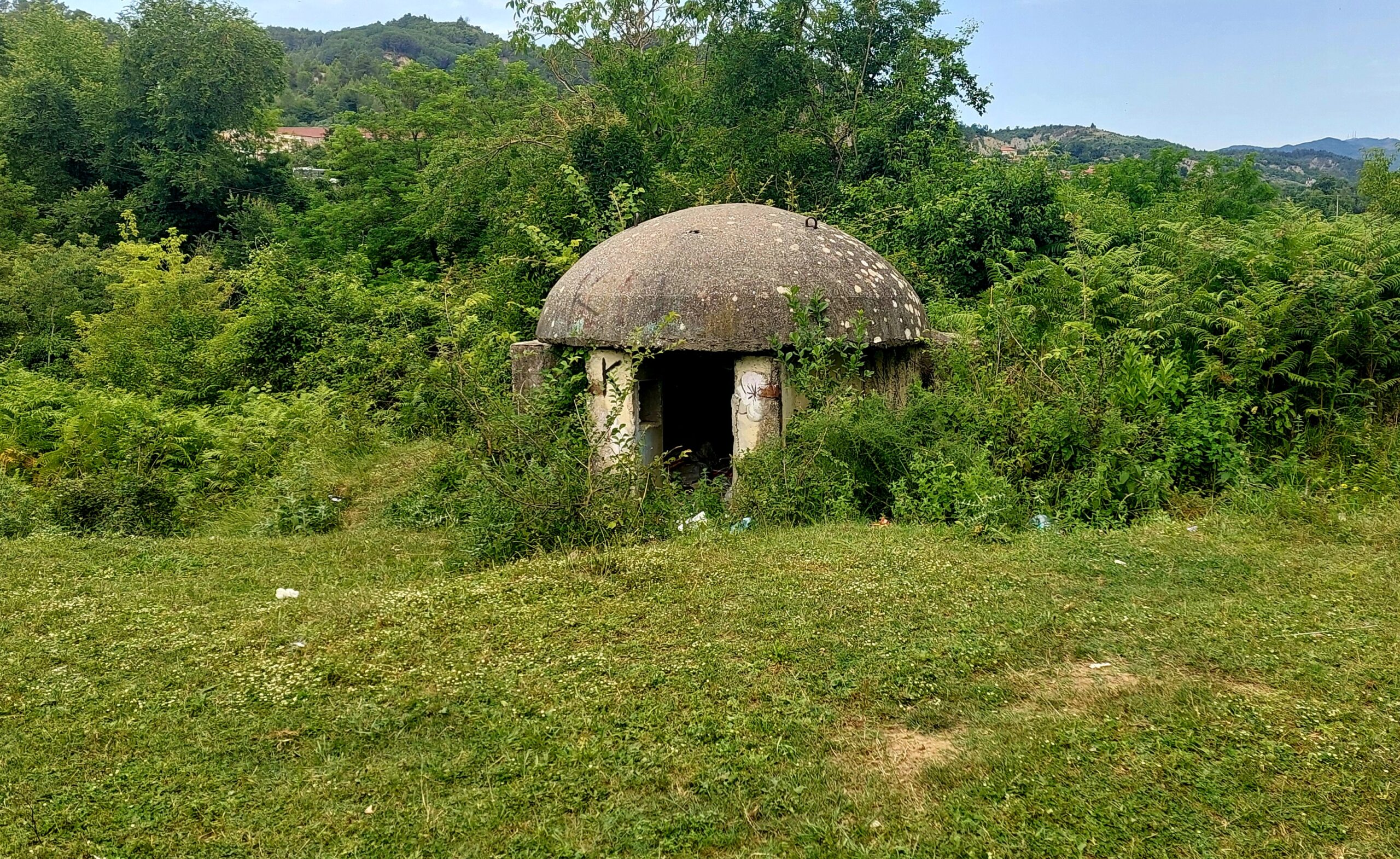
The regime built an estimated 173,000 concrete bunkers across the country — an average of 5.7 bunkers per square kilometer. These mushroom-shaped structures dot the landscape everywhere: on beaches, in fields, on mountaintops, in people’s backyards. They were meant to defend against an invasion that never came, and today they stand as the most visible physical reminder of a period that shaped an entire generation.
The cultural impact of communism on Albania cannot be overstated. It disrupted family structures, destroyed religious traditions, eliminated private property, and created a culture of surveillance and distrust. But it also, paradoxically, created a deep hunger for freedom, connection, and self-expression that defines modern Albanian culture.
I’ve written extensively about what daily life was actually like during this period, how Albanians experienced it, and what traces remain today in my article Communist Albania: A Local’s Perspective.
Modern Albania
The Albania of 2026 would be unrecognizable to someone who last visited in the 1990s. The transformation since the fall of communism in 1991 has been nothing short of extraordinary — messy, chaotic, sometimes painful, but extraordinary.
The 1990s were brutal. The transition from a completely state-controlled economy to a free market happened almost overnight. In 1997, a series of pyramid schemes collapsed, wiping out the savings of roughly two-thirds of the population. The country descended into anarchy. Weapons were looted from army depots. People lost everything. It’s a period that still shapes Albanian attitudes toward institutions, banks, and trust.
But Albanians rebuilt. Through a combination of remittances from the diaspora (millions of Albanians emigrated in the 1990s and 2000s), foreign investment, and sheer determination, the country clawed its way back. Tirana went from a grey, crumbling city with almost no cars to a colorful, buzzing European capital with cafés, boutiques, tech startups, and an increasingly vibrant nightlife scene.
Today, Albania is an EU candidate country (formal negotiations began in 2022), a NATO member since 2009, and one of the fastest-growing tourism destinations in Europe. The Albanian Riviera — the stretch of coastline along the Ionian Sea — has been discovered by international travelers, and places like Saranda, Ksamil, Himara, and Dhermi are seeing a tourism boom that is both exciting and, at times, concerning for those of us who worry about overdevelopment.
Young Albanians today are globally connected, often multilingual (many speak English, Italian, and sometimes Greek or German), and ambitious in ways that reflect both European aspirations and Albanian resilience. There’s an energy here — a sense that anything is possible — that you don’t find in countries where things have always been comfortable. If you want to explore Tirana through a local’s eyes, check out my interactive map of Tirana with over 300 curated places.
Culture Shock for Visitors
Every visitor to Albania experiences some degree of culture shock, and honestly, that’s part of the fun. Here are the things that surprise people the most, based on 21 years of watching friends, colleagues, and readers navigate their first Albanian experience:
- The head nod means “no” and the head shake means “yes.” This one trips up everyone. Albanians nod their head (tilt upward) to say no and shake their head side to side to say yes. It’s the exact opposite of most of the world. You will mess this up repeatedly. Albanians find it hilarious.
- Everyone talks loudly. Albanians are expressive, animated communicators. A normal conversation between friends can sound like an argument to outsiders. If you hear two Albanians seemingly shouting at each other in a café, they’re probably just discussing what to have for lunch.
- Time is a suggestion, not a rule. If an Albanian says “I’ll be there in 10 minutes,” mentally add 20-30 minutes. Being late is not considered rude — it’s just how things work. The exception is business meetings, which are generally on time (mostly).
- Personal space is smaller. Albanians stand closer when talking, touch more during conversation, and kiss on both cheeks when greeting friends and even acquaintances. Men greet other men with a handshake and often a hug. Women kiss on both cheeks. If someone puts their hand on your shoulder during a conversation, they’re being friendly, not aggressive.
- Saying “no” to food is almost impossible. When an Albanian family offers you food, the word “no” will be treated as “maybe” at best. They will insist. They will pile more on your plate. Your only defense is to eat slowly and claim you are physically incapable of consuming another bite — and even then, they might bring dessert.
- Driving is an adventure. Albanian driving culture can be … intense. Lane markings are treated as decorations. Overtaking happens on blind curves. Roundabout rules are theoretical. If you’re renting a car, drive defensively and expect the unexpected.
- Staring is not rude. Albanians may stare at foreigners out of curiosity, especially in smaller towns. It’s not hostility — it’s genuine interest. Smile and wave, and you’ll likely end up in a conversation (and possibly invited for coffee).
For more on what to expect as a first-time visitor, read my complete guide for tourists visiting Albania.
Frequently Asked Questions About Albanian Culture
What is Albanian culture known for?
Albanian culture is known for its extraordinary hospitality rooted in the ancient code of besa, its religious harmony between Muslims and Christians, its vibrant food traditions, its passionate coffee culture, and its resilience after decades of communist isolation. The UNESCO-recognized tradition of iso-polyphonic singing and the elaborate multi-day wedding celebrations are among its most distinctive cultural expressions.
Is Albania a Muslim or Christian country?
Albania is both — and neither, in a sense. The population is approximately 57% Muslim and 17% Christian (split between Catholic and Orthodox), but religion plays a far less central role in daily life than in most countries. Interfaith marriages are common, families often include members of different faiths, and national identity consistently takes priority over religious identity. Albanians famously say, “The religion of the Albanian is Albanianism.”
What does besa mean in Albanian culture?
Besa is an Albanian code of honor that means “keeping the faith” or “a pledge of honor.” It obligates Albanians to keep their promises, protect guests, and uphold their word regardless of personal cost. Besa was the driving force behind Albanian families sheltering Jewish refugees during World War II. Today, it continues to shape hospitality, business dealings, and social relationships throughout Albania. Read our full guide to besa for more.
What should I know before visiting Albania?
The most important things to know: head nodding means “no” (and shaking means “yes”), hospitality is intense and genuine, coffee culture is a way of life, the food is outstanding Mediterranean cuisine, English is widely spoken in cities, the currency is the lek (but euros are widely accepted), and Albanians are among the friendliest people you will ever meet. Read our complete tourist guide for detailed preparation advice.
What is a traditional Albanian wedding like?
Traditional Albanian weddings are multi-day celebrations that can include hundreds (sometimes over a thousand) guests. They feature elaborate rituals, live music with traditional circle dancing (valle), enormous feasts, and specific gift-giving customs. The celebrations often begin with a bride’s night (nata e kanës) and continue through the ceremony and reception. Cash gifts are customary and are expected to cover at least the cost of your plate. Read our full wedding traditions guide.
What is Albanian food like?
Albanian cuisine is Mediterranean with Turkish and Balkan influences. Key dishes include byrek (flaky phyllo pastry), tavë kosi (lamb in yogurt custard — the national dish), qofte (grilled meatballs), and flia (a layered crepe dish from the north). Meals are communal and generous, with fresh, locally sourced ingredients. Coffee culture is central to dining, and homemade raki (grape brandy) accompanies most meals. See our complete guide to Albanian food.
Is Albanian a difficult language to learn?
Albanian is considered one of the more challenging European languages for English speakers because it belongs to its own unique branch of the Indo-European family — it’s not related to any neighboring language. However, pronunciation is phonetic (words are spelled as they sound), and learning even a few basic phrases like “faleminderit” (thank you) and “përshëndetje” (hello) will earn you enormous appreciation from locals.
Understanding Albania Through Its Culture
I started writing this guide thinking I could capture Albanian culture in a single article. Twenty-one years of living here, and I’m still learning. Every conversation over coffee reveals a new layer. Every wedding I attend shows me a tradition I hadn’t encountered before. Every family dinner reminds me why people here have survived everything history has thrown at them.
Albanian culture isn’t something you can fully understand from reading an article — even a long one written by someone who has lived it for two decades. It’s something you have to experience. You have to sit in the café and feel time slow down. You have to be overwhelmed by a grandmother’s insistence that you eat just one more plate. You have to hear iso-polyphony echo through a mountain valley. You have to walk the xhiro on a warm evening and realize that sometimes the best thing you can do with your time is simply be present with the people around you.
What I can tell you, after all these years, is this: Albania is not what you expect. It’s better. It’s more complex. It’s more beautiful. And it’s more human than almost any place I’ve been.
If you’re ready to experience it for yourself, start with the guides I’ve linked throughout this article. Explore the interactive map of Tirana. Read about besa and Albanian traditions. Dive into the food and the history. And when you finally get here — find a café, order a macchiato, and let Albania introduce itself.
It won’t take long. The person at the next table will probably start talking to you first.
Explore more of Albanian culture:
Besa & Hospitality •
Traditions & Customs •
Weddings •
Food Guide •
New Year •
History •
Communist Era •
Interactive Map
Albanian Heritage & Diaspora
- 12 Famous People You Didn’t Know Were Albanian — From Danny DeVito to a Nobel Prize winner
- The Arberesh: 500-Year-Old Albanian Communities in Italy — 44 villages, medieval dialect, Byzantine faith
- The Albanian Plis: History and the Fight for UNESCO — The iconic white cap and its 12-year campaign
Continue Exploring Albania