
Key Takeaways
- Tirana is compact enough to walk most attractions, but the Dajti Express cable car and Grand Park need a half-day each.
- Budget roughly €30-€50 per day for museums, food, coffee, and transport. Most museum entries cost €2-€5.
- The best time to visit is April-June and September-October. July and August hit 35-40°C regularly.
- Don’t skip the xhiro (evening walk). It’s how Tirana’s 900,000 residents socialize, and it tells you more about Albanian culture than any museum.
- According to Euromonitor’s Top 100 City Destinations 2024, Tirana saw 21% visitor growth, making it one of Europe’s fastest-growing destinations.
I was sitting at a cafe on Rruga Myslym Shyri last Thursday, watching a tourist couple stand at the intersection with that look I’ve seen a thousand times. The look that says: we’ve done Skanderbeg Square, now what? They had guidebooks, Google Maps, the whole setup. But the best things about Tirana aren’t the ones you find on a map. They’re the conversations with the barista who studied philosophy in Florence, the raki your waiter pours “on the house” because you tried to say faleminderit (thank you), and the sunset from a rooftop bar where the Adriatic glimmers on the horizon and Mount Dajti turns gold behind you.
I’ve lived in Tirana for over 40 years. I started blogging about Albanian life back in 2004 (yes, that long ago), and in two decades I’ve watched this city transform from a grey, post-communist capital with exactly three traffic lights into one of Europe’s most surprising urban destinations. But here’s the thing: most “things to do in Tirana” guides are written by people who spent 48 hours here. This one is written by someone who buys his vegetables at Pazari i Ri every Saturday morning.
So here are 25 things I genuinely recommend doing in Tirana, organized the way I’d explain them to a friend over coffee. Some are famous. Some are not. All of them are honest.
Table of Contents
- Cultural & Historical Tirana
- 1. Skanderbeg Square
- 2. Bunk’Art 1
- 3. Bunk’Art 2
- 4. National History Museum
- 5. Et’hem Bey Mosque
- 6. Clock Tower
- 7. House of Leaves
- 8. The Pyramid of Tirana
- Neighborhoods & Markets
- 9. Blloku District
- 10. Pazari i Ri (New Bazaar)
- 11. Komuna e Parisit
- Outdoor & Nature
- 12. Dajti Express Cable Car
- 13. Grand Park & Artificial Lake
- 14. Hiking Mount Dajti
- Food & Drink
- 15. Street Food Tour
- 16. Raki Tasting
- 17. Traditional Albanian Restaurants
- Art & Architecture
- 18. Street Art & Murals
- 19. Painted Buildings of the Edi Rama Era
- 20. National Art Gallery
- Nightlife & Social Life
- 21. Bar Hopping in Blloku
- 22. The Xhiro (Evening Walk)
- 23. Live Music & Cultural Venues
- Day Trip Teasers
- 24. Kruja (1 hour)
- 25. Durres (40 minutes)
- Frequently Asked Questions
Short on time in Tirana?
Esther, our tour partner, organises a 3–4-hour Tirana walk and small-group day trips from the city, in English or German, with certified local guides on site.
See Esther’s tours →Esther is our tour partner; we receive a small share of the tour price.
What Are the Best Cultural & Historical Things to Do in Tirana?
Short on time? Esther, our tour partner, organises a 3–4-hour Tirana walk and small-group day trips from the city, in English or German, with certified local guides on site.
See Esther’s tours → (Esther is our tour partner; we receive a small share of the tour price.)Tirana’s cultural attractions pack a surprising amount of depth into a compact city center. According to INSTAT (Albania’s statistics agency), Tirana welcomed over 1.1 million international visitors in 2024, a 19% increase from the previous year. Most of the historical sites below sit within a 15-minute walk of each other, which makes Tirana one of the most walkable capitals in the Balkans.
I’ve watched every single one of these buildings and museums evolve over four decades, from communist-era ruins to world-class cultural spaces. That transformation is the real story of Tirana.
1. Skanderbeg Square
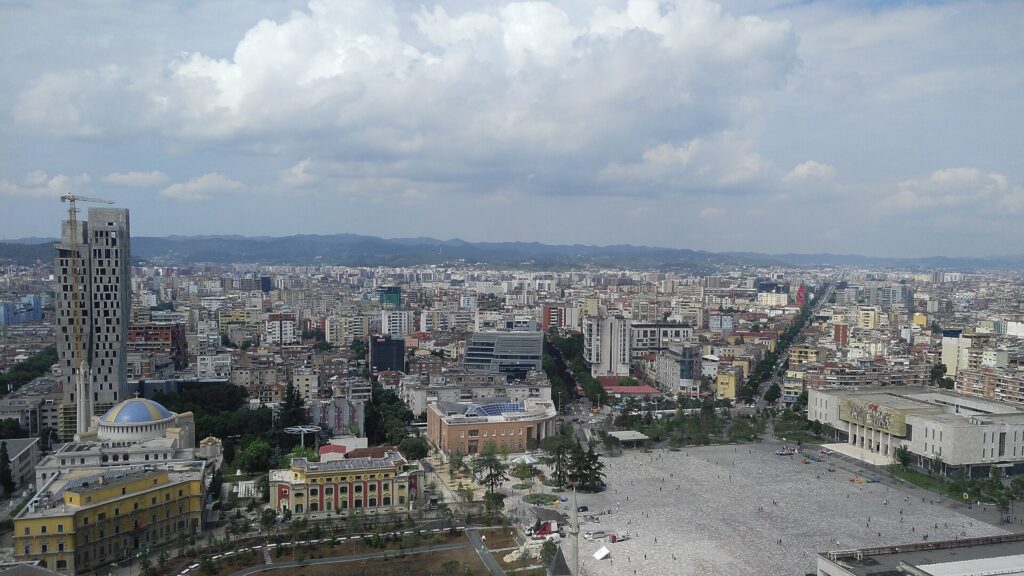
This is where everything starts. The redesigned Skanderbeg Square (completed in 2017) is one of Europe’s largest pedestrian plazas at 40,000 square meters. Named after Albania’s national hero, Gjergj Kastrioti Skanderbeg, it’s surrounded by the National History Museum, Et’hem Bey Mosque, the Opera House, and the Clock Tower. The 11-meter bronze statue of Skanderbeg on horseback anchors the center.
What makes it special isn’t the architecture, though. It’s the atmosphere. Every evening, the square fills with families, teenagers on bikes, couples strolling, old men arguing over kafe turke (Turkish coffee). During summer weekends, there are concerts, pop-up markets, and food festivals. In winter, there’s an ice rink that my niece insists we visit at least three times per season.
Practical tip: Free to visit anytime. Best at sunset when the marble tiles catch golden light. The fountains are lit at night and the square transforms into something almost theatrical.
2. Bunk’Art 1
This is the most powerful museum experience in Tirana, and it’s inside a massive Cold War bunker on the outskirts of the city. Built in the 1970s under Enver Hoxha’s orders, this five-story underground complex was designed to protect Albania’s political and military elite during a nuclear attack. Today it’s a museum documenting Albania’s communist period from 1944 to 1991 through photographs, documents, original furnishings, and art installations.
I’ll be honest: Bunk’Art 1 is emotionally heavy. The rooms documenting political persecution, the recreation of interrogation chambers, the letters from prisoners who never came home. My parents lived through that era. When I walk through Bunk’Art, I’m not just looking at exhibits. I’m looking at what my family survived.
Practical tip: Entry is 500 ALL (about €4). It’s a 15-minute taxi ride from the center, near the Dajti Express cable car station. Plan at least 90 minutes. Photography is allowed. Bring a jacket since underground rooms stay cool even in summer.
3. Bunk’Art 2
Smaller and more central than its sibling, Bunk’Art 2 focuses specifically on the Sigurimi, Albania’s secret police. Located right behind the Ministry of Interior on Rruga Abdi Toptani, this bunker-turned-museum documents surveillance, political imprisonment, and the mechanisms of state terror. The tunnels connecting the rooms have been preserved with their original concrete walls, creating a claustrophobic atmosphere that’s intentional.
The exhibit on wiretapping and informant networks is chilling. At the height of communist rule, one in every three Albanians was reported to be an informant. Whether that number is exact doesn’t matter. The paranoia was real. And Bunk’Art 2 makes you feel it.
Practical tip: Entry is 500 ALL (€4). Open daily except Mondays, 9:00-19:00 (summer hours). It’s a 5-minute walk from Skanderbeg Square. Allow 45-60 minutes.
4. National History Museum
You can’t miss it, literally. The enormous Socialist Realist mosaic on the facade, called “The Albanians,” depicts warriors, workers, partisans, and students marching forward in triumph. Love it or find it unsettling, it’s the most photographed building in Tirana.
Inside, the museum covers Albanian history from the Illyrians (3000 BC) to the post-communist transition. The ancient artifacts and medieval sections are genuinely impressive. The communist-era exhibits are sobering. The display on the Hoxha regime’s destruction of religious buildings is something every visitor should see.
Practical tip: Entry is 700 ALL (about €6). Budget 1.5-2 hours. The gift shop sells decent reproductions of Illyrian jewelry.
5. Et’hem Bey Mosque
This 18th-century Ottoman mosque on the edge of Skanderbeg Square is one of Tirana’s oldest buildings and a symbol of religious freedom in Albania. Built between 1789 and 1823, it was shut down during Hoxha’s atheist campaign (Albania declared itself the world’s first atheist state in 1967). When it reopened for prayers on January 18, 1991, over 10,000 people gathered outside. That day is widely considered the beginning of Albania’s democratic transition.
The interior frescoes are unusually ornate for a mosque, featuring painted trees, waterfalls, and landscapes. Non-Muslims are welcome to visit outside of prayer times.
Practical tip: Free entry. Remove shoes, dress modestly. The best time to visit is mid-morning on weekdays when it’s quietest. It’s right next to the Clock Tower, so visit both together.
6. Clock Tower (Kulla e Sahatit)
Climb the narrow spiral staircase for the best panoramic view of central Tirana. Built in 1822, this 35-meter Ottoman clock tower has been keeping (approximate) time for over 200 years. The climb is tight and steep, and the wooden stairs creak in a way that’s either charming or alarming depending on your perspective.
Practical tip: Entry is 200 ALL (about €1.60). Open 9:00-13:00 and 16:00-20:00. The top platform is tiny, so go early to avoid queuing with other visitors on the narrow stairway.
7. House of Leaves (Shtëpia e Gjetheve)
If Bunk’Art shows you the bunkers, the House of Leaves shows you the surveillance. This former Sigurimi wiretapping center is now a museum dedicated to surveillance and espionage during communist Albania. The name comes from the ivy that once covered the building, though locals also connect it to the leaves of paper on which reports were written.
The museum is thoughtfully designed with original wiretapping equipment, listening devices, and personal stories of those who were watched. It’s smaller than Bunk’Art but more intimate, and the building itself carries the weight of its history.
Practical tip: Entry is 700 ALL (€6). Closed Mondays. Allow 60-90 minutes. The audio guide is worth getting.
8. The Pyramid of Tirana
No building in Tirana has had a more dramatic life story. Originally built in 1988 as the Enver Hoxha Museum (designed by his daughter and son-in-law, no less), this concrete pyramid served as a NATO headquarters during the Kosovo War, then became an abandoned ruin where teenagers skateboarded and couples spray-painted love declarations.
The MVRDV-designed renovation, completed in 2023, transformed it into a technology and cultural center called the TUMO Center. You can now climb the exterior staircases to the top for a 360-degree view of the city. It’s free, it’s brilliant, and on warm evenings the steps are filled with people watching the sunset.
Practical tip: Climbing the exterior is free, 24/7. The TUMO Center inside offers free workshops in technology and creative arts for young people (registration required). The best photos come from the southeast corner at golden hour.
I wrote a full guide to the Pyramid’s wild history if you want the deep story.
Which Tirana Neighborhoods Should You Explore?
Planning a Trip to Tirana?
Get my free Tirana in 48 Hours checklist with day-by-day itinerary, prices, and local tips.
Get the Free Checklist →Tirana’s neighborhoods tell the city’s story better than any museum. According to the World Bank’s 2024 Albania Economic Update, Tirana’s population has grown by over 30% since 2001, reaching approximately 900,000 in the greater metro area. That growth has transformed formerly quiet residential blocks into dynamic neighborhoods with their own distinct personalities.
9. Blloku District
During communism, this was the forbidden block. Only the Politburo elite and their families could enter. Enver Hoxha himself lived here, in a villa that’s still standing on Rruga Ismail Qemali (you can walk past it). The area was walled off and guarded. Regular Albanians who wandered too close were turned away or worse.
Today, Blloku is the exact opposite of what it was. It’s Tirana’s most vibrant neighborhood, packed with cafes, restaurants, boutiques, cocktail bars, and gelato shops. The transformation happened fast after 1991, and by the early 2000s it had become the place where young Albanians went to see and be seen. It still is.
I have a complicated relationship with Blloku. I remember when it was off-limits. Now my kids go there for ice cream. That cognitive dissonance never fully goes away. But that’s Albania for you.
Practical tip: Start at Rruga Pjeter Bogdani and wander south. Coffee costs €1-€2, cocktails €4-€7. For a deeper look, read my Blloku neighborhood guide.
10. Pazari i Ri (New Bazaar)
This is where Tirana eats. The Pazari i Ri (New Bazaar) was rebuilt and reopened in 2017 as a modern covered market with a traditional soul. Fresh produce, aged cheeses, mountain honey, dried herbs, olives, and seasonal fruit fill the stalls. Surrounding the market building are dozens of restaurants, bars, and specialty shops.
I do my weekly shopping here. Every Saturday morning, I’m at the same olive vendor who has been working the same stall since the early 2000s. He knows I like the Elbasan olives, the small wrinkly ones that taste like the countryside. That kind of consistency is what makes Pazari i Ri more than a tourist attraction.
The market hosts roughly 120 permanent vendors and sees an estimated 15,000-20,000 daily visitors during summer months, based on the Tirana Municipality’s urban development reports.
Practical tip: Go in the morning for the freshest produce. The restaurants surrounding the market are excellent for lunch, especially Mullixhiu (farm-to-table Albanian) and Oda (traditional home cooking). Read the full Pazari i Ri guide for restaurant picks.
11. Komuna e Parisit
This is Tirana’s up-and-coming neighborhood, and it’s where the city is heading. Located east of Blloku, Komuna e Parisit (Paris Commune) used to be a quiet residential area with communist-era apartment blocks. In the last five years, it’s become a hub for specialty coffee shops, co-working spaces, artisan bakeries, and yoga studios.
If Blloku is where Tirana parties, Komuna e Parisit is where it works. A lot of the digital nomads I’ve met through the blog end up renting apartments here because it’s quieter than Blloku, cheaper than the city center, and walking distance to everything. There’s a gym on nearly every corner (Albanians got serious about fitness around 2018, and we haven’t looked back).
Practical tip: Check out Mon Cheri for pastries, Sophie Caffe for specialty coffee, and the area around Rruga Asim Vokshi for the neighborhood’s character. Apartment rentals here run €400-€600/month for a 1-bedroom.
What Outdoor Activities Can You Do in Tirana?
Most visitors don’t expect nature within a capital city, but Tirana delivers. The UNEP Green City Action Plan for Tirana notes the city has over 16 square meters of green space per capita, largely thanks to the Grand Park and the Dajti mountain range that forms the city’s eastern wall. You can go from a downtown espresso to alpine meadows in under 20 minutes.
12. Dajti Express Cable Car
The longest cable car in the Balkans takes you from the edge of Tirana to the top of Mount Dajti in about 15 minutes. The Dajti Express opened in 2005, covers 4.5 kilometers, and climbs over 800 meters in elevation. The views from the gondola are spectacular, especially on clear days when you can see all the way to the Adriatic coast.
At the top, there’s a restaurant (decent but overpriced), a small adventure park, horseback riding, and panoramic terraces. But the real draw is just standing up there, looking down at the city you just left behind. On days when the air quality in Tirana is poor (and I’ll be honest, that happens), the mountain air at the top feels like a reset button for your lungs.
Practical tip: Round-trip tickets cost 1,000 ALL (about €8). The cable car runs 9:00-21:00 in summer, shorter hours in winter. It closes during high winds. Take the Speed Taxi app to the base station since there’s no convenient bus route.
13. Grand Park & Artificial Lake (Parku i Madh)
This is Tirana’s lung. The Grand Park covers 289 hectares south of the city center, built around an artificial lake constructed in 1955. On weekends, half of Tirana seems to show up here: joggers, cyclists, families with picnic blankets, university students studying on benches, elderly couples doing laps.
The park also holds the Presidential Palace (visible but not open to visitors), the Botanical Garden (small but pleasant), and several cafes along the lakeside path. There’s a running track that loops the entire lake, roughly 5 kilometers, and it’s well maintained.
Practical tip: Free to enter, open 24/7. Bike rentals available near the main entrance for 300-500 ALL/hour (€2.50-€4). The best section is the western lakeside path at sunset. Avoid summer weekends if you want peace, since the park gets very crowded.
Did you know?
According to the Municipality of Tirana, the Grand Park’s artificial lake was excavated entirely by volunteer labor brigades during the communist era. Over 150,000 young Albanians participated in the construction between 1955 and 1956 as part of Hoxha’s “voluntary work” campaigns, which were, in practice, far from voluntary.
14. Hiking Mount Dajti
If the cable car feels too easy, hike up instead. Several trails lead from the eastern edge of Tirana to the Dajti ridge at 1,613 meters. The most popular starts near the cable car base station and follows a mix of forest road and trail to the summit. It takes about 3-4 hours one way, depending on your pace and how many times you stop to take photos (you’ll stop a lot).
I’ve done this hike dozens of times. In spring, the wildflowers are absurd, carpets of purple and yellow across meadows where goats stare at you with supreme indifference. In autumn, the beech forests turn orange and red, and on clear days the views stretch from Tirana’s skyscrapers to the distant shimmer of the sea.
Practical tip: Bring water (there are no reliable water sources on the trail), wear proper shoes, and start early to avoid afternoon heat in summer. You can hike up and take the cable car down for 500 ALL (€4 one-way). Trail markings are inconsistent, so download the route on Wikiloc or AllTrails beforehand.
One question I get every summer and should answer here: there is no water park inside Tirana. The nearest is out on the Durrës highway, and several of the parks you will find listed online are closed or are not water parks at all — I went through what actually exists in my guide to water parks in Albania.
What Should You Eat and Drink in Tirana?
Albanian food is one of Europe’s best-kept secrets, and Tirana is where the country’s culinary traditions converge. According to Numbeo’s 2025 cost data, a meal at an inexpensive restaurant in Tirana costs an average of €5-€7, making it one of the most affordable dining cities in Europe. But cheap doesn’t mean low quality. Albanian cuisine draws from Ottoman, Mediterranean, and Balkan traditions, using fresh local ingredients that would cost three times as much in Western Europe.
For the full deep dive, I’ve written an entire guide to Albanian food. But here are the three food experiences you shouldn’t miss in Tirana specifically.
15. Take a Street Food Tour (Byrek, Sufllaqe, Qofte)
The best meal you’ll eat in Tirana might cost €2 and come wrapped in paper. Albanian street food is exceptional, and three items form the holy trinity:
- Byrek (buh-REK) – Flaky phyllo pastry filled with spinach and feta (me spinaq), minced meat (me mish), or tomato (me domate). Every bakery makes its own version. A whole triangle costs 100-150 ALL (about €1). The best ones are at the small bakeries near Pazari i Ri, not the ones on the main boulevards.
- Sufllaqe (soo-FLAH-cheh) – Albania’s answer to the gyro/shawarma. Grilled meat (usually chicken or mixed), wrapped in flatbread with tomatoes, onions, french fries (yes, inside the wrap), and a garlic yogurt sauce. A good one costs 300-400 ALL (€2.50-€3.50). Try Duff near the Pyramid.
- Qofte (CHOF-teh) – Spiced meatballs, usually served with bread and a side salad. Qofte Korçare (from the city of Korça) is the most famous style. Order them at any traditional restaurant for 400-600 ALL (€3-€5).
Practical tip: The best street food is found in the area between Pazari i Ri and the Grand Park, along Rruga Barrikadave and the small side streets off it. Avoid anything near Skanderbeg Square, since those spots charge tourist prices for mediocre food.
16. Raki Tasting
You can’t visit Albania without trying raki, and I mean real raki. This grape or mulberry spirit (40-50% alcohol) is Albania’s national drink. Every Albanian family has a bottle, and many still make their own. It’s served before meals, after meals, at celebrations, at funerals, when a guest arrives, when a guest leaves, basically always.
The word you need to know is raki rrushi (grape raki) or raki mani (mulberry raki). The homemade stuff from the countryside is stronger and more aromatic than commercial bottles. Several restaurants in Tirana now offer raki tasting flights with different regional varieties.
Practical tip: Mullixhiu (at Pazari i Ri) and Destil offer raki tasting experiences. A shot at a bar costs 100-200 ALL (€1-€1.50). If someone offers you homemade raki, accept it. Declining is almost rude. Sip slowly; this isn’t vodka.
“In Albania, raki is not alcohol. It’s a social contract. When someone pours you a glass of their family’s raki, they’re offering you more than a drink. They’re offering you trust. This is besa in liquid form.”
17. Traditional Albanian Restaurants
Skip the international chains and eat where locals eat. Tirana’s traditional restaurant scene has matured significantly in the last decade. Here are my honest picks:
- Oda (Rruga Luigj Gurakuqi) – Set up like a traditional Albanian sitting room, low tables, cushions, and all. The menu is handwritten, the portions are enormous, and the owner treats every table like family. Try the tavë kosi and the baked peppers.
- Mullixhiu (Pazari i Ri) – Albania’s first farm-to-table restaurant, run by chef Bledar Kola. Seasonal ingredients, traditional recipes with modern presentation. This is the place to understand what Albanian food can be. Expect to pay €15-€25 per person.
- Era (Rruga Ismail Qemali) – Right in Blloku, consistently good traditional food at reasonable prices. The grilled meats and the fërgesë (baked peppers with tomato and cottage cheese) are excellent.
- Juvenilja (Rruga Ibrahim Rugova) – Small, family-run, serving genuine home-style Albanian cooking. Nothing fancy, just honestly delicious food.
Practical tip: Lunch is typically the larger meal in Albania, so restaurants are busiest 12:30-14:00. Dinner starts late by European standards, usually 20:00-21:00. Tipping isn’t obligatory, but 10% is appreciated and increasingly expected.
What Art and Architecture Should You See in Tirana?
Tirana’s visual identity is unlike any other European capital. According to a 2018 Guardian feature, the city’s painted building program began in 2000 under then-mayor Edi Rama (now Prime Minister), who used color as urban therapy for a city still scarred by communist neglect. Two decades later, the combination of street art, bold architecture, and colorful facades makes Tirana a photographer’s dream.
18. Street Art & Murals
Tirana’s street art scene is one of the best in the Balkans, and it started as a political act. During the 2000s, artists began reclaiming communist-era walls with murals that ranged from abstract to satirical. Today, you’ll find major works on buildings throughout the city center, particularly along Rruga Abdyl Frasheri, around the Pyramid, and in the alleys between Blloku and Komuna e Parisit.
The annual MurAL Fest (started in 2015) brings international artists to Tirana each summer, adding new pieces to the cityscape. Some of the murals are politically charged. Some are purely decorative. All of them make the grey concrete of communist apartment blocks a little more bearable.
Practical tip: No organized street art tour exists (as of early 2026), but the best concentration is on Rruga Ibrahim Rugova and around the Pyramid area. Just walk with your eyes up. Google Maps won’t help here.
19. The Painted Buildings of the Edi Rama Era
In 2000, newly elected mayor Edi Rama decided to paint the drab communist apartment blocks in bold, bright colors. Circles, stripes, geometric patterns in orange, pink, green, and purple. Critics called it cosmetic. Supporters called it transformative. Residents initially thought the mayor had lost his mind.
What most visitors don’t know is that the painting project was also practical politics. Rama couldn’t demolish the illegal kiosks and constructions overnight (politically impossible), so he painted over the visual chaos instead. It was urban camouflage dressed as art, and it worked. The city’s mood shifted before any structural renovation began.
Today, many of those original painted buildings have faded or been renovated, but the philosophy survived. New construction in Tirana routinely uses color and bold architectural forms. The city looks nothing like it did 25 years ago.
Practical tip: The most photographed painted buildings are on Rruga Myslym Shyri and along the blocks between Skanderbeg Square and Blloku. Walk Rruga Barrikadave for a good cross-section.
20. National Art Gallery (Galeria Kombëtare e Arteve)
This gallery holds the best collection of Albanian art from the 19th century to today. The permanent collection includes Socialist Realist paintings from the communist era (propaganda as art is genuinely fascinating), traditional iconography, and contemporary Albanian work. The temporary exhibitions rotate every few months and usually feature emerging Albanian or Balkan artists.
What I find most interesting are the Socialist Realist pieces. They’re technically accomplished paintings of an imaginary Albania: smiling workers, bountiful harvests, grateful peasants meeting benevolent leaders. When you compare them to what actually happened during those years (documented at Bunk’Art), the dissonance is staggering.
Practical tip: Entry is 300 ALL (about €2.50). Located on Bulevardi Dëshmorët e Kombit, a 5-minute walk from Skanderbeg Square. Allow 45-60 minutes. The cafe on the ground floor is pleasant for a post-gallery coffee.
What Is Nightlife Like in Tirana?
Tirana’s social life revolves around two things: coffee during the day and going out at night. According to World Population Review, Albania’s median age is 36.4 years, one of Europe’s youngest demographics. You feel that energy in Tirana’s nightlife, which runs from casual bar-hopping to full-blown club nights that don’t start until midnight.
21. Bar Hopping in Blloku
Blloku is where Tirana goes out, and the concentration of bars per square meter is genuinely absurd. You can walk down Rruga Pjeter Bogdani and hit a different bar every 30 meters. Wine bars, cocktail bars, beer gardens, rooftop terraces, jazz bars, dive bars. The variety is real.
My personal favorites: Radio Bar (Rruga Ismail Qemali) for a low-key beer and good conversation, Nouvelle Vague for cocktails with a creative crowd, and Komiteti (technically on Rruga Fadil Rada) for raki tasting in a setting that feels like your Albanian grandmother’s living room, if your grandmother had 30 varieties of raki and a PhD in hospitality.
Practical tip: Beer costs 250-400 ALL (€2-€3.50), cocktails 500-800 ALL (€4-€7). Thursday through Saturday are the busiest nights. Things don’t really pick up until after 22:00. Dress is smart-casual; Tirana’s nightlife crowd is well-dressed but not exclusive.
22. The Xhiro (Evening Walk)
This isn’t just a walk. It’s a cultural institution. The xhiro (JEER-oh) is Albania’s version of the Italian passeggiata, the Greek volta, the Spanish paseo. Every evening around sunset, Albanians pour into the streets to walk, talk, see friends, and be seen. In Tirana, the main xhiro routes are Rruga Myslym Shyri, Bulevardi Dëshmorët e Kombit (from the university to Skanderbeg Square), and around the Artificial Lake.
I’ve been doing the xhiro my entire life. As a teenager, it was where you spotted your crush (and pretended you weren’t looking). As an adult, it’s where I run into old classmates, neighbors, former colleagues. Sometimes a 20-minute walk takes two hours because you stop to chat with everyone you know. The xhiro is Albania’s social network, except it predates the internet by centuries and works infinitely better.
Practical tip: Join the xhiro between 18:00-20:00 in summer (17:00-19:00 in winter). Start on Rruga Myslym Shyri, grab an ice cream, and walk south toward Blloku. There’s no entrance fee. There’s no app. Just walk.
23. Live Music & Cultural Venues
Tirana’s live music scene is small but genuine. The National Theatre of Opera and Ballet (Teatri Kombëtar i Operës dhe Baletit) on Skanderbeg Square hosts classical performances at ticket prices that would be unimaginable in Western Europe (500-2,000 ALL, or €4-€16). The acoustics are decent, and the crowd is a mix of dressed-up locals and surprised tourists who can’t believe they’re watching opera for the price of a pizza.
For contemporary music, check out Tulla Culture Center (a converted factory that hosts indie concerts, art shows, and electronic music nights), Hemingway Bar (jazz and acoustic sets on weekends), and Destil (local musicians, experimental cocktails).
Practical tip: Check the Tulla Center’s Instagram for event listings since there’s no reliable website. Most live music events start at 21:00 and cost 500-1,000 ALL (€4-€8) at the door, if there’s a cover charge at all.
Can You Take Day Trips from Tirana?
Want it organized for you? Go with Esther, our tour partner: day trips to Kruja, Berat, Durrës and Dajti, personal quote on request. (Esther is our tour partner; we receive a small share of the tour price.)
Absolutely. Tirana is one of those capitals where you can reach mountains, beaches, UNESCO cities, and ancient ruins within 1-3 hours. According to UNESCO, Albania has four World Heritage Sites, and two of them (Berat and Butrint) are accessible as day trips from Tirana. I’ve written a complete guide to 12 day trips from Tirana, but here are two quick favorites to whet your appetite.
24. Kruja (1 Hour from Tirana)
This is Albania’s spiritual capital. Kruja is the mountain fortress where Skanderbeg held off the Ottoman Empire for 25 years in the 15th century. The castle, the Skanderbeg Museum, and the Old Bazaar (one of the best preserved in Albania) can fill a solid half-day. The views from the castle walls, with clouds often sitting below you in the valley, are genuinely dramatic.
Quick practical: Furgon minibuses leave from Tirana’s North Terminal every 30 minutes, 300 ALL (€2.50) each way. Budget 2,000-4,000 ALL (€16-€35) for the day including transport, museum entry, lunch, and bazaar shopping.
25. Durres (40 Minutes from Tirana)
Albania’s oldest city and closest beach to the capital. Founded in 627 BC as Epidamnos, Durres has a Roman amphitheater in the middle of town, a reconstructed Byzantine forum, and a long waterfront promenade. In summer, the beaches get packed (too packed for my taste, honestly), but the historical quarter and seafood restaurants are excellent year-round.
Quick practical: Buses leave every 30 minutes from Tirana’s Western Terminal, 300 ALL (€2.50). The train also runs but is slower. Budget 2,500-5,000 ALL (€20-€40) for the day.
For the full list of day trips, check my complete guide. And for getting around Albania without a car, read the transport guide.
Quick Reference: Costs & Opening Hours
| Activity | Cost (EUR) | Time Needed | Best For |
|---|---|---|---|
| Skanderbeg Square | Free | 30-60 min | Everyone |
| Bunk’Art 1 | €4 | 90-120 min | History lovers |
| Bunk’Art 2 | €4 | 45-60 min | History lovers |
| National History Museum | €6 | 90-120 min | Everyone |
| Et’hem Bey Mosque | Free | 15-20 min | Culture seekers |
| Clock Tower | €1.60 | 15-20 min | Photography |
| House of Leaves | €6 | 60-90 min | History lovers |
| Pyramid (exterior climb) | Free | 30-45 min | Everyone |
| Dajti Express | €8 (return) | 2-3 hours | Families, nature |
| Grand Park | Free | 1-3 hours | Everyone |
| National Art Gallery | €2.50 | 45-60 min | Art enthusiasts |
| Xhiro (evening walk) | Free | 1-2 hours | Everyone |
Where to stay in Tirana
Set your dates below to see live availability and nightly rates across the major booking sites in one view.
Affiliate map. I earn a small commission if you book; it does not change your price.
Frequently Asked Questions About Things to Do in Tirana
How many days do you need in Tirana?
Three full days is the sweet spot. Day one for the historical center (Skanderbeg Square, museums, Pyramid). Day two for neighborhoods, food, and the xhiro. Day three for Mount Dajti or a day trip. If you have five days, you can add Kruja, Durres, and deeper neighborhood exploration. For a structured 72-hour plan, check my Tirana City Guide.
Is Tirana safe for tourists?
Yes. According to World Population Review, Albania ranks favorably on the Global Peace Index for the Balkans. Tirana has very low violent crime rates for a European capital. Petty theft (pickpocketing) exists but is less common than in Rome, Barcelona, or Athens. Use normal urban awareness, especially in crowded markets, and you’ll be fine. I’ve written a full safety guide with specific advice.
What is the best time to visit Tirana?
April-June and September-October are ideal. Temperatures range from 18-28°C, the cafe terraces are full, and you’ll avoid both winter rain and the 35-40°C peaks of July-August. Summer is fine if you enjoy heat and plan to include beach day trips. Winter (December-February) is cool and rainy, but the city is less crowded and accommodation is significantly cheaper.
How do I get around Tirana?
Walking covers most attractions in the center. For longer distances, use the Speed Taxi, Clust, or VrapOn ride-hailing apps. Uber and Bolt do NOT work in Albania. City buses exist but are confusing for visitors (unmarked stops, no digital schedules). A taxi from the center to the Dajti Express cable car costs about 500-700 ALL (€4-€6). Full details in my Albania transport guide.
Is Tirana expensive?
No. According to Numbeo 2025, Tirana’s cost of living is about 55-60% lower than Western European capitals. A good restaurant meal costs €5-€10, coffee is €0.80-€1.50, and museum entries rarely exceed €6. Budget travelers can comfortably spend €30-€50/day including accommodation in a hostel or budget hotel. Mid-range travelers should budget €70-€120/day.
Final Thoughts from a Lifelong Local
I started writing about Albania in 2004, back when “Albanian tourism” was essentially an oxymoron. Nobody came here on purpose. If you told someone you were visiting Albania, they asked if you were sure. If you told them you lived there, they assumed you had no choice.
Twenty-two years later, Tirana is one of Europe’s fastest-growing destinations, and sometimes I don’t quite recognize the city I grew up in. The Pyramid where teenagers used to drink cheap beer is now a TUMO center teaching kids to code. Blloku, where my parents couldn’t even walk, is packed with €5 cocktail bars. Pazari i Ri, which was genuinely dangerous in the 1990s, is now where Instagram food bloggers take their content photos.
That said, Tirana isn’t perfect. Traffic is terrible. Air quality can be poor. Construction noise is constant. The sidewalks are an obstacle course. The bureaucracy can drive you mad. I’ll never pretend this city doesn’t have real problems because it does.
But the problems are honest, and so are the people. When you sit down at a cafe in Blloku and the waiter brings you a glass of raki you didn’t order and says “from the house, welcome to Albania,” that’s not a tourism strategy. That’s besa, the Albanian code of honor and hospitality. It’s been here for centuries, and it’ll still be here long after the cocktail bars move on to the next neighborhood.
Come to Tirana with your eyes open, your expectations flexible, and your appetite ready. And if you see me on the xhiro some evening, stop and say hello. I’ll probably have time. We always do.
What do you think?
Have you visited Tirana? What surprised you the most about the city? And if you’re planning a trip, what are you most excited (or nervous) about? I’d love to hear from you in the comments.
Explore these spots on the map
Some place links are affiliate links — if you book through them we may earn a small commission at no extra cost to you.
Subscribe to monthly updates
Get honest Albania travel tips, local guides, and new posts straight to your inbox. No spam, unsubscribe anytime.
