
Shopping in Tirana runs from the New Bazaar’s stalls of cheese, honey and raki to design boutiques in Blloku and a couple of big modern malls on the edge of town. It is where to pick up Albanian olive oil, mountain tea, hand-knit wool and local labels rather than the same brands you would find anywhere. Here are the places worth browsing in Tirana, mapped.
Tap any place to zoom to it, then “Open in Google Maps” for directions and reviews. Exploring more of the country? See the full interactive map of Albania.
Key Takeaways
- The morning market: Pazari i Ri (the New Bazaar) is best before 2pm for fresh produce, cheese, honey and spices — the surrounding streets stay lively into the evening for food and drinks.
- Boutiques: Blloku has Tirana’s highest concentration of small Albanian-designer and concept shops, mixed in with the cafes.
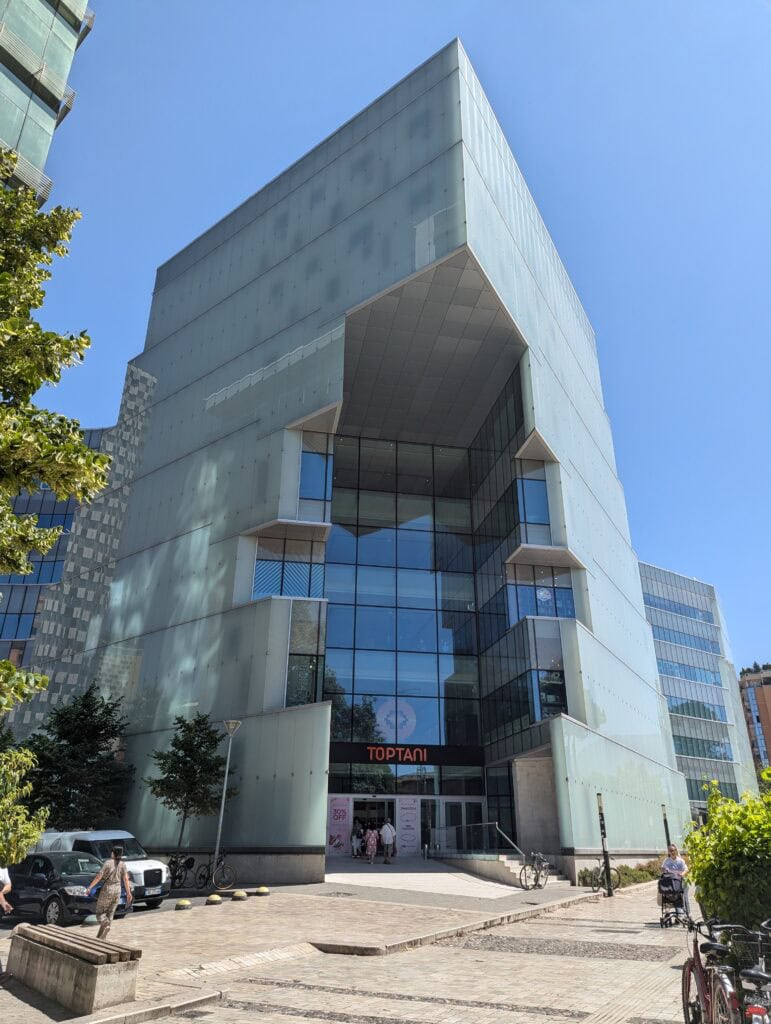
- Malls: Toptani Shopping Center is central and walkable (Zara, Mango, LC Waikiki); TEG (Tirana East Gate) is bigger but about 4–5km out of town, on the road toward Elbasan.
- Real crafts: most of the qilims (rugs), filigree jewelry and copperware sold in Tirana are made elsewhere — Krujë, Shkodër, Korçë — not in the capital itself. Worth knowing before you pay “handmade” prices.
- Books: Adrion, on Skënderbej Square, is the city’s best stop for English-language books and guides.
Table of Contents
Pazari i Ri: The New Bazaar
Start here if you only have time for one stop. Pazari i Ri — the “New Bazaar,” despite a history that goes back to the 1930s and was rebuilt again in the 2010s — is the closest thing Tirana has to a proper market square. In the morning it’s produce: mountains of tomatoes and peppers in season, jars of honey and mountain tea (çaj mali), wheels of local cheese, dried figs, olives, and the kind of raki you won’t find with a barcode. By early afternoon the produce stalls are winding down, and the covered arcades around the edge shift toward souvenirs, textiles and small crafts — the range and quality varies a lot stall to stall, so it’s worth a slow lap before buying.
Most sources list the market itself as running roughly 7am to 2pm, though that’s really the produce side — the cafés, bars and restaurants that ring the square keep going well into the evening, and that part of Pazari i Ri barely resembles a market after dark. If you want the full history and a proper walkthrough of what’s where, we’ve covered it in more depth in our dedicated guide to Pazari i Ri.

Free checklist
Planning a trip to Tirana?
Get my free Tirana in 48 Hours checklist, with a day-by-day itinerary, prices and local tips.
Blloku: Boutiques & Albanian Designers
Until 1991, ordinary Tiranians weren’t allowed anywhere near Blloku — it was the sealed-off residential quarter for the Communist party elite, Enver Hoxha included. Today it’s the opposite: the most walked, most photographed, most expensive-per-square-meter part of the city, and the place with by far the highest concentration of small clothing boutiques, concept stores and jewelry shops in Tirana.
This isn’t mall shopping. Blloku’s retail is dozens of small, independently run storefronts tucked between the cafes and cocktail bars, and the exact lineup shifts from year to year — small shops open and close here faster than a guide can keep up with. As of this writing, names worth watching for on a walk through the neighborhood include KOA Boutique and Chrono Vintage for clothing, and Artifiko and Souvenir Albania for jewelry and handmade textile pieces — but treat any specific list, including this one, as a starting point rather than gospel. Half the fun of Blloku is that you find things by wandering, not by following a checklist.
Did you know?
Blloku’s name literally means “the Block.” For nearly 45 years it was fenced and guarded, and an ordinary Tiranian could be arrested just for walking through it. The same streets now hold some of the highest retail rents in the country.
For the full walking-tour version of the neighborhood — bars, cafes, the old Hoxha villa, and how it all fits together — see our Blloku neighborhood guide.

The Malls: TEG and Toptani
If you want ordinary international brands rather than local finds, Tirana has two real options, and they’re not interchangeable.
Toptani Shopping Center
Downtown, a short walk from Skënderbej Square, so it’s the one you can fold into a normal walking day. Several floors of mid-range international chains — Zara, Mango, LC Waikiki, Calvin Klein among them — plus a food court and a rooftop terrace. Most listings put it open roughly 9am to 10pm, but hours can shift around holidays, so it’s worth a quick check before you go.
TEG — Tirana East Gate
Much bigger — around 180 stores across several floors, plus a large supermarket anchor, a multiplex cinema, and a food court with the usual international fast-food names. The tradeoff is location: TEG sits on the SH3 road out toward Elbasan, roughly 4–5km from the center, so you’ll want a taxi, ride app or a car rather than a walk. Worth it if you actually need a wider range of shops in one trip, or if you’re staying near that side of the city anyway.
Neither mall is a “must-see” the way Pazari i Ri or Blloku are — they’re useful if you need something specific (a phone charger, real winter boots, a proper pharmacy) rather than a reason to visit Tirana in themselves.

Traditional Crafts and Qilims: Where They Actually Come From
Here’s the thing almost no shopping guide tells you plainly: very little of what’s sold as “handmade Albanian craft” in Tirana is actually made in Tirana. The capital is where you buy it, not usually where it’s woven, hammered or dyed. Knowing the real origin helps you judge what you’re paying for.
- Qilims (rugs): the tradition is strongest in Krujë, about an hour from Tirana, where the old bazaar has been the country’s main rug market for generations. Named workshops in Korçë and, across the border, Gjakova, produce the higher-end pieces. Small woven pieces from Krujë run roughly €50–80; a genuine hand-woven mid-size rug from a named workshop is more like €200–500; a serious room-sized piece from an older weaver can run well past €1,000.
- Silver filigree jewelry: the craft is most associated with Shkodër in the north, where filigree work has been a family trade for generations.
- Qeleshe (the white felt cap) and other folk textiles: made across several regions, with local variations in shape and weave.
- Çifteli (the two-string folk instrument) shows up in miniature, ornamental sizes at market stalls — more display piece than working instrument at that size.
You can absolutely find good versions of all of this at Pazari i Ri — the covered stalls on the edge of the market carry qilims, filigree pieces and textiles from around the country, and it’s the easiest single stop if a day trip to Krujë isn’t on your itinerary. If you do have the time, going to Krujë’s own bazaar cuts out a layer of markup and usually means talking to someone closer to the actual maker.
Day trips from Tirana
Want a day out of the city, planned for you?
Esther, our tour partner, plans day trips to Berat, Kruja, Durrës and Dajti Mountain, with certified local guides on site. Tell her your date and group size, and she replies personally, in English or German.
Bookshops: Adrion and a Few Others
Adrion International Books, right on Skënderbej Square next to the National Theatre of Opera and Ballet, is the obvious stop for English-language books in Tirana — travel guides, translated Albanian literature, and a general international selection alongside its Albanian-language stock. Most listings put its hours around 9:30am to 9:30pm, and there’s a smaller outlet at Tirana International Airport if you’re looking for something to read on the way out.
It won’t be the biggest English-language shelf you’ve ever seen, so don’t expect a full Waterstones. But for picking up something on Albanian history, a translated Kadare novel, or a proper paper map, it’s the most reliable single stop in the city center.
Real Souvenirs vs. Tourist Tat
Tirana doesn’t have the aggressive souvenir-trap culture of some Mediterranean cities, but it has its share of stalls selling the same mass-produced stock you’d find sold as “local” craft in a dozen other countries. A few honest markers before you buy:
- Machine-loomed “handmade” rugs. A genuine hand-woven qilim has small, slightly uneven variations in the weave. A perfectly regular pattern at a very low price, especially from the outer stalls of a market, is almost always machine-made, whatever the sign says.
- Die-stamped “filigree.” Real filigree is hand-twisted wire, and it shows in small irregularities up close. Stamped or cast pieces are cheaper, lighter, and made in bulk — fine as a souvenir, just don’t pay filigree prices for them.
- Check where the flag or magnet was actually printed. Plenty of the generic Albania-flag merchandise sold around Skënderbej Square and the bazaar is printed well outside Albania. It’s not a scandal — it’s just not the local product it’s implied to be.
- The safer, honest buys: raki (fruit or grape brandy), çaj mali (mountain tea), local honey, olive oil, gliko (fruit preserve, the Përmet version has a particularly good reputation), and Skënderbeu brandy. These are genuinely Albanian, widely available, and hard to fake.
The honest version of Tirana shopping isn’t “avoid the markets” — it’s knowing that most of what makes a souvenir genuinely Albanian was made somewhere other than the shop you bought it in, and asking a couple of questions before you pay a handmade price for a machine-made piece.
Frequently Asked Questions
What are the best places to shop in Tirana?
Pazari i Ri for fresh produce, honey and crafts; Blloku for boutiques and Albanian-designer clothing; Toptani Shopping Center for central mall shopping; and TEG (Tirana East Gate) if you need a wider range of international stores and don’t mind the trip out of the center.
What time does Pazari i Ri close?
The produce and food side of the market generally winds down by early-to-mid afternoon — most sources say around 7am to 2pm — though the restaurants, bars and some craft stalls around the square stay open much later.
Is Toptani or TEG better for shopping?
Toptani is smaller but central and walkable from Skënderbej Square. TEG is significantly larger with more stores and a supermarket anchor, but it’s on the edge of town, about 4–5km out on the road toward Elbasan, so you’ll need a taxi or car.
Where can I buy a real Albanian qilim (rug) in or near Tirana?
You can find qilims at the craft stalls around Pazari i Ri, but the strongest tradition and the widest selection is in Krujë’s old bazaar, about an hour from Tirana. Prices there tend to be lower too, since you’re closer to the source.
Where do I buy English-language books in Tirana?
Adrion International Books on Skënderbej Square is the most reliable stop, with a smaller branch at Tirana International Airport.
What are the most authentic, hard-to-fake Albanian souvenirs?
Raki, çaj mali (mountain tea), local honey, olive oil, gliko fruit preserve, and Skënderbeu brandy. Handmade textiles and filigree jewelry are genuine too, but it’s worth checking for the small irregularities that separate handmade from machine-made before paying a premium price.
What do you think?
Have you found a shop, stall or corner of Blloku that isn’t on this list? Tell us in the comments — the best finds in Tirana are usually the ones a guide would never think to include.
For more on the neighborhoods this shopping guide touches on, see our guide to Tirana’s neighborhoods, our roundup of things to do in Tirana, and — once you’ve worked up an appetite from all that walking — our guide to where to eat in Tirana.
