
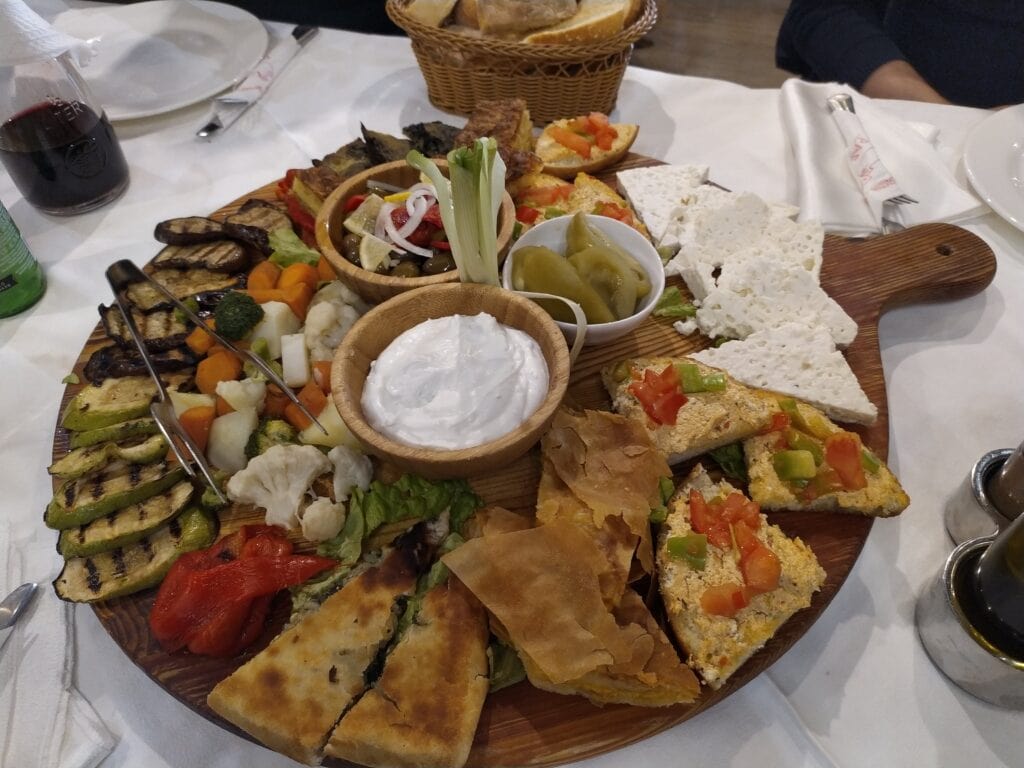
Albanian food is local almost by default — small farms, short supply chains, and produce that often travelled a few kilometres rather than a few countries. In Tirana a growing handful of places lean into that properly: farm-to-table kitchens, organic shops, and spots sourcing straight from the villages. Here are the ones worth seeking out in Tirana, mapped.
Tap any place to zoom to it, then “Open in Google Maps” for directions and reviews. Exploring more of the country? See the full interactive map of Albania.
Key Takeaways
- The honest version: most Albanian food has always been “farm-to-table” — the label is newer than the practice. What’s actually new is restaurants building a menu around that fact instead of treating it as the default.
- The flagship: Mullixhiu, chef Bledar Kola’s restaurant near the Artificial Lake, is the reason this scene has an international reputation at all.
- The day trip: Farm 88, about 20–30 minutes outside the city near Mullet, is where you go to eat somewhere the ingredients were actually grown.
- The everyday version: traditional kitchens like Oda and Komiteti have been serving locally sourced Albanian food for years without ever branding it as a trend.
- Prices vary a lot — from a 300–400 lek market breakfast to a 3,000+ lek tasting menu. This guide hedges every price because they change; always confirm before you go.
What “Farm-to-Table” Actually Means in Albania
Somewhere else in the world, “farm-to-table” is a positioning statement — a reason to charge more, printed on a chalkboard near the door. In Tirana, for a lot of places, it’s closer to a description of how the kitchen has always worked. Albania never fully built out the industrial food-processing infrastructure that made “where did this actually come from” a mystery in bigger economies. A large share of the country still works some form of land, even informally — a family plot, a few olive trees, a cousin with chickens — and a lot of that produce moves through short, unglamorous supply chains straight into home kitchens and small restaurants, not through a distribution centre three countries away.
That doesn’t mean everything here is organic in the certified, regulated sense — Albania doesn’t have a robust organic-certification system the way parts of Western Europe do, so when a market vendor tells you their tomatoes are “bio” or “organike,” it’s usually a claim you’re taking on trust and reputation, not a label backed by an inspection body. What you can generally trust is the distance the food travelled and the number of hands it passed through — which, for a lot of Tirana kitchens, is refreshingly short. For the fuller picture of what actually lands on the table here, our complete guide to Albanian food covers the dishes themselves; this guide is about where to go if the sourcing is the point.
Did you know?
By some estimates, agriculture still occupies close to two out of every five working Albanians — one of the highest shares in Europe. A lot of what Tirana eats never gets far from where it grew.
Free checklist
Planning a trip to Tirana?
Get my free Tirana in 48 Hours checklist, with a day-by-day itinerary, prices and local tips.
Mullixhiu: Where This Movement Actually Started
If one restaurant is responsible for Tirana having a farm-to-table “scene” at all, it’s Mullixhiu, near the Artificial Lake at the southern edge of the city centre. Chef Bledar Kola built the concept around sourcing exclusively from Albanian farmers and reviving cooking techniques — slow stews, foraged greens, corn-flour breads — that were disappearing from restaurant menus even as they survived in home kitchens. The tasting menu changes with the seasons because it has to; there’s no year-round supply chain to fall back on.
It isn’t cheap by Tirana standards — tasting menus have run in the range of 3,000–4,000 lek per person (roughly €30–40), which is a real jump above the traditional restaurants covered elsewhere in the city. But it’s also the one place on this list that’s earned international recognition for it, with mentions in global “best of” food coverage that most Albanian restaurants never get near. If you only try one deliberately farm-to-table restaurant in Tirana, this is the one people mean when they say it.

Farm 88: A Full Day Out at an Actual Farm
Mullixhiu sources from farms. Farm 88 just is one — a working organic farm-to-table restaurant about 20–30 minutes outside the city near Mullet, close enough for a Saturday lunch that turns into an afternoon. It’s the one entry on this list where the “farm” part isn’t a sourcing philosophy, it’s the address — gardens, a family-friendly layout, and a menu built around what was actually growing nearby that week. We’ve covered it in full, with real prices from an actual visit, in our dedicated Farm 88 guide.
It’s a genuinely different experience from a Blloku dinner reservation: bring the kids, expect to stay longer than planned, and don’t rush the drive out — the countryside around Mullet is part of the point.
More Farm-to-Table Kitchens Worth Seeking Out
Between the flagship and the fully rural option, there’s a working middle tier — restaurants that source locally and seasonally without necessarily putting it front and centre on the menu. Most cluster in or near Blloku, which has quietly become Tirana’s highest concentration of kitchens that care where the ingredients came from.
- Oda — a traditional restaurant near Pazari i Ri, set in a restored Ottoman-era house, serving recipes that read like they haven’t changed much in generations. Not marketed as farm-to-table; functionally is one.
- Komiteti – Kafe Muzeum — behind the Pyramid of Tirana, part restaurant, part communist-era museum, with locally sourced ingredients, good byrek, and one of the better raki selections in the city.
- Destil — a Blloku restaurant built around a seasonal menu that changes with what’s actually available, plus creative cocktails using Albanian botanicals.
- Artigiano — Italian-Albanian fusion with two locations (the original in Blloku, a second in a restored 1940s villa), leaning on Albanian grains and locally produced cheeses inside an otherwise Italian menu.
- Juvenilja — homestyle Albanian cooking built around seasonal produce from partner farms, less polished than some of the above and worth it for exactly that reason.
None of these need a reservation weeks out the way Mullixhiu sometimes does, and most sit comfortably in the mid-range rather than the splurge category. For the wider list of where to eat across the city — farm-to-table and otherwise — see our full guide to the best restaurants in Tirana.
Organic Markets and Shops
If you’d rather buy the ingredients than have someone else cook them, Pazari i Ri — the New Bazaar — is where to start. Vendors sell fruit, vegetables, cheese, honey, and preserved foods brought in directly from villages around Tirana, and weekend mornings tend to have the widest selection before things sell out. It’s not a curated “farmers’ market” in the polished Western sense — it’s a working city market that happens to sell a lot of genuinely local produce, stall by stall, at prices that are usually lower than anything labelled “organic” in a supermarket.
Nearby on Rruga Myslym Shyri, small shops such as Ejona specialise in Albanian-origin natural products — olive oils, honey, herbal teas, and jams sourced from small farms — if you want something to take home rather than eat on the spot.


Day trips from Tirana
Want a day out of the city, planned for you?
Esther, our tour partner, plans day trips to Berat, Kruja, Durrës and Dajti Mountain, with certified local guides on site. Tell her your date and group size, and she replies personally, in English or German.
Worth the Day Trip: Uka Farm & Winery and Mrizi i Zanave
Two places push this whole idea further than Tirana proper can, and both are worth building a half-day or full day around.
Uka Farm & Winery, on the city’s outskirts in Laknas, is a working vineyard and farm offering wine tastings alongside farm-fresh dining — their own wine, olive oil, and seasonal vegetables, all produced on-site. It’s close enough to combine with other things on a day out.
Mrizi i Zanave is a longer trip — about an hour from Tirana, near Fishtëvillage outside Lezhë — but it’s widely considered Albania’s most celebrated agrotourism restaurant: its own dairy, its own bakery, its own gardens, a set menu with no à la carte, and international food-media coverage most Albanian restaurants never see. It also now has a smaller city branch on Bulevardi Zhan D’Ark near the Tanners’ Bridge, if the full trip isn’t in the schedule, though locals generally agree the original is the real experience. Either way, reservations are worth making ahead rather than showing up and hoping.

The strange part isn’t that Tirana has farm-to-table restaurants now. It’s that it took this long for anyone to put a name on something Albanian kitchens were already doing out of necessity, not marketing.
Eating This Way on a Budget vs Splurging
You don’t need a tasting-menu budget to eat this way in Tirana. On the cheap end, a market breakfast at Pazari i Ri — bread, cheese, olives, fruit, picked up stall by stall — can run under 300–400 lek (roughly €3–4) and is arguably more “farm-to-table” than anything with a menu. A meal at Oda, Komiteti, or Juvenilja generally lands in the 800–1,500 lek range per person (about €8–15), traditional-restaurant pricing that happens to also be locally sourced.
On the splurge end, Mullixhiu’s tasting menu and a full outing to Mrizi i Zanave both sit well above that — treat them as an occasion rather than a Tuesday dinner. Farm 88 and Uka Farm land somewhere in between: more than a quick lunch, less than a special-occasion splurge, and worth it precisely because you’re paying for the trip out as much as the food.
Every price here is a rough range, not a quote — menus and market prices in Tirana move, and none of these figures are official. Confirm before you go, especially for the restaurants outside the city.
Practical Tips for Visiting
- Go to the market in the morning. Pazari i Ri thins out by early afternoon, and the best produce is picked over first. Weekend mornings have the widest selection.
- Book ahead for Mullixhiu and Mrizi i Zanave. Both are popular enough with visitors and locals alike that walking in without a reservation is a gamble.
- Bring cash for market stalls. Card readers are common in restaurants; they’re far less common at an open-air market stand.
- Don’t expect certified-organic labelling. “Organic” at a Tirana market is usually a trust relationship with a vendor, not a certification. Ask, and ask around.
- Rent a car (or book a driver) for the day trips. Uka Farm, Farm 88, and especially Mrizi i Zanave are far more comfortable with your own transport than trying to piece together public transit. For more on getting around the city and beyond, see our guide to things to do in Tirana.
Frequently Asked Questions
Is Albanian food naturally organic?
Much of it is grown or raised on small, low-intervention farms and travels a short distance to the table, but Albania doesn’t have a widespread formal organic-certification system. “Organic” claims at markets are usually based on trust in the vendor rather than an official label.
What’s the best farm-to-table restaurant in Tirana?
Mullixhiu is the most internationally recognised, but it’s also the most expensive. For a genuinely rural experience, Farm 88 or a day trip to Mrizi i Zanave are strong alternatives.
Where can I buy organic produce in Tirana?
Pazari i Ri (the New Bazaar) is the main hub, with vendors selling fruit, vegetables, cheese, and honey brought directly from nearby villages, plus small specialty shops like Ejona for packaged items.
Is Farm 88 worth the trip from Tirana?
Most visitors find it worth it, especially with kids — it’s a genuine working farm setting about 20–30 minutes outside the city, not a restaurant merely styled to look rural. See our full guide for details and real prices.
Do I need a reservation for these restaurants?
For Mullixhiu and Mrizi i Zanave, yes — both are popular enough that walking in is a gamble. The others generally don’t require booking far ahead, though weekends can still get busy.
Is farm-to-table dining expensive in Tirana?
It doesn’t have to be. A market breakfast can cost a few euros, while a tasting menu at Mullixhiu can run €30–40 per person. Both fall under the same idea; the price gap is about presentation, not necessarily better ingredients.
What do you think?
Have you eaten at any of these places — or found a farm-to-table spot in Tirana that deserves to be on this list? Tell us in the comments.
