
Key Takeaways
- Tirana rewards slow exploration — three days lets you move past the tourist checklist into the city’s actual rhythm
- Day 1 covers the historic core: Skanderbeg Square, Pazari i Ri, and your first xhiro (evening walk) in Blloku
- Day 2 dives into communist history at Bunk’Art 2 and House of Leaves, then choose between the Grand Park, Mount Dajti cable car, or a Krujë day trip
- Day 3 takes you deeper — street art, hidden courtyards, and neighborhoods most visitors never see
- International ride-hailing apps don’t work here — use Speed Taxi, Clust, or VrapOn for rides around the city
Table of Contents
- Day 1 Morning: Skanderbeg Square and the Historic Center
- Day 1 Afternoon: Pazari i Ri and Blloku
- Day 1 Evening: Dinner and the Xhiro
- Day 2 Morning: The Communist Story
- Day 2 Afternoon: Choose Your Adventure
- Day 2 Evening: Blloku Nightlife
- Day 3: Going Deeper
- Where to Stay by Budget
- Getting Around
- Money and Practical Tips
- What to Pack for Tirana
- Frequently Asked Questions
I’ve been trying to write this guide for years, and the problem is always the same — Tirana keeps changing before I finish. A restaurant I loved closes. A ruin gets turned into a cultural center. A whole neighborhood gentrifies between drafts. After 21 years of living here, I’ve learned that the only honest way to write a Tirana guide is to accept that some of it will be outdated by next month. That’s the nature of this city. It doesn’t sit still.
So here is what I can tell you: this is how I would spend 72 hours in Tirana if I were landing here for the very first time, knowing everything I know now. Not the guidebook version. Not the Instagram version. The version where you actually feel the city instead of just photographing it.
Three days is enough to fall in love with Tirana. It’s also enough to be confused by it, frustrated by it, and charmed by it — sometimes all in the same afternoon. That’s exactly the point.
Short on time in Tirana?
If you’d rather not plan every hour, go with Esther, our tour partner: a 3–4-hour Tirana walk or one of her day trips from Tirana (Kruja, Berat, Durrës, Dajti).
Esther is our tour partner; we receive a small share of the tour price.
Day 1 Morning: Skanderbeg Square and the Historic Center
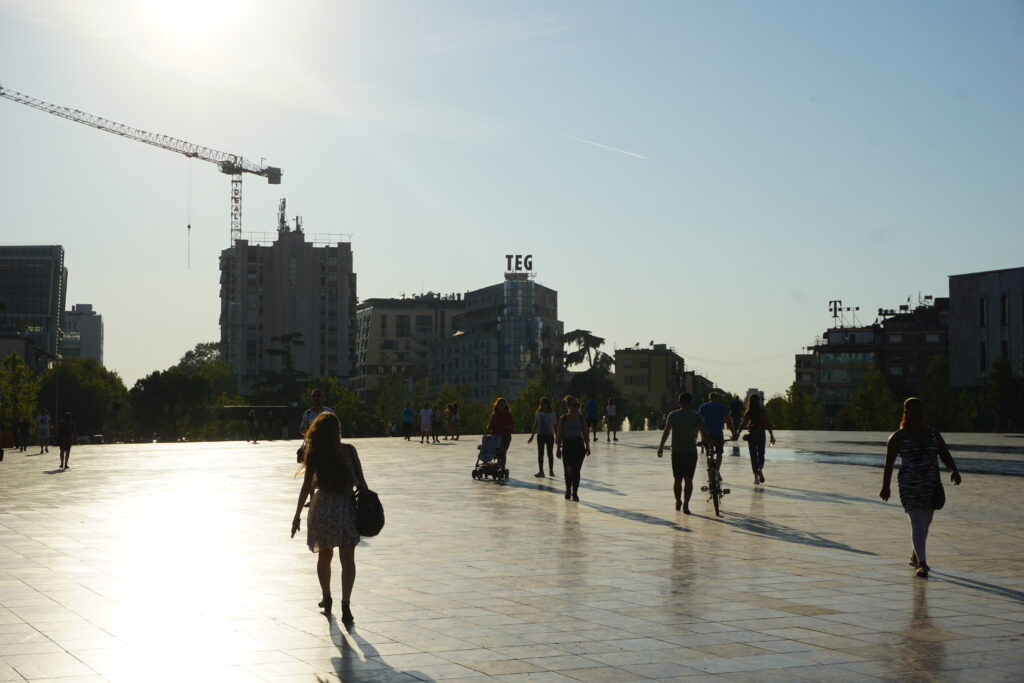
Start where everything starts in Tirana — Skanderbeg Square. I know that sounds obvious, but there’s a reason every local direction begins with “from the square.” This is the geographic and emotional center of the city. When Albania won its first football match at Euro 2016, people celebrated here. When the communist regime fell in 1991, this is where the statue of Hoxha came down. Every protest, every celebration, every New Year’s Eve countdown — it happens in this square.
The square was completely redesigned in 2017, and honestly, it’s beautiful now. The mismatched pavement stones come from every region of Albania, which is a nice metaphor if you’re into that sort of thing. Stand in the center and you can see the entire story of Tirana spinning around you: the National History Museum with its massive mosaic façade to the north, the Et’hem Bey Mosque (one of the few structures that survived the communist demolition of religious buildings) to the east, and the Clock Tower right beside it.
The National History Museum deserves at least an hour. The top floor covers the communist period and the Hoxha dictatorship, and it does not sugarcoat anything. The mosaic on the building’s exterior — depicting triumphant Albanian workers and soldiers — is itself a relic of that era. Admission is 700 ALL (about €7), and there are English-language guides available.
After the museum, walk over to the Et’hem Bey Mosque. Even if you’re not interested in religion, the painted interior is genuinely stunning — floral patterns, landscapes, and colors that feel more Mediterranean than Ottoman. It was one of the first buildings reclaimed when religious freedom was restored in 1991. The Clock Tower next door is climbable for a small fee, and from the top, you get a panoramic view that explains Tirana’s layout better than any map.
Budget about 2–3 hours for the square area. Don’t rush it. Sit on a bench. Watch the kids chasing pigeons and the old men arguing about politics. This is your introduction to the pace of life here.
Day 1 Afternoon: Pazari i Ri and Blloku
Planning a Trip to Tirana?
Get my free Tirana in 48 Hours checklist with day-by-day itinerary, prices, and local tips.
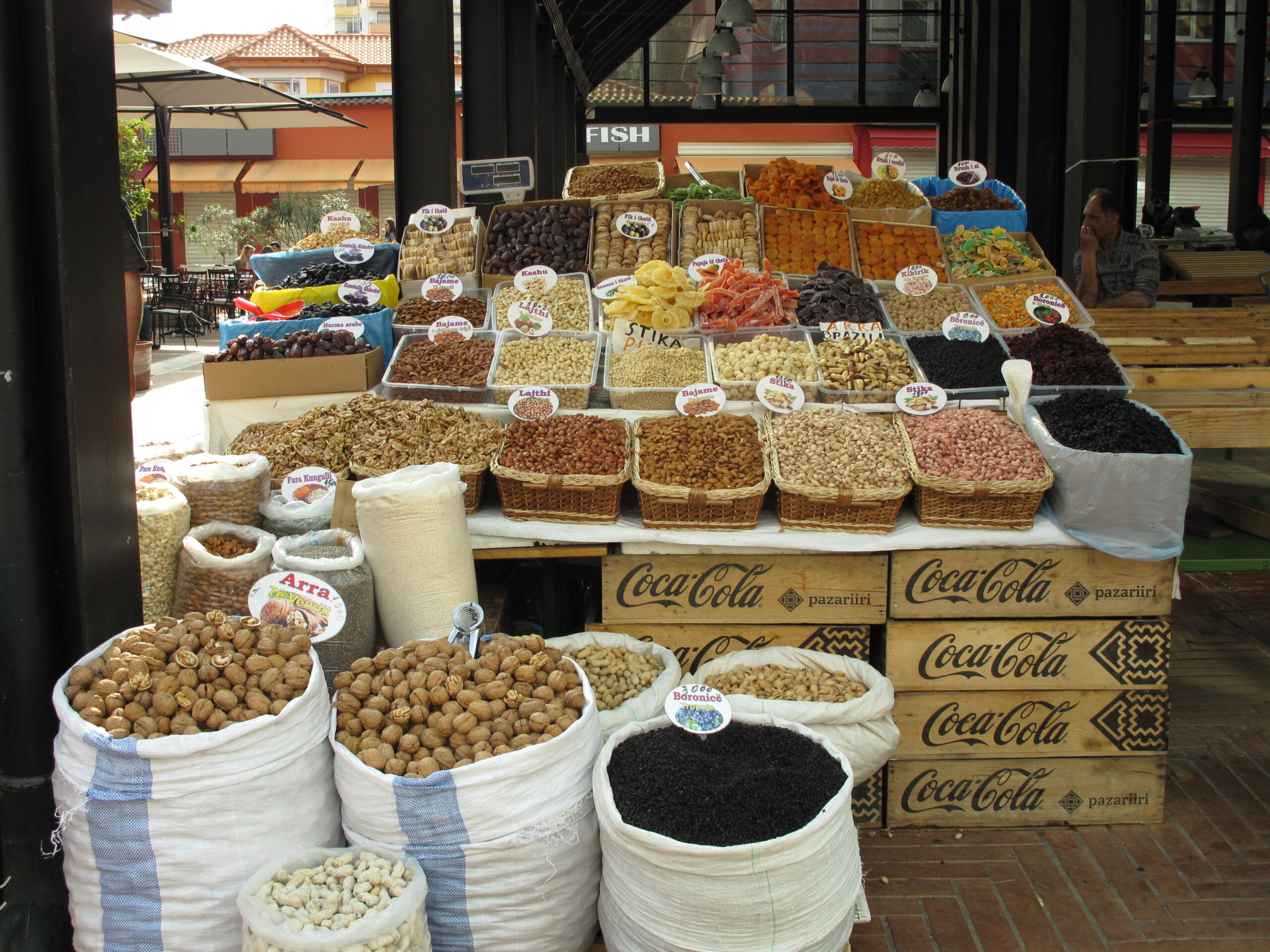
Get the Free Checklist →From Skanderbeg Square, walk south for about ten minutes and you’ll hit Pazari i Ri — the New Bazaar. “New” is relative here. There’s been a market on this spot since Ottoman times, but the current version was rebuilt and revitalized starting in 2016. Today it’s one of the most photogenic spots in Tirana: colorful buildings, open-air produce stalls, butchers, fishmongers, and an ever-growing ring of restaurants and bars around the edges.
This is where I buy my vegetables. I know which vendor has the best tomatoes (the older woman in the third row, if she’s still there) and which cheese seller will let you taste before buying. It’s a working market, not a tourist performance, though plenty of visitors come through now. The balance is still good.
Wander the stalls, buy some fruit, and then find a table at one of the cafes along the perimeter. Order a kafe turke (Turkish coffee) or a makiato — that’s Albanian for macchiato, and we drink it at all hours. Coffee here isn’t a quick stop. It’s a social ritual. You sit. You watch. You talk. Nobody rushes you, and no waiter will bring you the check unless you ask for it. If you want a proper meal here, try Kripe Dhe Piper — the name means “Salt and Pepper” and they do excellent traditional Albanian dishes at fair prices.
From Pazari, it’s a 15-minute walk southwest to Blloku — Tirana’s most famous neighborhood. During communism, this was the forbidden residential block for the Party elite. Ordinary citizens couldn’t even walk through it. Now it’s the beating heart of the city’s café culture and nightlife. Enver Hoxha’s former villa still stands at its center, surrounded by cocktail bars and gelato shops. The irony is not lost on anyone.
Spend your late afternoon here. Find a café with outdoor seating on Rruga Pjetër Bogdani or Rruga Ismail Qemali. Order another coffee or your first Albanian beer (Korça is the local classic). Watch the xhiro begin — that slow evening promenade where half the city comes out to walk, see, and be seen.
Day 1 Evening: Dinner and the Xhiro
The xhiro is one of my favorite things about living in Tirana, and it’s almost impossible to explain to someone who hasn’t experienced it. Every evening, as the heat fades (in summer) or the lights come on (in winter), Albanians go out and walk. Not to get somewhere. Not for exercise. Just… to walk. Families with strollers, teenagers in groups, elderly couples arm in arm, all moving along the same streets at the same gentle pace. It’s a Mediterranean tradition that Albania has kept alive better than most.
The main xhiro routes in Tirana run through Blloku and along Rruga e Kavajës. Just join the flow. You’ll feel the rhythm within minutes.
For dinner on your first night, I’d steer you toward one of these:
- Mullixhiu — This is Tirana’s most celebrated restaurant, and it deserves every bit of attention. Chef Bledar Kola works exclusively with Albanian ingredients, many foraged or sourced from small farms. The tasting menu changes with the seasons. It’s not cheap by Tirana standards (€30–50 per person), but it’s a genuine culinary experience. Book ahead.
- Era Blloku — A solid mid-range option right in the heart of Blloku. Traditional Albanian dishes done well, in a warm atmosphere with outdoor seating. Try the tavë kosi (lamb baked in yogurt) or the grilled meats. Mains run 600–1,200 ALL (€6–12).
- Oda — One of the most atmospheric restaurants in the city. It’s set up like a traditional Albanian living room, with low tables, cushions, and rugs. The food is hearty, home-style Albanian cooking. Perfect if you want to feel like you’ve been invited to someone’s house for dinner.
- Qofte Tradita Met Kodra — If you want something simpler and cheaper, this is where locals go for qofte (grilled meatballs). No frills, just excellent grilled meat, fresh bread, and a cold beer. Under €5 for a full meal.
“In Tirana, dinner before 8 PM marks you as a tourist faster than a guidebook in your hand. Locals eat at 9, sometimes 10. The city doesn’t even fully wake up for the evening until the sun goes down.”
After dinner, walk. That’s the program. Walk through Blloku, get gelato, sit at a bar if you want, or just keep moving with the crowd. Your first evening in Tirana should end like every local’s does — with no particular plan, on foot, slightly later than intended.
Day 2 Morning: The Communist Story
You cannot understand Tirana — or Albania — without understanding what happened here between 1944 and 1991. I’m not saying this to be dramatic. The communist period shaped everything: the architecture, the mentality, the family structures, the suspicion of authority, the dark humor. When an Albanian tells you a joke, there’s a good chance it originated as a survival mechanism during the dictatorship.
Start your second morning at Bunk’Art 2, in the center of town near the Ministry of Interior. It’s a converted Cold War bunker — one of the roughly 173,000 that Hoxha’s regime built across Albania. This one has been turned into a museum documenting the secret police (Sigurimi), political persecution, and daily life under the dictatorship. The installations are powerful and well-curated. Allow 1–2 hours. Admission is 500 ALL (about €5).
From Bunk’Art 2, walk ten minutes to the House of Leaves (Muzeu i Gjetheve). This was the actual surveillance headquarters during communism — the building where the Sigurimi listened to wiretaps and compiled dossiers on citizens. Now it’s a museum of surveillance, with displays of actual equipment and files. The name comes from the ivy that once covered the building, hiding what went on inside. It’s haunting and essential. Admission is 700 ALL.
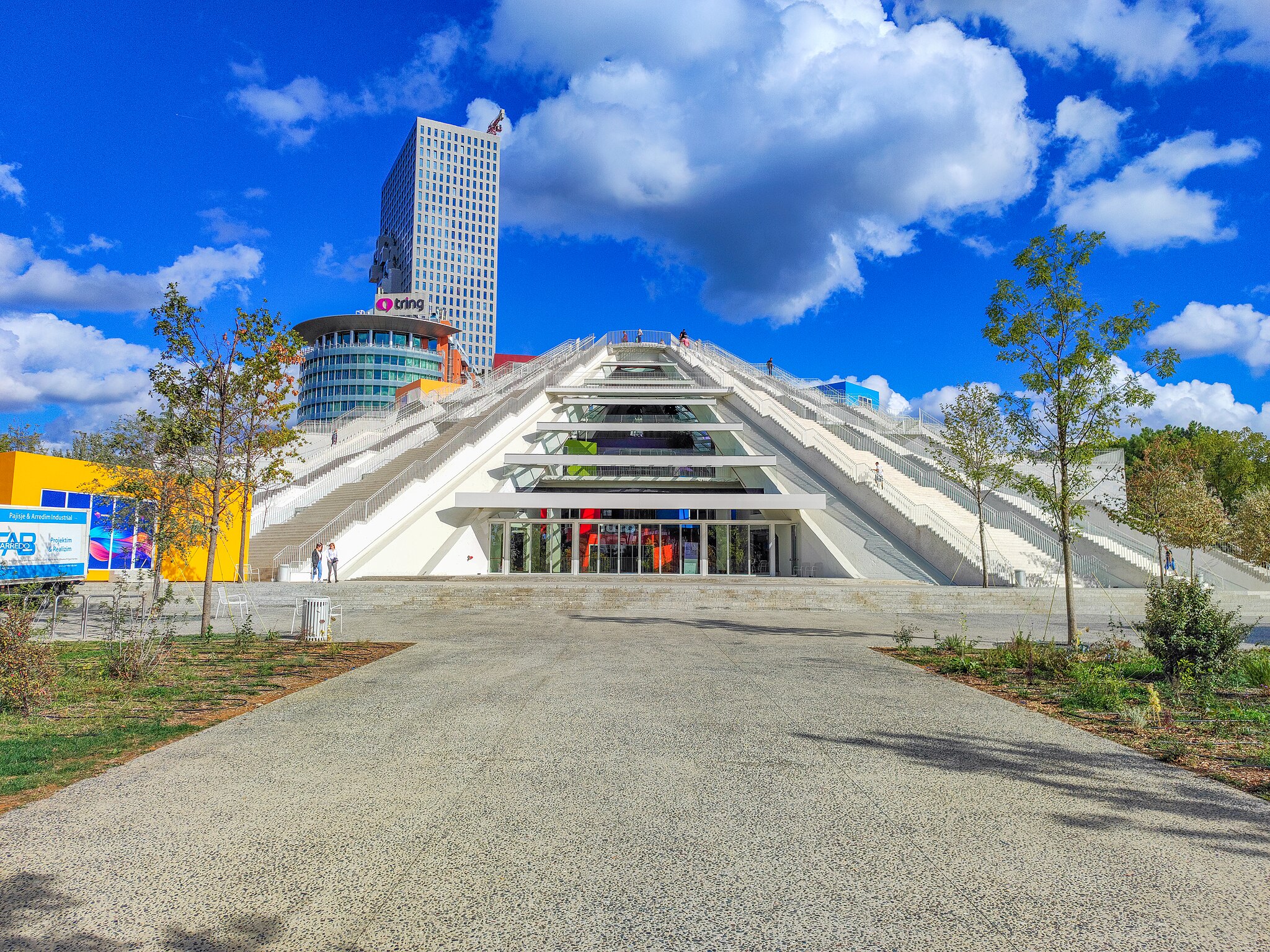
If you have time, walk past the Pyramid of Tirana on your way between sites. Built in 1988 as a museum dedicated to Enver Hoxha (his daughter was one of the architects), it was abandoned after the regime fell and spent decades as Tirana’s most conspicuous ruin. In 2023, it reopened as TUMO Tirana, a free technology and arts education center for young people. You can walk the exterior ramps for free and look out over the city. The transformation is symbolic of everything Tirana is trying to do.
Day 2 Afternoon: Choose Your Adventure
Your second afternoon is where I’d encourage you to pick your own path. Three options, all excellent, depending on your mood and energy level.
Option A: Grand Park and the Artificial Lake
Tirana’s biggest green space is just south of the center, and it’s where locals go to escape the concrete. The Artificial Lake (Liqeni Artificial) has a walking and running path around it, and on weekends the whole park fills with families, joggers, and couples. There are a few cafés along the lakeside. It’s not spectacular in a tourist-attraction sense — it’s just genuinely pleasant, and it shows you the Tirana that residents actually live in. Budget 2–3 hours for a relaxed visit.
Option B: Mount Dajti Cable Car
The Dajti Ekspres is a 15-minute cable car ride that takes you from the eastern edge of Tirana up to 1,613 meters on Mount Dajti. On a clear day, the views of the city and the surrounding mountains are stunning. At the top there are restaurants, walking trails, and a rotating observation platform. The round-trip ticket is 1,000 ALL (about €10). To get to the cable car base station, you’ll need a taxi (about 700–1,000 ALL from the center). This is a half-day commitment, but it’s worth it if the weather cooperates. Don’t go on a cloudy day — you’ll see nothing but fog.
Option C: Krujë Day Trip
If you’re willing to leave the city for a few hours, Krujë is the essential day trip. It’s 30 km north of Tirana (about 45 minutes by car or bus), and it’s where Gjergj Kastrioti Skënderbeu — Albania’s national hero — held off the Ottoman Empire from his mountain fortress. The castle, the Skënderbeg Museum inside it, and the old bazaar below are all worth the trip. The bazaar is also the best place in Albania to buy handmade souvenirs, antiques, and traditional textiles. Buses leave from the North-South bus terminal in Tirana (Terminali i Autobuzëve Tiranë-Jug) and cost about 300 ALL each way. For a complete guide to transport options, check our dedicated article.
Did you know?
Albania has more bunkers per square kilometer than any country on Earth. Enver Hoxha’s regime built an estimated 173,000 concrete bunkers between the 1960s and 1980s — roughly one for every 11 citizens at the time. Today, many have been converted into cafés, tattoo parlors, or art installations. Bunk’Art 1 and 2 in Tirana are the most famous conversions.
Day 2 Evening: Blloku Nightlife
Your second night is the one to go out properly. By now you have your bearings, you’ve walked through Blloku during the day, and you know the rhythm. Time to see it at night.
Tirana’s nightlife doesn’t follow the Western European schedule. People go out late. Dinner at 9. Drinks at 10:30 or 11. Clubs fill up after midnight. Don’t show up at a bar at 7 PM expecting a scene — you’ll be drinking alone.
My picks for a night out:
- Radio Bar — A Blloku institution. It’s named after Radio Tirana, the state broadcaster during communism. The vibe is relaxed, the cocktails are good, and the crowd is a mix of locals and visitors. Great for starting your evening.
- Komiteti — This is the bar that makes every “best bars in Tirana” list, and for once, the hype is justified. They specialize in raki — Albanian grape brandy — with an enormous selection of artisanal varieties. The decor is communist-era kitsch done right: old telephones, vintage posters, mismatched furniture. Order a flight of raki and let the bartender guide you through the regions and flavors.
- Late-night sufllaqe — At some point around 1 or 2 AM, you will want a sufllaqe. This is Albania’s answer to the döner kebab: grilled meat, fries, salad, and garlic sauce wrapped in flatbread. Every Blloku corner has a sufllaqe stand, and after a few drinks they all taste incredible. This is the proper way to end a Tirana night.
Blloku is safe at night. I walk through it at all hours and have for over two decades. Tirana’s violent crime rate is lower than most Western European capitals. If you want more detail on safety, I wrote a full breakdown: Is Albania Safe?
Day 3: Going Deeper
On your third day, put the guidebook away. You’ve seen the headlines — the square, the museums, the bazaar, the nightlife. Now I want you to see the Tirana that doesn’t make the Instagram highlight reels.
Start with a street art walk. Tirana has one of the most vibrant urban art scenes in Southeast Europe, and it started in an unusual way. When Edi Rama became mayor in 2000 (before he was Prime Minister), he famously had the drab communist-era apartment blocks painted in bright colors and bold geometric patterns. That project was controversial then and still is now, but it kicked off something real. Today the street art goes far beyond painted buildings — you’ll find murals, stencils, and installations throughout the city. The best concentrations are around Rruga e Barrikadave, the streets behind the Pyramid, and the alleys between Pazari i Ri and the river.
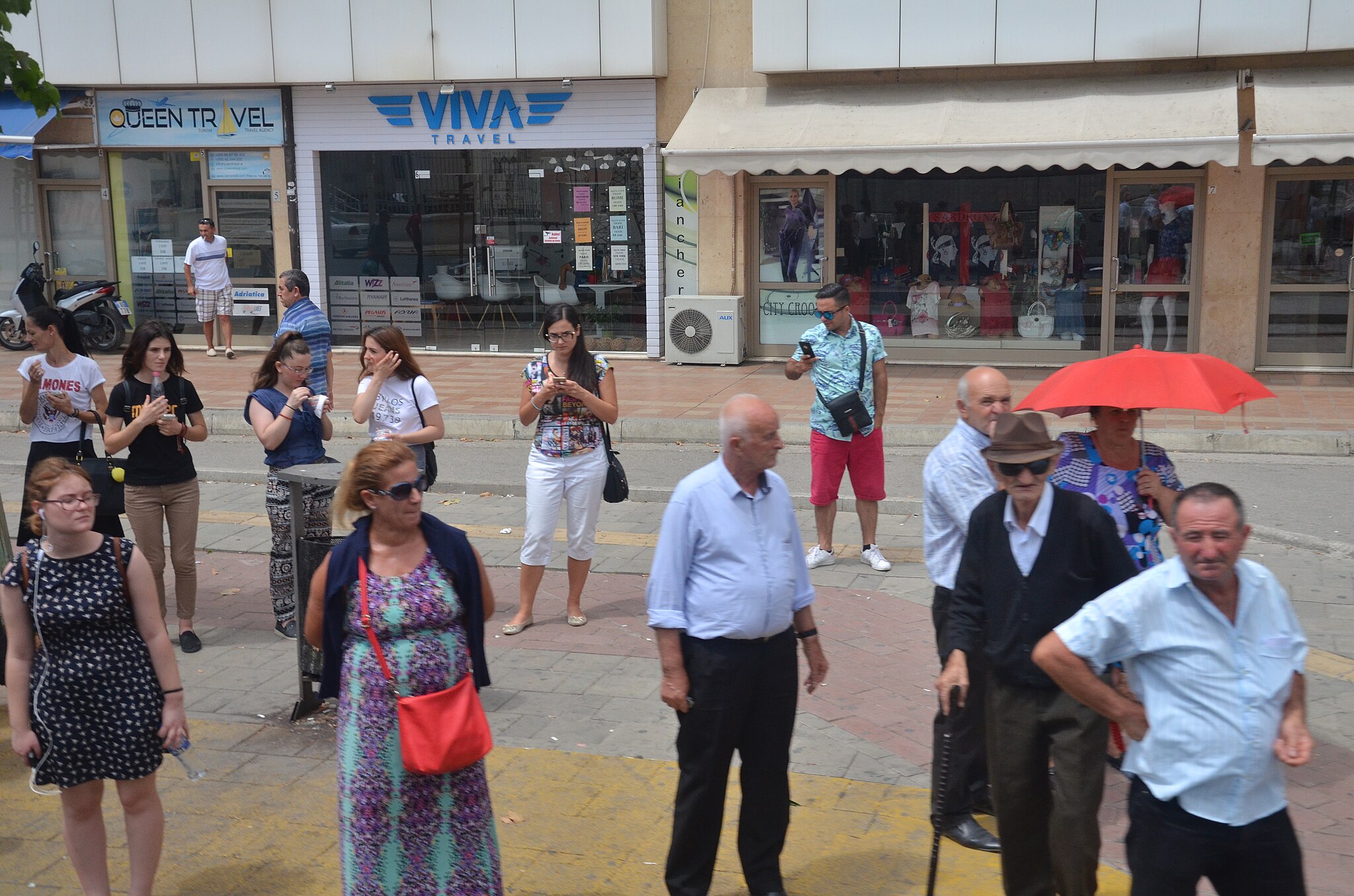
Next, explore the hidden courtyards. One of Tirana’s best-kept secrets is that behind many of the bland apartment façades, there are inner courtyards where neighbors have created gardens, hung laundry, set up small workshops, and built entire social worlds invisible from the street. You can’t plan this — just walk residential streets in areas like Komuna e Parisit or around Rruga Myslym Shyri and let yourself get lost. When you see an open doorway into a courtyard, take a look. People are generally friendly and curious about why a foreigner is wandering their neighborhood.
For the afternoon, go beyond the tourist center. A few neighborhoods worth exploring:
- Komuna e Parisit — A residential area east of the center that’s becoming increasingly interesting. Local cafés, small bakeries, a more authentic daily-life feel. This is where many young Tirana professionals actually live.
- The area around Rruga Myslym Shyri — This long street has evolved into a secondary nightlife and dining corridor. Less polished than Blloku, more local, with some excellent hidden restaurants.
- Selvia and Sauk — Southern neighborhoods near the university. Student energy, cheaper restaurants, and the Grand Park nearby. Walk through during a weekday afternoon and you’ll see a completely different Tirana than Skanderbeg Square.
If you want to see all these places plotted on one map, check our interactive Tirana map with 300+ locations, restaurants, and landmarks.
Live prices: where to stay in Tirana
Set your dates on the map below to see live availability and nightly rates across the major booking sites in one view.
Booking through this map earns me a small commission, at no extra cost to you. More on that here.
Where to Stay by Budget
Where you sleep in Tirana matters more than in most cities, because each neighborhood has a distinct personality. Here’s my honest breakdown.
| Neighborhood | Best For | Budget Range | Vibe |
|---|---|---|---|
| Blloku | Nightlife, cafés, walking distance to everything | €40–120/night | Lively until late, trendy, central |
| Pazari i Ri area | Food lovers, morning market access, culture | €30–80/night | Colorful, walkable, authentic |
| Komuna e Parisit | Budget travelers, longer stays, local feel | €20–50/night | Residential, quiet, real neighborhood |
| Near Skanderbeg Square | First-time visitors, sightseeing access | €50–150/night | Tourist-friendly, hotels and hostels |
My honest advice: Stay in Blloku if it’s your first visit and you want convenience. Stay in Komuna e Parisit if you’re on a budget or staying more than a few days. Avoid the very center around the square itself — it’s noisier than you’d expect and the hotel prices are inflated for what you get.
For a deeper look at what things cost here, including rent and daily expenses, check my Cost of Living in Tirana 2026 breakdown.
Getting Around
The first thing you need to know about getting around Tirana: walk. The city center is compact and almost everything in this guide is within a 20–30 minute walk of Skanderbeg Square. Tirana was not designed for tourists with tidy grid streets — sidewalks appear and disappear, cars park on pedestrian paths, and crosswalks are more suggestions than rules. But walking is still the best way to experience the city.
When you need a ride, use one of these Albanian taxi apps:
- Speed Taxi — The most established app. Works like any ride-hailing service. Reliable coverage across Tirana. This is my default recommendation.
- Clust — A newer Albanian-made app that’s growing fast. Good prices, clean interface.
- VrapOn — Another local option. Less coverage than Speed Taxi but decent in the city center.
Important: No international ride-hailing apps operate in Albania. Don’t bother looking for them — they simply aren’t here. The three Albanian apps above are your options, and they work well. A typical ride within Tirana costs 300–500 ALL (€3–5).
If you don’t want to use an app, you can hail a yellow taxi from the street, but always agree on the price before getting in or insist on the meter. Unmetered rides from the airport are the most common tourist overcharge in Tirana — the fair price from Rinas Airport to the center is 2,500–3,000 ALL (€25–30). Some drivers will try for double that.
City buses exist and cost only 40 ALL (about €0.40) per ride. The main lines run along Rruga e Kavajës, Rruga e Durrësit, and Rruga e Elbasanit. There are no paper maps of bus routes that I’d trust to be current — ask a local at the bus stop or just follow where the crowd goes. For a complete guide to transport across Albania, including intercity buses and the new airport, I wrote a dedicated article.
Money and Practical Tips
Albania uses the Lek (ALL), and the exchange rate is mercifully simple: roughly 100 Lek = 1 Euro. As of 2026, the precise rate hovers around 98–102 ALL per Euro, so you can mentally divide any price by 100 and get a close-enough Euro equivalent. A 500 ALL coffee? That’s about €5. A 2,000 ALL dinner? About €20.
Key money tips:
- ATMs are everywhere. Every major bank has ATMs in the center. Withdraw in Lek, not Euros. If the ATM offers to convert for you (“Dynamic Currency Conversion”), decline it — you’ll get a worse rate.
- Cash is still king. While card payments are increasingly accepted in Blloku and at bigger restaurants, many smaller shops, taxis, and markets are cash-only. Always carry some Lek.
- Tipping is appreciated but not obligatory. 5–10% at restaurants is generous by local standards. Round up at cafés. Taxi drivers don’t expect tips but won’t refuse them.
- Get a local SIM card. Vodafone, One Albania, or ALBtelecom all sell prepaid SIM cards at the airport or at shops throughout the city. A tourist SIM with data costs about 500–1,000 ALL (€5–10) and will save you from relying on café WiFi. You’ll need your passport to register it.
- Don’t change money at the airport. The exchange rate at Rinas is poor. Use an ATM instead, or change money at the exchange offices (këmbimore) on Rruga e Kavajës in the city center.
What to Pack for Tirana
Tirana is not a “special gear” destination, but a few things will make your trip significantly more comfortable.
- Comfortable walking shoes. Non-negotiable. Tirana’s sidewalks are uneven, cracked, and sometimes nonexistent. You’ll be stepping off curbs, dodging parked cars, and walking on cobblestones. Fashion shoes are for Blloku at night only.
- Earplugs. Tirana is loud. Car horns, construction, barking dogs at 3 AM, neighbors watching Turkish soap operas at full volume — the city has a noise problem and nobody pretends otherwise. If you’re a light sleeper, bring earplugs or noise-canceling earbuds.
- A European power adapter. Albania uses Type C and Type F plugs (the standard two-pin European plug). If you’re coming from the US or UK, bring an adapter.
- Sunscreen and sunglasses. Tirana gets over 300 days of sunshine per year. Even in winter, the sun can be surprisingly strong. Summer temperatures regularly hit 35–40°C (95–104°F).
- A light rain jacket. Especially November through March. When it rains in Tirana, it rains hard, and the streets flood quickly. A packable rain layer is worth its weight in gold.
- A reusable water bottle. Tap water in Tirana is technically treated, but most locals and visitors drink bottled or filtered water. A refillable bottle means you can fill up cheaply at any market.
Frequently Asked Questions
Is 3 days enough for Tirana?
Three days is the sweet spot for a first visit. You can cover the major sights, experience the nightlife, and get a feel for the city’s rhythm without rushing. If you want to do day trips (Krujë, Berat, Durrës), add a day or two.
Is Tirana safe for solo travelers?
Yes. I’ve lived here for 21 years and walk everywhere at all hours. Tirana’s violent crime rate is very low, and tourists are not targeted. Petty theft exists (as in any European city) but is uncommon. Use normal big-city awareness and you’ll be fine. Read my full Albania safety guide for more detail.
Do people speak English in Tirana?
Most people under 40 speak at least some English, and many speak it well. Italian is even more widely spoken, thanks to decades of Italian TV influence. In restaurants, hotels, and tourist areas, English is not a problem. In markets and with older residents, you might need some patience and hand gestures. Learning a few Albanian words (faleminderit = thank you, mirëdita = good day) goes a very long way.
What is the best time of year to visit Tirana?
April through June and September through October are ideal — warm but not brutal, with long days and fewer crowds. July and August are hot (35–40°C) and much of Tirana empties out as locals head to the coast. Winter (December–February) is mild compared to northern Europe but rainy, and the city is quieter.
Can I use Euros in Tirana?
Some hotels and tourist-oriented restaurants accept Euros, but you’ll get a worse exchange rate than at an ATM. The official currency is the Albanian Lek (ALL). Withdraw Lek from an ATM on arrival and use that for everything. The rate is simple: roughly 100 Lek = 1 Euro.
Twenty-one years ago, when I first started exploring this city seriously, Tirana was a different place. There were fewer cafés, fewer tourists, fewer reasons for a foreigner to come here on purpose. The Pyramid was a crumbling embarrassment. Blloku had just opened up and nobody quite knew what to do with it. Pazari i Ri was a gritty market, not a destination.
What hasn’t changed is the thing that made me stay: the energy. Tirana has this restless, forward-leaning quality that’s hard to describe until you feel it. People are building things, opening things, arguing about things. The city is figuring itself out in real time, and when you visit, you become part of that process.
Don’t come to Tirana expecting perfection. Come expecting to be surprised. Come expecting the sidewalk to end suddenly. Come expecting someone to invite you for coffee before you’ve even asked for directions. Come expecting to leave confused about why more people don’t know about this place.
That confusion? That’s the beginning of understanding Albania.
What do you think?
Have you spent time in Tirana? What was your favorite neighborhood or hidden gem? Share your tips below!
Subscribe to monthly updates
Get honest Albania travel tips, local guides, and new posts straight to your inbox. No spam, unsubscribe anytime.
