
Key Takeaways
- Built in 1988 as the Enver Hoxha Museum; co-designed by Hoxha’s own daughter, architect Pranvera Hoxha, along with her husband and two other architects.
- Fell into ruin after the fall of communism in 1991 and became famous locally as the place Tirana kids climbed and slid down its sloped concrete sides.
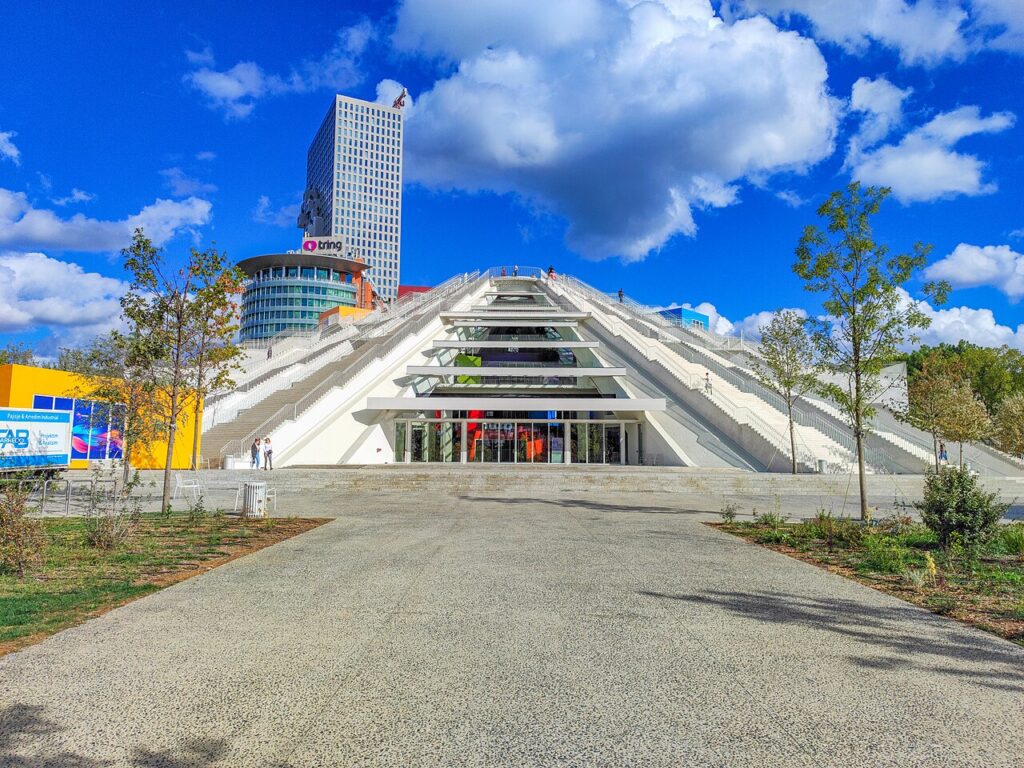
- Renovated by Dutch architecture firm MVRDV (2021–2023) and reopened in October 2023 as TUMO Tirana, a free technology-education centre for teenagers, funded by the Albanian-American Development Foundation.
- Its stepped exterior is open to the public and free to climb — no ticket, no booking, and no fence stopping you.
- It sits directly on Bulevardi Dëshmorët e Kombit, a short walk from Blloku and the city centre.
The Pyramid of Tirana — everyone here just calls it Piramida — is the strangest building on the city’s main boulevard, and also one of the most loved. It opened in 1988 as a museum glorifying communist dictator Enver Hoxha, spent the 1990s and 2000s collapsing into a graffiti-covered ruin that generations of Tirana kids climbed and slid down for fun, and reopened in October 2023 as TUMO Tirana, a free youth tech-education centre with a fully climbable stepped roof, a rooftop viewing platform, and a café — no ticket required, ever.
A Museum Built for a Dead Dictator (1988)
Construction on the Pyramid began in the mid-1980s and the building opened on 14 October 1988, three years after Enver Hoxha’s death, as a museum dedicated entirely to his legacy. It’s often described as the most expensive individual structure ever built in Albania at the time — an enormous statement in concrete and marble for a country that, in reality, had very little money to spend.
What makes the building’s origin story genuinely strange is who designed it: Pranvera Hoxha, the dictator’s own daughter and a trained architect, working alongside her husband Klement Kolaneci, with Pirro Vaso and Vladimir Bregu also credited. A monument to a father, designed by his daughter — it’s the kind of detail that tells you more about how communist Albania actually worked than any museum plaque could. For the wider story of how the country got here, our beginner’s guide to Albanian history covers the decades under Hoxha’s rule.
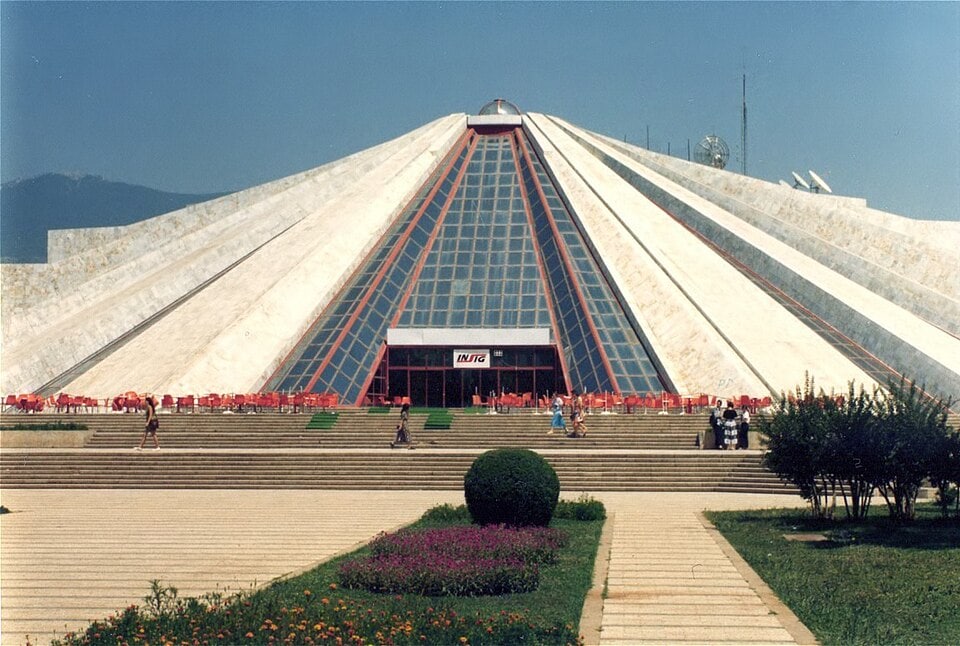
I’m old enough to remember the original. As a kid, I visited the Pyramid when it still functioned as Enver Hoxha’s museum, with his statue standing right in the middle of it. That version of the building — solemn, official, built to glorify one man — is a world away from what it is today.
Thirteen Years of Ruin
Planning a Trip to Tirana?
Get my free Tirana in 48 Hours checklist with day-by-day itinerary, prices, and local tips.
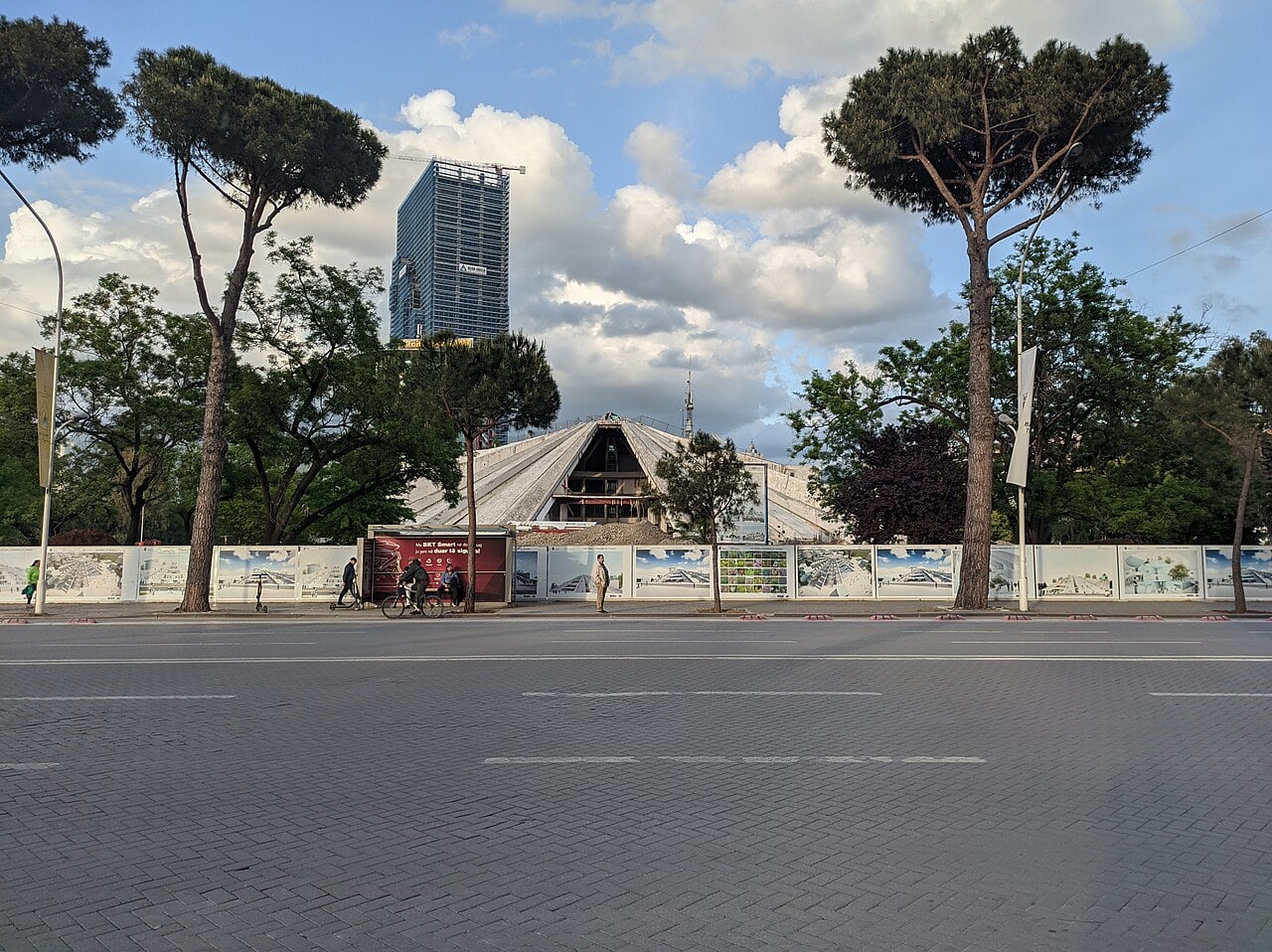
Get the Free Checklist →Everything changed after 1991. Once communism collapsed, a museum built to worship Hoxha had no purpose left, and the building drifted through a string of half-uses: a conference centre for a while, an exhibition venue, even a base for NATO and humanitarian organisations passing through during the 1999 Kosovo War. From 2001, part of the rear structure was occupied by the TV station Top Channel and Top Albania Radio — but the rest of the building, and the whole plaza around it, was left to rot.
For most of the 2000s and 2010s, that’s exactly what happened. Windows broke, marble cracked, graffiti spread across every reachable surface, and the Pyramid became less a monument and more a ruin people simply learned to live around — a strange, half-abandoned landmark on the city’s busiest street.
The Kids Who Turned It Into a Slide
Here’s the part almost every visitor asks about: it’s genuinely true that Tirana’s children spent years climbing the Pyramid’s sloped sides and sliding back down, using its concrete beams the way other cities’ kids use playground equipment. It wasn’t sanctioned, it wasn’t safe, and it happened anyway — a whole generation informally reclaiming a monument built to celebrate the man who’d controlled their parents’ lives.
That image stuck. A 2012 photograph of local kids sliding down the ruin has been widely shared as a kind of shorthand for what the Pyramid had become, and it later became central to how the building was rebuilt.
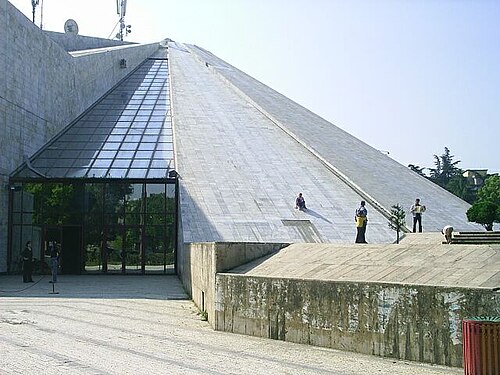
For my generation of Tirana kids, though, the Pyramid was never a monument to anything — it was a playground. I grew up playing on it and climbing it, the way pretty much every kid in the city did. Nobody thought twice about it; it was just part of childhood here, this giant concrete slope you scrambled up because it was there.
Reborn in 2023: MVRDV’s Redesign
In 2018, the Albanian-American Development Foundation (AADF) unveiled a plan, designed with Dutch architecture studio MVRDV, to transform the Pyramid into a youth technology-education centre. Construction began in February 2021, with Tirana mayor Erion Veliaj at the ground-breaking, and finished in October 2023 — a project AADF says represented roughly $8 million in investment across some 11,800 square metres of reimagined space.
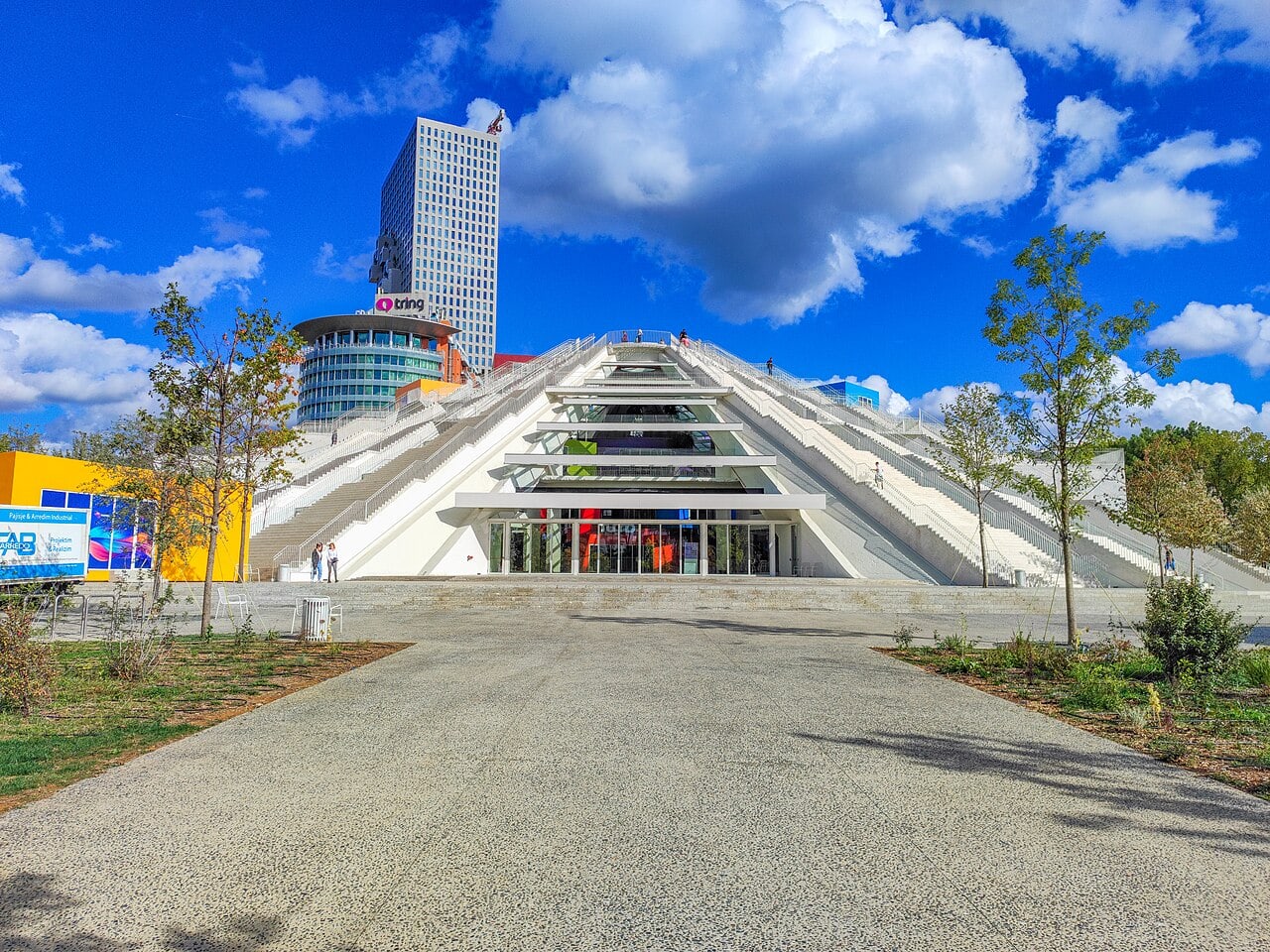
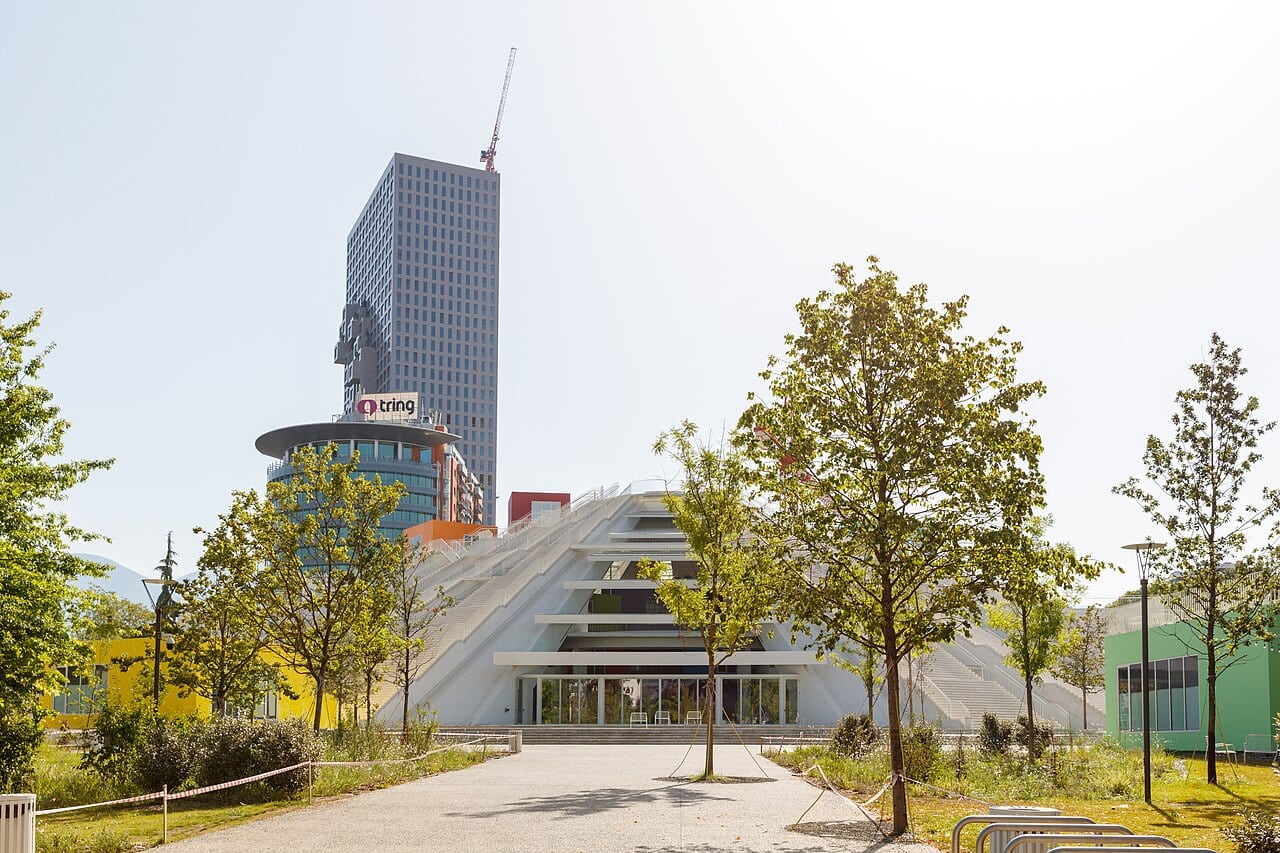
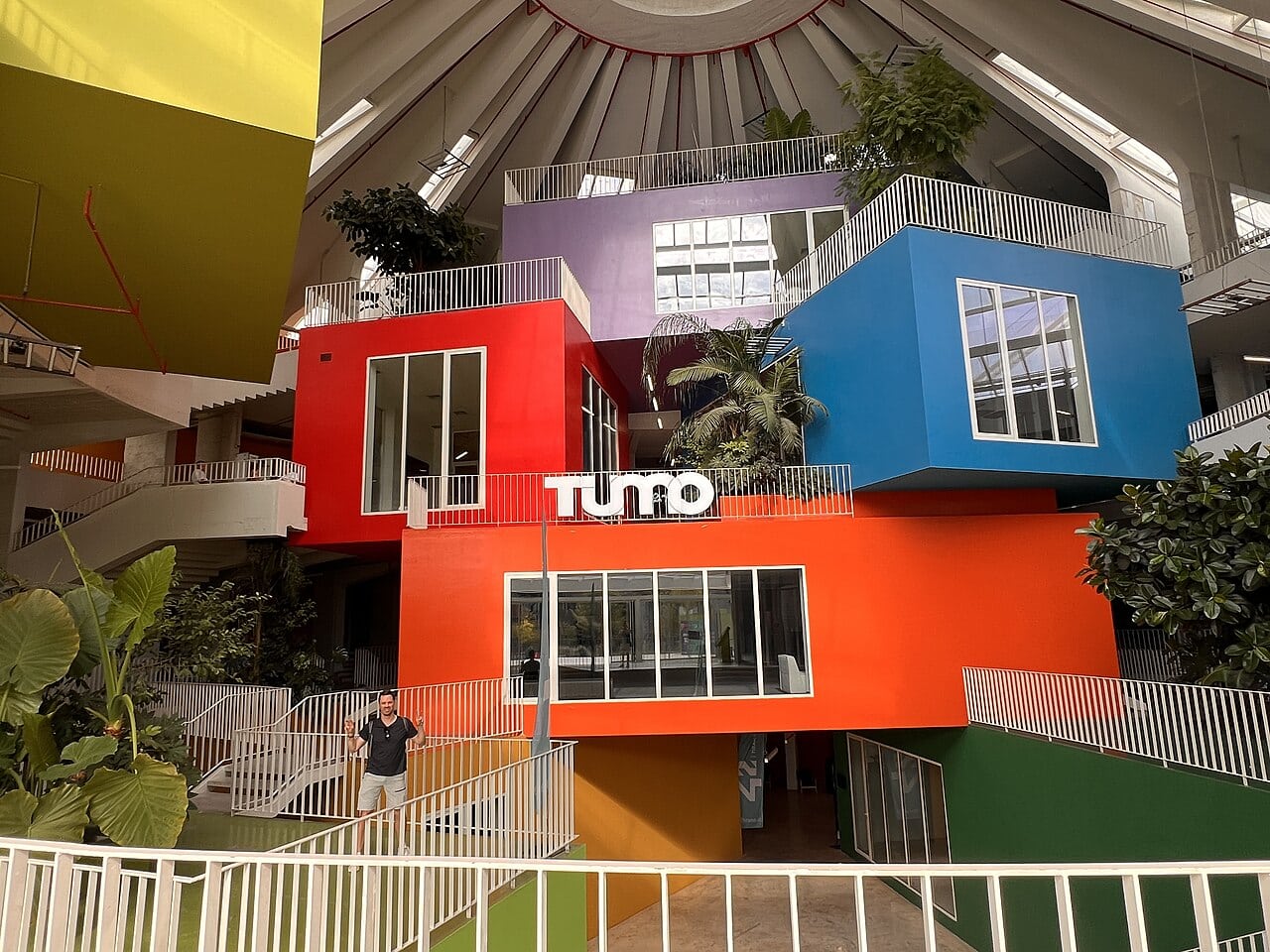
The design itself is a direct answer to those informal decades of kids climbing and sliding down the ruin. MVRDV didn’t fence the Pyramid off — they leaned into it. Steps now run across the entire sloped exterior, formally inviting anyone to climb all the way to the top, and one section of the original beam was deliberately kept as a literal slide. Around thirty colourful modular boxes were scattered in and around the building, along with a glass lift for visitors who can’t manage the stairs.
Did you know?
When MVRDV redesigned the Pyramid, they deliberately kept one section of the original sloped beam as a literal slide — a permanent nod to the generations of Tirana kids who’d already been sliding down the ruin for decades.
MVRDV founding partner Winy Maas summed up the transformation bluntly: “Once sardonically called the ‘Enver Hoxha Mausoleum’, the transformed Pyramid has now become a monument for the people and their ability to overcome and outlive dictators.”
What the Pyramid Is Today
Inside, the building now runs as TUMO Tirana, a free after-school program for teenagers aged 12 to 18, teaching programming, robotics, animation, filmmaking, music production, graphic design, 3D modelling, and game development — part of the international TUMO Center for Creative Technologies network. Roughly half of the colourful boxes scattered through and around the building serve as TUMO classrooms; the rest hold cafés, start-up incubator offices, coworking spaces, and workshop rooms.
The Pyramid also functions as a genuine public venue now, hosting tech meetups, film screenings, art exhibitions, and music performances inside the same structure that once existed purely to glorify one man. It’s a strange, satisfying reversal, and it’s a big part of why the building matters so much to people who grew up watching it decay.
Visiting the Pyramid of Tirana Today
Where It Is
The Pyramid sits directly on Bulevardi Dëshmorët e Kombit, Tirana’s main boulevard, an easy walk from Skanderbeg Square at one end and from Blloku at the other — the neighbourhood most visitors base themselves in for its cafés and nightlife. It’s also close to the National History Museum, making it a natural stop if you’re stringing together a Tirana walking tour through the city centre.
Climbing It (Free)
This is the detail that surprises most first-time visitors: you can climb the Pyramid’s stepped exterior for free, any time you happen to be passing. There’s no ticket booth, no gate, and no posted closing time on the steps themselves — you just start walking up. The climb takes you to a platform near the top with views back over the boulevard and out across the rooftops of central Tirana, and it’s become one of the most photographed things to do in the city, especially around sunset.
TUMO, the Café, and What You Can Actually Do Inside
The interior classrooms mostly serve TUMO’s enrolled teenagers on weekdays, so they aren’t generally open for casual browsing. But several of the colourful boxes function as public cafés and event spaces, so it’s worth checking what’s on before you go — a coffee at one of the on-site cafés, an exhibition, or just the climb itself, are all reasonable ways to spend twenty minutes here. It’s a regular fixture on lists of things to do in Tirana, and unlike almost everything else on those lists, it costs nothing to experience the best part.
Then, and Now: Three Different Albanias
I’ve watched this building my entire life — from the first years it was built, when I was a child, through its decades as a ruin, to the reopening. Not many buildings let you measure your own life against them the way the Pyramid does for me: a monument to a dictator, then an abandoned husk my generation played on, and now a place that genuinely belongs to the city’s teenagers.
Same concrete, three completely different Albanias.
The Pyramid’s whole arc — worshipped, abandoned, reclaimed, rebuilt — says something honest about how Albania as a country has handled its own communist past, and it’s one of the clearer examples of that tension you’ll find anywhere in Albanian culture today.
Frequently Asked Questions
Is it really free to climb the Pyramid of Tirana?
Yes. The stepped exterior is open to the public at no cost — there’s no ticket booth and no admission fee to walk up the steps and reach the viewing platform near the top.
What is inside the Pyramid now?
The interior houses TUMO Tirana, a free after-school technology program for teenagers aged 12 to 18, along with cafés, start-up incubator offices, coworking spaces, and event space used for exhibitions and screenings.
Who built the Pyramid, and why?
It was built in 1988 as a museum honouring communist dictator Enver Hoxha, co-designed by his daughter, architect Pranvera Hoxha, along with her husband Klement Kolaneci and two other architects.
When did the Pyramid reopen after its renovation?
It reopened in October 2023, following a renovation led by Dutch architecture firm MVRDV that ran from February 2021 to October 2023, funded by the Albanian-American Development Foundation.
Can I go inside TUMO if I’m not a student there?
The classrooms mainly serve TUMO’s enrolled teenagers, but several of the building’s public-facing boxes — cafés and event spaces — are open to visitors, and the climbable exterior is open to everyone regardless.
How far is the Pyramid from Blloku?
It’s a short, easy walk — the Pyramid sits on the main boulevard right at the edge of the city centre, close enough to Blloku that most visitors cover both in the same outing.
What do you think?
Have you visited the Pyramid of Tirana since its 2023 reopening — or do you remember it from before, as a ruin or even as the old museum? What surprised you most?
Subscribe to monthly updates
Get honest Albania travel tips, local guides, and new posts straight to your inbox. No spam, unsubscribe anytime.
