
Key Takeaways
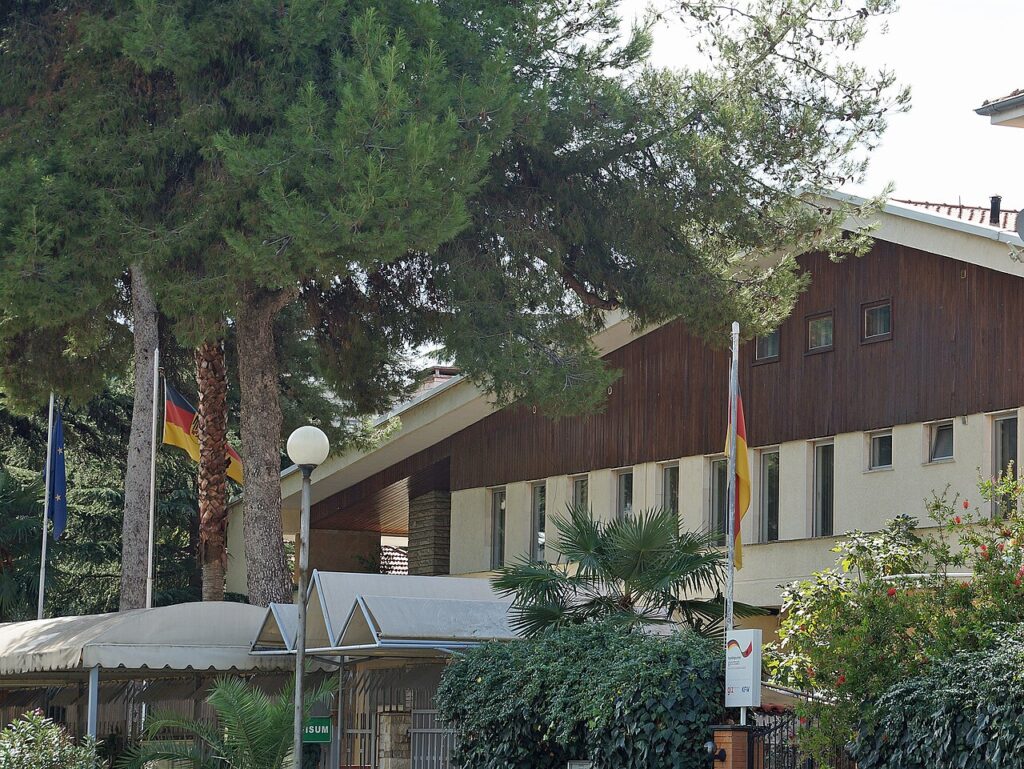
- On the evening of 2 July 1990, a Tirana man named Ylli Bodinaku drove a truck through the wall of the West German embassy — reportedly with his wife and two children inside the cab.
- His breach was one of several around those same days (including at the Italian embassy) that helped accelerate a mass exodus — it did not single-handedly trigger the crisis.
- Roughly 5,000 Albanians sought refuge inside foreign embassies in Tirana that July, with more than 3,200 crowded into the West German compound alone.
- The standoff lasted about ten days and ended in negotiation, not violence — refugees left by ship from Durrës to Brindisi, Italy, then mostly onward to Germany.
- The crisis is widely seen as a hinge moment: it came before pluralism (December 1990), the 1991 elections, and the fall of the dictatorship in 1992.
Table of Contents
I was a kid in Tirana in the summer of 1990, and if you’d asked me at the time what was happening a few streets over, I couldn’t have told you. That’s not a dramatic confession — it’s just how a closed country worked. Things happened, and you found out about them in pieces, months later, sideways, from someone who’d heard it from someone else. The embassy crisis of July 1990 is one of those events, and it still surprises me how much of it never made it into the version of history I grew up with.
This is the story of Ylli Bodinaku, a man most Albanians of my generation know mainly as a name attached to a truck. But the truck is really just the door into a much bigger story — about roughly five thousand people who, over ten days in July 1990, decided they’d rather sit crammed into a foreign embassy garden than spend another year inside Albania’s borders.
The Summer Nobody Talked About
By the summer of 1990, Albania was the last truly closed country in Europe. The Berlin Wall had fallen eight months earlier. Ceau?escu was dead, and Poland, Hungary, and Czechoslovakia were already dismantling one-party rule. Albania, under Ramiz Alia, was still holding the line — no private property, no freedom to travel abroad, and until that same year, technically no legal way for a citizen to walk up to a foreign embassy and ask for anything. If you want the fuller picture of daily life under that system, I’ve written about it separately in what communist Albania was really like.
That mattered more than it might sound. For decades, foreign embassies in Tirana were treated almost like sealed capsules — physically present in the city, but functionally cut off from it. Approaching one was not something you did on a whim.
Did you know?
Albania had already broken diplomatic ties with the Soviet Union decades earlier, in the early 1960s — and had no formal relationship with the United States at all until 1991. By 1990, it was more isolated from the West than any other communist state in Europe.
Free checklist
Planning a trip to Tirana?
Get my free Tirana in 48 Hours checklist, with a day-by-day itinerary, prices and local tips.
A Truck, a Wall, a Family
On the evening of 2 July 1990, a man named Ylli Bodinaku drove a truck through the rear wall of the West German embassy in Tirana. Accounts describe the vehicle as a Skoda or a state-fleet LIAZ-type truck, and most sources agree his wife and two children were with him in the cab. He wasn’t a dissident intellectual or a political organizer — by most accounts, an ordinary Tirana resident who had reached the point where sitting still felt worse than the risk of moving.
The number of people who followed him through the breach that evening varies by source — I’ve seen figures anywhere from the mid-thirties to over sixty. Rather than pick one and pretend it’s settled, it’s more honest to say: dozens went through that gap within hours, and in the days that followed, thousands more tried to reach the same compound by other means.
A man puts his own children in the cab of a truck and drives it through a wall. Whatever else you think about that decision, it tells you something about how thin the alternative had become.
There’s also a detail that keeps this from becoming too tidy a story: a German embassy exhibition on the crisis has captioned a truck breach dated 3 July — a day later, with a different headcount attached. It’s possible more than one truck was used to break into the compound over those days, which fits the chaos of what was unfolding better than a single clean, cinematic moment would.
One Crack, Not the Only One
Here’s where I think the popular version of this story oversimplifies something important: Bodinaku’s truck did not single-handedly trigger the embassy crisis. It became the emblematic image of that July — the detail that survived into monuments and memory — but it was one accelerant among several, not the spark that lit an otherwise still fuse.
There were earlier and parallel breaches at other embassies around the same period, including at the Italian embassy. People had already been testing the walls of Tirana’s diplomatic quarter before Bodinaku’s truck made headlines. What his act did — the honest way to describe it — was become one of the emblematic acts of a movement already gathering momentum, helping accelerate what turned into a mass rush toward every embassy compound in the city. Think of it less as the single crack that let the water through, and more as one especially visible crack in a wall that was already failing in several places at once.
Five Thousand People Inside the Walls
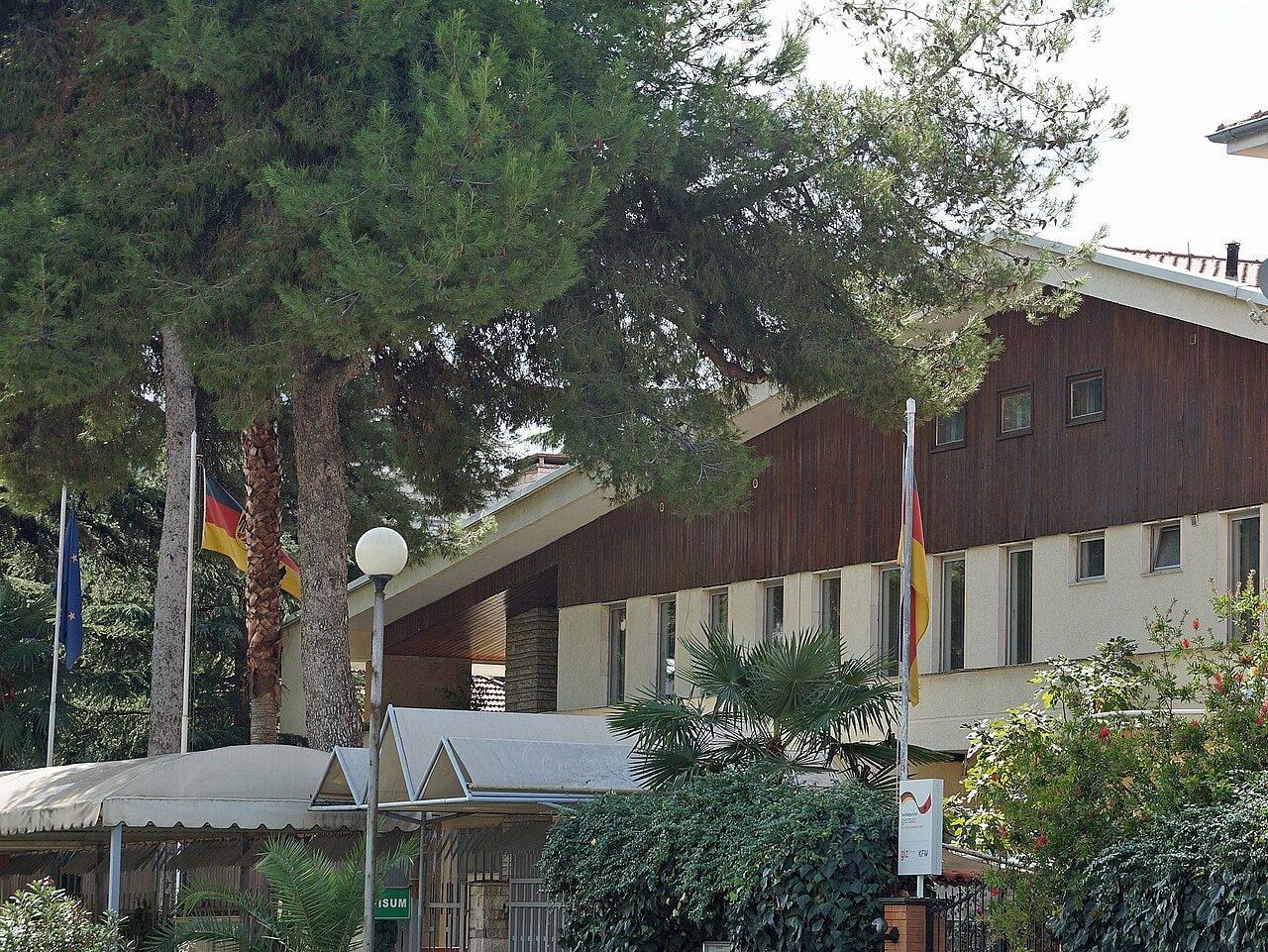
By the time the dust settled, an estimated 5,000 Albanians had sought refuge inside foreign embassies in Tirana that July — with more than 3,200 of them crammed into the West German embassy alone. Picture a diplomatic compound built to house staff and the occasional official visitor, suddenly holding thousands of people: sleeping in gardens, in hallways, wherever there was space, for days on end, with embassy staff and the German government scrambling to work out what to do with them.
Other Western embassies took in smaller numbers, but the West German compound became the epicenter — partly because of Bodinaku’s breach, and partly, I suspect, because West Germany’s own existence was itself a symbol of the freedom people were trying to reach. This was, after all, less than a year after the Berlin Wall fell. If you were going to climb a wall in Tirana in July 1990, the German embassy was not a random choice.
Ten Days of Nothing, and Everything
The standoff lasted roughly ten days, and — this is the part that still strikes me — it was resolved through negotiation, not force. The Albanian government, under pressure both from the scale of what was happening inside those walls and from the diplomatic weight of West Germany, Italy, and other Western states with their own citizens trapped inside, eventually agreed to let the refugees leave the country.
For a regime that had spent decades treating any attempt to leave Albania as a serious crime — sometimes a capital one, when people were shot trying to cross the border — simply letting thousands of people go was a remarkable concession. It didn’t happen because the government suddenly became reasonable. It happened because the alternative — thousands held for weeks inside foreign sovereign territory, with the world’s press starting to pay attention — was worse than letting them go.
Day trips from Tirana
Want a day out of the city, planned for you?
Esther, our tour partner, plans day trips to Berat, Kruja, Durrës and Dajti Mountain, with certified local guides on site. Tell her your date and group size, and she replies personally, in English or German.
The Ships to Brindisi
When the refugees finally left, they didn’t fly out. They were taken by bus and truck to the port of Durrës, Albania’s main harbor on the Adriatic, and put onto ships bound for Brindisi, in the heel of Italy. From there, most continued by train to West Germany — since it was the German embassy that had sheltered the largest number of them — while others made their way to France, Greece, and elsewhere in Western Europe.
It’s worth sitting with that image for a second: people who, ten days earlier, had climbed embassy walls or slipped through cracks made by trucks, now boarding ships in an orderly evacuation, sailing away from a country that eight months earlier had seemed like it would never let anyone leave at all.
What It Actually Cracked Open
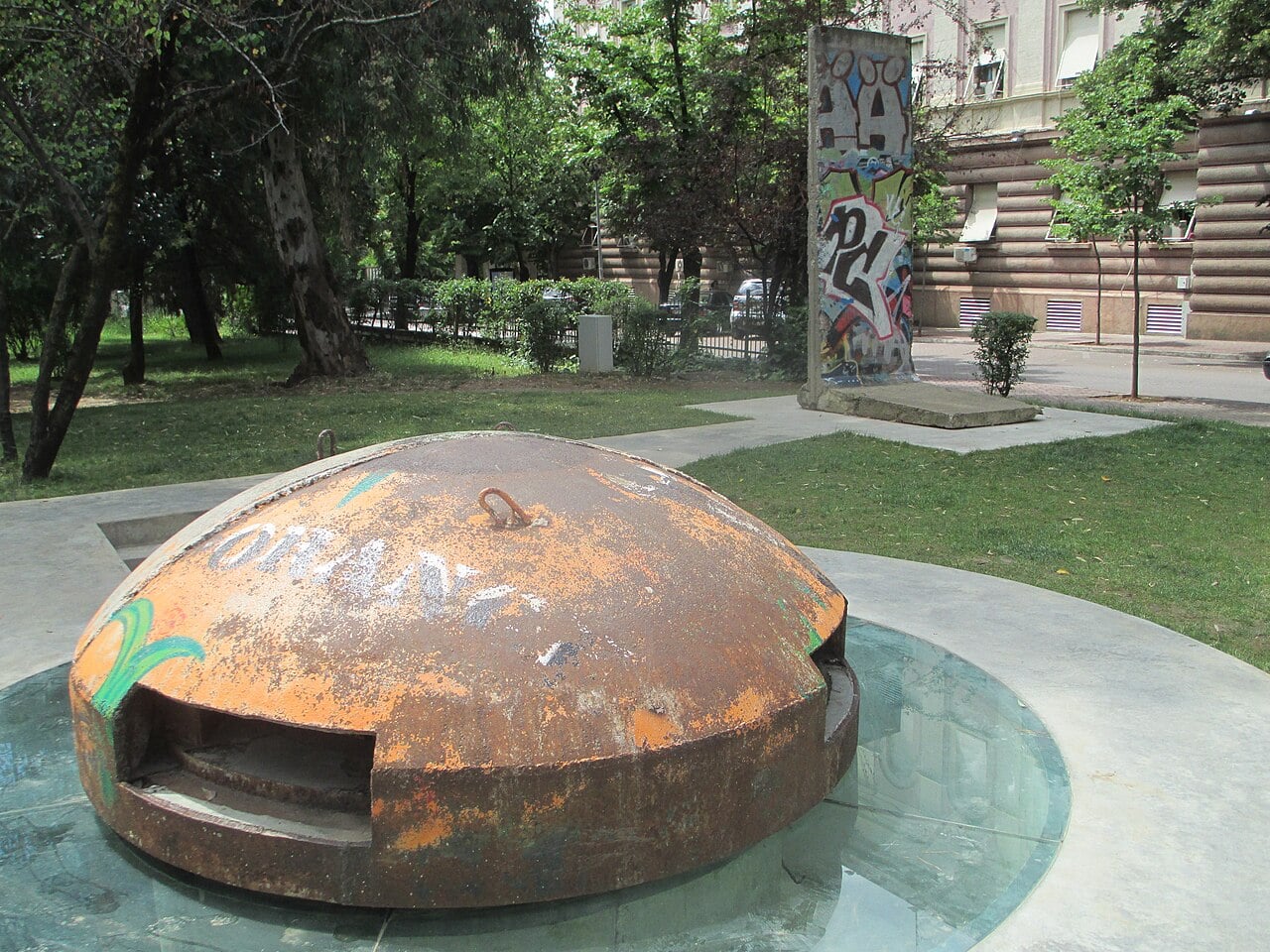
The embassy crisis of July 1990 is widely seen — and I think correctly so — as a hinge moment in Albania’s transition out of dictatorship, even though the dictatorship itself limped on for another year and a half. It preceded the legalization of political pluralism in December 1990, Albania’s first multi-party elections in 1991, and the Democratic Party’s decisive election victory in 1992 that finally ended communist rule outright.
None of those later milestones happened because of the embassy crisis alone. But it mattered because it was the first time the regime had been forced, in full view of the world, to publicly negotiate with its own citizens over their right to simply leave. That’s a different kind of rupture than a protest or a strike — thousands of ordinary people voting with their feet, and a government that, for the first time in decades, had to let them. If this period of Albanian history is new to you, my beginner’s guide to Albanian history covers how the country got here in the first place, and what came after.
How Tirana Remembers It Now
Walk past the German embassy on Rruga Skënderbej today and you’ll find the moment hasn’t been forgotten — there’s a permanent installation on the embassy wall marking the anniversary, and the German embassy itself has run exhibitions on “Tirana, July 1990” documenting the escape. It’s one of the few pieces of communist-era Albanian history with a genuinely international audience, because West Germany was on the receiving end of it.
What I find more interesting is how differently this event sits in Albanian memory compared to, say, the toppling of Enver Hoxha’s statue in Skanderbeg Square in February 1991 — the image most people reach for first when they think of communism ending here. The embassy crisis came first, was less photogenic, and involved ordinary families rather than a crowd pulling down a monument, and maybe that’s exactly why it took longer to become part of the story Albanians tell about their own history.
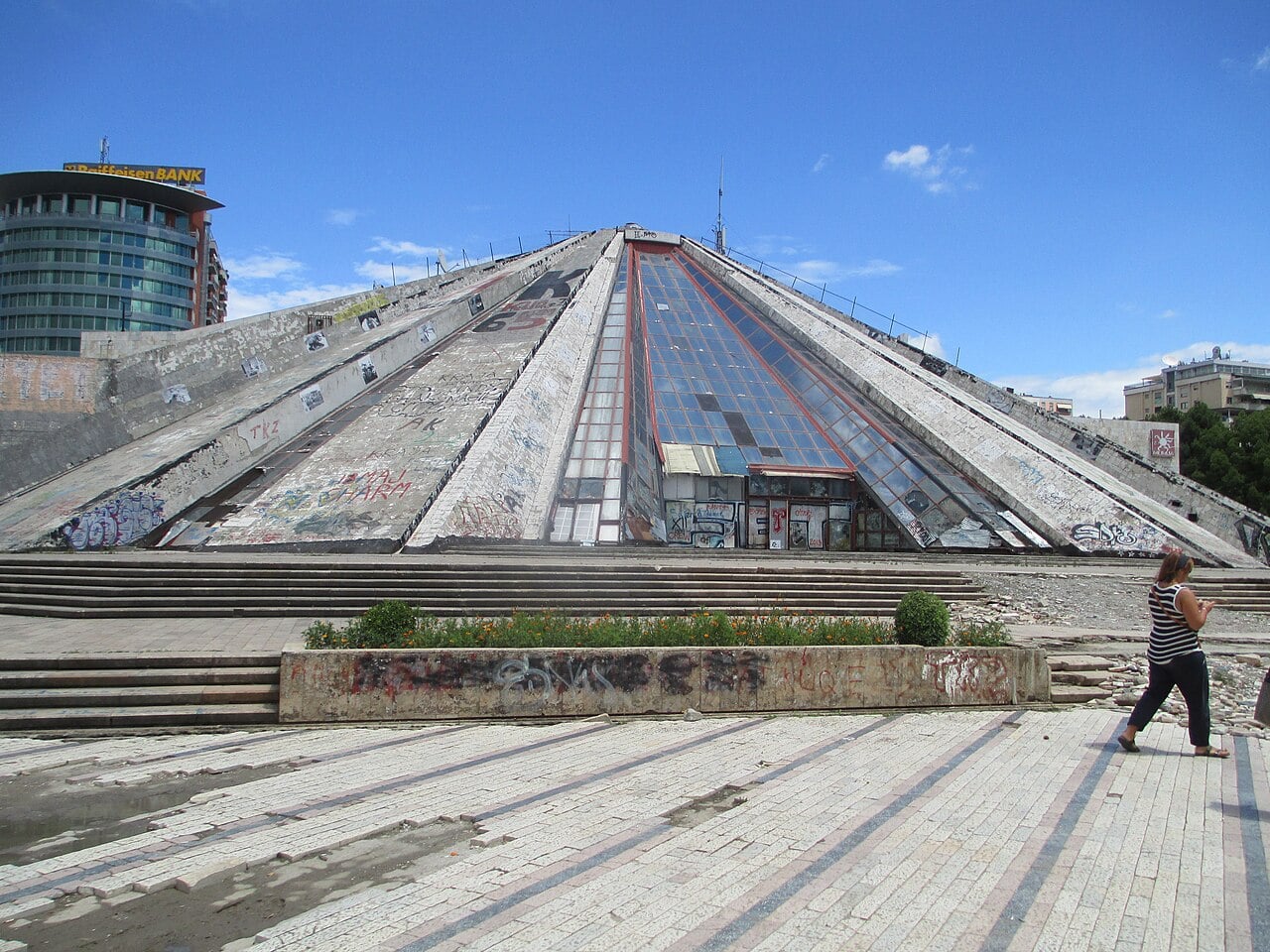
If you’re visiting Tirana and want to see where this history is still visible on the ground, it’s worth folding into a broader walk through the city — I’ve put together a list of 25 things to do in Tirana that includes several communist-era sites within easy walking distance of the German embassy, and if you’re planning the trip itself, my Albania travel tips guide covers the practical basics of getting around the city.
What do you think?
Did your family have a story from the summer of 1990 — an embassy, a border, a decision to stay or go? I’d genuinely like to hear it in the comments below.
Frequently Asked Questions
Who was Ylli Bodinaku?
Ylli Bodinaku was a Tirana resident who, on the evening of 2 July 1990, drove a truck through the rear wall of the West German embassy, reportedly with his wife and two children in the cab. He became one of the emblematic figures of Albania’s 1990 embassy crisis, though he was not its sole cause.
Did Bodinaku’s truck single-handedly start the 1990 embassy crisis?
No. It was a catalytic, emblematic moment that helped accelerate a mass movement already underway, with earlier and parallel breaches at other embassies, including the Italian embassy, around the same period.
How many people took refuge in embassies in Tirana in July 1990?
An estimated 5,000 Albanians sought refuge across foreign embassies in Tirana, with more than 3,200 of them crowded into the West German embassy compound alone.
How long did the embassy crisis last, and how did it end?
The standoff lasted roughly ten days and was resolved through negotiation between the Albanian government and Western diplomats, rather than through force. The government ultimately agreed to let the refugees leave the country.
How did the refugees actually leave Albania?
They were transported to the port of Durrës and put on ships to Brindisi, in southern Italy. Many continued by train to West Germany, while others went on to France, Greece, and other Western European countries.
Why does this event matter for Albania’s history?
It’s widely regarded as a hinge moment that preceded the legalization of political pluralism in December 1990, the first multi-party elections in 1991, and the Democratic Party’s 1992 election victory that ended communist rule — a public, undeniable crack in a regime that had spent decades insisting it had no cracks at all. The German embassy still stands on Rruga Skënderbej today with a permanent memorial installation marking the anniversary.
