
Key Takeaways
- Bunk’Art 1 = the huge nuclear bunker near Dajti (outskirts), 106 rooms, history + contemporary art, allow 2+ hours.
- Bunk’Art 2 = the compact bunker by Skanderbeg Square (city centre), focused on the Ministry of Internal Affairs and the Sigurimi secret police, allow 60–90 minutes.
- Tickets run roughly 900 ALL (~€9) per museum, with a combined ticket for both around 1,300 ALL (~€13). Cash is the safest bet. Verify current prices before you go.
- Typical hours are 09:30–17:30 (Bunk’Art 1) and 09:30–18:30 (Bunk’Art 2), daily — but check the official Bunk’Art Facebook page or call ahead, as hours shift seasonally.
- Short on time or based in the centre? Do Bunk’Art 2. Have half a day and want the full picture? Do Bunk’Art 1, or both.
Bunk’Art is the name given to two former communist-era bunkers in Tirana that have been turned into museums about Albania’s history under dictator Enver Hoxha. Bunk’Art 1 is a colossal five-storey nuclear shelter on the eastern edge of the city, near the Dajti cable car, mixing Cold War history with contemporary art across 106 rooms. Bunk’Art 2 is a smaller bunker right in the centre, steps from Skanderbeg Square, dedicated entirely to the Ministry of Internal Affairs and the Sigurimi — Albania’s secret police. If you only have time for one, Bunk’Art 2 is faster and more emotionally direct; Bunk’Art 1 is the fuller, stranger, more physically overwhelming experience.
A Country Built on Fear
To understand why Tirana has two museums inside bunkers, you have to understand what Enver Hoxha did to this country. Hoxha ruled Albania from 1944 until his death in 1985, and he ran it as one of the most closed, paranoid states on earth — cut off even from its own communist allies, convinced that invasion by NATO, the Soviet Union, or Yugoslavia was always imminent.
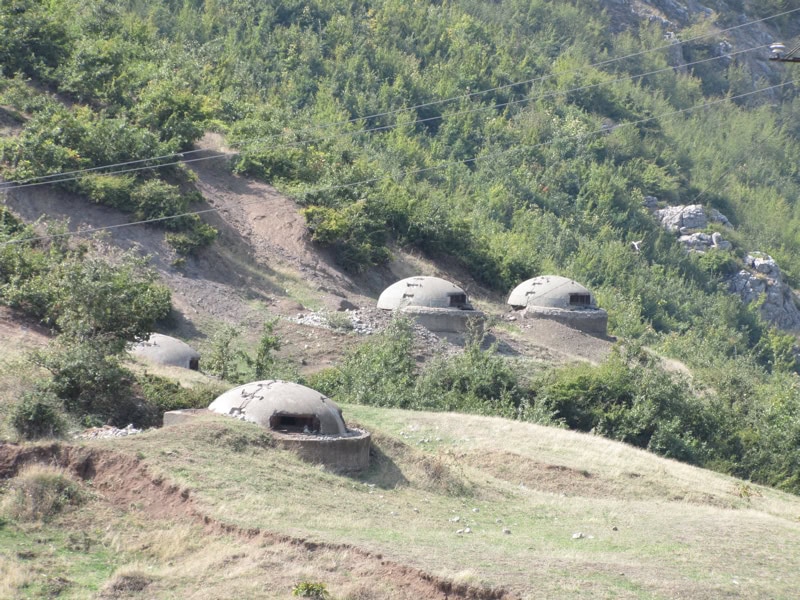
That paranoia poured itself into concrete. Starting in the late 1960s and accelerating through the 1970s and 80s, the regime built somewhere around 173,000 bunkers across the country — small “mushroom” pillboxes dotting fields, beaches, and city parks, plus much larger command shelters for the elite. The exact figure is debated (some counts of all defensive structures run higher), but the scale isn’t: for a country of roughly three million people at the time, it’s an almost incomprehensible amount of concrete poured in the name of a war that never came. For the fuller backstory, our beginner’s guide to Albanian history walks through the decades that led here.
Did you know?
Albania built an estimated 173,000 bunkers under Enver Hoxha — roughly one for every 17 citizens at the time — for an invasion that never came.
Most of those bunkers are small, empty, and slowly disappearing into the landscape. Bunk’Art 1 and Bunk’Art 2 were different — two of the largest shelters built for the regime itself — and both are now preserved and turned into two of the city’s most visited attractions.
Bunk’Art 1 — Inside the Dictator’s Nuclear Bunker
Planning a Trip to Tirana?
Get my free Tirana in 48 Hours checklist with day-by-day itinerary, prices, and local tips.
Get the Free Checklist →Bunk’Art 1 sits on the eastern edge of Tirana, dug into the hills near Mount Dajti, close to the Dajti Ekspres cable car station. Built between the 1970s and 1978, it’s a five-storey, roughly 2,600-square-metre shelter designed to protect Hoxha and the top tier of the political and military leadership in the event of a nuclear strike. It was never used for that purpose — today it’s the opposite of secret: a museum with 106 rooms open to anyone with a ticket.
What You’ll See
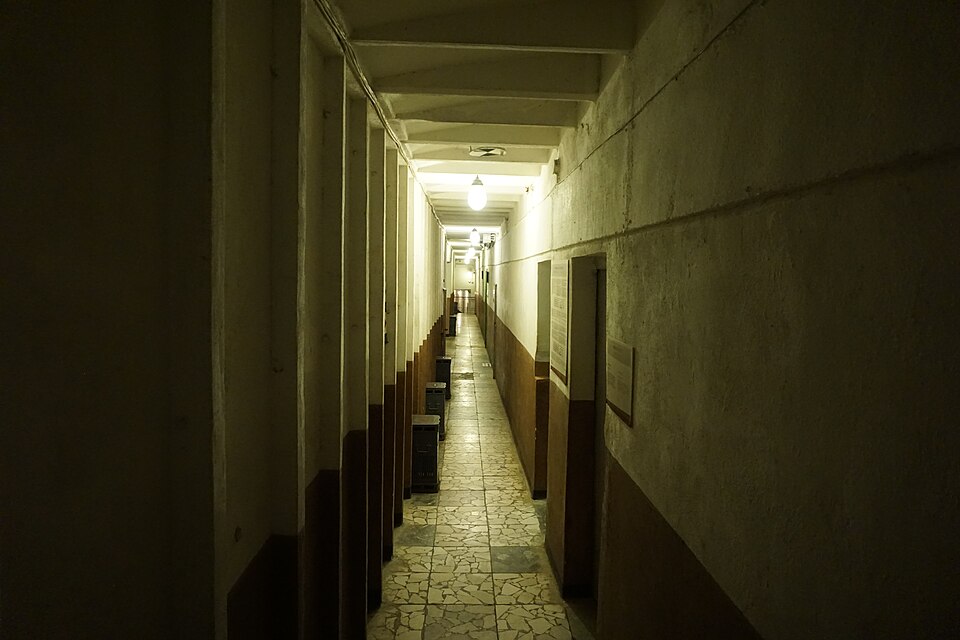
Walking through Bunk’Art 1 feels less like a museum tour and more like exploring an abandoned government facility — because in a sense, that’s exactly what it is. Long, low-ceilinged corridors connect small rooms: sleeping quarters, decontamination chambers, an assembly hall laid out like a mini parliament, communications rooms, even a chamber built for Hoxha himself. Some rooms hold a fairly conventional walk through Albanian history from the world wars through the rise and fall of communism; others have been handed to contemporary Albanian artists, whose installations sit inside the same claustrophobic concrete boxes, blurring the line between historical document and art piece. You go in expecting a history lesson and come out having also seen a strange, effective piece of institutional critique.
Budget at least two hours if you want to do it properly. The bunker sits at a constant 16°C (61°F) year-round, so bring a layer even in summer.
Bunk’Art 2 — The Ministry of Fear
Bunk’Art 2 is a different animal — smaller, more focused, far more central. It occupies a bunker beneath a small dome poking out of the pavement on Rruga Abdi Toptani, next to Tirana’s City Hall and a short walk from Skanderbeg Square (Skënderbej, in Albanian). Opened in November 2016, its 24 rooms are dedicated to one story: the history of Albania’s Ministry of Internal Affairs from 1912 through 1991, and specifically the Sigurimi — the state security service that spied on, interrogated, imprisoned, and often killed Albanians suspected of disloyalty to the regime.
What You’ll See
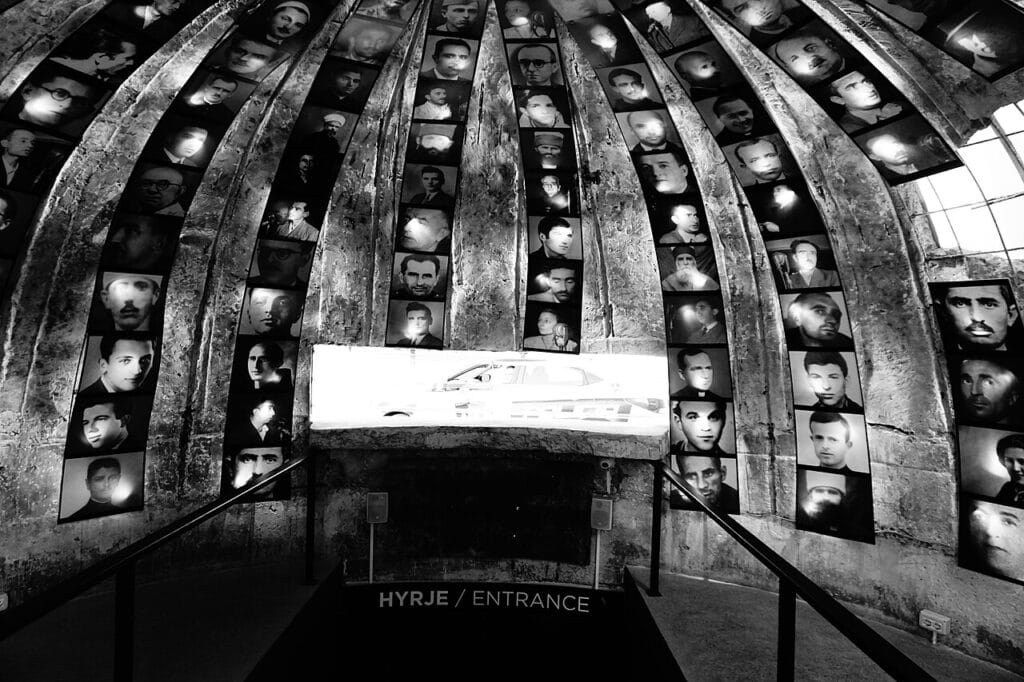
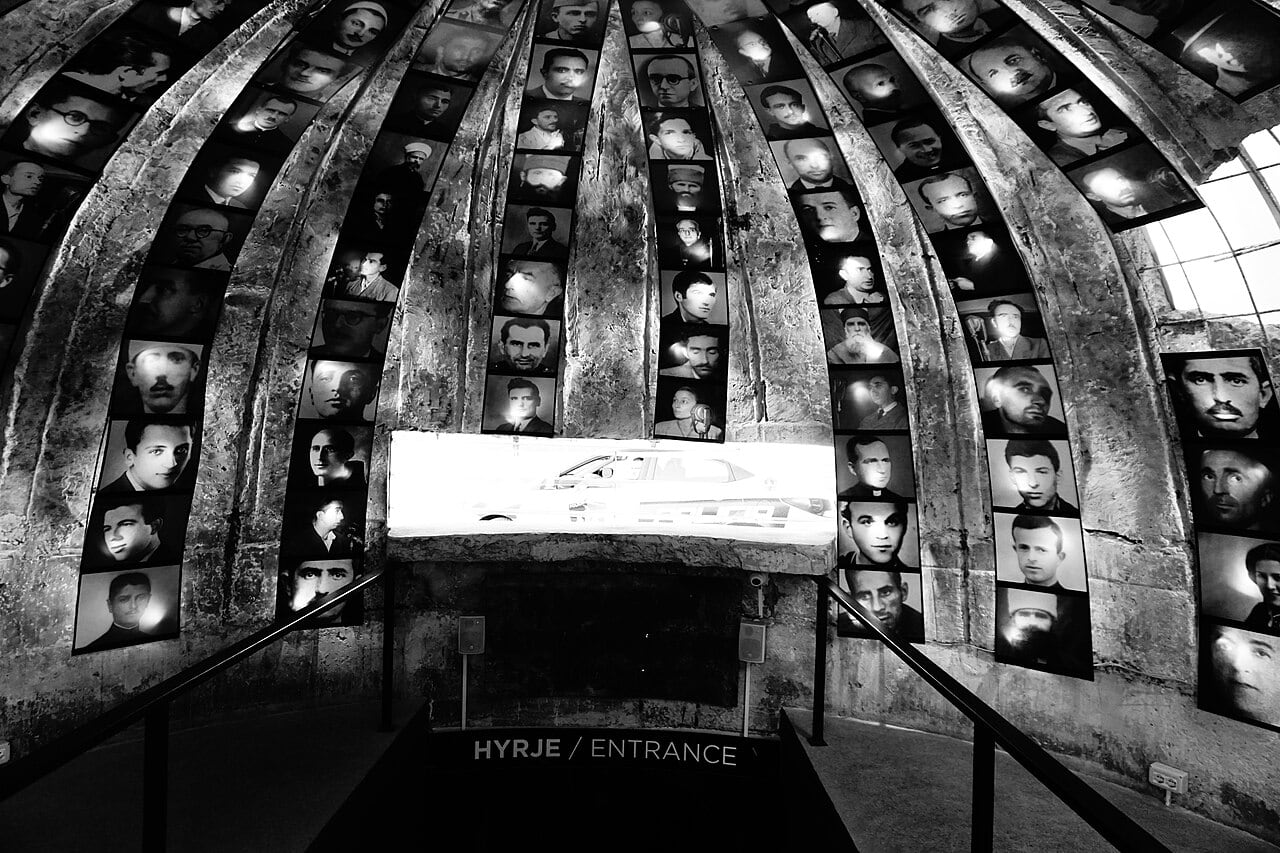
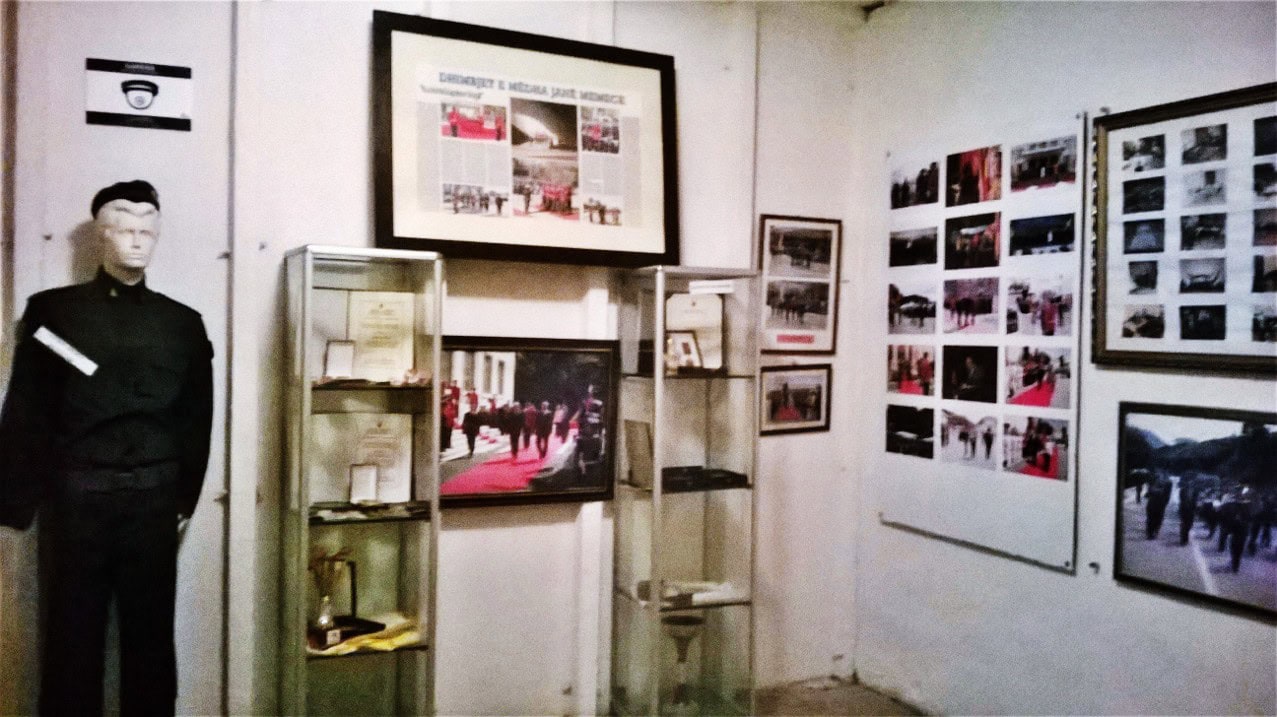
Where Bunk’Art 1 spreads its history across a huge physical space, Bunk’Art 2 concentrates it. Expect rooms built around surveillance equipment, interrogation methods, and forced-labour camps; case files and photographs of real people who were imprisoned or executed; and a genuinely striking entrance, where a domed concrete stairwell is lined floor to ceiling with the faces of victims of the regime — clergy, intellectuals, ordinary citizens — looking down at you as you walk in. It’s a smaller visit than Bunk’Art 1, usually 60 to 90 minutes, but it hits harder in less time precisely because it’s so tightly focused.
Because it sits right in the historic centre, Bunk’Art 2 fits easily into a Tirana walking tour alongside Skanderbeg Square and the National History Museum — no bus or taxi required.
Bunk’Art 1 vs Bunk’Art 2 — Which Should You Visit?
If you’re choosing between them, it comes down to time and what kind of experience you want.
Choose Bunk’Art 2 if: you’re short on time or based in the centre without a car; you want the more emotionally concentrated, personal-stories version of this history; you’re already walking Tirana’s historic core and want one stop, not a half-day excursion.
Choose Bunk’Art 1 if: you have at least half a day and want the fuller historical arc, not just the secret-police chapter; you’re drawn to the contemporary-art angle as much as the history; you’re riding the Dajti Ekspres cable car anyway, since the bunker sits right near the base station.
Honestly, if your schedule allows it, do both — they complement rather than repeat each other, and the combined ticket makes it the cheaper option anyway. Both museums rank among the top things to do in Tirana.
Practical Guide: Locations, Hours, Prices, Getting There
A note before we start: ticket prices and opening hours at both sites have changed more than once in recent years, and sources currently disagree slightly on exact figures. Treat the numbers below as a solid planning estimate, not gospel — verify current prices and hours on the official Bunk’Art Facebook page or by phone before you go.
Bunk’Art 1
- Location: Rruga Fadil Deliu, Linzë, eastern outskirts of Tirana, right by the Dajti Ekspres cable car base station.
- Getting there: Blue city bus #11 towards Linzë from the Pazari i Ri / clock tower area (roughly 40 ALL, 30–45 minutes); or a taxi (15–20 minutes, ~800–1,000 ALL).
- Hours: Daily, roughly 09:30–17:30 (some sources say 16:30 — confirm on the day).
- Price: Around 900 ALL (~€9); audio guide adds a small fee. Cash has historically been the only accepted payment.
Bunk’Art 2
- Location: Rruga Abdi Toptani, opposite Tirana City Hall, a few minutes’ walk from Skanderbeg Square.
- Getting there: Walking distance from anywhere in the centre — look for a small concrete dome rising out of the pavement.
- Hours: Daily, roughly 09:30–18:30, with some sources noting later closing on Fridays/Saturdays.
- Price: Around 900 ALL (~€9); a combined ticket for both is typically cheaper than paying separately — ask at either ticket desk.
If you’re building a broader itinerary, our 72-hour Tirana city guide shows where a Bunk’Art visit (or both) slots in alongside the rest of the city.
What It’s Actually Like to Visit — An Honest Take
It’s worth being upfront about something most listicles skip: visiting Bunk’Art isn’t a neutral sightseeing experience, and it isn’t meant to be. You’re walking through a shelter built by a regime to protect itself from a war it invented in its own head, while ordinary Albanians outside lived with rationed food, restricted movement, and the real fear of being reported by a neighbour. Bunk’Art 2 puts faces and names to that fear in a way that can be genuinely heavy, especially the entrance stairwell lined with photographs of the persecuted.
That contrast — the shelter built for the few, against the surveillance state built to control the many — is the point of both museums, and it’s why they land differently than most “communism museums” elsewhere in the former Eastern Bloc.
This isn’t distant history behind glass; for a large share of the people who still live in Tirana, it’s living memory, or one generation removed from it. That tension between how a place processes its own hard history and how it presents itself to the world is very much part of Albanian culture today.
Come with that in mind and give yourself permission to move through it slowly. It’s not a place you rush, and it’s not one you leave unaffected.
Frequently Asked Questions
Is Bunk’Art 1 or Bunk’Art 2 better for a first-time visitor?
Bunk’Art 2 is the easier first stop — central, quick, and a strong introduction to the Sigurimi era. Bunk’Art 1 is the deeper dive if you have more time.
How much time should I set aside for each museum?
Around two hours at Bunk’Art 1, given its size, and 60–90 minutes at Bunk’Art 2. Add travel time if you’re coming from the centre.
Can I visit both in one day?
Yes — start with Bunk’Art 1 in the morning (combine it with the Dajti cable car) and finish with Bunk’Art 2 back in the centre in the afternoon.
Do I need to book tickets in advance?
Generally no — both sell tickets on-site. In peak summer, arriving earlier in the day helps you avoid queues, particularly at Bunk’Art 2.
Is Bunk’Art suitable for children?
Bunk’Art 1 is generally fine for older children and teens with guidance. Bunk’Art 2’s subject matter — surveillance, imprisonment, persecution — is heavier and better suited to teens and adults.
Are the museums accessible for visitors with mobility issues?
Both involve stairs and uneven underground surfaces with no lifts, so accessibility is limited. Contact the museums directly beforehand if mobility is a concern.
Bunk’Art 1 and Bunk’Art 2 aren’t the easiest attractions in Tirana, but they may be the most important ones — a physical, walkable way to understand why the city looks and feels the way it does today. Pair either or both with time in the historic centre for a far fuller picture of Albania than the beach photos alone ever give you.
What do you think?
Have you visited Bunk’Art 1, Bunk’Art 2, or both? Which one hit you harder — and did it change how you see Tirana?
Subscribe to monthly updates
Get honest Albania travel tips, local guides, and new posts straight to your inbox. No spam, unsubscribe anytime.
