
Key Takeaways
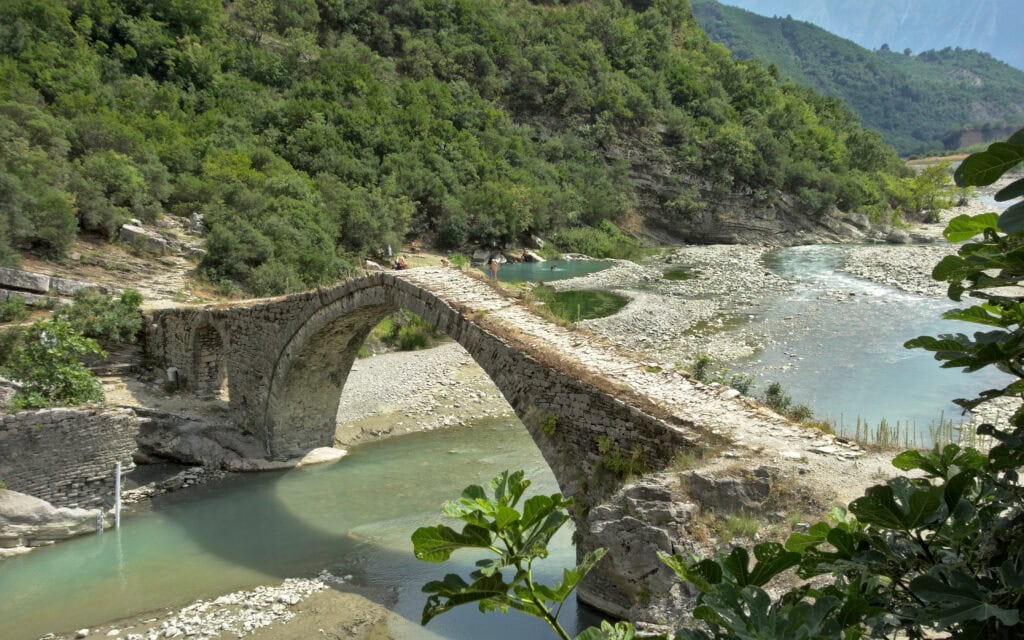
- What it is: A cluster of thermal pools — sources put the count at six to eight — fed by sulphur-rich water at roughly 23–30°C, beside the Ottoman-era Katiu Bridge (Ura e Kadiut) at the mouth of the Lengarica Canyon.
- Where: About 14 km south of Përmet, itself roughly 230–250 km (a 3.5–4.5 hour drive) south of Tirana.
- Cost: Free to soak in, per recent visitor reports — though a small parking fee is possible and facilities were still under construction as of 2025. Bring cash; don’t expect a ticket booth.
- Best time: Spring and autumn for comfort and thinner crowds; early morning any season to beat the day-trippers; summer for canyon hiking and Vjosa rafting, but expect a crowded main pool.
- Manage expectations: rustic and undeveloped — no changing rooms, no showers, occasional overflowing bins. Come prepared, not expecting a spa resort.
- The bigger picture: Bënjë sits on the Lengarica, a tributary of the Vjosa — the river that in March 2023 became the anchor of Europe’s first Wild River National Park.
Deep in the Vjosa valley of southern Albania, a cluster of steaming pools sits at the mouth of a narrow limestone gorge, beside a centuries-old stone bridge. This is Bënjë (also spelled Benjë or Benja), Albania’s best-known natural hot springs and the reason most travelers first hear of nearby Përmet. Together, the springs, the Lengarica Canyon, and the rose-filled town of Përmet make one of Albania’s most rewarding, least commercialized corners — now that the Vjosa these springs feed into is Europe’s first Wild River National Park.
The Bënjë Thermal Springs and the Ottoman Katiu Bridge
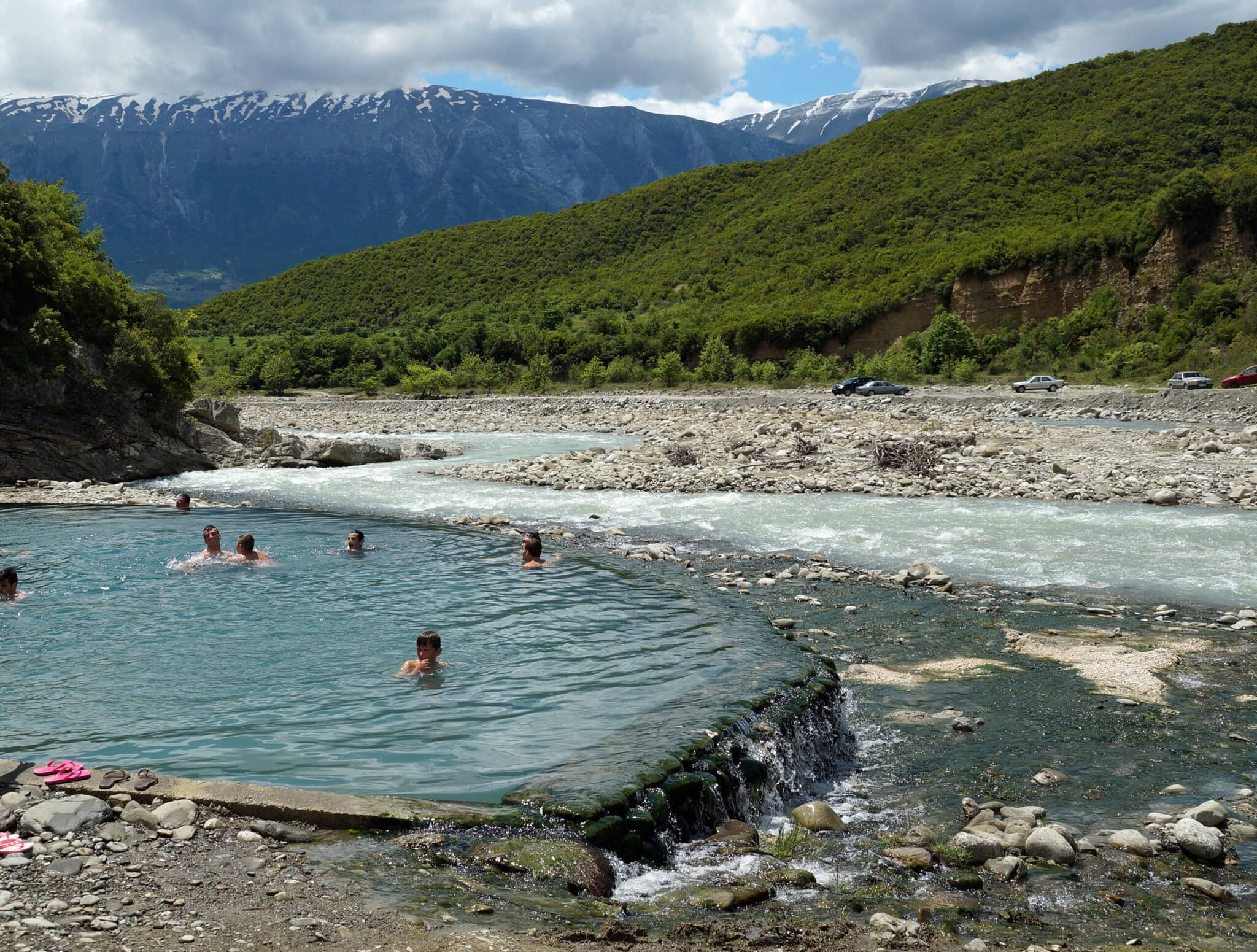
Nowhere else in Albania do warm, mineral-rich pools, a wild canyon, and a centuries-old stone bridge sit within a few hundred meters of each other. Visitor accounts describe six to eight linked pools along the Lengarica river, split across both banks, at temperatures generally between 23°C and 30°C — pleasantly warm rather than scalding, with a distinct sulfur smell giving away where the heat comes from.
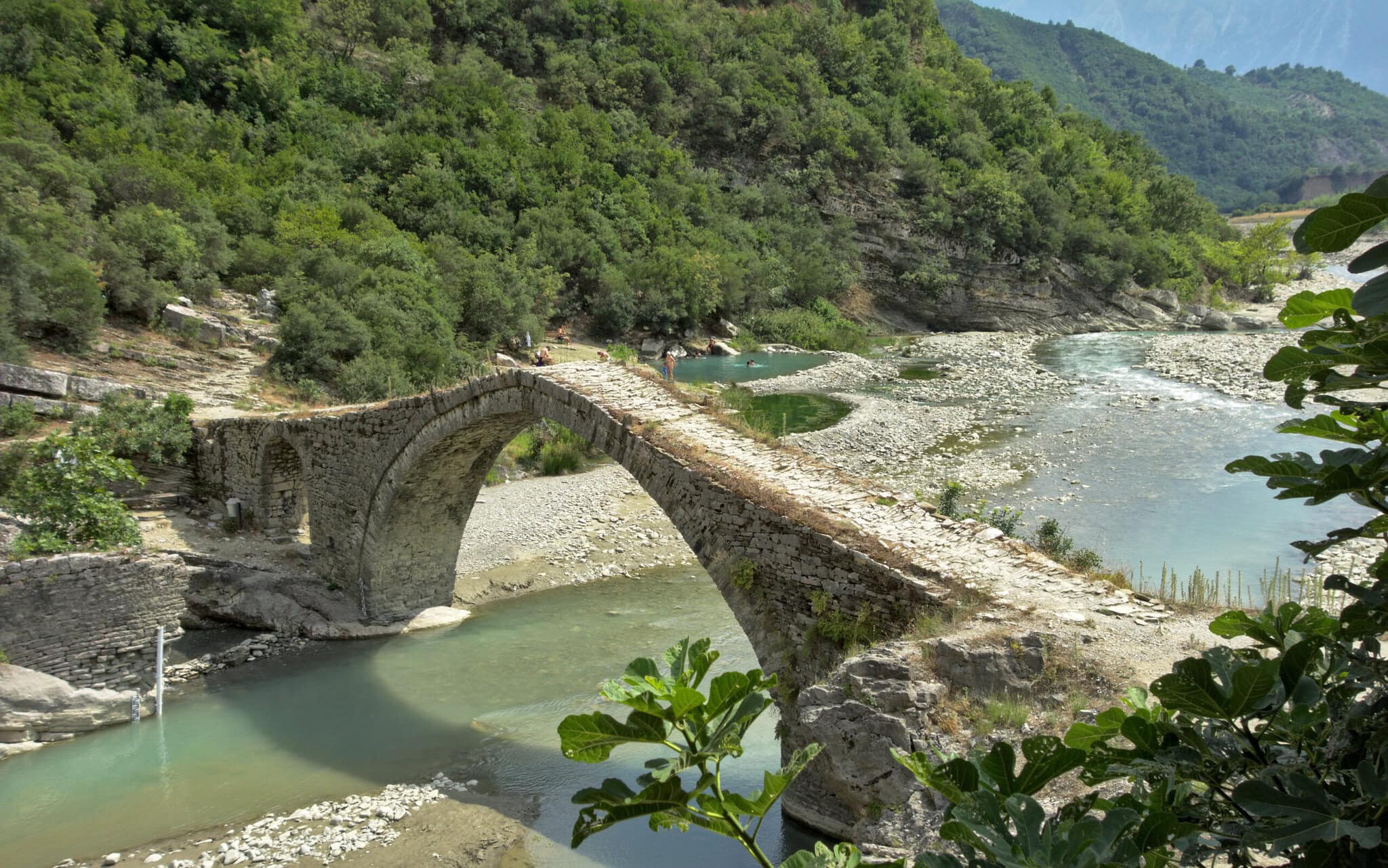
Right at the springs stands the Katiu Bridge, a single-arch Ottoman-era stone bridge nearly as photographed as the pools. Sources disagree on its exact age and size — some date it to the 18th century at roughly 30 meters long and 7 meters high, others describe just the main arch as a 15.5-meter span 6 meters above the water — but all agree it once connected villages and loggers across the valley, and has held up remarkably well.
Be honest about what this is: an unticketed, undeveloped natural site, not a resort. Recent reports describe no toilets, showers, or changing rooms on-site, a largest pool that’s crowded most of the day, and bins known to overflow at busy times. None of that makes it less worth visiting — just come prepared rather than expecting polish.
The Lengarica Canyon: A Narrow Gorge Carved by Hot Water
Planning a Trip to Tirana?
Get my free Tirana in 48 Hours checklist with day-by-day itinerary, prices, and local tips.
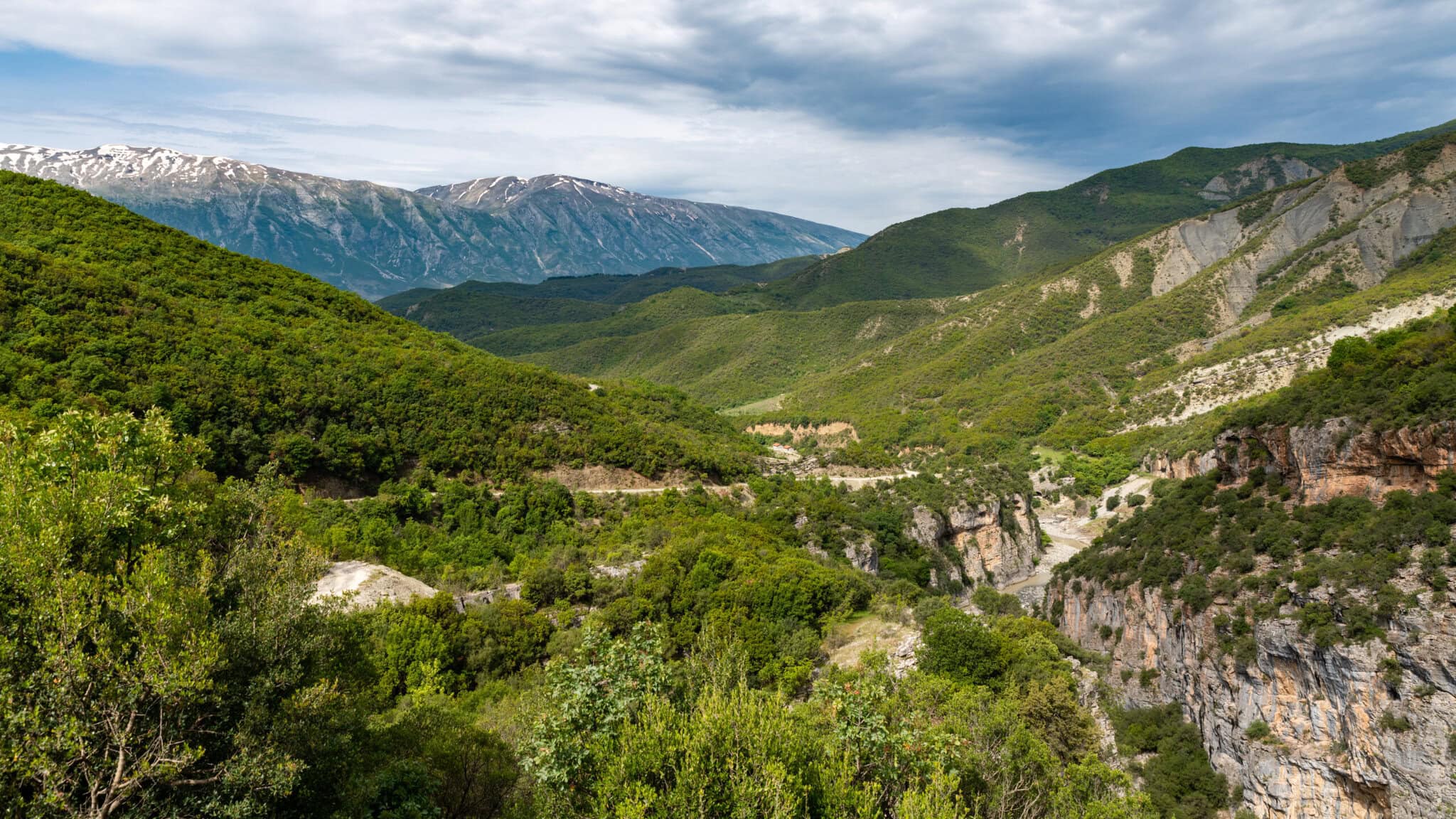
Get the Free Checklist →Behind the springs, the Lengarica has cut a dramatic gorge through the limestone — reported lengths run 5 to 7 km, with walls rising 100 to 150 meters in places while narrowing to 20–30 meters across. Inside are caves, springs seeping straight out of the rock, and stretches you can wade or hike through in summer.
It’s one of Albania’s better spots for river-hiking and canyoning: expect river crossings, cold water upstream, and terrain that rewards water shoes over flip-flops. Operators in Përmet run guided trips combining the canyon with the Bënjë pools, typically around €35 per person — confirm current pricing before you go.
Përmet: The Town of Roses on the Vjosa
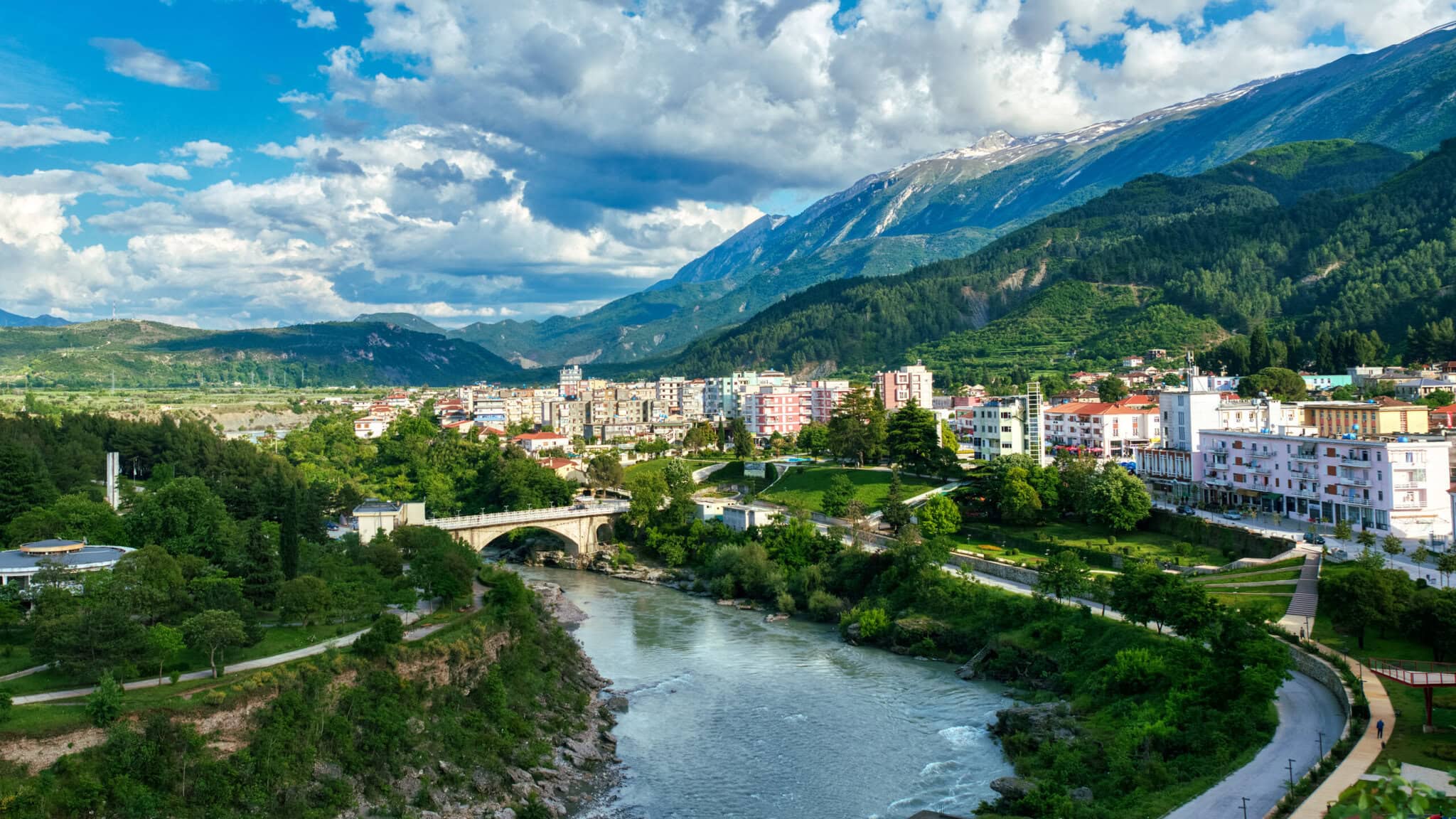
Përmet is worth the drive on its own merits. Known locally as the “town of roses” for its flower-lined streets and annual rose festival, it sits directly on the Vjosa river, ringed by mountains, with a reputation — even among Albanians — as one of the cleanest, greenest towns in the country.
Food is a serious part of the draw. Përmet is the historic home of gliko, a traditional fruit preserve (walnuts, cherries, figs) in sugar syrup, recognized by the Slow Food movement as a regional presidium worth protecting. Expect homemade raki, local wines, herbal mountain tea, and traditional cheese alongside it. The town also has a strong musical heritage, tied to clarinet virtuoso Laver Bariu and southern Albania’s UNESCO-recognized iso-polyphony singing tradition.
The Vjosa: Europe’s First Wild River National Park
Everything in this valley sits downstream of a remarkable conservation story. The Vjosa flows roughly 270 km, undammed, from Greece’s Pindus Mountains (called the Aoös there) to the Adriatic — widely described as the last genuinely wild river of its size in Europe.
Did you know?
The Vjosa runs roughly 270 km without a single dam — one of the last rivers of its size left in Europe to flow completely wild, start to finish.
On 15 March 2023, the Albanian government — with the IUCN, the Save the Blue Heart of Europe campaign, and Patagonia — declared the Vjosa’s active channel a national park, protecting its free flow and biodiversity instead of damming it for hydropower. Përmet, sitting right on the river, is effectively a gateway town, and rafting or kayaking trips from here are among the most direct ways to experience it.
Getting There, and When to Go
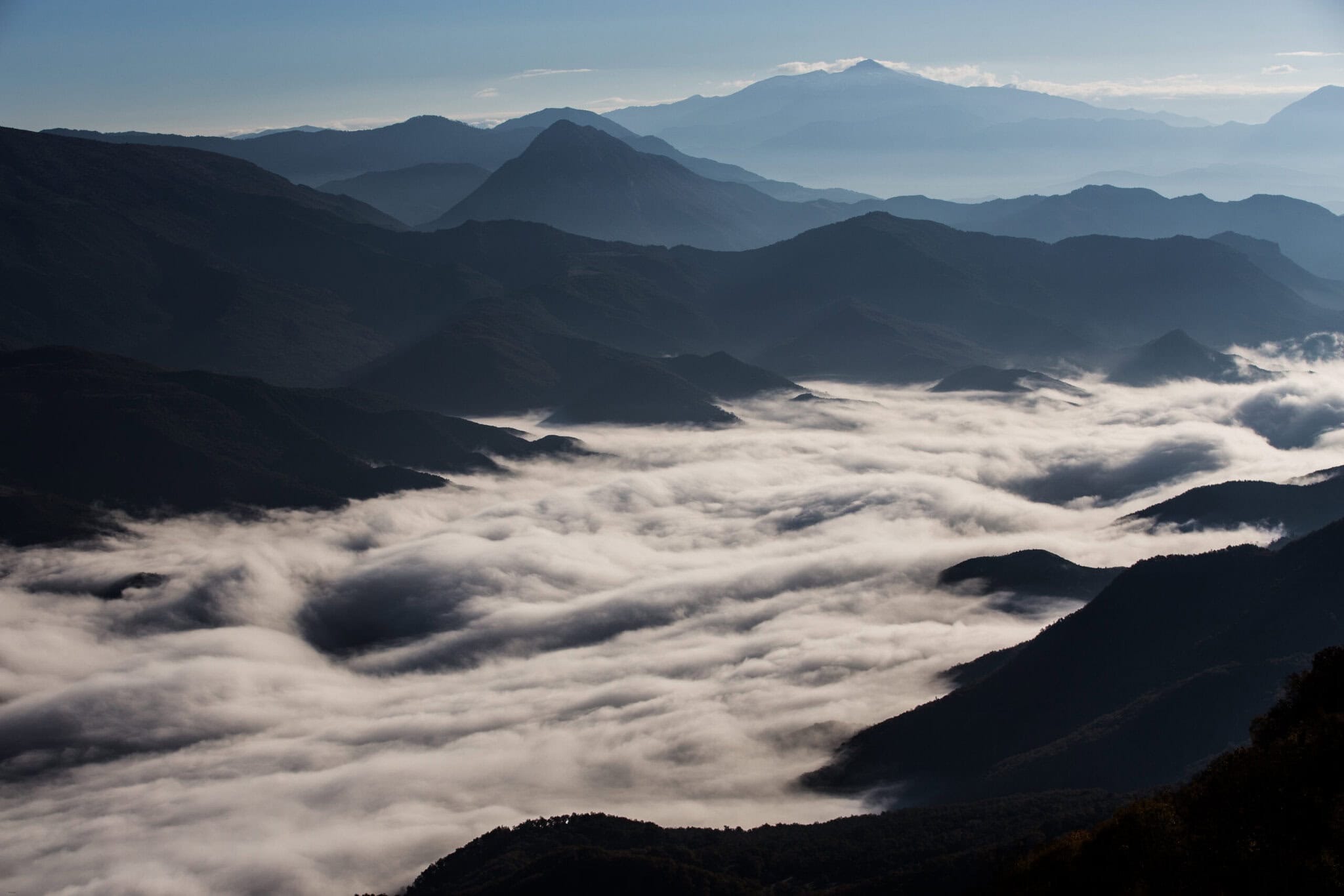
Most visitors drive from Tirana south on the SH4 through Fier and Tepelenë, then follow the Vjosa gorge road southeast into the Përmet basin — most sources put the drive at 3.5 to 4.5 hours, a weekend trip rather than a rushed day out. For the wider logistics of getting around by car or bus, see our guide to getting around Albania.
Without a car, buses run Tirana–Gjirokastër (roughly 3.5–4 hours), then on to Përmet (about an hour). From Përmet to Bënjë, 14 km away, there’s generally no reliable public bus — plan on a taxi, a tour, or a seasonal local minibus, and confirm locally.
Best season: Spring and autumn for comfort and thinner crowds. Summer suits canyon hiking and rafting but brings the biggest crowds — go at first light for the pools mostly to yourself. Winter draws a smaller crowd for the steam-against-cold effect, though access may be more limited.
An honest note: expect no toilets, showers, or changing rooms, occasional litter, and a pothole-prone access road. Bring water shoes, a towel, cash, water, snacks, and a bag for your own rubbish — it’s a beautiful, still-mostly-wild site, not a manicured attraction.
If a 4-hour drive south isn’t in your plans right now, our guide to the best day trips from Tirana covers destinations you can reach and return from in a day, and our Gamti Mountain and Bovilla Lake hike is a closer-to-home alternative for the same wild-nature feel.
Continuing On: Toward the Riviera
Përmet sits on the route many travelers use to reach the Albanian Riviera, following the Vjosa valley toward Tepelenë. For a longer southern itinerary, our guide to Sarandë and the Albanian Riviera is a natural next stop.
This is one of the last corners of the country where a hot spring is still just a hot spring, and a major European river still runs exactly where it always has.
Frequently Asked Questions
Is Bënjë thermal springs free to visit?
Per recent visitor reports, yes — no entry ticket, though a small parking fee is possible. Confirm locally; there’s no fixed pricing structure.
How far is Përmet from Tirana, and is it a day trip?
Roughly 230–250 km, 3.5–4.5 hours each way — better as an overnight or weekend visit than a rushed day trip.
Best time of year to visit?
Spring and autumn for comfort and crowds; summer for hiking and rafting (but busiest); winter for a smaller crowd and cold-weather steam, with more limited access.
How do I reach Bënjë from Përmet without a car?
No reliable scheduled bus for the 14 km stretch — use a taxi, an organized tour, or a seasonal local minibus, and check locally.
Is it family-friendly, and what should I bring?
Families do visit, but treat it as rustic: water shoes, towels, cash, snacks, water, and a rubbish bag — there are generally no toilets, showers, or changing rooms.
What is the Vjosa Wild River National Park, and how does it relate to Përmet?
Declared March 2023, it protects the ~270 km Vjosa’s free-flowing course — the river the Lengarica (and Bënjë) feeds into. Përmet sits directly on it and serves as a gateway town.
What do you think?
Have you made the trip south to Bënjë or Përmet? What surprised you most — the springs, the canyon, or the town itself?
Bënjë and Përmet capture a side of Albania that’s still delightfully unpolished. For more of the country’s wild corners, see our guide to getting around Albania.
Subscribe to monthly updates
Get honest Albania travel tips, local guides, and new posts straight to your inbox. No spam, unsubscribe anytime.
