
By Elvis Plaku — lifelong Tirana native, blogging since 2004
FTC Disclosure: This post contains affiliate links. If you book through my recommended link, I earn a small commission at no extra cost to you. I only recommend trips I’d take myself.
Every Albanian grows up knowing Kruja. It’s the city where Gjergj Kastrioti — Skanderbeg — held off the Ottoman Empire for decades, and the place the whole nation treats as something close to sacred ground. For visitors coming from Tirana, it’s the most historically charged 45-minute drive you’ll make in this country.
What’s interesting about Kruja is that it works on two completely different levels at once. There’s the serious historical weight of the castle and the museum. And then there’s the bazaar below it, which is one of the most atmospheric places to spend an afternoon anywhere in the Western Balkans. You don’t have to choose — most people do both in the same visit, and that’s exactly how it should be.
Key Takeaways
- Kruja is 32 km from Tirana and takes roughly 45 minutes to reach by road — one of the most accessible day trips from the capital.
- The castle complex sits at 600 meters above sea level and houses the Skanderbeg Museum, which draws around 200,000 visitors per year.
- The Old Bazaar (Bazari i Vjetër) is one of the few surviving Ottoman-era markets in Albania, with craftsmen still working in traditional trades.
- Organized day trips from Tirana average 4.7 stars and cost around $35-45 per person on GetYourGuide.
- You can reach Kruja independently by furgon (shared minibus) for under €2, or by taxi for €25-35 return.
Book This Day Trip
Kruja Day Trip from Tirana — Castle, Museum & Bazaar
4.7 stars · Small group · Includes entrance fees · Free cancellation
Affiliate link — I earn a small commission if you book. Doesn’t change your price.
What Is Kruja, and Why Does It Matter So Much to Albanians?
Kruja is not just a day trip destination. Among Albanians, it occupies the same kind of emotional space that a handful of sacred sites do for other nations. According to Albania’s Institute of Cultural Monuments (IKMT, 2023), the castle complex is one of the country’s five most significant cultural heritage sites, and the Skanderbeg Museum inside it receives approximately 200,000 visitors annually — the highest figure for any single cultural site in the country.
The reason comes down to one man: Gjergj Kastrioti, known to history as Skanderbeg, Albania’s national hero. Born into a noble Albanian family and taken as a boy into the Ottoman court, he rose to command armies for the Sultan, then turned on the empire that had shaped him. In November 1443 he reclaimed Kruja, raised the double-headed eagle, and united the fractured Albanian principalities into a resistance that held for 25 years. He won 25 of 26 major battles against what was then the most powerful military force in the known world. Kruja was his stronghold. He died in 1468, and the castle fell to the Ottomans shortly after — but the legend never did.
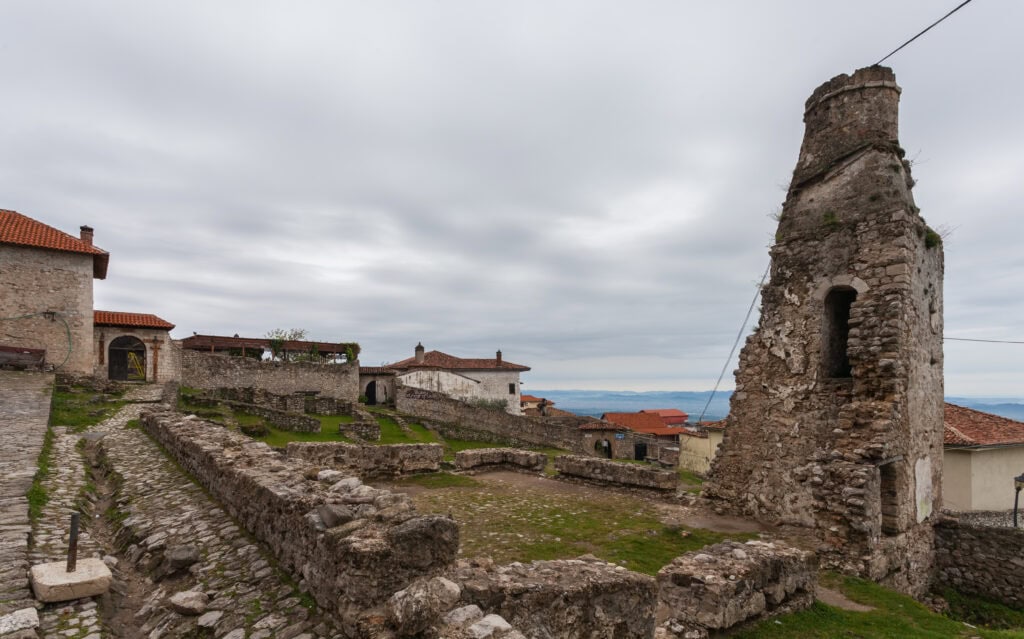
The castle isn’t a pristine medieval fortress. Much of what you see today has been rebuilt or restored. But the position is astonishing — perched on a limestone ridge at 600 meters, with views across the valley toward the Adriatic on a clear day. Walking through it, you start to understand why Skanderbeg chose this specific place to make his stand.
The Skanderbeg Museum, housed inside the reconstructed castle, was designed by Albanian architects Pirro Vaso and Engjëll Zhuli and opened in 1982. The collection covers Skanderbeg’s life, his campaigns, the history of the castle, and broader Albanian medieval history. Some of the artifacts are originals, some are reproductions — the labeling is sparse, so a guide is useful here more than in some other Albanian museums.
Kruja’s castle complex, classified as one of Albania’s five most significant cultural heritage sites by the Institute of Cultural Monuments (IKMT, 2023), receives approximately 200,000 visitors per year — the highest annual visitor count of any single cultural site in the country. The site is associated with Gjergj Kastrioti Skanderbeg, who used Kruja as his military base during a 25-year resistance against Ottoman expansion, winning 25 of 26 major engagements between 1443 and his death in 1468.
What Makes Kruja Different From Other Albanian Castles?
Planning a Trip to Tirana?
Get my free Tirana in 48 Hours checklist with day-by-day itinerary, prices, and local tips.
Get the Free Checklist →Most Albanian castle sites give you a ruin and a view. Kruja gives you those things, plus a living cultural weight that you can feel even if you know nothing about the history before you arrive. According to a 2022 UNESCO heritage assessment report on the Western Balkans (UNESCO, 2022), Kruja is one of a handful of Balkan sites where the continuous cultural significance of a location has remained unbroken from the medieval period to the present day — meaning locals still actively identify with it, visit it, and celebrate it.
The other thing that sets Kruja apart is the bazaar directly below the castle. Most Albanian historical sites don’t have this kind of commercial and craft infrastructure right next to them. The Old Bazaar here is genuinely old — not a reconstruction for tourists, but a working market with buildings dating to the 18th and 19th centuries that has been carefully restored and maintained.
What you feel in Kruja — and I’ve been here many times over the years — is that the place hasn’t been flattened into a heritage theme park. The castle is dramatic but honest. The bazaar feels used, not staged. That combination is rarer than you’d think.
The most overlooked part of the Kruja visit is the view from the castle walls at around 3 PM, when the afternoon light comes in from the west and the Adriatic catches it through the valley haze. Most day-trippers arrive in the morning and leave by lunch. Staying for the light change is worth rearranging your schedule for.
The Old Bazaar: What to See, What to Buy, and What to Skip
The Bazari i Vjetër (Old Bazaar) runs along a stepped cobblestone lane between the lower town and the castle entrance. The buildings are stone-and-timber structures, most dating to the 18th or 19th century, now occupied by craft stalls, antique dealers, and small workshops. Albania’s National Tourism Agency estimates the bazaar has roughly 80-100 active stalls across its two main lanes (Agjencia Kombëtare e Turizmit, 2024).
What’s worth buying:
- Kilim rugs and flat-woven textiles — Kruja is known across Albania for its woven goods. The quality varies, but the genuine handmade pieces are recognizable if you look at the underside of the weave. Prices range from a few hundred lek for small items to 5,000-15,000 lek for a proper rug.
- Copper and brasswork — functional and decorative pieces, some made on-site. Albanian craftsmen (qereqitë) have been working copper in this bazaar for generations.
- Traditional clothing and accessories — you’ll see the white Albanian plis (qeleshe) cap, embroidered items, and regional dress elements. Some are tourist-grade; some are the real thing.
- Antiques and bric-a-brac — the dealers mixed in among the craft stalls are hit and miss, but if you like hunting for old Albanian objects, this is one of the better places to do it.
What to skip: The mass-produced tourist kitsch (Skanderbeg keychains, generic Albania T-shirts) is present and easy to spot. The genuine craft items are a few steps further in, not at the entrances.
Bargaining: It’s expected and normal, but don’t be aggressive about it. A friendly negotiation is fine. Starting at 70-75% of the asking price is reasonable for smaller items.
How to Get to Kruja from Tirana
Kruja is 32 km from Tirana by road. The drive takes 35-50 minutes depending on traffic out of Tirana and road conditions on the approach to the castle.
By furgon (shared minibus): The cheapest and most local option. Furgons for Kruja depart from Sheshi Shqiponja (the square near the Tirana International Hotel, at the intersection with Rruga e Kavajës). The fare is around 200-250 ALL (€1.60-2.00) per person. Furgons don’t run on a fixed schedule — they depart when full, which typically means every 20-40 minutes during the day. Journey time is 45-60 minutes depending on the route. The furgon drops you at the lower town; the castle is a 10-15 minute walk uphill from there, or a short taxi ride.
By taxi: A taxi from central Tirana to Kruja (return, including 2-3 hours waiting time) typically costs €25-35, depending on negotiation. Agree the total price before you get in. Taxis don’t use meters for inter-city routes. This is a good option if you’re traveling with 2-3 people and want door-to-door convenience without the time flexibility of an organized tour.
By organized day tour: Pickup from your hotel in Tirana, guided visit to the castle and museum, time in the bazaar, return by early afternoon. Tours typically run 4-5 hours total. Average price €35-45 per person via GetYourGuide (GetYourGuide, 2025). This is the most efficient option if your time in Tirana is limited.
By rental car: Kruja is a straightforward drive — take the Rruga Nacionale toward Fushë-Krujë and follow signs up to the castle. Parking is available near the bazaar entrance. Not difficult, but be aware that the road up to the castle has some narrow sections.
Should You Do Kruja Self-Guided or Book a Tour?
Kruja is one of the more accessible Albanian day trips to do independently. Unlike Komani Lake — where missing a ferry can derail your entire day — Kruja operates on your own schedule. The furgon system is functional and cheap, the walk up to the castle is straightforward, and the bazaar explains itself.
The case for self-guided:
- The bazaar and castle grounds are navigable without a guide.
- You control the pace — more time in the bazaar, fewer rushed group moments.
- The furgon experience is interesting in its own right (very local, very Albanian).
- Entrance to the castle museum is only 200 ALL (less than €2).
- Kruja is close enough to Tirana that getting back if something goes wrong is easy.
The case for an organized tour:
- The Skanderbeg Museum has limited English labeling — context from a guide significantly improves what you take away from it.
- Guides know which stalls in the bazaar are worth your time and can help you navigate the quality question on textiles and crafts.
- You don’t have to negotiate the furgon or organize your own transport.
- For first-time visitors to Albania who aren’t yet comfortable with how things work, the structured experience removes friction.
My read: If you’re comfortable with independent travel and have at least one prior day in Tirana under your belt, Kruja self-guided is completely doable. If this is your first day in Albania, or you want to actually understand what you’re looking at in the museum, book the tour. The added context is genuinely worth it.
Kruja Day Trip from Tirana — Organized Tour
4.7 stars · Castle + Museum + Bazaar · Small groups
Includes: transport from Tirana, guided castle visit, museum entrance, bazaar time
What Does the Kruja Day Trip Cost?
Organized tour from Tirana: €35-45 per person, depending on operator and group size (GetYourGuide 2025 pricing). Most include transport, guide, and museum entrance.
Self-guided costs:
- Furgon Tirana-Kruja: ~200-250 ALL (€1.60-2.00) each way
- Taxi (if preferred for return): €15-20 one-way from Kruja to Tirana
- Skanderbeg Museum entrance: 200 ALL (under €2) per person
- Ethnographic Museum (separate building inside the castle complex): 100 ALL
- Food and drink in the bazaar area: budget 500-1,500 ALL (€4-12) per person
Total self-guided day: around 2,000-4,000 ALL (€16-32) per person, not including purchases at the bazaar.
The comparison: For a solo traveler, the organized tour can actually be comparable to self-guided once you factor in taxis for convenience. For a couple or small group sharing taxi costs, self-guided is noticeably cheaper.
When to Go to Kruja
Kruja works year-round in a way that some Albanian day trips don’t. The castle is outdoors and best in good weather, but the bazaar is mostly covered and perfectly manageable on overcast or cool days.
According to visitor data from the Albanian Ministry of Tourism (Ministria e Turizmit, 2024), Kruja sees its heaviest visitor numbers between June and September, with peak days in July and August often reaching several thousand visitors.
Best times:
- April, May, early October: Ideal conditions. Mild temperatures, clear views from the castle, far fewer crowds in the bazaar.
- June and early September: Still good — weather is reliable, but expect more people. Weekdays are noticeably quieter than weekends.
- July and August: Hot (can reach 35°C in the valley approach), crowded, and the bazaar is busiest. Still a fine visit, but go early in the day.
- November through March: Fewer visitors, prices negotiable at the bazaar, the mountain setting has a different character — more dramatic, quieter. The castle can be cold and sometimes closes sections in harsh weather.
Time of day: Morning visits (arrive by 9-10 AM) let you have the castle largely to yourself. The bazaar is most atmospheric mid-morning to early afternoon when all the stalls are open and craftsmen are working.
Albanian Ministry of Tourism visitor data (2024) shows Kruja’s castle complex sees peak footfall between June and September, with July and August regularly exceeding several thousand daily visitors. The castle and museum function year-round; the Old Bazaar’s stalls are generally all open by 9 AM and wind down by late afternoon, making a morning arrival the best approach for a full experience of both.
Practical Tips for Visiting Kruja
Getting oriented: When you arrive in the lower town, the road up to the castle is clearly signposted. The bazaar runs parallel to the main approach road and begins before the castle entrance. Walk up through the bazaar to the castle, not the other way around — the visual sequence works better that way.
Museum time: Budget 45-75 minutes for the Skanderbeg Museum if you’re moving at a reasonable pace. The collection is medium-sized, not overwhelming. The building itself — designed in the 1980s as a deliberate architectural statement — is interesting regardless of the exhibits.
Ethnographic Museum: Fewer visitors notice this one, but it’s housed in a well-preserved Ottoman-era konak (manor house) and gives a good sense of how a prosperous Albanian household looked in the 18th-19th century. Worth 20-30 minutes if you have them.
Lunch: There are restaurants in the bazaar area and on the terrace above the main approach. Prices are fair. The typical Albanian lunch (grilled meat, salad, byrek, yogurt) will cost 600-1,200 ALL per person.
Bargaining at the bazaar: As mentioned — it’s expected and normal. Do it with a smile and don’t overdo it on small purchases.
The most common mistake I see visitors make in Kruja is rushing the bazaar on the way down from the castle. They’ve already decided what they want to buy, they’re tired, and they move through it too quickly. The bazaar rewards slowing down. The stalls further along the lane, away from the castle entrance, are generally where the more interesting pieces are — and where the sellers are less accustomed to quick tourist traffic.
What to bring: Cash in Albanian lek (the bazaar is mostly cash-only), sunscreen if it’s summer (the castle courtyard has little shade), and good walking shoes (the cobblestones in the bazaar can be slippery when wet).
FAQ
How far is Kruja from Tirana? Kruja is 32 km from central Tirana. By road, that’s roughly 35-50 minutes depending on traffic leaving the city. The furgon (shared minibus) from Sheshi Shqiponja takes around 45-60 minutes to reach the lower town. Driving or taking a taxi is faster, especially if you leave before 9 AM to avoid Tirana traffic.
Can I visit Kruja without a guide? Yes — and many visitors do. The castle grounds and bazaar are navigable independently. The main reason to book a guide is the Skanderbeg Museum, which has limited English-language labeling and benefits significantly from context. If history is the main reason you’re coming, a guide adds real value. If you’re primarily there for the atmosphere and the bazaar, self-guided works fine.
What is the entrance fee for Kruja Castle? The Skanderbeg Museum inside the castle costs 200 ALL (under €2) per person as of 2024 (IKMT, 2024). The Ethnographic Museum is a separate ticket at 100 ALL. The castle grounds and bazaar area are free to walk through. Note: prices have been stable for several years but can change seasonally.
How long should I spend in Kruja? Most visitors spend 3-5 hours total — around 1-1.5 hours at the castle and museum, 1.5-2 hours in the bazaar, plus travel time and lunch. Half a day from Tirana is the standard visit. If you’re very interested in the history and want to take your time in the bazaar, a full day is comfortable.
Is Kruja suitable for children? Yes, generally. The castle grounds are interesting for children (impressive setting, outdoor spaces), and the bazaar is visually engaging. The museum is more adult-oriented, but the building and views keep younger visitors occupied. The cobblestone paths can be uneven — pushchairs or strollers are not practical here.
What else is near Kruja? The Sari Salltik tekke (Bektashi shrine) is a 15-minute walk above the castle and worth visiting if you’re interested in Albanian religious diversity and the Bektashi tradition. The views from that elevation are exceptional. Some organized tours include it; self-guided visitors can walk up from the castle in about 15 minutes along a clear path.
A Few Honest Notes
The castle is partly reconstructed. This isn’t hidden, but some visitors arrive expecting original medieval stone and are surprised by 20th-century restoration work. The position and the museum are the main draws; the fortress itself is more symbolic than structurally ancient.
The bazaar can feel touristy. It is a tourist market — the stalls exist because visitors come to buy things. That doesn’t make it inauthentic, but if you go expecting a purely local experience, you’ll need to adjust. The craftsmen are real. The goods are real. The main lane is busy. Go in knowing that and you’ll enjoy it.
Altitude matters in summer. The castle sits at 600 meters, which is noticeably cooler than Tirana on hot days. That’s usually a good thing. But the approach from the lower town involves a decent uphill walk in direct sun during the middle of the day — plan accordingly.
Closing times vary. The museum closes for lunch (typically 1-3 PM) in the summer months. Check current hours before you go, especially if you’re arriving after noon.
Kruja is one of those places that repays returning. I’ve been there more times than I can count — for visits, for accompanying family and friends, for the kind of afternoon walk you take when you don’t know where else to go. It doesn’t wear out.
The castle is still standing on its ridge. The bazaar is still selling the same things it has sold for a century. And the view toward the Adriatic is still there, unchanged, waiting for whoever takes the trouble to climb up and look.
Elvis Plaku has lived in Tirana his entire life and has been writing about Albania since 2004. Albanian Blogger is powered by Sfida.PRO.
Prefer to go with a guide? Compare well-reviewed guided tours to Kruja from Tirana, with real traveller reviews and online booking. See Kruja tours on GetYourGuide → (affiliate link)
Subscribe to monthly updates
Get honest Albania travel tips, local guides, and new posts straight to your inbox. No spam, unsubscribe anytime.
