
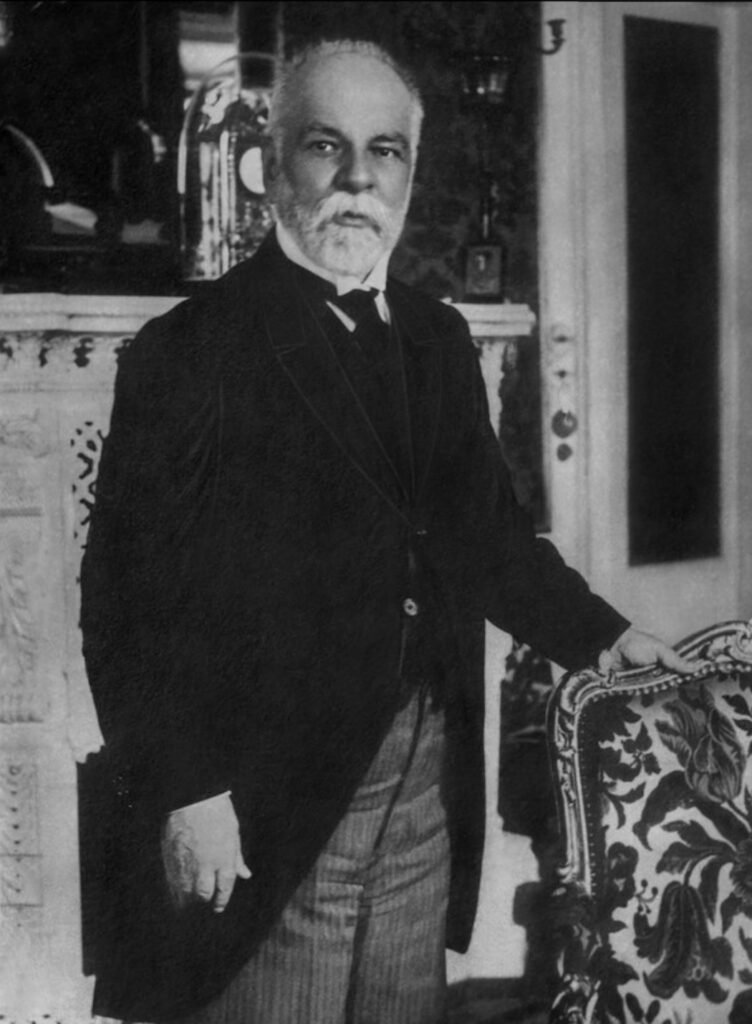
Tirana is the capital, and by the end of the year the city fills up: emigrants coming home, tourists, people coming in to celebrate and to get together with family. It’s festive, and it’s also a rowdy, slightly crazy time. I live in Tirana most of the year, so I’ll be honest: if I can escape the crowds, or go out at quiet hours, I’m happier. Independence Day is where that season starts.
I’ve been writing about this day on this blog since 2007, when Albania turned 95. For the centenary in 2012 I wrote about the crowds in Tirana standing in cold, windy weather to celebrate. This year, on Saturday 28 November 2026, Albania marks 114 years of independence. Here is what the day is about, why it’s really two celebrations in one, and what to expect if you’re in Albania.
Key Takeaways
- On 28 November 1912, an assembly in Vlorë declared Albania independent from the Ottoman Empire. Ismail Qemali led it.
- The same date is Flag Day (Dita e Flamurit). Tradition says Skanderbeg raised the red flag with the black eagle at Krujë on 28 November 1443.
- The next day, 29 November, is Liberation Day, the end of the German occupation in 1944. Both are public holidays.
- In 2026 both days fall on a weekend, so the days off move to Monday 30 November and Tuesday 1 December.
- The national anthem, Himni i Flamurit, was written by the poet Asdreni and was first published in Sofia in April 1912.
Table of Contents
What happened in Vlorë on 28 November 1912
By the autumn of 1912 the Ottoman Empire was losing the First Balkan War, and the armies of Serbia, Montenegro and Greece were taking land that Albanians lived on. If Albanians didn’t declare a state of their own, there was a real chance there would be nothing left to declare.
Ismail Qemali, an Ottoman statesman from Vlorë, came home with the backing of Austria-Hungary and called delegates from across the Albanian lands to his town. On 28 November they declared independence. About 40 delegates signed the declaration; roughly 80 had been registered, and some never made it through the fighting. Four of the signatories came from Kosovo.
Two details I like, because school textbooks tend to skip them:
- The document carries a double date, 15/28. Much of the region still used the old Julian calendar alongside the Western one, so the declaration was written for both.
- The newspaper Përlindja reported that the flag went up at five thirty in the afternoon. The image everyone knows, Qemali waving the flag from the balcony, is the popular version; the sources don’t actually say who raised it.
It was, to be honest, a declaration ahead of the facts. Vlorë was the only town the delegates really controlled. Recognition came in steps: the great powers’ Conference of Ambassadors in London accepted the idea of an Albanian state in December 1912, and confirmed it in July 1913, with a European prince to rule it and international officers to run the gendarmerie. The borders they drew left large Albanian-inhabited areas outside the new country, Kosovo above all. That’s a wound you still hear about in Albanian politics more than a century later.
Did you know?
“How old is Albania?” has two answers. The state dates from 28 November 1912, so it is 114 years old in 2026. Albanians and their language are much older: the geographer Ptolemy mentions an Illyrian tribe called the Albanoi in the 2nd century AD, and Byzantine writers talk about the Arbanitai from the 11th century. I tell the longer story in Albanian history for beginners.
Free checklist
Planning a trip to Tirana?
Get my free Tirana in 48 Hours checklist, with a day-by-day itinerary, prices and local tips.
Why it’s also Flag Day: Skanderbeg and 1443
The date wasn’t chosen at random. Albanians are taught that on 28 November 1443, Gjergj Kastrioti Skanderbeg took back the fortress of Krujë and raised his family’s flag, a black double-headed eagle on red, which is still our flag today. So 28 November is both Independence Day and Dita e Flamurit, Flag Day.
I’ll be straight with you about the history, though. Skanderbeg did take Krujë in late 1443, and few historians doubt that. The exact day is another matter. Most of what we know about his early campaigns comes from Marin Barleti, who wrote his biography decades later, and serious historians of the period treat many of those details as closer to legend than to record. The 1912 delegates knew exactly what they were doing when they picked the date. It tied the new state to the most famous name in Albanian history.
Two holidays in a row: 28 and 29 November
The day after Independence Day is Liberation Day, Dita e Çlirimit. It marks the end of the German occupation in November 1944: Tirana was freed on 17 November, and Shkodër, the last city, on 29 November. The communist regime made 29 November its main national day, and after 1990 the two days stayed side by side.
November is our national month. Here’s how it lines up:
| Date | Holiday | What it marks |
|---|---|---|
| 22 November | Alphabet Day (Dita e Alfabetit) | The Congress of Manastir (14–22 November 1908), which settled the Albanian alphabet. A public holiday since 2024; in 2026 the day off is Monday 23 November |
| 28 November | Independence Day and Flag Day | The 1912 declaration in Vlorë; Skanderbeg’s flag in 1443 |
| 29 November | Liberation Day | The end of the German occupation, 1944 |
| 8 December | National Youth Day | The December 1990 student protests that led to the end of the one-party state. A public holiday |
In 2026, 28 November is a Saturday and 29 November a Sunday. A public holiday that falls on a weekend moves to the next working day, so Monday 30 November and Tuesday 1 December are the days off for state offices, schools and banks (it’s in the Bank of Albania’s 2026 holiday calendar). Shops, cafés and restaurants in Tirana stay open; most of them do better business than usual.
How Albanians celebrate
In Vlorë, the official ceremony is held at the Flag Square, with the flag raised in front of the President and the Prime Minister. In recent years Kosovo’s leaders have come too: Albin Kurti in 2024 and Vjosa Osmani in 2025. If you want to see the day at its most official, this is the place.
In Tirana, the centre fills up on the evening of the 28th. Last year the city raised the flag at Skanderbeg Square, held folk dancing at Pazari i Ri, opened its cultural institutions for free for two days and put on a big concert. In Vlorë the evening ended with a concert, drones and fireworks, and Fier held a parade. The 2026 programme hadn’t been announced when I wrote this. When we do go out, I take the kids to the square, or to a shopping centre where they can play, have some fun and take pictures.
Across the country, towns hold their own flag-raisings: Lezhë, Shkodër, Korçë, Berat and others.
In Kosovo it’s celebrated as much as in Albania, and the government usually gives public institutions the day off by special decision each year. Among Albanians in North Macedonia, Montenegro and the Preševo valley it’s the big day of the year.
In the diaspora, New York’s mayor raised the Albanian flag at Bowling Green in Lower Manhattan in 2022 and again in 2024, and in London the Borough of Barking and Dagenham has marked the day with the local Albanian community.
Did you know?
The flag’s eagle is also behind the most famous explanation of the country’s name. We call Albania Shqipëria, and you’ll often hear that it means “the land of the eagles”, from shqiponjë, eagle. It’s a lovely story, but most linguists think the name comes from shqip, “clearly”, as in the people who speak our language clearly.
Day trips from Tirana
Want a day out of the city, planned for you?
Esther, our tour partner, plans day trips to Berat, Kruja, Durrës and Dajti Mountain, with certified local guides on site. Tell her your date and group size, and she replies personally, in English or German.
The anthem: “Himni i Flamurit”
You’ll hear the anthem everywhere on the day. Its words come from a poem called Betimi mbi Flamur (“The Oath on the Flag”), by Aleksandër Stavre Drenova, known as Asdreni, a poet born in 1872 in Drenovë, a village near Korçë, who spent most of his life in Bucharest. It was first published on 21 April 1912 in Liri e Shqipërisë, an Albanian newspaper printed in Sofia, seven months before the declaration. The tune is Romanian: it comes from a song by the composer Ciprian Porumbescu.
Here are the first two stanzas, the part that’s usually sung, with an English translation:
Rreth flamurit të përbashkuar
Me një dëshir’ e një qëllim,
Të gjith’ atij duk’ ju betuar
Të lidhim besën për shpëtim.Prej lufte veç ay largohet
Që është lindur tradhëtor,
Kush është burrë nuk frikohet,
Po vdes, po vdes si një dëshmor!United around the flag,
with one desire and one aim,
all of us swearing our oath to it,
let us give our besa for our salvation.Only one born a traitor
stays away from the fight.
A real man is not afraid;
he dies, he dies a martyr.
The Albanian text is the official one, as published by Albania’s Ministry of Foreign Affairs; the apostrophes mark letters the poem drops to keep the metre.
Notice the word besa in the fourth line. The anthem asks Albanians to bind themselves with the same sworn word of honour I wrote about in my piece on besa. I don’t think that’s an accident.
If you’re in Albania on 28 November
- Vlorë is the place for the official ceremony, but the town fills up and so do the hotels. If you plan to visit the Museum of Independence, check its opening hours before you go; they change with the season.
- In Tirana, the centre around Skanderbeg Square is where people gather in the evening. Expect traffic, flags and noise. The opposition has also called a protest in Tirana for 28 November, so check the news before you head into the centre. Over the holiday weeks, if you want the centre without the crowds, go on a weekday or at quiet times of the day. And bring a warm layer: the days can be sunny and mild, but Tirana’s humidity makes the evenings colder than you’d expect.
- Money and paperwork: if you need a bank, a notary or a state office, do it by Friday 27 November. Monday 30 November and Tuesday 1 December are public holidays.
- A day trip with meaning: Krujë, about an hour from Tirana, is where the Skanderbeg story is set. Our Krujë day trip guide covers the castle and the bazaar, and Esther’s Krujë tour can take you there.
Frequently asked questions
When is Albanian Independence Day?
On 28 November every year. It marks the declaration of independence in Vlorë on 28 November 1912.
Why do Albanians celebrate two days in a row?
28 November is Independence Day and Flag Day, and 29 November is Liberation Day, the end of the German occupation in 1944. Both are public holidays.
Is 30 November 2026 a holiday in Albania?
Yes. Both holidays fall on a weekend in 2026, so they move to the next working days: Monday 30 November and Tuesday 1 December.
Who declared Albania’s independence?
An assembly of delegates in Vlorë led by Ismail Qemali. About 40 of them signed the declaration.
How old is Albania?
As a state, 114 years in 2026, counting from 1912. As a people and a language, Albanians go back much further; I explain both in Albanian history for beginners.
Who wrote the Albanian national anthem?
The poet Asdreni (Aleksandër Stavre Drenova). The music comes from a song by the Romanian composer Ciprian Porumbescu.
What the day means
For me, the weeks that start with 28 November are mostly about people. Messages come in from friends who are in town, old acquaintances, family, new friends too, and each one is a coffee, a lunch or a dinner. Not everything can be planned, and the real challenge is keeping up with it all. We do it every year, and we love it.
What do you think?
Have you been in Albania or Kosovo for 28 November? Tell me in the comments what you saw, or how your family celebrates abroad.
