
Key Takeaways
- Grand Park of Tirana covers 289 hectares just south of Blloku, built in 1955–1956 on a Bulgarian landscaping plan.
- The Artificial Lake (Liqeni Artificial) was created as a flood-control reservoir around 1955–1958 using volunteer labour and a 400-metre dam; it now anchors the park’s promenade and café scene.
- Inside the park: the Orthodox Church of Saint Prokopius (Kisha e Shën Prokopit), the Botanical Garden (University of Tirana, est. 1964), an amphitheatre, and the Presidential Palace grounds.
- It’s a 15–20 minute walk from central Blloku, or a 5-minute taxi/Bolt ride — no ticket, no entrance fee, open all day.
- Locals treat it as a daily-use park, not a sightseeing stop: morning runners, weekend picnics, and the evening xhiro stroll around the water.
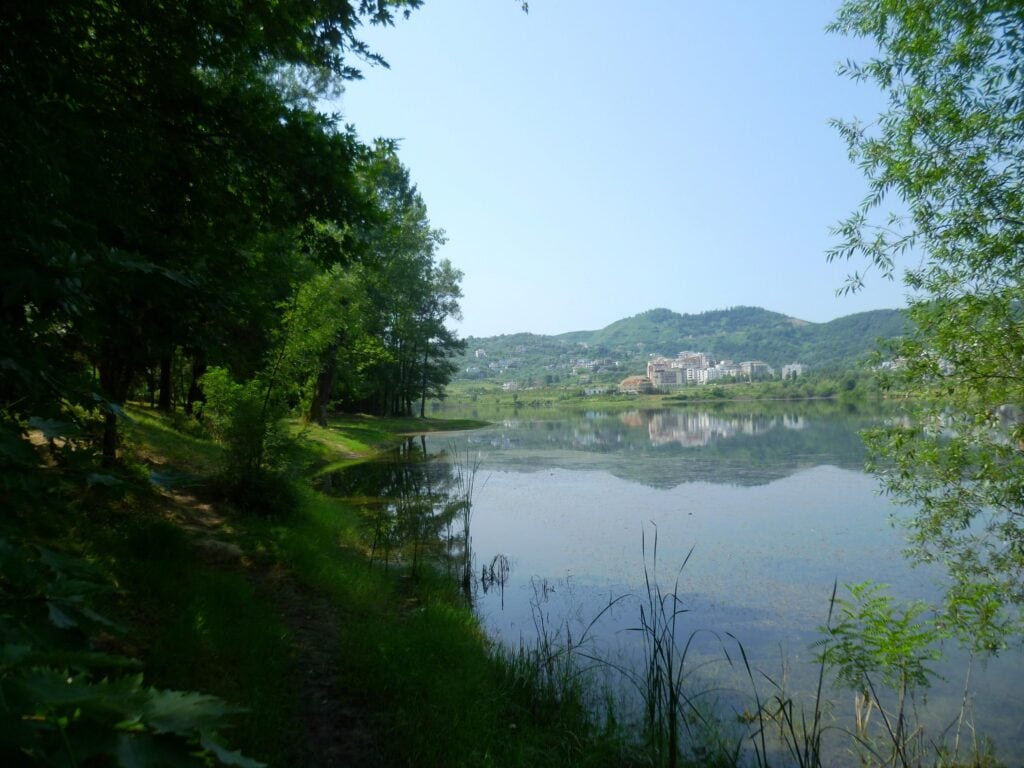
If you want to see how Tirana actually lives, skip the museums for an afternoon and walk south of Blloku into the Grand Park (Parku i Madh) and around its Artificial Lake (Liqeni Artificial). This is where the city runs, walks the dog, drinks a coffee by the water, and does the evening xhiro — not for tourists, just for itself.
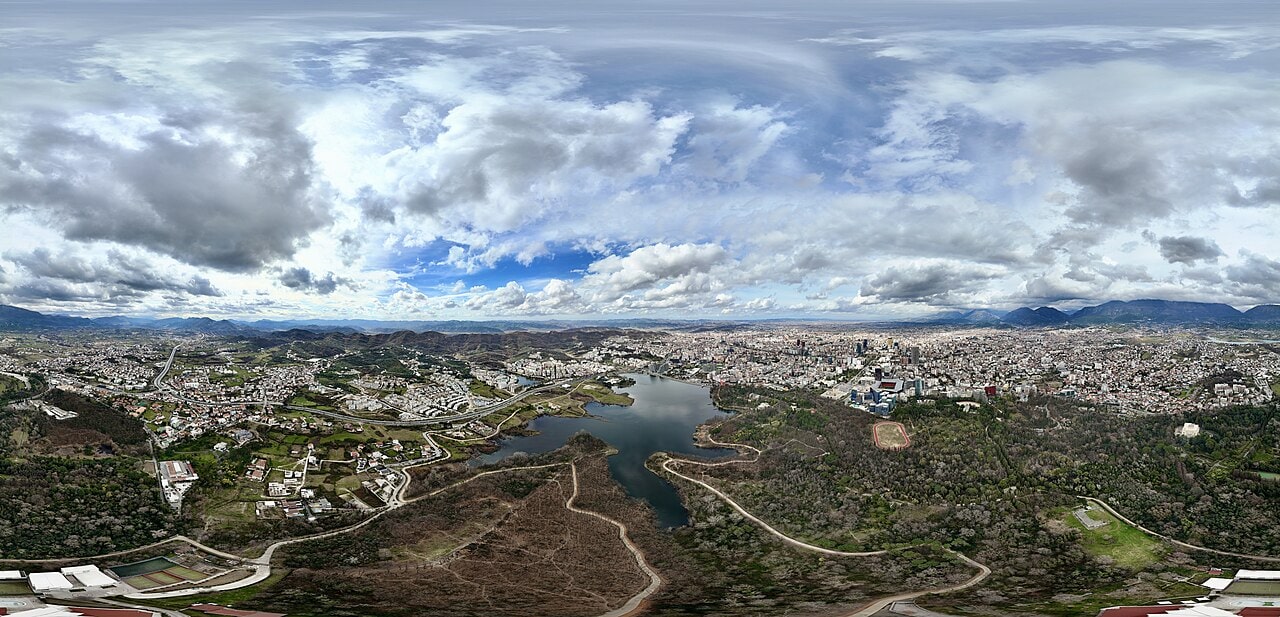
The Grand Park is a 289-hectare green belt on the southern edge of the centre, built around a lake that was originally dug as a flood-control reservoir in the mid-1950s. Today it’s the closest thing Tirana has to a lung: joggers circle it at sunrise, families fill it on Sunday afternoons, and lakeside cafés stay busy well past dark in summer.
The Lake and the Promenade
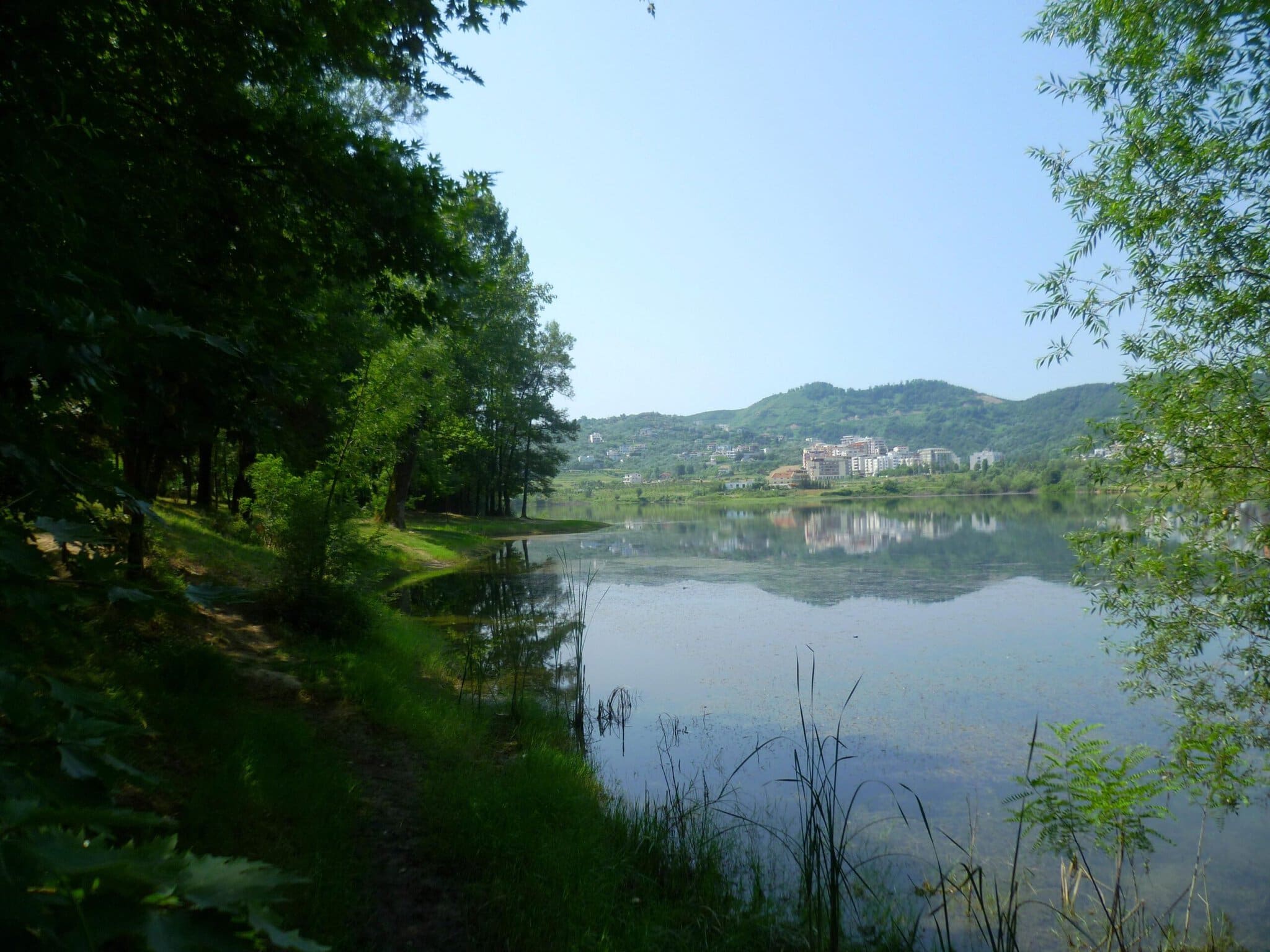
The Artificial Lake sits at the centre of the park, a wide sheet of water surrounded by a shaded, mostly flat path that loops the shoreline. Locals just call it “liqeni” — the lake — and treat the loop the way people elsewhere treat a gym: it’s where you go to move.
The lake wasn’t built for looks. It started as a flood-control project in the mid-1950s, dug largely through volunteer labour under Albania’s post-war urban plans, with a roughly 400-metre dam holding back water that used to flood toward the city centre. Only later did it become the recreational centrepiece it is now, ringed with plane trees, benches, and a running and cycling track that locals use year-round.
I’ve got a lifetime of history with this lake. As a kid, and right through my high-school years, the park was where we spent our time. We swam in the lake constantly — we’d even jump in during January, because that’s exactly the kind of ridiculous thing kids do. I once swam all the way across it too, which is a story I’ll keep to myself. I spent hours fishing there as well; not to eat, but to carry the fish home for my aquarium, which I did more times than I can count.
Some of my fondest childhood memories are on that water — though I have to be honest: the lake is polluted now, and I wouldn’t recommend swimming in it the way we did back then.
These days I just cycle or walk the loop when I’m in the area — a lot less dramatic than swimming across it, but the park still pulls me back.
Rowing boats and pedal boats are sometimes available for rent near the main promenade in warmer months, and fishermen still cast lines from the banks early in the morning, a quiet holdover from the lake’s original purpose. For a broader sense of how this fits into everything else Tirana offers visitors, our guide to things to do in Tirana puts the park in context alongside the city’s museums and squares.
Where Locals Get Coffee (and Why the Cafés Matter)
Planning a Trip to Tirana?
Get my free Tirana in 48 Hours checklist with day-by-day itinerary, prices, and local tips.
Get the Free Checklist →Ask any Tirana local what they actually do at the Grand Park and the honest answer is often “get a coffee by the lake.” A string of cafés and casual restaurants lines parts of the shore, most with outdoor seating angled toward the water — the kind of place where a single espresso buys you an hour of table time and nobody rushes you.
This isn’t a tourist strip of overpriced lakeside bars; it’s a neighbourhood extension of daily life. Prices sit close to what you’d pay in the centre, but the pace is slower and the crowd skews local, especially on weekday mornings.
Evening plans in Tirana usually split two ways: a slow coffee or family walk at the lake, or drinks with a skyline view later on. If you’re weighing both, our roundup of the best rooftop bars in Tirana covers the other half of a local’s typical day — daytime lakeside calm, nighttime rooftop buzz.
The Church of Saint Prokopius
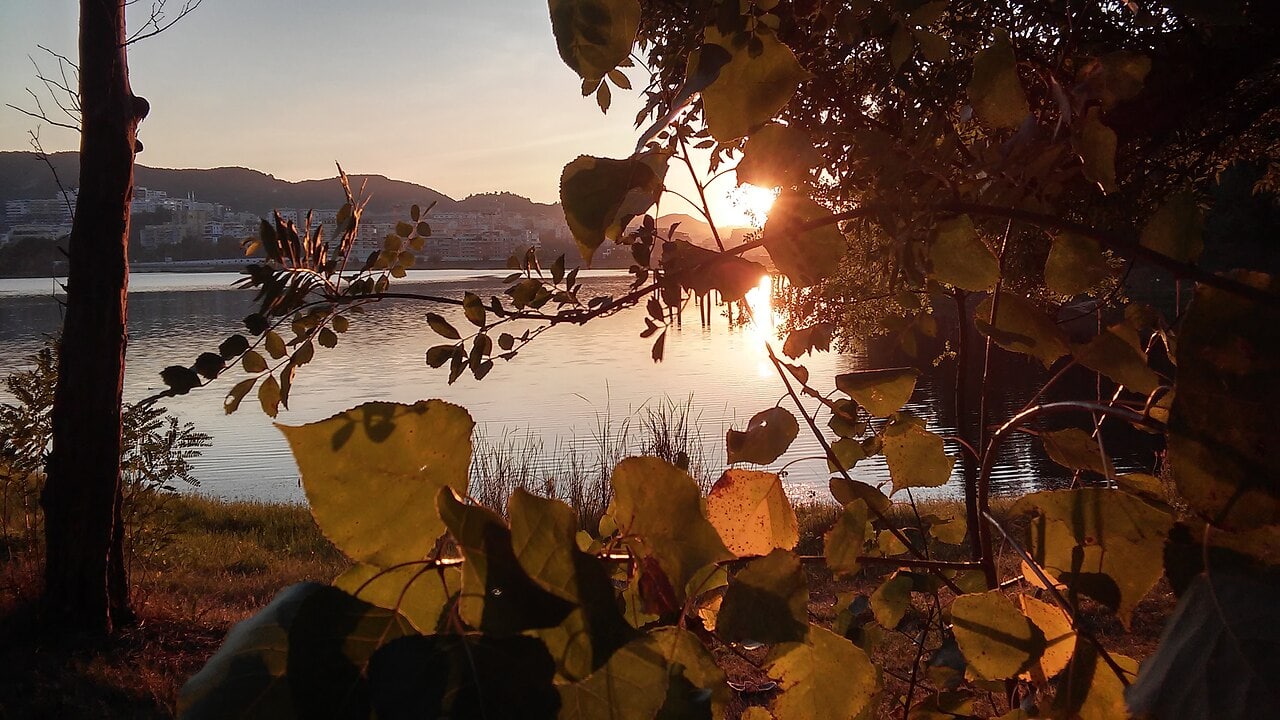
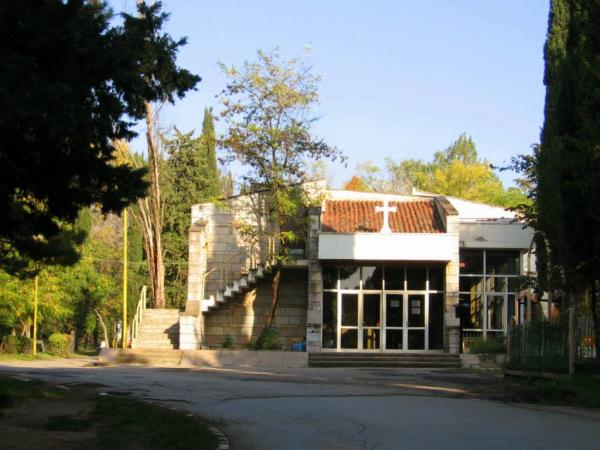
Tucked into the park near the lake is the Orthodox Church of Saint Prokopius (Kisha e Shën Prokopit), small, whitewashed, and easy to miss if you’re not looking for it — which is part of its charm. The original church dates to 1787, when the Bargjini family, feudal lords of the area, granted the Orthodox community permission to build it.
When Tirana’s 1940 urban plan reshaped this part of the city, the community agreed to move the church roughly 400 metres to its current spot inside what became the park, at slightly higher elevation than the original site. Architect Skënder Luarasi, a University of Vienna graduate, designed the replacement building, which the firm Ing. Lucca & Co of Milan and Naples completed in 1942; it was inaugurated in 1945 after the war ended.
Did you know?
The Grand Park was originally known as the Park of Saint Procopius — the “Grand Park” name only became common later, once the lake and the socialist-era landscaping took over as the site’s main identity.
It’s a modest stop, but it anchors the park’s older identity — a reminder that this land had a life before the lake and the socialist-era landscaping plans arrived.
The Botanical Garden Next Door
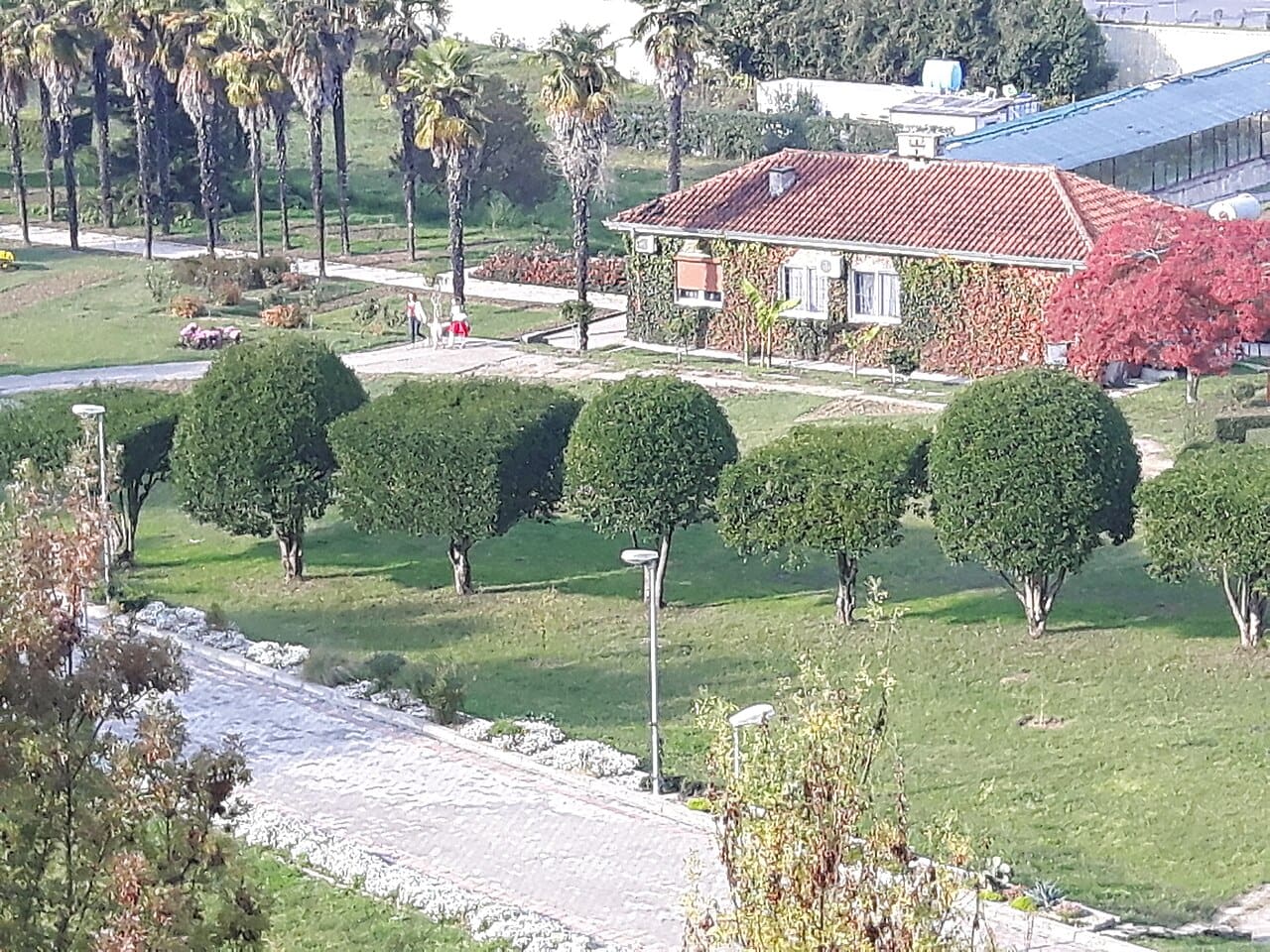
Adjoining the southern part of the Grand Park is the Botanical Garden (Kopshti Botanik), Albania’s only botanical garden and part of the University of Tirana’s Faculty of Natural Sciences. Established in 1964 and covering roughly 15 hectares, it holds around 2,000 plant species, both native Albanian flora and imported specimens, arranged along shaded paths, a greenhouse, and seasonal flower displays.
Because it’s a working academic garden as much as a public one, it has a quieter, more studious feel than the main park — students studying under trees, researchers tending sections, far fewer joggers. It’s an easy add-on to a park visit if you want a slower half hour after the lake loop.
Sunday Afternoons, the Amphitheatre, and Weekend Rhythm
Weekends change the park’s character entirely. On a weekday, the lake loop belongs mostly to runners and dog walkers. On Saturday and especially Sunday, it fills with entire families — grandparents on benches, kids on rented pedal boats, groups spreading blankets on the grass for a late lunch.
The park’s amphitheatre, used for concerts and cultural events, sees the most activity in the warmer months, when Tirana’s cultural calendar shifts outdoors. Combined with the National Martyrs’ Cemetery, WWII memorials, and the tombs of 19th-century Albanian national figures scattered through the grounds, a weekend visit moves naturally between recreation and a bit of quiet history — nobody plans it that way, it just happens because everything sits within the same tree cover.
This rhythm — quiet mornings, full weekends, a completely different crowd on a Tuesday versus a Sunday — is a pattern that repeats across Tirana’s public spaces, not just here. Our guide to daily life in Tirana covers how locals structure their week around exactly this kind of shift between weekday routine and weekend leisure.
Getting There and Best Times to Visit
The Grand Park sits directly south of Blloku, close enough that walking is the most natural option for most visitors staying in the centre.
- On foot from Blloku: 15–20 minutes south along Deshmorët e Kombit Boulevard or through the side streets past the Presidential Palace grounds. If you haven’t explored Blloku itself yet, our Blloku neighbourhood guide is worth reading first — the park makes a natural extension of a Blloku afternoon.
- By taxi or Bolt: roughly 5 minutes from Skanderbeg Square or Blloku, and inexpensive by any standard.
- By city bus: several routes run along the boulevard toward the park’s northern entrances.
There’s no entrance fee and no fixed hours — it’s a public park, open from early morning until well after dark, with lit paths near the main promenade.
Best times to go:
- Early morning (7–9 a.m.): the loop belongs to runners and cyclists; coolest and quietest, especially in summer.
- Weekday afternoons: relaxed, mostly local, good for a slow coffee without a crowd.
- Weekend mornings and Sunday late afternoon: busiest, full of families — the best window if you want to see the xhiro in full swing.
- Summer evenings: cafés fill up, the amphitheatre sometimes hosts events, and the heat breaks enough to make the lakeside genuinely pleasant.
If you’re mapping this against the rest of the city, the park also works as a quiet contrast to the busier commercial neighbourhoods. See our Tirana neighbourhoods guide for how the area around the lake compares to Blloku, the New Bazaar, and the centre.
Frequently Asked Questions
Is the Grand Park of Tirana free to visit?
Yes. The park and the Artificial Lake are free, public, and open every day with no fixed closing time. Some individual attractions inside the grounds, such as the small zoo, may charge a separate entrance fee.
How far is the Grand Park from Blloku?
It’s about a 15–20 minute walk south from central Blloku along the main boulevard, or roughly a 5-minute taxi or Bolt ride. It’s one of the easiest green spaces in Tirana to reach without a car.
What is the Artificial Lake used for today?
Originally built in the mid-1950s as a flood-control reservoir, the lake now functions as Tirana’s main recreational lake — used for walking and running loops, occasional boat rentals, fishing, and as the anchor for the park’s lakeside cafés.
Can you swim in the Artificial Lake?
Swimming isn’t a common local activity in the main lake, which functions mainly as a promenade and recreational feature rather than a swimming spot. The park does contain a separate swimming pool complex for that purpose.
Is the Botanical Garden part of the Grand Park?
It’s adjacent to the Grand Park rather than technically inside it, run by the University of Tirana’s Faculty of Natural Sciences since 1964. Most visitors treat a park visit and a garden visit as one combined outing since they sit right next to each other.
What’s the best time of day to experience the park like a local?
Early morning for the runners’ rhythm, or Sunday late afternoon for the family xhiro — these are the two windows that show the park’s actual daily use rather than a quiet, empty version of it.
What do you think?
Have you walked the loop around Tirana’s Artificial Lake, or grabbed a coffee at one of the lakeside cafés? What’s your favourite time of day to visit the Grand Park?
Grand Park of Tirana and the Artificial Lake are two of the easiest “live like a local” stops in the city — no ticket, no schedule, just Tirana doing what it does on an ordinary day.
Subscribe to monthly updates
Get honest Albania travel tips, local guides, and new posts straight to your inbox. No spam, unsubscribe anytime.
