
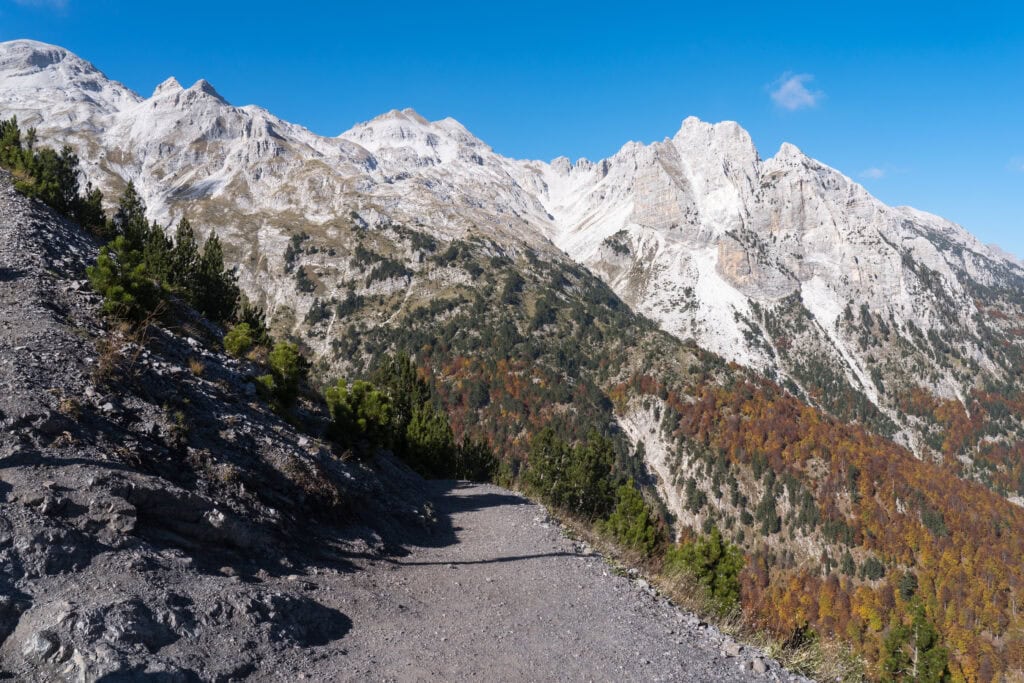
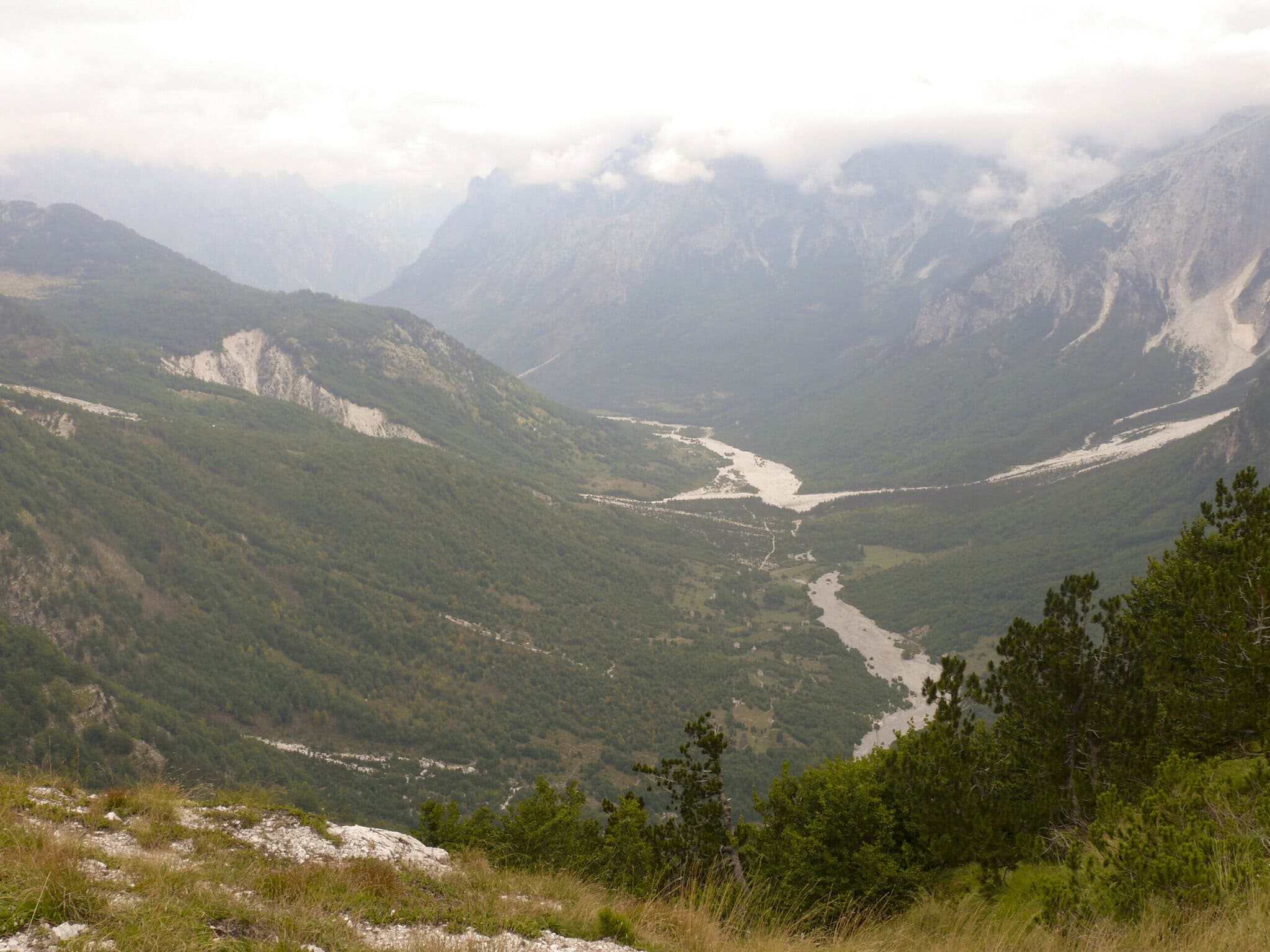
Valbona is the jewel of the Albanian Alps — a glacial valley of pale riverbed, pine forest, and jagged peaks deep in the Accursed Mountains, reached by a spectacular ferry across Lake Koman. It is the other end of the country’s most famous hike, the day-long trail over the pass from Theth, and a place to stay in family-run guesthouses and simply breathe. Here is what to find in and around Valbona, mapped.
Some place links are affiliate links — if you book through them we may earn a small commission at no extra cost to you.
Tap any place to zoom to it, then “Open in Google Maps” for directions and reviews. Exploring more of the country? See the full interactive map of Albania.
Key Takeaways
- Getting there: most visitors reach Valbona via the Koman Lake ferry from Shkodër (about 2.5 hours across the lake) plus a furgon from Fierzë, though a paved road via Bajram Curri now exists too.
- The hike: the famous Theth–Valbona crossing goes over Qafa e Valbonës (Valbona Pass, 1,797 m) and takes most hikers roughly 6–9 hours — no guide required if you stay on the marked trail and carry water.
- Where to stay: family-run guesthouses (bujtina) with half-board, cash only — there is no ATM in Valbona itself.
- Best time: the pass is realistically hikeable late May through early October; the ferry itself only runs roughly April to early November.
- Bring cash and an offline map — mobile signal is patchy in the valley and gone entirely on the high trail.
Table of Contents
How to Get to Valbona
There are two real ways in, and they feel completely different. Most people arrive the scenic way — over Lake Koman — and a smaller but growing number now drive in on a paved road via Bajram Curri.
The Koman Lake ferry route is the classic approach and the reason half the photos of this trip exist. From Shkodër, it’s roughly an hour by car or minibus to the Koman dock. From there, the passenger ferry crosses Lake Koman to Fierzë, a trip of around two and a half hours through a flooded canyon of the Drin River, hemmed in by cliffs on both sides. According to the main ferry operator’s own schedule, boats leave Koman around 09:00 and the return leaves Fierzë’s around 13:00, with the season running roughly from mid-April to early November — but treat those as a starting point, not gospel, since more than one operator runs boats on this lake and schedules shift. A one-way passenger ticket runs somewhere around €9–10 depending on where and how you book; vehicles are priced by size. At Fierzë, a connecting furgon (shared minibus) typically continues on to Valbona, roughly an hour’s drive, timed loosely to meet the boat — confirm the connection locally rather than assuming it will always be there. For the fuller logistics of buses, furgons, and ferries around the country, our complete guide to getting around Albania is worth reading before you go.
The direct road route skips the ferry entirely. From Tirana, the fastest way to Bajram Curri (the district town nearest Valbona) usually runs north via the Kukës highway and then briefly through Kosovo — crossing at Qafa e Morinës, which means you’ll want a passport, not just an ID card. A route that avoids Kosovo altogether, via Krumë, exists too and is typically a little longer. Either way, budget more than four hours from Tirana. From Bajram Curri, the last stretch into Valbona is now a paved road and takes about half an hour — a genuine change from a few years ago, when this final leg was rough dirt track.
Most travelers doing a loop through the north base themselves in Shkodër first. If that’s you, our piece on spending one night in Shkodër covers the town itself before you head up toward the lake.
Did you know?
In 2022, Valbona Valley National Park was merged with neighboring Theth National Park into one larger protected area, officially called the Albanian Alps (Bjeshkët e Nemuna) National Park — which is fitting, since most visitors treat Theth and Valbona as two halves of the same trip anyway.
The Theth–Valbona Hike
Planning a Trip to Tirana?
Get my free Tirana in 48 Hours checklist with day-by-day itinerary, prices, and local tips.
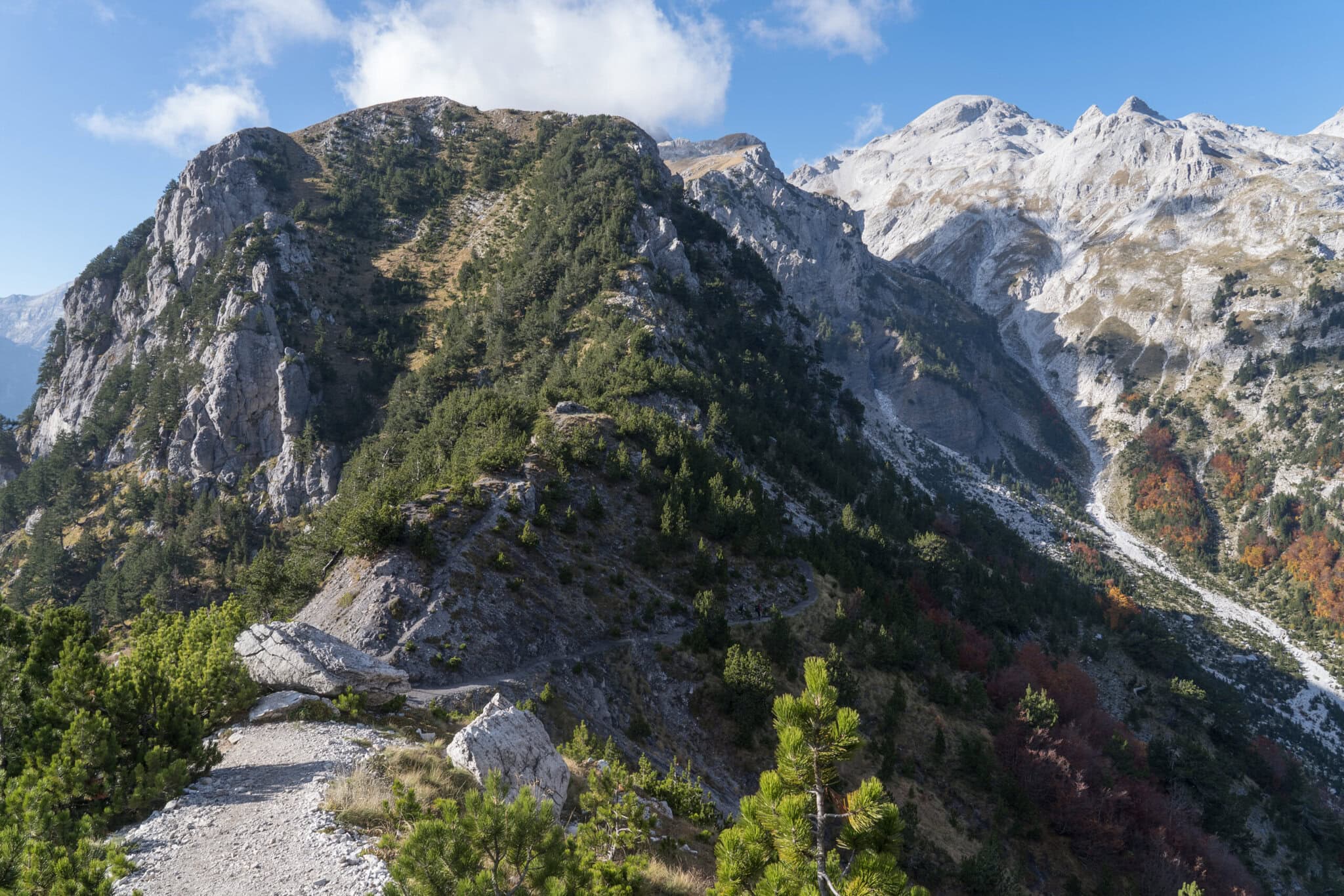
Get the Free Checklist →This is the reason most people come. The trail crosses Qafa e Valbonës (Valbona Pass), sitting at roughly 1,797 meters, and connects the two valleys on foot in a single long day. Distance estimates vary by source — you’ll see anywhere from about 14 to 18 kilometers depending on exactly where the measurement starts — and most hikers report the crossing taking somewhere between six and nine hours, breaks included. It is not a technical climb; there’s no scrambling or rope work involved. It is, however, a long day with sustained elevation gain, so treat it as moderate-to-strenuous rather than a casual walk.
People hike it in both directions, and there isn’t an official “correct” way. That said, a lot of hikers and guesthouse owners lean toward starting in Valbona and finishing in Theth: you tackle the steeper climb early in the day while you’re fresh, the descent into Theth has more shade in the afternoon, and Theth generally has faster onward transport back toward Shkodër once you arrive. Going the other way — Theth to Valbona — gives you a gentler opening climb, but the final descent into Valbona tends to be more exposed to the afternoon sun. Either direction works; pick based on your schedule and how you handle heat.
The trail is generally described as marked the whole way and safe to hike without a guide, provided you’re reasonably fit, stick to the main path, and carry enough water — trailside sources can run dry in peak summer. Still, download an offline map (Maps.me, Organic Maps, or Gaia GPS all work) before you set out, since paint blazes are not a substitute for a real map if weather closes in or you lose the trail. Mobile signal disappears well before the pass. Wolves, bears, and lynx do live in these mountains, but encounters with hikers are rare and not something to plan your trip around.
If you’d rather do this as a shorter, guided outing from the Theth side rather than the full point-to-point crossing, our Theth day trip guide covers that approach and what a single day in Theth itself looks like.
Where to Stay: Guesthouses in Valbona
Valbona runs on family-run guesthouses — locally called bujtina — almost all of them offering half-board (dinner and breakfast included), because there is nowhere else nearby to eat. A few names come up repeatedly with strong, genuine review histories: Guesthouse Kol Gjoni, consistently one of the highest-rated stays in the valley for hospitality and home cooking; Rilindja, a larger operation with a dozen rooms across a main house and an annex (note it sits a few kilometers from the main Theth-Valbona trailhead, so factor in a short taxi ride or a walk of an hour or more to reach the start of the trail); and smaller places like Bujtina Arturi and Bujtina Valbonë.
Expect to pay roughly €20–40 per person per night with half-board as a rough planning figure — this varies by guesthouse and season, so confirm the actual rate directly or through a booking platform before you arrive. Bring cash. Euros are usually accepted at the host’s own exchange rate, but don’t assume a card machine will be sitting on the counter.
Best Time to Visit
The realistic hiking window for Qafa e Valbonës runs roughly late May through early October, with June through September considered the reliable core of the season. July and August are the busiest months — warmest weather, the most hikers on the trail, and the least rain, but also the most crowded guesthouses. May and October are quieter shoulder months, though weather is less predictable and some trailside water sources or facilities may not be fully up and running yet.
Outside that window, the pass is generally snowbound and effectively closed to casual hikers from roughly November through April, and most guesthouses close for the winter. It’s also worth noting that the Koman ferry itself only operates roughly from mid-April to early November — so if you’re planning to arrive by boat, the ferry’s own season is often the real constraint on when you can visit at all.
What to Do in Valbona
The pass hike is the headline, but it isn’t the only thing here. The valley itself — a wide, pale riverbed threading through pine forest with jagged limestone peaks on both sides — is worth simply spending a day in if you’re not in a rush to move on. The Valbona River and the meadows around Dragobi are a good place to slow down, and the peaks framing the valley (Maja e Kollatës, Maja Boshit, Maja e Hekurave among them) make for a dramatic backdrop from pretty much anywhere you’re standing.
For more serious hikers, Maja Jezercë (2,694 m) — the highest peak in the Albanian Alps, though not the highest point in Albania overall — is a separate, harder undertaking from the pass crossing: figure roughly six and a half to seven and a half hours for experienced hikers, and this is not something to add on casually to a pass-crossing day.
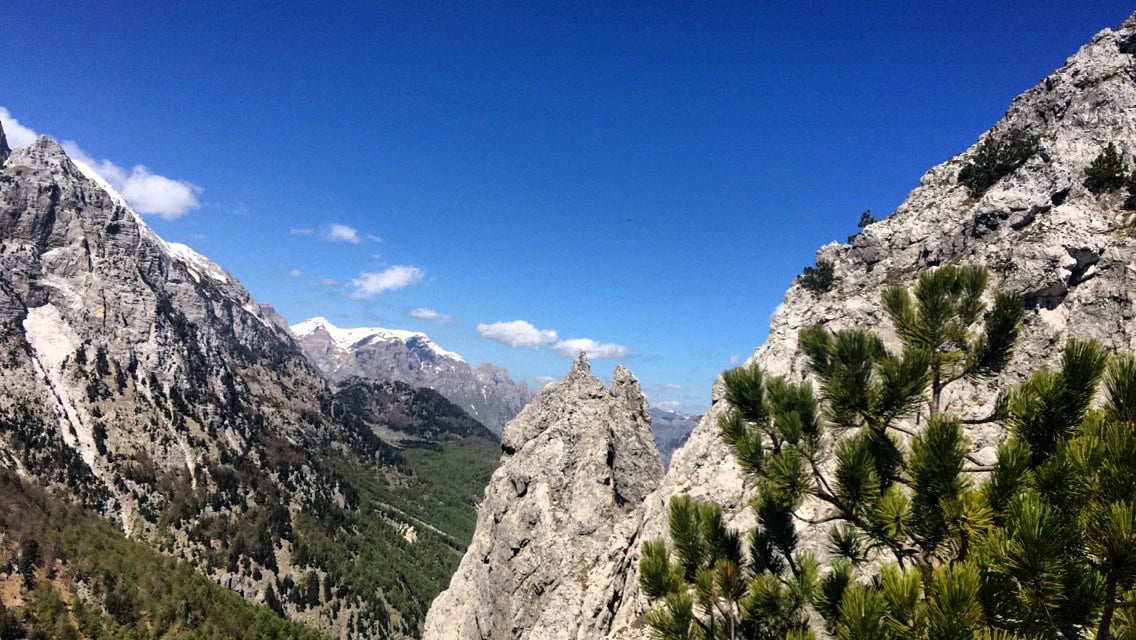
Valbona isn’t a place with a checklist of sights. It’s a valley you walk into, and the point of being there is mostly just to be there — slower, further from a signal, further from anything that needs your attention.
If Valbona is one stop on a longer itinerary out of the capital, our roundup of the best day trips from Tirana is a useful companion for planning what comes before or after.
Practical Tips
- Bring cash, and bring enough of it. There is no ATM in Valbona itself. Withdraw what you’ll need in Shkodër, Tirana, or Bajram Curri before you head up. Euros are generally fine at guesthouses, but Albanian Lek is the practical local currency.
- Don’t count on your phone. Signal is intermittent at best in the valley and disappears entirely on the higher sections of the trail. Download offline maps before you leave a town with a connection.
- Pack for altitude and a long day. Even in summer, layers matter at 1,797 meters — mornings and the pass itself can be genuinely cold even when the valley floor is warm. Good boots, sun protection, and more water than you think you need.
- Tell someone your plan. Given the patchy signal, let your guesthouse know roughly when you’re setting out and when you expect to arrive on the other side — standard mountain-safety practice here as anywhere.
- Budget roughly €40–60 a day for guesthouse half-board, the ferry or furgon, and incidentals — treat this as a starting estimate, not a fixed number, since prices vary by season and by exactly where you stay.
For more general advice that applies across the country — not just the north — see our complete Albania travel tips guide.
Frequently Asked Questions
How do I get to Valbona from Tirana?
Most travelers go via Shkodër, then the Koman Lake ferry to Fierzë, then a furgon (shared minibus) on to Valbona — a half-day journey in total. A paved road via Bajram Curri also exists, usually routed through Kosovo, and takes over four hours by car or bus from Tirana.
Do I need a guide to hike from Theth to Valbona?
No — the trail over Qafa e Valbonës is generally described as clearly marked and safe to hike solo if you’re reasonably fit, carry enough water, and download an offline map beforehand. A guide isn’t required, though hiring one is always an option if you’d prefer company or local knowledge.
Which direction should I hike — Theth to Valbona, or Valbona to Theth?
Both directions are common. Many hikers and guesthouse owners lean toward starting in Valbona, since the steep climb comes early in the day and the Theth-side descent has more afternoon shade — but there’s no official recommendation, and either direction is a reasonable choice.
When is the best time to visit Valbona?
Roughly late May through early October for hiking, with June through September as the reliable core season. July and August are busiest; May and October are quieter but less predictable. The Koman ferry itself typically only runs from around mid-April to early November.
Is there an ATM or card payment in Valbona?
No ATM in the valley itself. Bring cash — withdraw what you need in Shkodër, Tirana, or Bajram Curri beforehand. Most guesthouses will accept Euros at their own exchange rate, but plan on cash for everything.
How long does the Theth–Valbona hike take?
Most hikers report somewhere between six and nine hours including breaks, depending on fitness, pace, and exactly which direction and trailhead you start from.
What do you think?
Have you made the Theth-Valbona crossing? Which direction did you go, and would you recommend it — or was the ferry across Lake Koman the real highlight of the trip?
Subscribe to monthly updates
Get honest Albania travel tips, local guides, and new posts straight to your inbox. No spam, unsubscribe anytime.
