
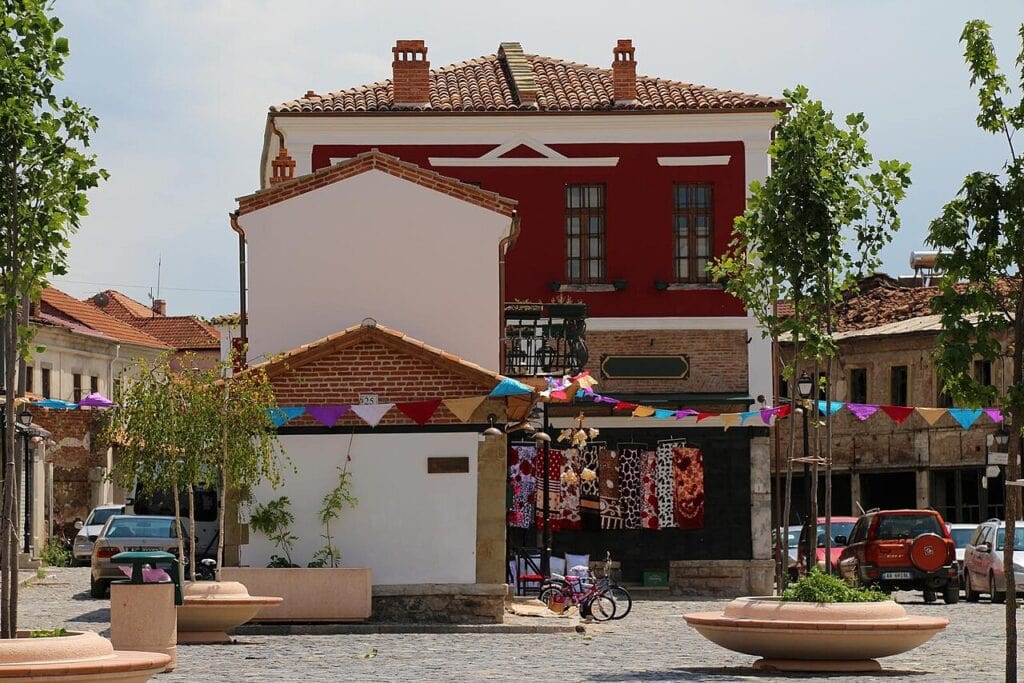
Korçë is the elegant cultural city of southeastern Albania — wide boulevards, a grand Orthodox cathedral, the country’s beloved beer, and a tradition of winter serenades. It is home to the first school to teach in the Albanian language and a surprisingly rich museum scene. Cooler and greener than the coast, it keeps its own distinct rhythm. Here are the spots worth a stop in Korçë, mapped.
Some place links are affiliate links — if you book through them we may earn a small commission at no extra cost to you.
Tap any place to zoom to it, then “Open in Google Maps” for directions and reviews. Exploring more of the country? See the full interactive map of Albania.
Key Takeaways
- Korçë sits about 165 km southeast of Tirana — roughly 2.5 to 3 hours by car or hourly bus over the Qafë Thanë pass.
- The restored Old Bazaar, the Resurrection Cathedral, and the Mirahori Mosque (one of Albania’s oldest, built in 1494–95) all sit within walking distance of each other in the center.
- Korçë opened the first Albanian-language school in 1887 and is home to Birra Korça, the country’s first brewery, founded in 1928.
- Nicknamed the “City of Serenades,” Korçë has a beloved winter Christmas market that lights up the boulevard from early December.
- Voskopojë, a mountain village 21 km away with seven surviving 17th–18th century painted churches, makes an easy half-day trip from Korçë.
Table of Contents
Getting to Korçë from Tirana
Korçë sits about 165 km southeast of the capital, and the drive is one of the most scenic in the country. You leave Tirana on the A3 motorway, pass through the Krraba Tunnel toward Elbasan, then follow the SH3 up the Shkumbin valley through Librazhd before climbing to Qafë Thanë — the highest point on the route — and dropping into the Korçë plain. Door to door, it’s usually 2 hours 40 minutes to 3 hours by car, depending on traffic and how many photo stops you make along the way.
If you’re not driving, hourly buses (furgons and coaches) leave from Tirana’s eastern bus terminal and take roughly 2.5 to 3 hours, which makes Korçë an easy day trip or an overnight add-on if you’re already working through our guide to getting around Albania. It’s a different kind of city than the capital — cooler, greener, and built around wide 19th-century boulevards rather than the dense, fast-changing streets you’ll find if you’re spending time on things to do in Tirana first.
Things to Do in Korçë: At a Glance
Planning a Trip to Tirana?
Get my free Tirana in 48 Hours checklist with day-by-day itinerary, prices, and local tips.
Get the Free Checklist →The 8 things worth your time in and around Korçë, in the order I would do them. Jump straight to any of them:
The Old Bazaar
Korçë’s Old Bazaar is the reason most people come here in the first place. It dates back roughly 500 years, when the city was a trading post linking the Adriatic and Aegean routes, and by the 19th and early 20th centuries it had grown into the biggest marketplace in Albania — more than a thousand shops and two well-known inns, the Old Elbasan and the Old Monastery. Like a lot of Albania’s Ottoman-era heritage, it fell into disrepair after the 1990s. A $4 million restoration project, financed by the Albanian Development Fund and the Albanian-American Development Foundation and announced in 2015, brought the stone buildings, arched passages, and cobblestone lanes back to life. Today the bazaar’s 138 protected monuments house cafés, restaurants, and artisan shops rather than the wholesale trade of a century ago, but the bones of the old market town are unmistakable.
Give yourself at least an hour to wander without a plan — it’s a small enough area that you won’t get lost, and the side alleys are where the good photos are anyway. If you want to sit down, this is also one of the best places in the city to try lakror, grilled meats, or homemade cheese; if you haven’t already, our complete guide to Albanian food is worth a look before you order.
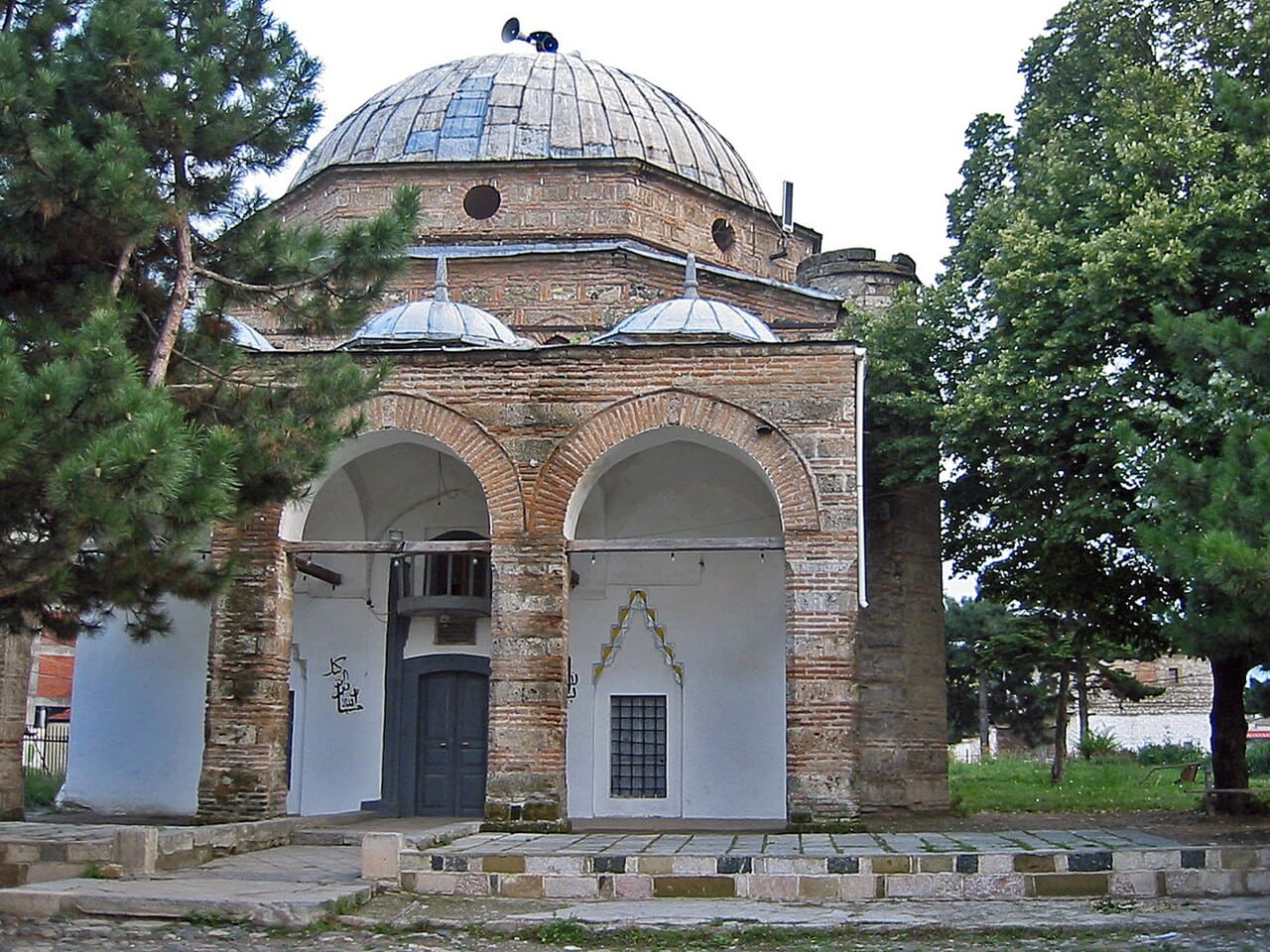
Don’t miss nearby: the Mirahori Mosque. A short walk from the bazaar stands one of Albania’s oldest mosques, built in 1494–95 by Iljaz Bej Mirahori, the Ottoman military commander who effectively founded Korçë as a town. It’s a modest, single-domed structure with a three-domed entrance porch and finely worked stonework — the minaret, lost in an earthquake in the early 1960s, was rebuilt after 2006. Mirahori endowed five villages to fund it and the surrounding complex, which once included a bakery, a hamam, and a school.
Resurrection Cathedral
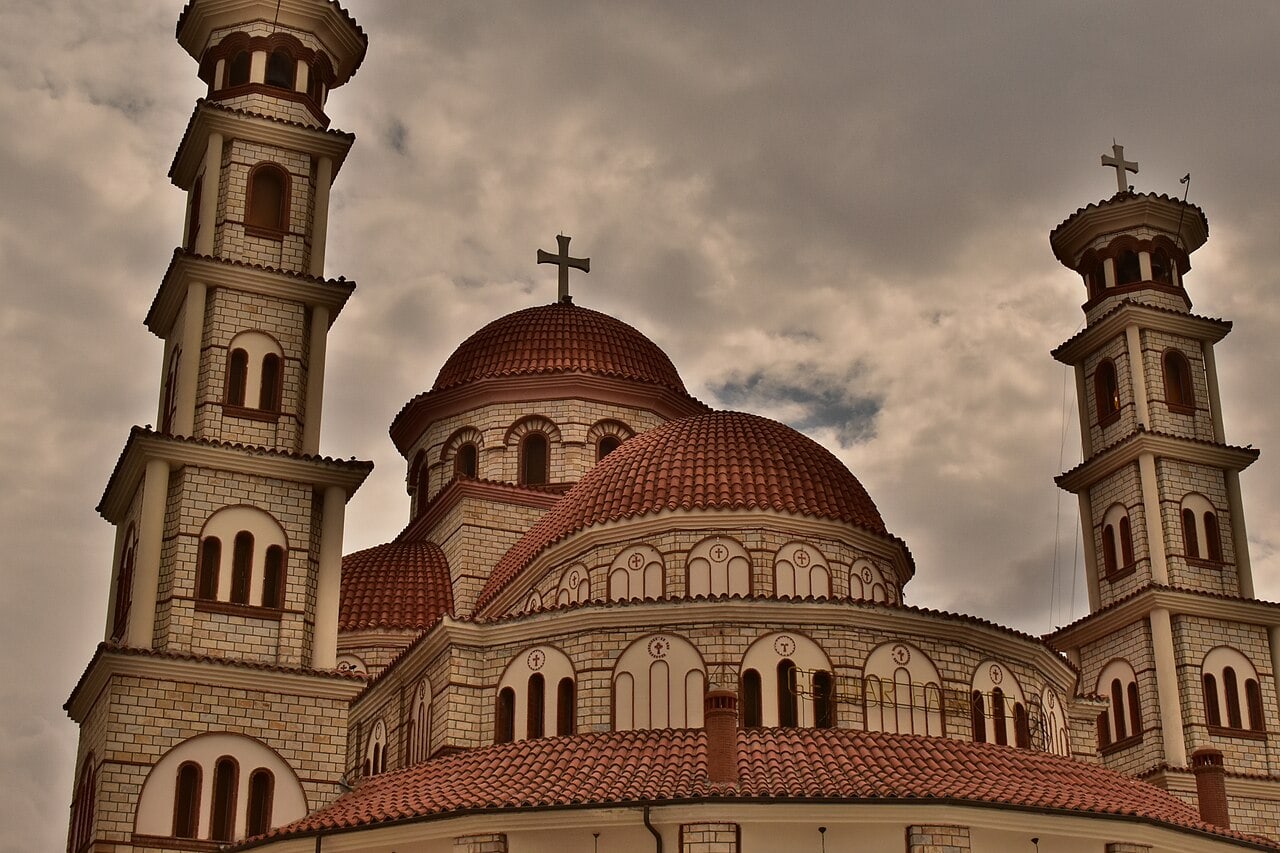
You’ll see the Resurrection Cathedral’s pink-and-blue facade before you reach it. This is the main Orthodox church in Korçë, and its story is tied to one of the harder chapters of the city’s recent past — the original cathedral, dedicated to St. George, was demolished by the communist regime in 1968 as part of Albania’s declared status as the world’s first atheist state. Construction of the current cathedral began in 1994, once religious worship was legal again, and finished in 2002, funded largely by Orthodox Albanians at home and in the diaspora, with support from Greece.
Inside, the interior is simple and white, dominated by a large carved wooden iconostasis. The square in front of the cathedral is also where the city’s Christmas Market sets up every winter, so if you’re visiting in December, this is the spot everything else in town radiates out from.
The First Albanian School & Education Museum
Korçë has a genuinely important place in Albanian history that has nothing to do with architecture or beer. On March 7, 1887, the patriotic teacher Pandeli Sotiri opened the first secular school to teach in the Albanian language, in a house donated by the local patriot Diamanti Terpo. This was still Ottoman Albania, where teaching in Albanian was effectively banned, so the opening of the school — known simply as Mësonjëtorja, “the teaching place” — was as much a political act as an educational one. March 7 is still marked as Teachers’ Day in Albania because of it.
The building was converted into the National Museum of Education in 1967 and still holds the first and second Albanian alphabets — one devised by Naum Veqilharxhi, the other by Kostandin Kristoforidhi — along with photographs of the school’s founders, teachers, and early pupils. It’s a small museum, but if you care at all about how Albanian identity survived centuries of outside rule, it’s one of the more moving stops in the country.
National Museum of Medieval Art
This is the museum most visitors underestimate. Established in 1980 and rebuilt in 2016, the National Museum of Medieval Art holds more than 7,000 icons, fresco fragments, liturgical objects, and textiles dating from the 13th to the 18th centuries — one of the most significant collections of Orthodox religious art in the Balkans. The star names are the iconographers Onufri, Konstandin Shpataraku, David Selenica, and the Zografi brothers, whose work also decorates the churches of Voskopojë (more on that below).
Did you know?
Onufri, the 16th-century painter whose icons anchor the museum’s collection, is known for a specific, almost impossible-to-replicate shade of red he mixed into his pigments — art historians still argue about exactly how he made it.
Korça’s Beer Culture
Albania’s first brewery opened here in 1928, and the name stuck to the whole country’s drinking habits. Birra Korça was founded by the Italian investor Umberto Umberti and Selim Mborja, a local businessman from the nearby village of Mborje, with an initial capacity of about 20,000 hectoliters a year. It was nationalized after the communist takeover in 1946, went through several rounds of Soviet-style renovation in the 1950s and 60s, and was privatized in 1994 during Albania’s rocky transition to a market economy. Since 2004, under businessman Irfan Hysenbelliu, the brewery has had roughly €15 million invested into it — and Birra Korça remains the country’s best-known domestic beer, sold nationwide but still carrying the city’s name with real pride locally.
You don’t need a brewery tour to feel this — just sit at any bar around the Old Bazaar or the boulevard, order a Korça, and you’ll notice it’s usually the house default rather than an imported lager.
A city that survived having its cathedral torn down, its language banned for a century, and a market rebuilt from ruin isn’t going to let a good beer brand disappear either. That’s Korçë in one sentence.
The City of Serenades
Korçë’s nickname, “the city of serenades,” comes from a very specific, very romantic habit. Sometime in the last couple of centuries, inspired by Spanish and Italian traditions that filtered in through trade and travel, men in Korçë began performing love ballads — serenatas — from balconies and courtyards, usually with guitar, violin, or a small ensemble. It’s a gentler, more theatrical cousin of Albania’s older iso-polyphonic singing traditions (themselves recognized by UNESCO as intangible cultural heritage), and it became such a defining part of local identity that Korçë still leans into the nickname today, with cafés, festivals, and even street signage nodding to it.
You’re most likely to run into serenades — organized or spontaneous — around cultural festivals and during the winter season, when the city’s boulevards are already full of people out walking in the evening air.
A Day Trip to Voskopojë
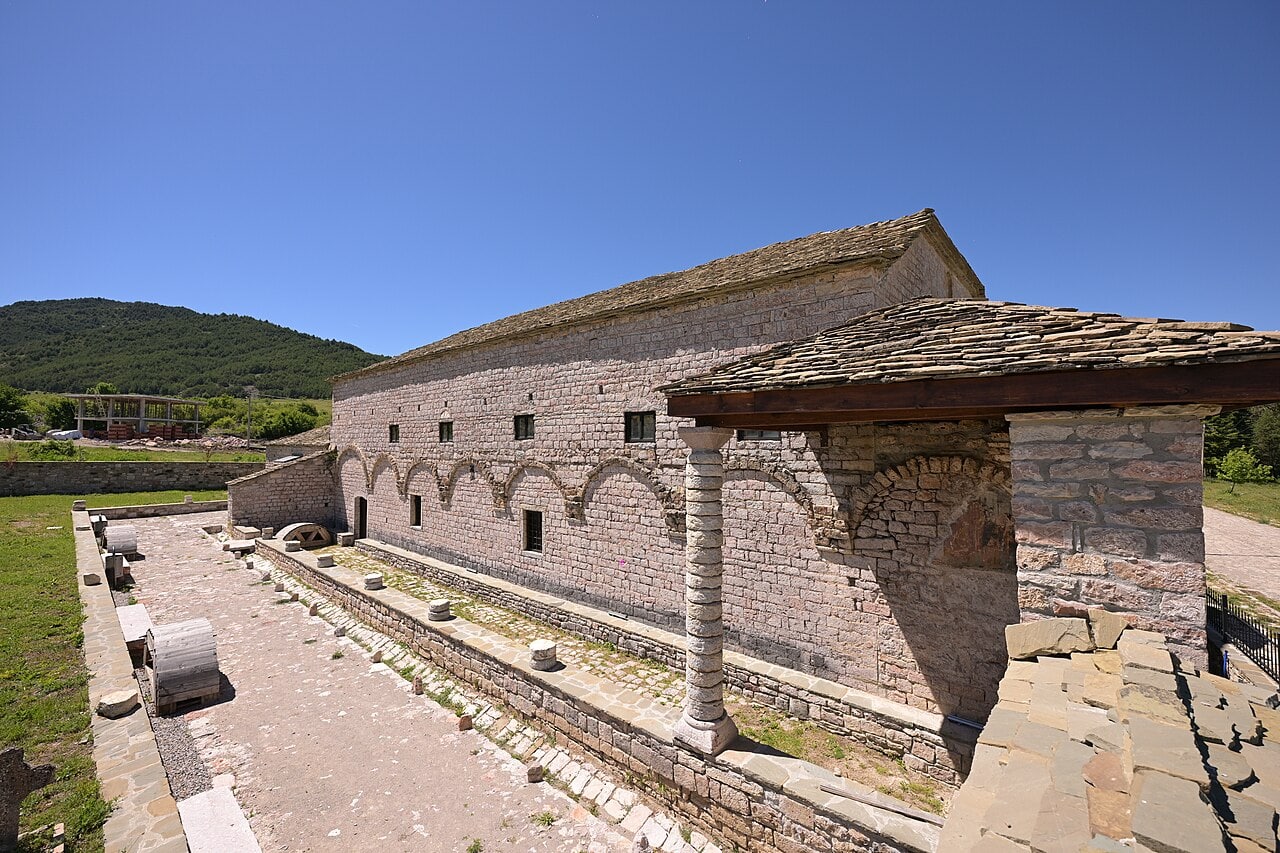
Twenty-one kilometers west of Korçë, up in the Morava mountains, sits one of the more sobering places in Albania. Voskopojë (also spelled Voskopoja) was, in the 17th and 18th centuries, one of the most important cultural centers in southeastern Europe — a town with its own printing press (the first in the Ottoman Balkans outside Constantinople), schools, libraries, and, by some estimates, dozens of churches. Trade routes shifted, conflict and decline followed, and what’s left today is a quiet mountain village with seven surviving churches from that golden age, decorated with roughly 43,000 square feet of frescoes.
The churches were neglected and used as storage during the communist era, but they’ve since been designated Cultural Monuments, and in 2020 the historic center where most of them stand was recognized as a Historic Ensemble. St. Michael’s (Kolli) is generally considered the finest example of the post-Byzantine basilica style here. If you enjoyed the icons in the Medieval Art Museum, seeing frescoes by some of the same artists in the churches they were painted for is worth the detour — it pairs well with a broader itinerary if you’re working through our guide to the best day trips from Tirana and want to extend south.
Best Time to Visit
Most of Albania empties out from the coast by October, but Korçë’s best season is just getting started. With an official lighting ceremony on December 6, the city turns itself into what’s become known as the country’s unofficial “capital of year-end celebrations” — Republika Boulevard and the square in front of the Resurrection Cathedral fill with a Christmas Market, artisan stalls, roasted chestnuts, baklava, and local pastries, plus concerts and choir performances running through the season. It has the feel of a Central European Christmas market with a distinctly Albanian character, and because it draws mostly domestic and regional visitors rather than international tourist crowds, it still feels unpolished in the best way.
Outside the holidays, spring and early autumn are the most comfortable for walking the bazaar and day-tripping to Voskopojë — Korçë sits higher and cooler than the coast, so summers are more pleasant here than almost anywhere else in the country, but winters are genuinely cold and can bring snow.
Practical Tips
- Base yourself in the center. Anywhere within a few blocks of the bazaar or the boulevard puts the cathedral, the museums, and most restaurants within walking distance.
- Pack for cooler weather than the coast. Korçë sits at altitude, so evenings are noticeably cooler than Tirana or Vlora even in summer, and winters are properly cold.
- Set aside a full day, or two if you want Voskopojë too. The center is compact, but the museums deserve real time rather than a rushed walk-through.
- Check hours before museum visits. Smaller museums like the Education Museum keep limited hours and sometimes close for lunch — worth confirming locally rather than assuming.
- December books up. If you want to see the Christmas Market, plan accommodation early — this is now Korçë’s busiest season by far.
For broader planning — visas, money, safety, what to pack — our Albania travel tips guide covers the basics that apply everywhere in the country, Korçë included.
Frequently Asked Questions
How far is Korçë from Tirana, and how do I get there?
About 165 km. Driving takes roughly 2 hours 40 minutes to 3 hours via the A3 to Elbasan and the SH3 over Qafë Thanë. Hourly buses from Tirana’s eastern terminal take about 2.5 to 3 hours.
How many days do you need in Korçë?
One full day covers the Old Bazaar, the cathedral, and one museum comfortably. Add a second day if you want to visit both museums unhurried and take the half-day trip to Voskopojë.
Is Korçë worth visiting if I’ve already seen Gjirokastra or Berat?
Yes — it’s a different kind of historic town. Gjirokastra and Berat are Ottoman hillside cities; Korçë is flatter, greener, and shaped more by its 19th- and 20th-century identity as an educational and cultural center, plus the beer and serenade traditions you won’t find elsewhere.
What is Korçë known for?
The restored Old Bazaar, the first Albanian-language school (1887), Birra Korça (Albania’s first brewery, 1928), its nickname as the “city of serenades,” and its increasingly famous winter Christmas Market.
When is the Korçë Christmas Market open?
The lighting ceremony is typically held on December 6, and the market runs through the holiday season around the cathedral square and Republika Boulevard.
Is Voskopojë easy to visit from Korçë without a car?
It’s only 21 km, but public transport is limited and irregular. Most visitors go by rental car, taxi, or an organized local tour — check availability locally rather than assuming a fixed bus schedule.
What do you think?
Have you been to Korçë, or is it on your list? What pulled you there — the bazaar, the beer, or the Christmas Market?
Subscribe to monthly updates
Get honest Albania travel tips, local guides, and new posts straight to your inbox. No spam, unsubscribe anytime.
