
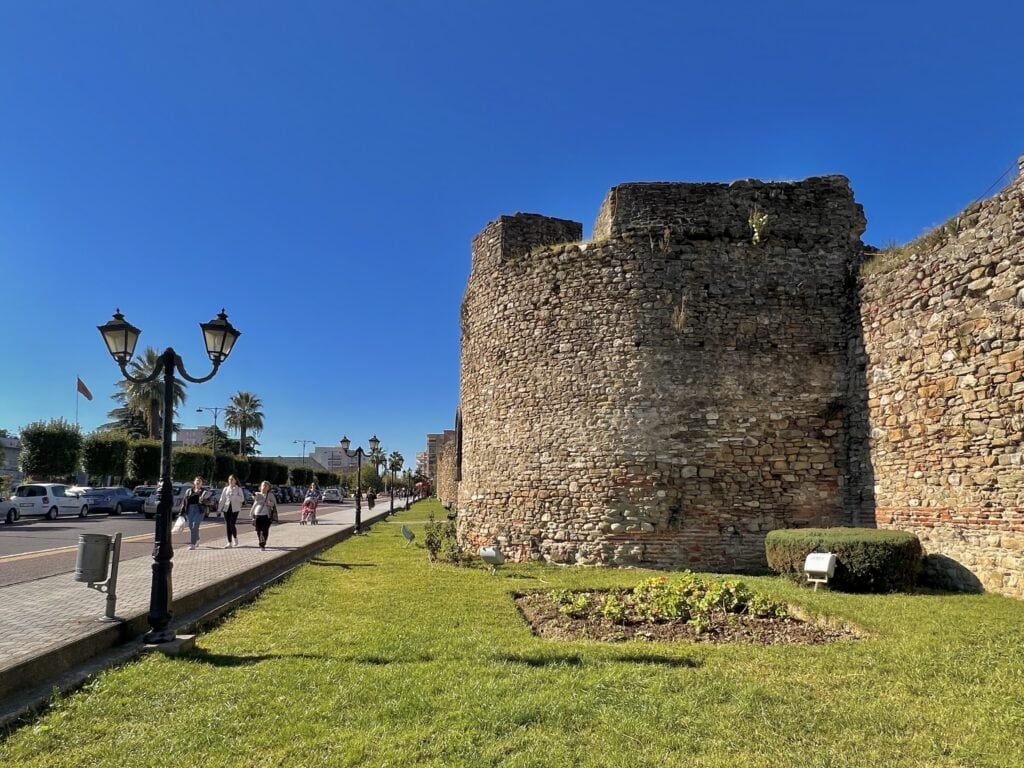
Elbasan is a central Albanian city built around one of the best-preserved Ottoman castle quarters in the country — a walled old town you can still wander, with churches, mosques and houses inside the ramparts. Less touristed than the coast or the UNESCO towns, it rewards a curious detour, and it is famous nationally for its ballokume biscuits. Here is what to see in Elbasan, mapped.
Some place links are affiliate links — if you book through them we may earn a small commission at no extra cost to you.
Tap any place to zoom to it, then “Open in Google Maps” for directions and reviews. Exploring more of the country? See the full interactive map of Albania.
Key Takeaways
- Elbasan is roughly 40 km southeast of Tirana by road via the Tirana–Elbasan Highway, a drive of about 45–60 minutes depending on traffic.
- Its walled old town sits on a Roman-era castrum first built under Emperor Diocletian and rebuilt by the Ottomans in 1466, with roughly 9-metre-high walls and 26 towers.
- Inside the walls you’ll find the King’s Mosque (built 1492–1502, one of Albania’s oldest active mosques), an Orthodox church, a Sinan Pasha hammam, and a 30-metre clock tower.
- The Llixhat e Elbasanit thermal baths, about 12 km outside the city near Tregan, have been used since Roman times and emerge from the ground at around 56°C.
- Elbasan is the birthplace of ballokume, the corn-flour biscuit baked nationwide every March 14 for Dita e Verës (Summer Day).
Table of Contents
Getting to Elbasan from Tirana
Elbasan sits roughly 40 km southeast of Tirana, connected by the Tirana–Elbasan Highway — a four-lane road that includes the Krrabë tunnel and cut travel times sharply when it was completed. In practice, the drive takes about 45–60 minutes depending on traffic leaving Tirana and conditions on the approach into the city.
By furgon or bus: Shared minibuses and buses run from Tirana’s southern bus terminal on a rolling schedule, roughly every 20–30 minutes through the day, with the journey taking around 45–50 minutes. Fares are cheap by Western standards — a couple of euros each way. This is the option most independent travelers use, and it drops you close to the city center.
By car or taxi: The highway route is straightforward and well signed, and it connects onward toward Librazhd, so Elbasan works well as a waypoint rather than a dead-end trip. A private taxi is the fastest door-to-door option for two or more people splitting the fare — agree the price before you get in, since meters aren’t generally used for trips this length. For the wider picture of buses, furgons, and driving conventions across the country, see our guide to getting around Albania.
Things to Do in Elbasan: At a Glance
Planning a Trip to Tirana?
Get my free Tirana in 48 Hours checklist with day-by-day itinerary, prices, and local tips.
Get the Free Checklist →The 6 things worth your time in and around Elbasan, in the order I would do them. Jump straight to any of them:
Inside the Walls: The Castle and Old Town
Elbasan’s defining feature is its kalaja — the castle — and the walled old town quarter it protects. The site’s history goes back much further than the walls you see today: it began as a Roman castrum, most likely established under Emperor Diocletian in the 4th century, guarding a stretch of the Via Egnatia, the great Roman road that linked the Adriatic coast to Constantinople. Byzantine Emperor Justinian I rebuilt it in the 6th century after earlier damage, and the Ottomans, under Sultan Mehmed II, reconstructed it again in 1466 during the campaigns against Skanderbeg’s League of Lezhë.
What survives from that Ottoman rebuild is genuinely impressive: walls reaching around 9 metres high, originally reinforced with 26 equidistant towers, enclosing a roughly rectangular quarter. For 445 years afterward, Elbasan served as the seat of an Ottoman sanjak — a regional administrative center — which explains why so much survives inside the walls rather than just the perimeter itself.

Walking the old quarter today, you’re moving through a genuine mix of eras rather than a restored theme-park version of one: cobbled lanes, Ottoman-era houses, a working mosque, a church, a bathhouse, and a clock tower rising roughly 30 metres near the southern gate, all inside the same set of walls. Unlike Berat or Gjirokastër, Elbasan’s old town isn’t a UNESCO site and doesn’t pull the same crowds — which, depending on what you’re after, is either a downside or exactly the point.
The King’s Mosque and the Old Town Churches
The most significant building inside the castle is the King’s Mosque (Xhamia e Mbretit), built by Ottoman Sultan Bayezid II between 1492 and 1502. It’s one of the oldest active mosques anywhere in Albania, predated only by the Fatih Mosque in Durrës (1466). The prayer hall is a modest 12 by 12 metres, divided by a wooden portico on three pillars, with a porch and minaret in classic early Ottoman style. It was designated a Cultural Monument of Albania in 1948, and like many religious buildings across the country, it was repurposed during the communist period before being restored to religious use.
Did you know?
The King’s Mosque is more than 500 years old and is one of only two mosques in Albania known to date to the 15th century — the other being the Fatih Mosque in Durrës, built roughly a generation earlier.
Elbasan’s Orthodox community is centered on St Mary’s Church (Kisha e Shën Mërisë), one of the old town’s most historically layered buildings. Construction began in 1483, though the church didn’t hold its first services until 1556 — nearly a century later. It was frescoed by Onufri, the celebrated 16th-century Albanian icon painter whose work also appears in Berat, and later restored by David Selenica. A fire destroyed much of the structure in the 18th century, and what stands today was largely rebuilt in the early 19th century. It became a Cultural Monument of Albania in 1963, and historically it’s associated with Fan Noli, the Albanian Orthodox archbishop and one-time prime minister.

Inside the castle walls you’ll also find the Sinan Pasha hammam, a Turkish bathhouse built in the early 19th century and reasonably well preserved, alongside an old school building and a scatter of traditional houses that give a sense of how the quarter actually functioned as a neighborhood, not just a monument zone.
Llixhat e Elbasanit: The Thermal Baths
Just outside the city, near the village of Tregan on the road toward Gramsh (around 12 km from central Elbasan), sit the Llixhat e Elbasanit — natural thermal springs that have reportedly been used since Roman times and remain a genuinely local attraction rather than a tourist-oriented spa circuit.
The springs were first scientifically tested in 1924, and a formal bathing facility, known as Park Nosi, was built in 1932 by local businessman Grigor Nosi. Reports from the period note that the site drew the attention of King Zog I, who brought in specialists from Czechoslovakia to assess the waters. According to available data on the springs, the water rises from a considerable depth and emerges at around 56°C, mildly sulphurous, and is locally believed to help with rheumatism and skin conditions — claims rooted in long tradition rather than modern clinical study, so treat them as folk wisdom rather than medical fact.
The area around the springs has grown considerably in recent years, with dozens of small hotels and guesthouses now operating nearby to serve Albanians who come specifically for the waters, particularly outside the summer heat. It’s a low-key, distinctly local scene — worth knowing about if you want to see a side of Albanian domestic tourism that rarely makes it into international guidebooks.
Ballokume and What to Eat
Elbasan has one genuinely famous culinary export: ballokume, a round, pale, crumbly biscuit made from corn flour, butter, sugar, and egg. The corn flour is what sets it apart from most Albanian sweets — it gives ballokume a distinctive sandy, melt-in-the-mouth texture rather than the denser bite of a wheat-flour biscuit.

Ballokume is tied specifically to Dita e Verës (Summer Day), celebrated nationwide every March 14 to mark the arrival of spring, but its home is unmistakably Elbasan. The traditional method is labor-intensive: butter and sugar are beaten by hand for a long time until pale and airy, before the corn flour is folded in and the dough shaped into rounds. In Elbasan households, baking a batch large enough to share with neighbors and visitors is part of the holiday itself, not just a recipe.
Beyond ballokume, Elbasan’s food scene follows the same central-Albanian patterns you’ll find elsewhere — grilled meats, byrek, fresh dairy, and seasonal vegetables from the surrounding plain, which is some of the most fertile agricultural land in the country. For the bigger picture of what to eat and where, our complete guide to Albanian food covers the dishes you’ll see on menus nationwide.
A Roman road, an Ottoman sanjak, and a biscuit recipe that never left home — Elbasan’s history is written in layers you can still walk through.
A Detour Into the Shpat Mountains
If you have more than a few hours and a car, the road south from Elbasan into the Shpat mountains is worth knowing about, even if it’s a step beyond a standard day trip. An asphalt road runs from Elbasan up to the village of Gjinar, climbing through pine forest and past traditional mountain farms, with Bukanik marking the high point of Mali i Shpatit. Gjinar itself has a small cluster of guesthouses geared toward Albanians escaping the summer heat rather than international tourists.
Further into the range, the village of Valësh is known locally for a canyon and a waterfall estimated at around 22 metres, along with a church, Shën e Premte, whose frescoes are locally attributed to Onufri — the same painter associated with St Mary’s Church back in the old town. The Elbasan–Gramsh road, which also passes near the thermal baths, offers similar mountain scenery if you’re continuing further south rather than looping back to Gjinar.
This is an add-on for travelers with their own transport and a full day to spare, not something to fit alongside the castle and the thermal baths in one short visit — but it’s a genuine look at rural central Albania that most itineraries skip entirely.
Elbasan as a Day Trip From Tirana
Elbasan doesn’t get anywhere near the attention that Berat, Kruja, or the coast get from visitors passing through Tirana, and that’s mostly a function of marketing rather than substance. The castle quarter is smaller than Berat’s and lacks UNESCO status, but it’s authentic, walkable in an hour or two, and rarely crowded — you can explore the King’s Mosque, St Mary’s Church, and the old streets without competing with tour groups.
The practical case for Elbasan as a day trip is straightforward: it’s close, the highway makes the drive easy, and it pairs naturally with a stop at the thermal baths or, for the more adventurous, the Shpat mountain road. If you’re deciding between several options from the capital, our roundup of the best day trips from Tirana puts Elbasan in context against Kruja, Berat, and the rest.
If your time in Albania is limited to a few days around Tirana, Elbasan is a reasonable second or third day-trip choice once you’ve covered the more obvious names on your list. If you have a full week or more and want to see a side of the country that isn’t on every itinerary, moving it up the list is easy to justify.
Best Time to Visit
Elbasan works reasonably well year-round, though conditions vary by season in ways that affect what you’ll actually enjoy doing there.
- Spring (March–May): Mild weather and, if you can time a visit around March 14, a chance to see Dita e Verës and ballokume-baking in full swing.
- Summer (June–August): Hot in the valley, which makes the thermal baths and the higher elevation of the Shpat mountains more appealing than the exposed castle walls at midday.
- Autumn (September–October): Comfortable temperatures and good light for photographing the old town — generally a strong option.
- Winter (November–February): Quiet and cold, but the castle and churches are indoors-adjacent enough to still be worthwhile, and the thermal baths are arguably at their best when the air outside is cold.
Practical Tips
How much time to budget: The castle quarter, King’s Mosque, and St Mary’s Church take 1.5–2.5 unhurried hours. Add the thermal baths and it’s a half-day to full-day outing from Tirana.
Cash: Carry Albanian lek — smaller vendors, bakeries selling ballokume, and the thermal bath facilities are unlikely to take cards.
Combine it wisely: Elbasan works best as a standalone half-day trip, not crammed into the same day as a coastal or mountain destination that’s already a long drive from Tirana.
For broader planning — money, safety, connectivity, and etiquette — see our Albania travel tips guide, and pair this trip with our guide to things to do in Tirana if you’re building a longer capital-based itinerary.
FAQ
How far is Elbasan from Tirana?
About 40 km southeast, via the Tirana–Elbasan Highway. Driving takes 45–60 minutes; furgons and buses from Tirana’s southern bus terminal take around 45–50 minutes and run every 20–30 minutes through the day.
What is inside Elbasan Castle?
The walled old town holds the King’s Mosque (1492–1502), St Mary’s Orthodox Church, the Sinan Pasha hammam, a roughly 30-metre clock tower, an old school building, and traditional Ottoman-era houses, all inside walls dating largely from a 1466 Ottoman reconstruction of an earlier Roman and Byzantine fortification.
Is the King’s Mosque open to visitors?
Yes, it’s an active mosque. Dress modestly, remove your shoes before entering the prayer hall, and be mindful around prayer times, as with any working mosque in Albania.
What are the Llixhat e Elbasanit thermal baths, and how do I get there?
Natural hot springs about 12 km from central Elbasan near Tregan, on the road toward Gramsh, with water emerging at around 56°C. A formal bathing facility has operated there since 1932; local minibuses run from the city center, and the area now has numerous small hotels and guesthouses catering mostly to Albanian visitors.
When is the best time to visit Elbasan?
Spring and autumn for the most comfortable walking weather. Around March 14 lets you see Dita e Verës and ballokume-baking firsthand. Summer is hot in the valley, making the thermal baths or the Shpat mountains more appealing than midday sightseeing in the castle.
Is Elbasan worth visiting as a day trip from Tirana?
Yes, especially once you’ve covered Kruja or Berat and want a genuine, uncrowded walled old town without the tour-group traffic. It’s an easy highway drive and pairs naturally with the thermal baths or a longer detour into the Shpat mountains.
Elvis Plaku has lived in Tirana his entire life and has been writing about Albania since 2004. Albanian Blogger is powered by Sfida.PRO.
What do you think?
Have you been to Elbasan — the castle quarter, the thermal baths, or the Shpat mountains? What surprised you, and what would you tell someone deciding whether to make the detour from Tirana?
Subscribe to monthly updates
Get honest Albania travel tips, local guides, and new posts straight to your inbox. No spam, unsubscribe anytime.
