
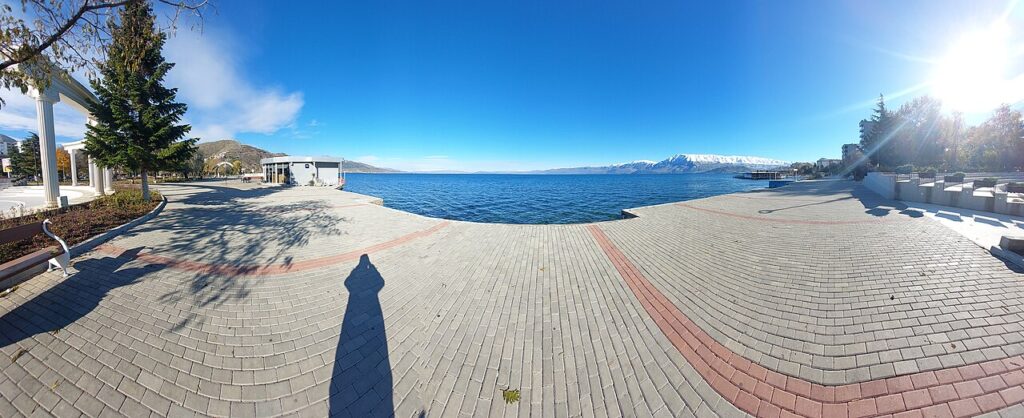
Pogradec sits on the shore of Lake Ohrid, one of the oldest and deepest lakes in Europe, shared with North Macedonia. It is a low-key lakeside town known for its waterfront promenade, the famous koran trout, and the Drilon springs nearby. People come to slow down — to walk the lake, eat fish, and watch the light change over the water. Here are the spots worth knowing in and around Pogradec, mapped.
Some place links are affiliate links — if you book through them we may earn a small commission at no extra cost to you.
Tap any place to zoom to it, then “Open in Google Maps” for directions and reviews. Exploring more of the country? See the full interactive map of Albania.
By Elvis Plaku — Tirana-based blogger since 2004
Pogradec doesn’t try very hard to impress you, and that’s exactly the point. While Ksamil gets the Instagram crowds and Sarandë gets the package tours, Pogradec has stayed what it’s always been: a working lake town where families walk the promenade after dinner, fishermen still bring in koran at dawn, and the pace of life is set by the water, not the calendar. It’s the kind of place Albanians go to relax rather than to be seen.
This guide covers what’s actually worth your time in and around Pogradec — the promenade, the Drilon springs, the mosaics at Lin, where to eat the fish the lake is famous for, and how to get here whether you’re coming from Tirana or from Korçë. If you’re building out a longer loop through the southeast, this pairs naturally with a stop in Albania’s best day trips from Tirana or a fuller push across the border to Ohrid town on the North Macedonian side of the same lake.
Key Takeaways
- Pogradec sits on the Albanian shore of Lake Ohrid, part of a UNESCO World Heritage site shared with North Macedonia and extended in 2019 to cover this side of the lake.
- It’s about 122 km (roughly 2.5 hours by car) from Tirana via Elbasan and Librazhd, and around 38 km (about 45 minutes) from Korçë.
- The must-do stops are the lakeshore promenade, the Drilon karst springs 5 km outside town, and the 6th-century early-Christian mosaics in Lin village, about 20 km away.
- Koran, the lake’s endemic trout, is the local specialty — but it’s a protected species with a winter fishing ban, so ask before assuming what’s on your plate was caught that morning.
- June, July, and September are the best months for swimming and mild crowds; July–August is warmest but busiest.
Table of Contents
How Do You Get to Pogradec?
Pogradec sits in the southeast of Albania, in Korçë County, right on the border area with North Macedonia. There are two realistic approaches depending on where you’re coming from.
From Tirana: the drive is about 122 km and takes roughly 2.5 hours on the SH3, heading southeast through Elbasan and Librazhd before climbing over the Qafë e Thanë pass and dropping down to the lake. The road is in good condition and the last stretch along the water is genuinely scenic. If you’re not driving, buses (furgons) run from Tirana’s regional bus terminal roughly hourly through the day, take about 2.5–3 hours depending on stops, and cost around 700–800 ALL. For the full rundown on how furgons, buses, and rental cars work in Albania, see our complete guide to getting around Albania.
From Korçë: Pogradec is much closer, about 38 km and 40–45 minutes away, with frequent minibuses running throughout the day for a couple of euros. This makes Pogradec an easy add-on if you’re already exploring Korçë, Voskopojë, or the southeast, rather than a destination that needs its own dedicated trip from the capital.
There’s no airport in Pogradec, and the nearest one, Tirana International, is the same 2.5-hour drive away. Once you’re in town, Pogradec itself is small and walkable — you won’t need a car to reach the promenade, the center, or most restaurants, though you’ll want wheels (or a taxi) for Drilon and Lin.
Things to Do in Pogradec: At a Glance
Planning a Trip to Tirana?
Get my free Tirana in 48 Hours checklist with day-by-day itinerary, prices, and local tips.
Get the Free Checklist →The 5 things worth your time in and around Pogradec, in the order I would do them. Jump straight to any of them:
The Lakeshore Promenade
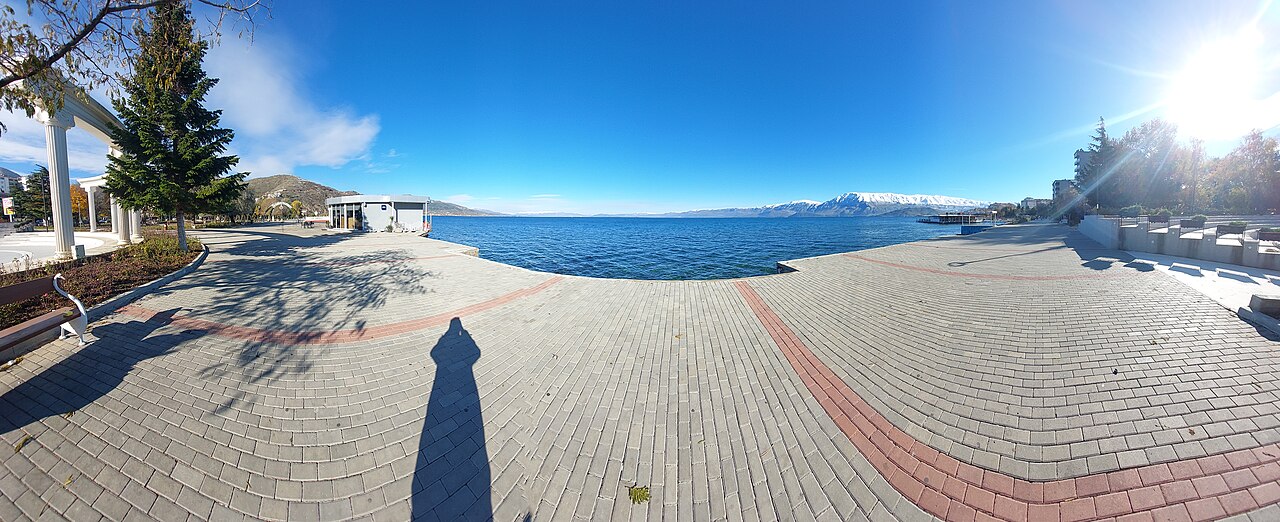
This is where Pogradec actually happens. A tree-lined boulevard runs along the water for roughly 5 km, lined with cafés, bars, hotels, and restaurants, and it’s where the whole town shows up in the evening for the xhiro — the slow, social walk that’s a fixture of Albanian daily life in every town, not just here. Locals stroll it after dinner, kids ride bikes along it, and older men sit at the same café tables they’ve probably sat at for decades.
Along the promenade you’ll pass a bronze statue of Lasgush Poradeci (1899–1987), one of Albania’s most important lyric poets, who was born in Pogradec and whose adopted pen name literally means “of Pogradec.” His poetry is soaked in the lake and the town — reading even a translated stanza or two before you visit adds a layer most tourists miss entirely.
The promenade is also simply the best vantage point in town for the lake itself. Lake Ohrid is estimated to be somewhere between 2 and 4 million years old, making it one of the oldest lakes in Europe, and one of a small handful of “ancient lakes” on the planet old enough to have evolved genuinely unique species found nowhere else. UNESCO inscribed the North Macedonian side of the lake as a World Heritage Site in 1979 and extended that protection to the Albanian shore, including Pogradec, in 2019 — recognizing it as one shared natural and cultural landscape rather than two separate lakes divided by a border.
Drilon & Tushemisht Springs
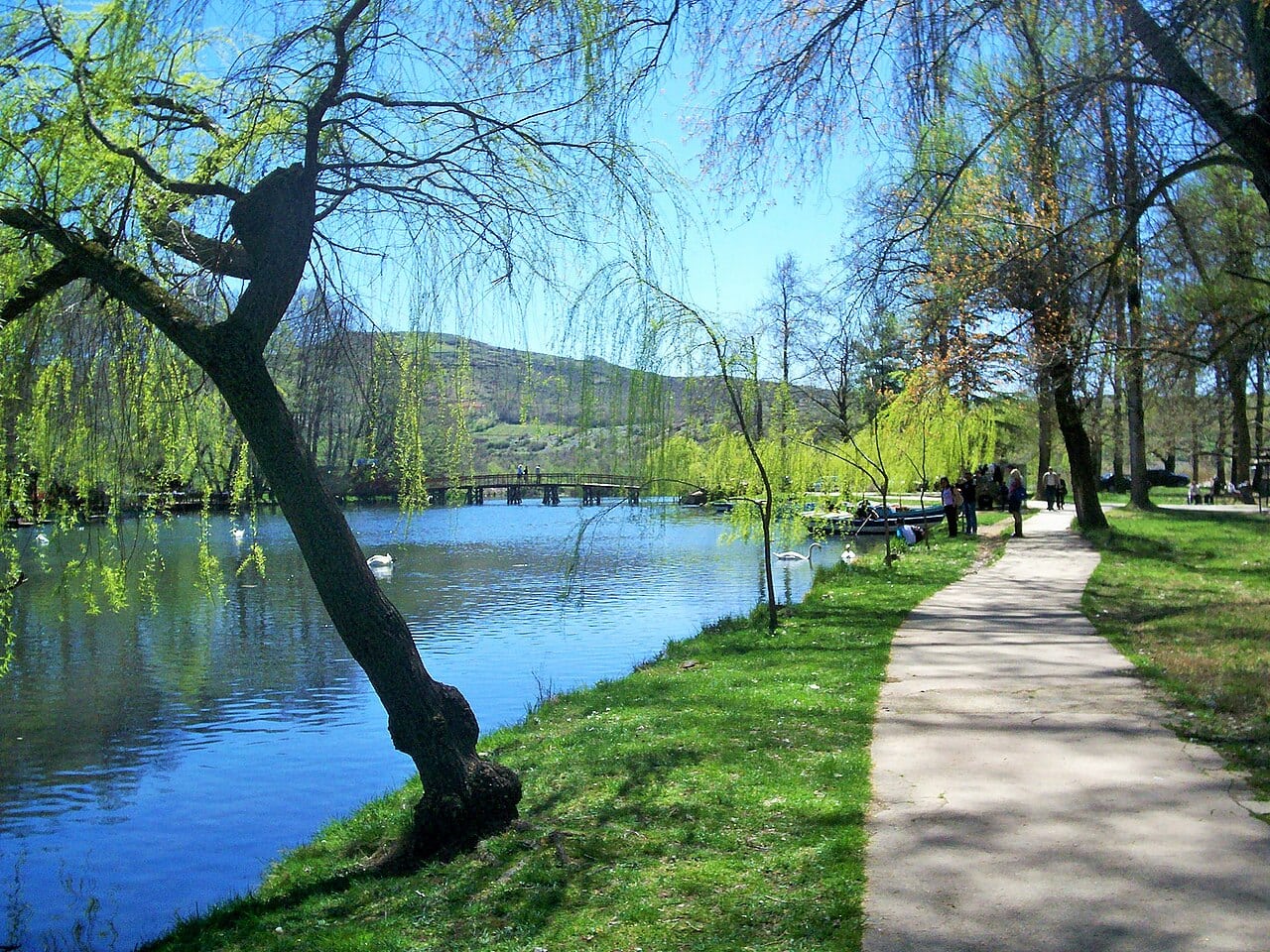
About 5 km east of the town center, near the village of Tushemisht, the ground itself turns into a small wonderland. Drilon is a cluster of karst springs — water that has traveled underground, some of it reportedly originating from Lake Prespa on the other side of the mountains — surfacing through the earth in a handful of channels and forming a network of impossibly clear canals lined with willow trees before flowing straight into Lake Ohrid.
The site has been developed into a park (Drilon National Park) with walking paths, small footbridges over the water, and a scattering of lakeside restaurants serving fresh fish practically over the springs themselves. Rowboats are available for hire on the calmer channels, and even on a hot August day the water here stays cool because it’s coming almost straight out of the mountain.
It’s an easy half-hour to an hour visit, best combined with lunch, and it works well as a stop on the way to or from Lin village, since both sit along the same eastern shoreline route out of Pogradec.
Lin Village & the Early-Christian Mosaics
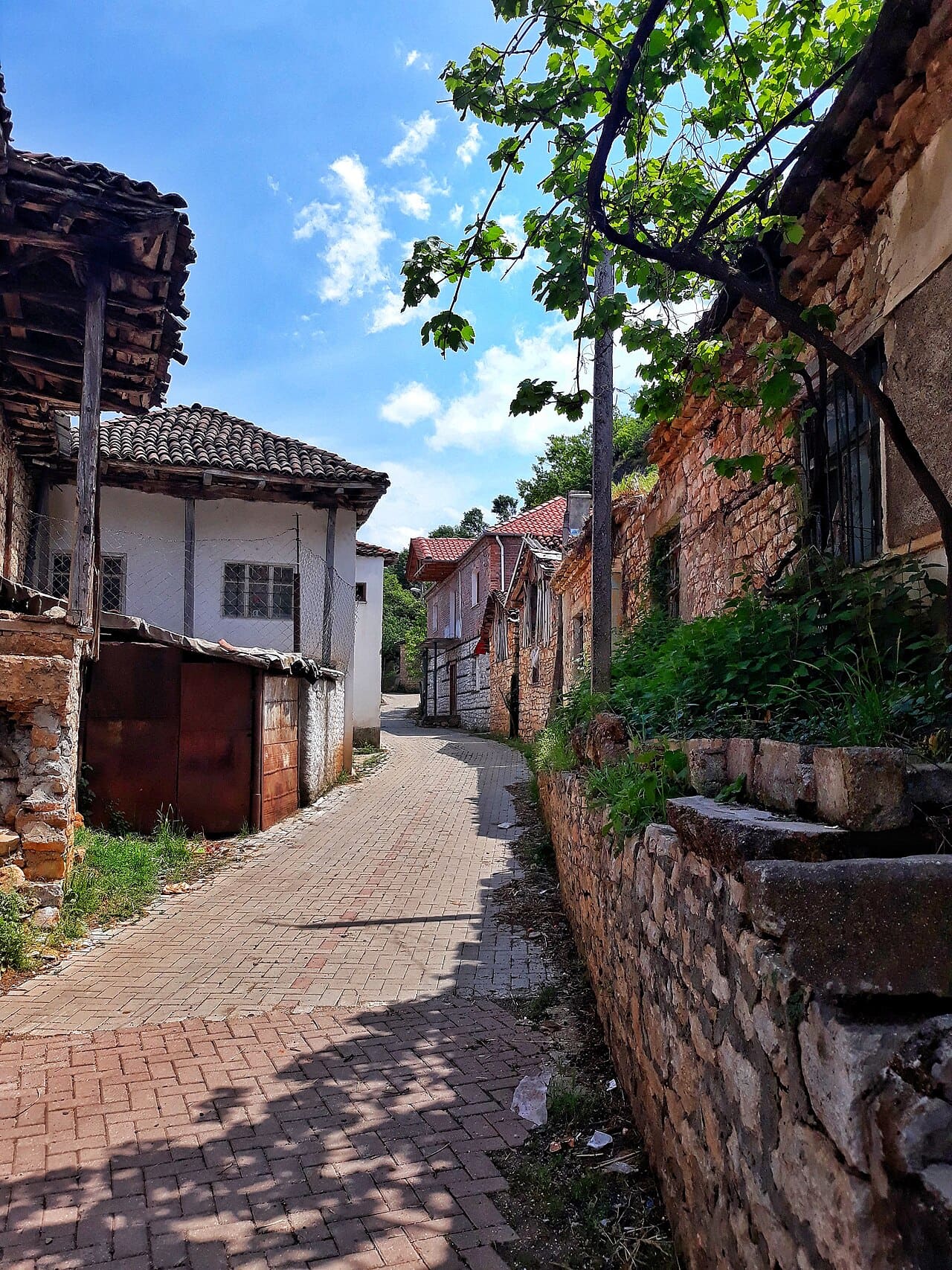
Lin is a small lakeside village about 20 km from Pogradec, sitting on a peninsula that juts into Lake Ohrid, and it holds one of the most significant archaeological finds on the Albanian side of the lake: the mosaics of an early-Christian basilica dating to the 6th century.
The basilica complex was discovered in 1967 by an expedition from the Pogradec Museum and includes a nave, two side chapels with apses, a baptistery, an atrium, and a tetraconch chapel — with almost the entire floor covered in mosaic work. The patterns are geometric, floral, and Eucharistic, mixed with stylized birds and vines, and they’re considered among the most important early-Christian mosaics found anywhere in the Balkans, both for their age and for how much of the original detail survives.
Did you know?
The Lin basilica mosaics sat largely out of sight for decades after their 1967 discovery. It’s only in recent years that the site has been developed with proper walkways and protective covering to make it consistently accessible to visitors, rather than a stop you needed local knowledge and a bit of luck to actually see.
Beyond the basilica, Lin itself is worth the detour simply for what it is: a slow, half-forgotten fishing village with narrow lanes, lake views from almost every angle, and none of the tourist infrastructure of Pogradec proper. Combine it with Drilon on the same drive and you’ve got a full, unhurried half-day out of town.
Koran Trout & Where to Eat
Koran (Salmo letnica), often called Ohrid trout in English, is the fish Pogradec is known for — and it’s genuinely different from the trout you’ll find elsewhere in Albania. It’s endemic to Lake Ohrid, meaning it exists naturally nowhere else on earth, and it appears on nearly every restaurant menu in town, usually grilled whole or oven-baked with lemon and herbs.
Here’s the part most travel write-ups skip: koran is also a species under real conservation pressure. Decades of overfishing and habitat pressure pushed the population down, and Albania now enforces a seasonal fishing ban (typically December–January, the spawning period) along with ongoing restocking programs that release well over a million hatchlings into the lake each year. In practice, that means supply of genuinely wild-caught koran can run short, and some restaurants serve farmed trout or lake fish from elsewhere under the same “koran” label. It’s worth simply asking your server whether the fish is wild-caught Lake Ohrid koran or farmed — most will tell you honestly, and it doesn’t make the meal any less good either way.
Koran isn’t just a menu item in Pogradec — it’s a small barometer of the lake’s health. Ask where it came from, and you’ll usually get an honest answer.
For where to actually eat it: restaurants along the promenade and lakeside boulevard are your best bet, with a concentration of well-regarded spots serving koran alongside other Lake Ohrid fish, grilled vegetables, and Albanian mezes. If you want the fuller picture of what Albanian food looks like beyond the lake — the byrek, the qofte, the regional variations — our complete guide to Albanian food covers the dishes you’ll meet everywhere else in the country.
Beaches & Swimming
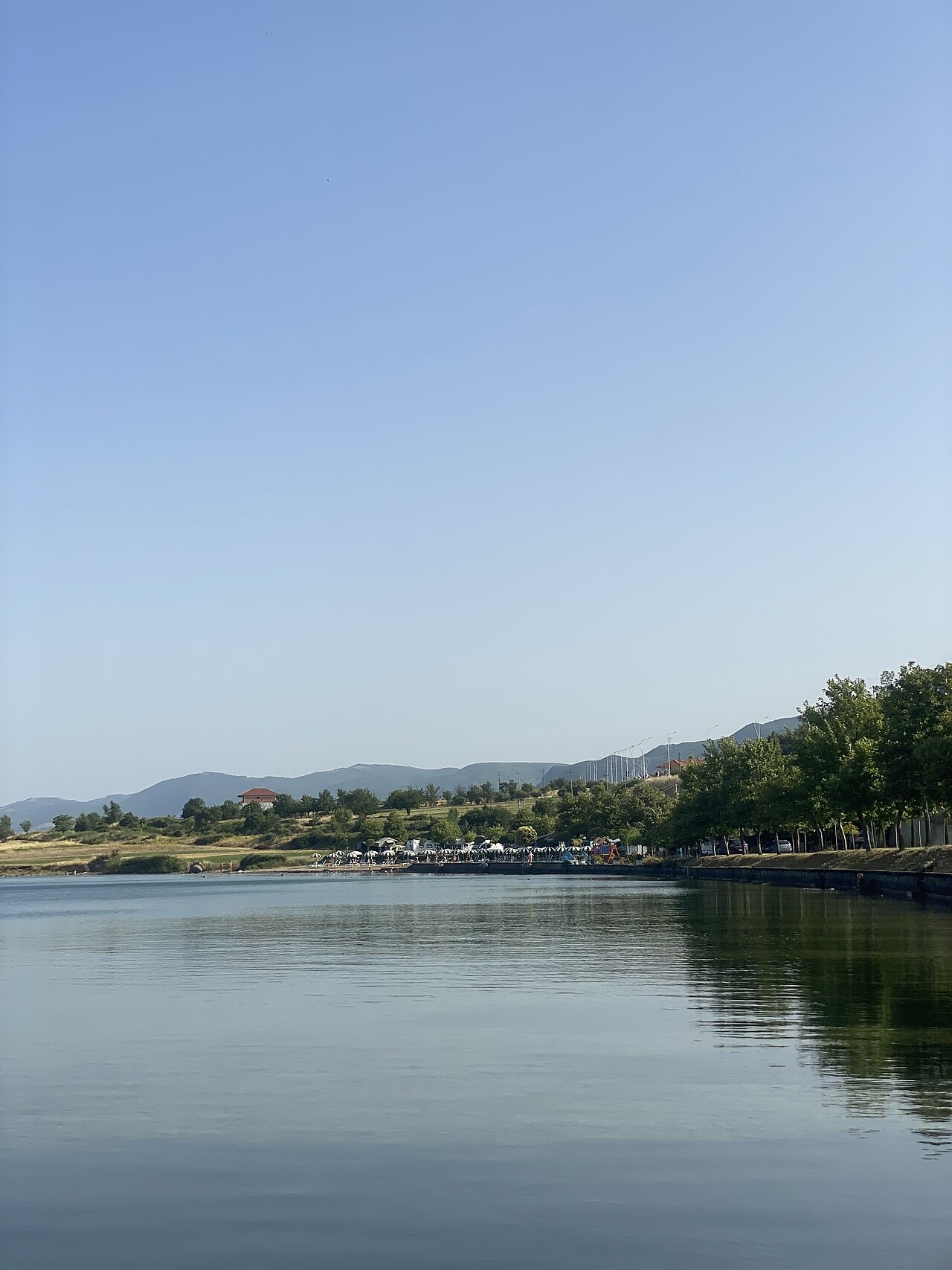
Lake Ohrid’s water is famously clear — a byproduct of its age and the karst springs that continually feed it — and Pogradec has swimmable shoreline right in town, particularly at the eastern end near the promenade, plus quieter pebble and sand stretches out toward Udenisht and along the road toward Lin.
This is a freshwater lake, not the sea, so don’t expect waves or salt — what you get instead is calm, cold-to-cool, very clean water and mountain views on every side. Kayaking, paddleboarding, and casual boat rental are available around the busier parts of town in season. Compared to the Albanian Riviera, the lake here is quieter and considerably less crowded, even at the height of summer.
When Is the Best Time to Visit Pogradec?
June, July, and September are the sweet spots. The water is warm enough to swim comfortably from June through September, with July and August being the warmest but also the busiest and most expensive, since this is when Albanian families take their own summer holidays. September is arguably the best month if you want both warm water (still around 22–23°C) and noticeably thinner crowds.
Spring (April–May) and early autumn (October) are better suited to sightseeing than swimming — cooler water, fewer visitors, and the promenade and Drilon are pleasant without the summer heat. Winter is quiet and cold, with the koran fishing ban in effect, but the town doesn’t shut down entirely; it’s simply a different, slower version of Pogradec.
Practical Tips for Visiting Pogradec
- Day trip or overnight? Pogradec works as a long day trip from Tirana if you leave early, but an overnight lets you actually enjoy the promenade in the evening and fit in both Drilon and Lin without rushing.
- Currency: Albanian Lek (ALL) is standard; euros are often accepted in tourist-facing businesses but expect a less favorable exchange rate than paying in Lek.
- Language: Albanian is the local language, but there’s a meaningful Macedonian-speaking minority in and around Pogradec given the border proximity, and English is spoken at most restaurants and hotels catering to visitors.
- Getting around locally: the town center and promenade are entirely walkable. For Drilon and Lin, you’ll want a car, a taxi, or a local tour, since public transport to both is sparse.
- Combine it with Ohrid town: the border crossing at Qafë e Thanë is close by, and many visitors pair Pogradec with a crossing into North Macedonia to see Ohrid town itself — plan for passport checks and keep your passport (not just an ID card) on hand.
For broader planning — money, SIM cards, safety, and the logistics of moving around the country — our Albania travel tips guide covers what you need before you go, wherever else your trip takes you.
Frequently Asked Questions
How do I get to Pogradec from Tirana?
By car, it’s about 122 km and roughly 2.5 hours via the SH3 through Elbasan and Librazhd, over the Qafë e Thanë pass. By bus, furgons leave Tirana’s regional terminal roughly hourly and take 2.5–3 hours, costing around 700–800 ALL. There’s no direct rail option, and Pogradec has no airport of its own.
Is Pogradec worth visiting as a day trip, or should I stay overnight?
Both work, but an overnight is more rewarding. A long day trip from Tirana lets you see the promenade, Drilon, and maybe Lin if you move efficiently. Staying a night means you can actually enjoy the evening xhiro along the lake, eat dinner without watching the clock, and take Drilon and Lin at a relaxed pace on separate outings.
Can I swim in Lake Ohrid at Pogradec?
Yes. Pogradec has swimmable shoreline right in town and quieter beach areas toward Udenisht and along the road to Lin. The water is clean, cold-to-cool freshwater rather than sea water, best from June through September and warmest in July–August.
What is koran fish, and can I always order it in Pogradec?
Koran (Salmo letnica) is a trout species found only in Lake Ohrid, and it’s the signature dish of every restaurant in town. It’s also a protected species with a seasonal fishing ban (typically December–January) and ongoing restocking efforts, so genuinely wild-caught koran isn’t guaranteed year-round — some restaurants serve farmed trout under the same name. Ask your server if you want to know which you’re getting.
Is Pogradec connected to Ohrid town in North Macedonia?
They sit on the same lake but are separate towns in separate countries. Pogradec is on the Albanian (southwestern) shore; Ohrid town is on the North Macedonian side. The Qafë e Thanë border crossing connects the two, and many visitors combine a stop in Pogradec with a day trip across the border to Ohrid town, which has a different, more historically layered old-town character.
What is the best time of year to visit Pogradec?
June, July, and September. July–August is warmest for swimming but also the busiest and most expensive, since it coincides with Albanian domestic summer travel. September offers nearly the same water temperature with noticeably fewer people. Spring and early autumn suit sightseeing over swimming.
Pogradec isn’t trying to be the next Ksamil, and that’s what makes it worth the detour. It’s a town that has kept its own rhythm — the evening walk, the fish, the springs, the quiet drive out to Lin — regardless of whether anyone outside Albania has heard of it. If you make the trip, give it more than a few rushed hours. The lake rewards slowness.
Have you been to Pogradec, or are you planning a trip to Lake Ohrid’s Albanian shore? I’d love to hear about it — drop a comment below or find me on the Albanian Blogger community.
Read Next
Subscribe to monthly updates
Get honest Albania travel tips, local guides, and new posts straight to your inbox. No spam, unsubscribe anytime.
