
Key Takeaways
- UNESCO status: Inscribed in 2005, extended in 2008 to include Berat, jointly known as the “Historic Centres of Berat and Gjirokastra.”
- The castle: Roots in the 12th–13th centuries, expanded by Ali Pasha after 1812 and King Zog in 1932, now home to a weapons museum and a captured US Air Force plane.
- Architecture: Stone-roofed kulla (tower houses); Skenduli House (1823) and Zekate House (1811–12) are the two open to visitors.
- Two famous sons: Birthplace of writer Ismail Kadare and communist dictator Enver Hoxha — both have dedicated sites in town.
- On the way south: Roughly 3–3.5 hours from Tirana, about an hour from Saranda — a natural stop or overnight en route to the Riviera.
- Eat qifqi: fried rice-and-mint balls, Gjirokastra’s signature dish, found almost nowhere else in Albania.
Gjirokastra is a hilltop town in southern Albania built almost entirely from grey limestone — roofs, walls, and streets alike — which earned it the nickname “City of Stone” and a spot on the UNESCO World Heritage list since 2005. A vast Ottoman-era fortress looms over a bazaar quarter of stone houses and cobbled lanes, and it sits directly on the road south to Saranda and the Albanian Riviera, making it one of the easiest genuinely great stops to add to a trip you’re already planning.
Why Gjirokastra Is Albania’s “City of Stone”
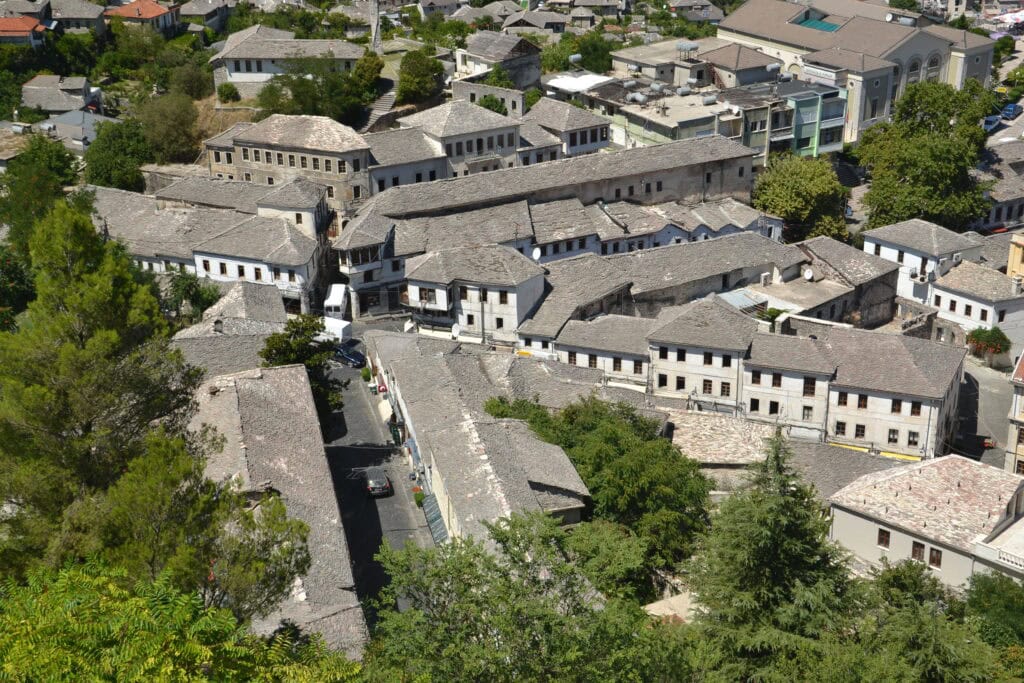
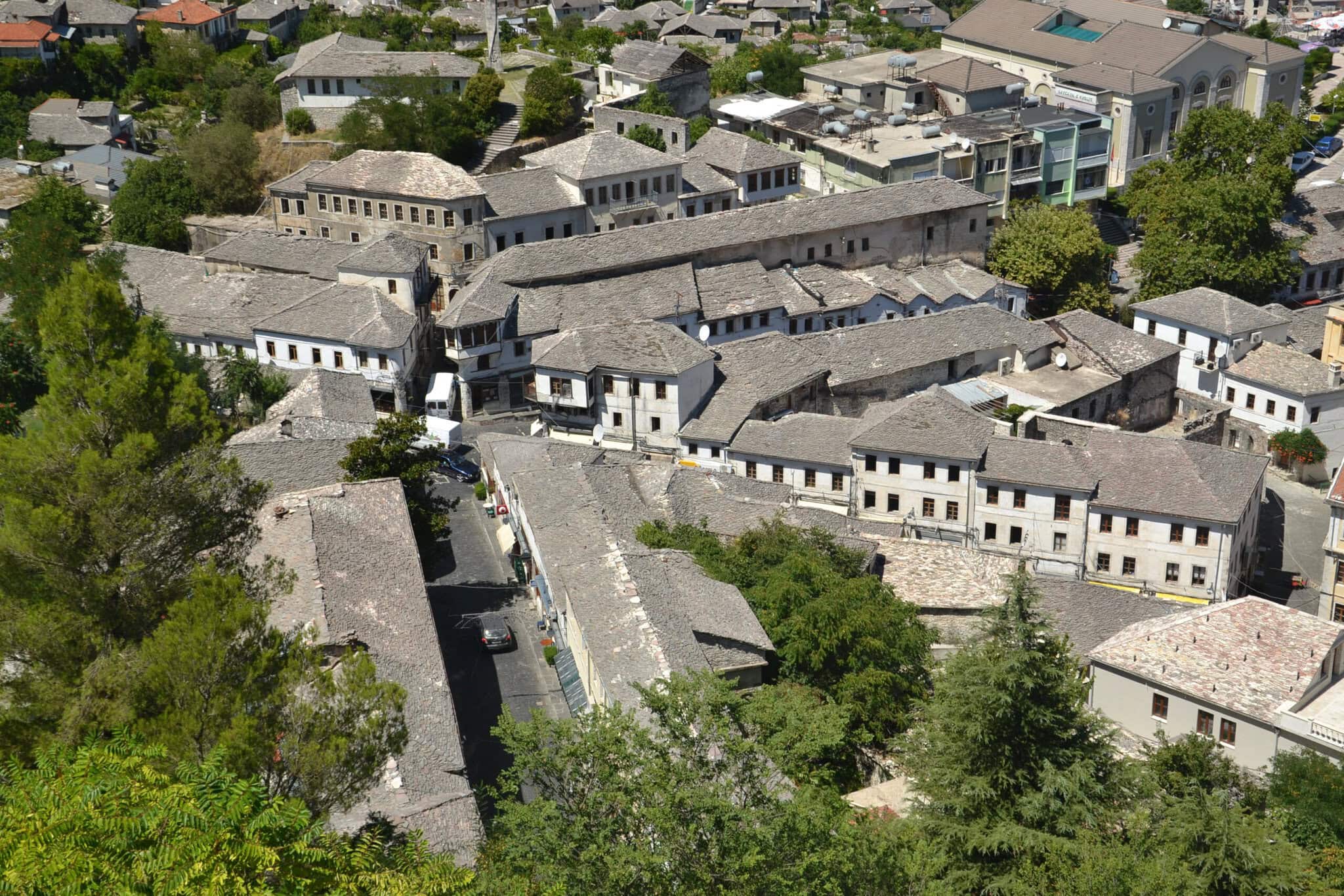
The nickname isn’t marketing. Gjirokastra’s houses are roofed in overlapping grey limestone slabs quarried from the surrounding hills, and from a distance the town reads as a single silver-grey mass spilling down the slope beneath the fortress. The houses are mostly two- and three-story stone kulla built in the 17th to 19th centuries, arranged along steep, stone-paved streets built for mule traffic, not cars — why parts of the Old Town stay closed to vehicles today.
UNESCO inscribed Gjirokastra as a World Heritage Site in 2005, a rare surviving Ottoman-era Balkan town where architecture, layout, and building materials all developed together. In 2008 the listing was extended to add Berat, two hours north, giving Albania its single joint entry, “Historic Centres of Berat and Gjirokastra.” Berat has its own character — white Ottoman houses stacked in tiers rather than grey stone — and both reward a visit rather than a choice between them.
I’ve passed through Gjirokastra several times over the years, and it never loses its pull. It’s a genuinely lovely city — and the investment that’s gone into protecting its character has paid off. Pulling the traffic out of the main streets in the centre and turning them into pedestrian zones means those iconic views are still there, intact, the way they should be. What strikes me most, though, is how deep the culture runs here: the people are steeped in their traditions, and the whole region radiates an influence you feel right across this part of Albania. One day honestly doesn’t do it justice.
Gjirokastra Castle: Fortress, Arms Museum, and a Cold War Spy Plane
Planning a Trip to Tirana?
Get my free Tirana in 48 Hours checklist with day-by-day itinerary, prices, and local tips.
Get the Free Checklist →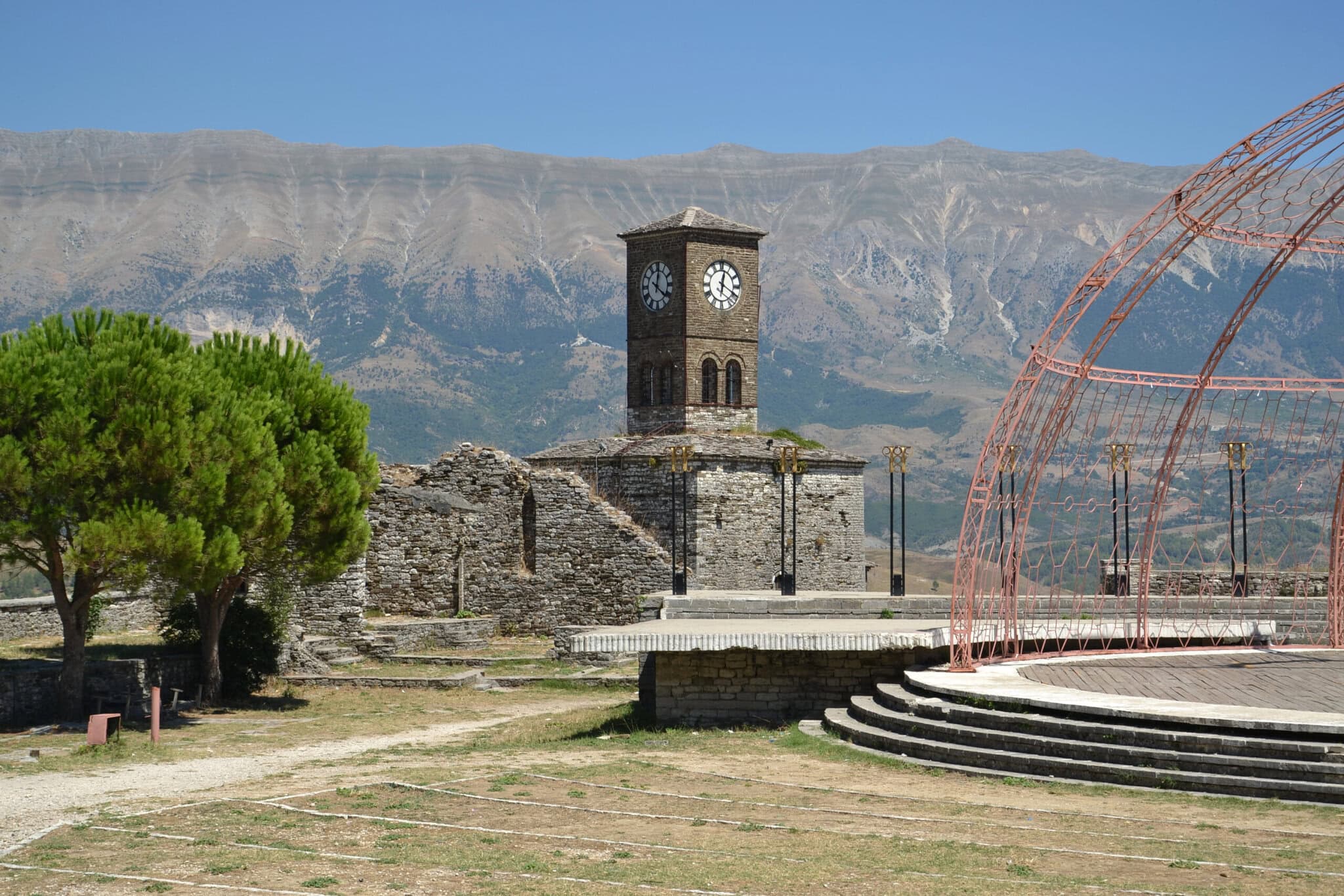
Gjirokastra Castle is one of the largest fortresses in the Balkans and impossible to miss — it sits directly above the Old Town and the bazaar. The earliest fortifications date to around the 12th–13th centuries, with the site first mentioned in Byzantine chronicles in 1336. Ali Pasha of Tepelena, the semi-independent Ottoman governor who controlled much of southern Albania, expanded it substantially after 1812, and King Zog added a prison wing in 1932 — one the communist regime later reused for political prisoners.
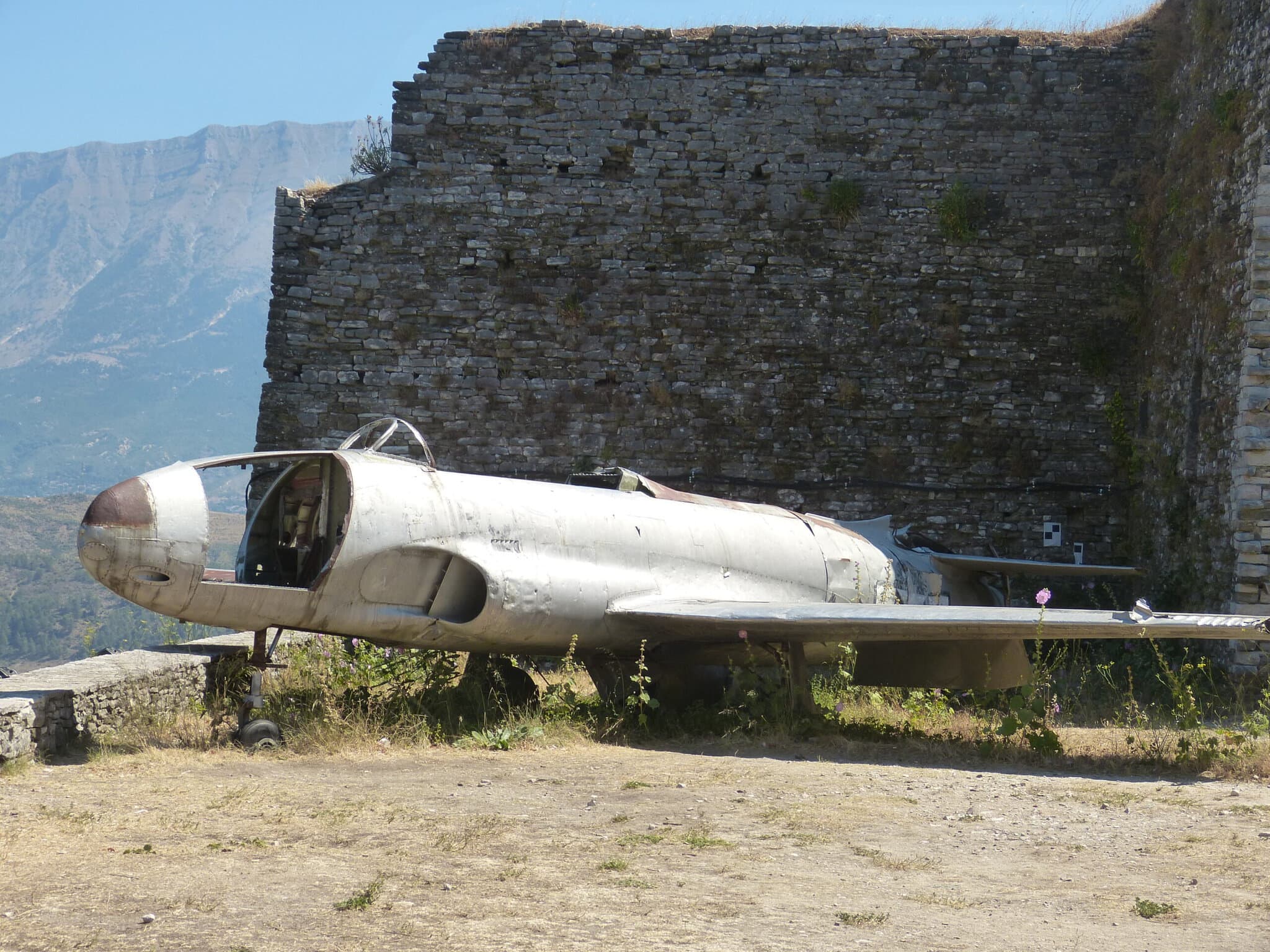
Today the grounds hold a clock tower, a cistern, a church, and the Gjirokastra Museum, whose main collection is a room of weapons and military hardware spanning Ottoman-era arms to WWII partisan equipment. The strangest exhibit sits out on the terraces: an American Lockheed T-33 jet trainer, presented for decades as a “spy plane” shot down by Albanian pilots. The real story is less dramatic — it got lost in bad weather on a routine flight from France to Italy in December 1957 and made an emergency landing after running low on fuel — but the communist government’s version made it a propaganda centerpiece, and it’s stayed at the castle ever since.
The first time I really visited, I went straight to the old communist-era prison inside the castle — it’s still there today. It was essentially an open-air prison, everything exposed to the elements, and up on that hill the cold is brutal, especially in winter; the wind chill alone is horrible. Standing there, I could only imagine what the people the regime persecuted and locked away endured through those winters — a sobering thing to feel in your bones, right in the middle of somewhere so beautiful.
Every few years, the castle’s stage also hosts the National Folk Festival of Albania, first held in 1968 and considered the country’s most important cultural event — musicians, dancers, and folk costume from every region of Albania and from Albanian communities across the Balkans and southern Italy. The most recent edition ran in summer 2023; the schedule has shifted before, so check locally rather than planning around an assumed date.
The Old Bazaar and the Streets Below the Castle
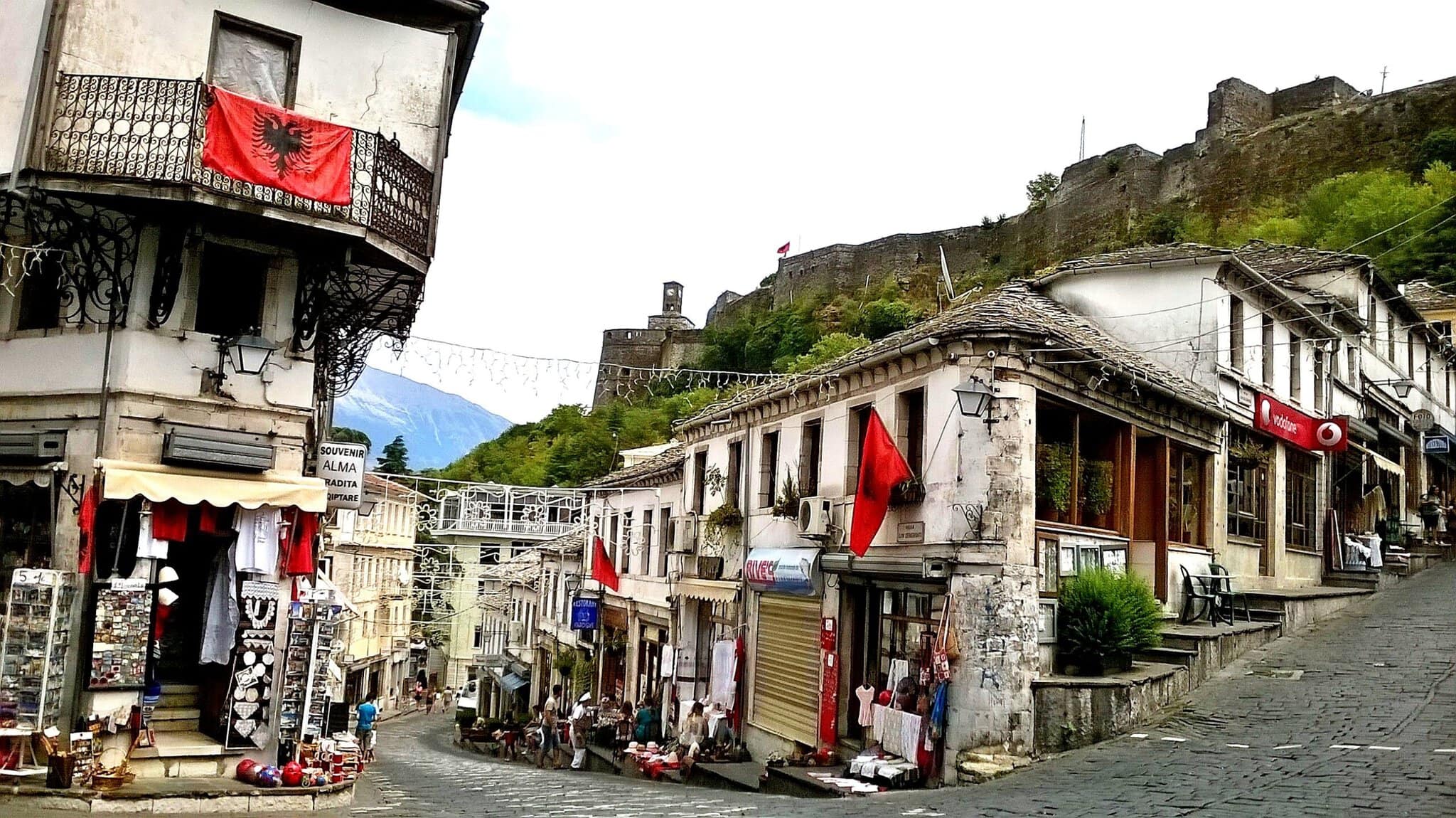
The bazaar quarter dates to the 17th century, when the Ottoman governor Memi Pasha laid out a commercial district beneath the castle, with streets converging at a central point known locally as the bazaar’s “neck.” It’s burned and been rebuilt more than once — most notably in the 1750s and again after a 1912 fire, when steel beams first went into the shopfronts you see today. The result is a run of two- and three-story buildings with near-identical facades: workshops at street level, living quarters above, and — unusually for an Ottoman-era bazaar — stone sidewalks in front of the shops.
Walking it today, you’ll find copperware, wood carving, wool textiles, and local food products alongside the inevitable souvenir stalls, but the real appeal is wandering the stone-paved lanes fanning out into the surrounding neighborhoods. Take the side streets, not just the main run of shops — that’s where the town still looks the way it has for two centuries.
For context on how a town like this fits into Albania’s broader story, our guide to Albanian history for beginners covers the periods — Ottoman rule, independence, monarchy, communism — that shaped Gjirokastra.
Inside the Tower Houses: Skenduli and Zekate
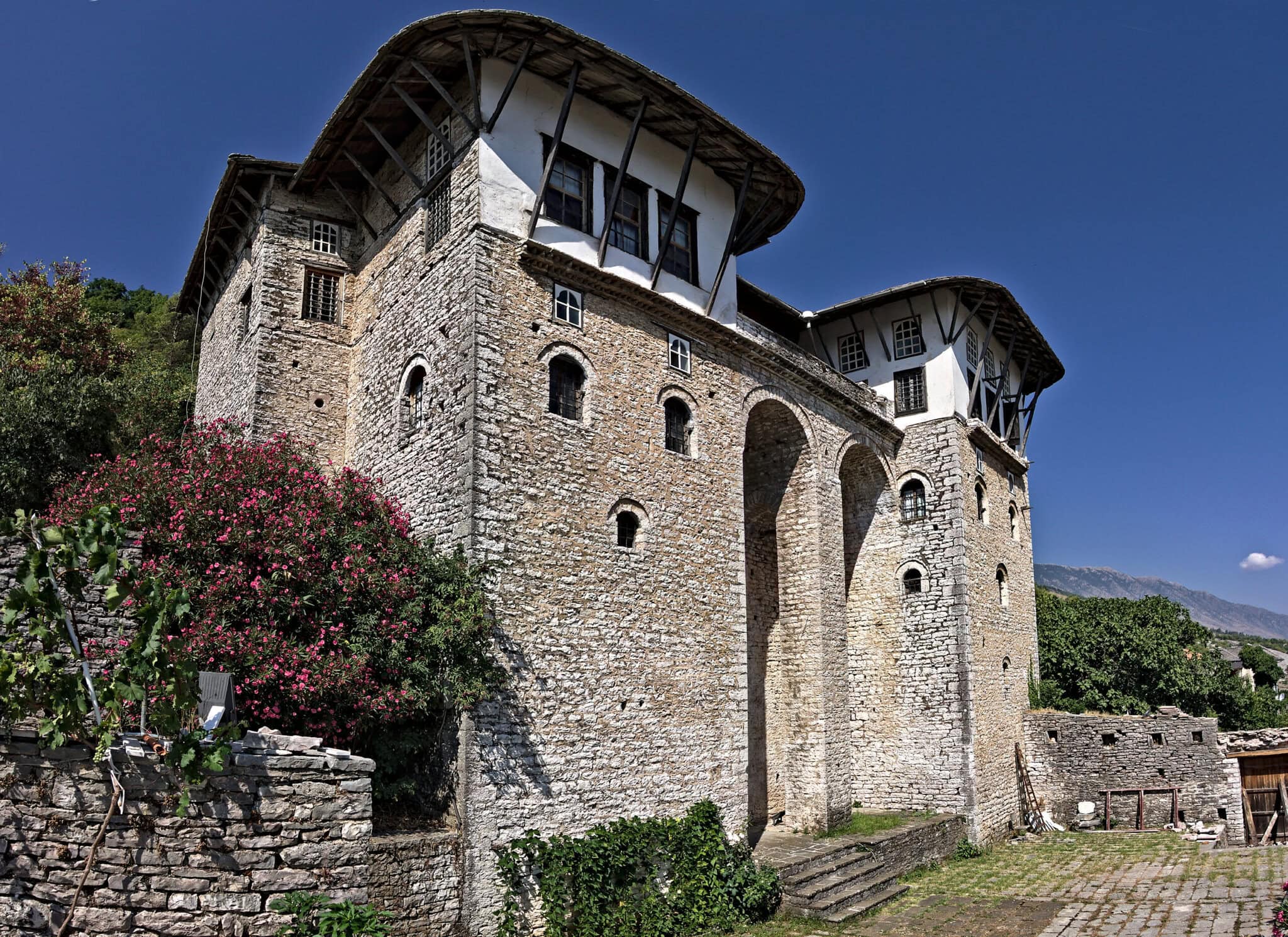
Gjirokastra’s defining building type is the kulla — a fortified tower house with a solid stone base and an upper floor of wood-framed rooms, built for defense as much as living, with narrow wall-slits for exactly that purpose. Wealthy families built these from the 17th century on, and two of the finest are open to the public.
Zekate House, built in 1811–12 for Beqir Zeko, an administrator in Ali Pasha’s government, is the more dramatic of the two — twin towers, a grand double-arched facade, and interior rooms with painted ceilings that show off how wealthy the family was.
Skenduli House, built in 1823 by landowner Skender Skenduli, is arguably more interesting to walk through: it has both an internal and external staircase, once had 46 chimneys, and its main guest room — the oda, where visitors were formally received — has an intricately carved wooden ceiling.
Both charge a small entrance fee and keep seasonal hours, so check locally or with your guesthouse rather than assuming they’ll be open.
Did you know?
Skenduli House once had 46 chimneys — a small city of stone flues rising off a single family home, a reminder of just how large these tower-house households really were.
Enver Hoxha’s Birthplace and the Ethnographic Museum
Gjirokastra’s other, darker claim to fame is that it’s the birthplace of Enver Hoxha, Albania’s communist dictator from 1944 until his death in 1985. His childhood home burned down and was rebuilt in 1966, and it now operates as the Ethnographic Museum — which, pointedly, holds none of Hoxha’s belongings. Instead it shows how a well-off southern Albanian family lived in the 19th century: period furniture, traditional costumes, kitchen tools, and a typical kulla interior.
It’s a strange bit of civic irony — the dictator’s birthplace repurposed to represent everyone but him — and one of the better places in town to see period interiors up close.
Ismail Kadare’s Gjirokastra
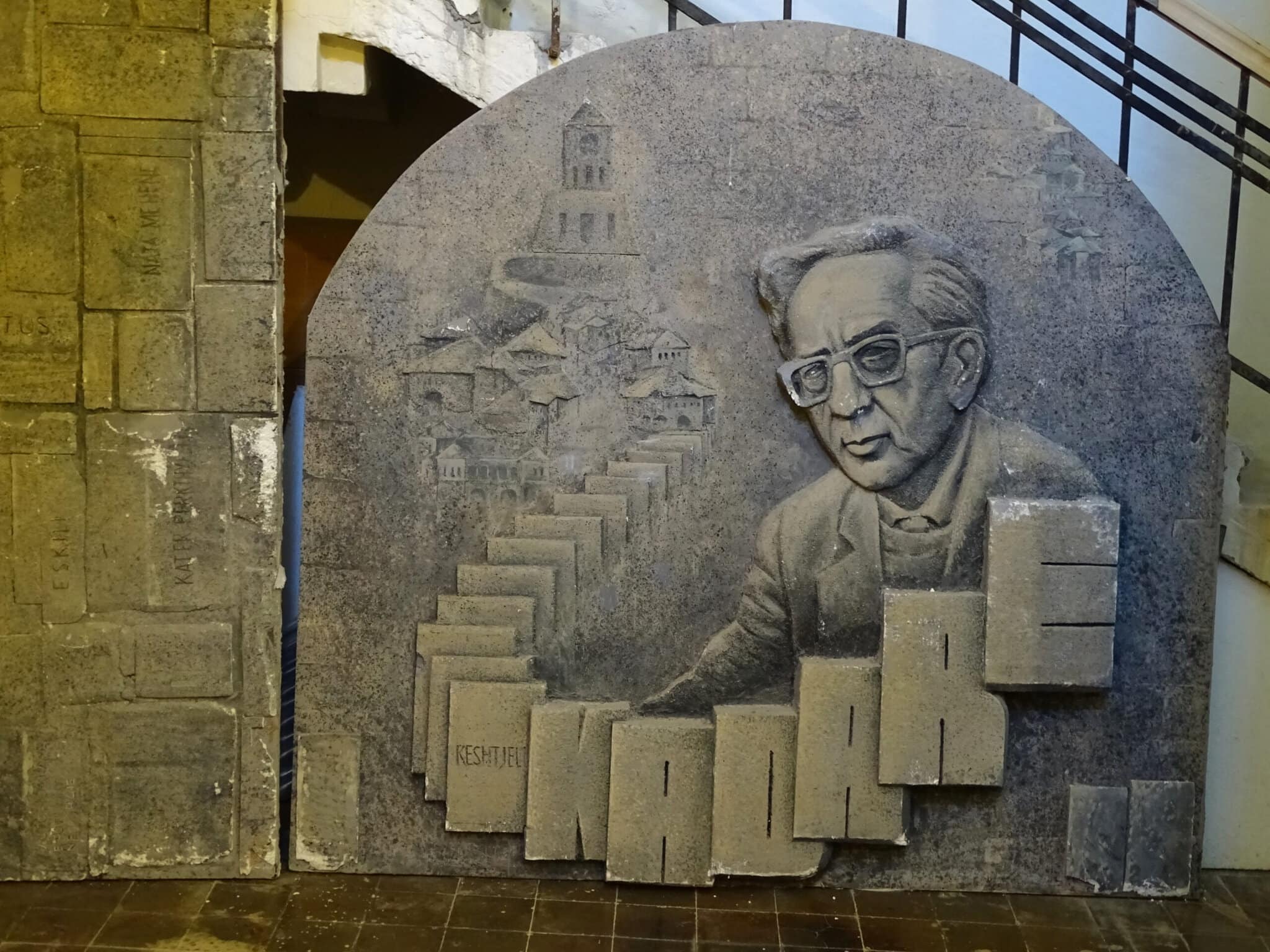
If Hoxha is Gjirokastra’s most infamous export, Ismail Kadare is its proudest one. Albania’s best-known novelist internationally — a perennial Nobel Prize in Literature contender until his death in 2024 — was born in Gjirokastra in 1936, and the town appears, thinly disguised, throughout his fiction; his novel Chronicle in Stone is essentially a portrait of childhood here during the Italian and German occupations of World War II. The house where he was born dates to 1799, and after an accidental fire in 1999 it was rebuilt to Kadare’s own description of the original; it opened as a house-museum in January 2016, with a small collection of original family objects, including a helmet from his time as a war correspondent in Vietnam.
For more on how figures like Kadare fit into Albania’s cultural identity more broadly, see our guide to Albanian culture.
What to Eat: Qifqi and Other Gjirokastra Specialties
Gjirokastra has its own regional dish worth planning a meal around: qifqi, small fried balls of rice mixed with egg, dried mint, and black pepper, cooked in a special shallow pan and served with yogurt. It’s the town’s signature food — rarely seen elsewhere in Albania — and the mint is what makes it, giving the rice a clean, herby aftertaste.
Beyond qifqi, southern Albanian cooking leans on grilled meats, fresh dairy, and vegetables from the fertile Drino Valley below — good byrek, grilled qofte, and, this being wine country too, local raki and southern Albanian wines with dinner.
Getting There, Where to Stay, and When to Go
Getting there: Gjirokastra sits about 232 km south of Tirana, roughly 3 to 3.5 hours by car, or 4 to 4.5 hours by bus from Tirana’s south bus station. It’s directly on the route to the coast: Saranda is only about 51 km / roughly an hour away, so Gjirokastra works naturally as a stopover between Tirana and the Albanian Riviera, not a detour from it. For a broader south-of-Tirana itinerary, our best day trips from Tirana guide is a useful starting point, though Gjirokastra rewards an overnight more than a rushed day trip.
Where to stay: Stay inside the Old Town itself, in one of the restored stone kulla now operating as boutique hotels and guesthouses — places like Hotel Kalemi or smaller family-run guesthouses near Skenduli House put you within walking distance of the bazaar and the castle gate. Prices shift seasonally, so book ahead in summer.
Best time to visit: Late spring (May–June) and early autumn (September–October) hit the sweet spot — warm enough for the terraces and hikes, without the heavy midsummer heat the stone streets can trap. If your visit lines up with a National Folk Festival year, plan around it; otherwise aim for a clear day, since the castle views over the Drino Valley are a big part of the experience.
Frequently Asked Questions
Is Gjirokastra worth visiting?
Yes — one of Albania’s two UNESCO World Heritage towns, with an impressive hilltop castle, an intact Ottoman bazaar, and tower houses you can walk through, all on the road to Saranda and the Riviera.
How far is Gjirokastra from Tirana?
About 232 km, roughly 3 to 3.5 hours by car or 4 to 4.5 hours by bus from Tirana’s south bus station.
How far is Gjirokastra from Saranda?
About 51 km, roughly an hour by car or bus — why most itineraries treat it as a stop on the way to the coast rather than a separate trip.
What is Gjirokastra known for?
Stone-roofed Ottoman architecture (the “City of Stone”), a hilltop castle with a weapons museum and a Cold War-era American plane, the Old Bazaar, and being the birthplace of both novelist Ismail Kadare and dictator Enver Hoxha.
What food should I try in Gjirokastra?
Qifqi — fried rice balls with egg and dried mint, served with yogurt — is the town’s signature dish, rarely found outside this part of southern Albania.
How much time do you need in Gjirokastra?
A half-day covers the castle and bazaar at a rushed pace; a full day or overnight also lets you visit the Ethnographic Museum, one of the tower houses, and the Kadare house-museum without hurrying.
What do you think?
Have you been to Gjirokastra, or is it on your list for a trip down to the Riviera? What would you add — the castle, the bazaar, or a qifqi recommendation of your own?
This guide reflects information available at the time of writing. Entrance fees, opening hours, and festival dates for Gjirokastra Castle, the tower houses, and other sites can change — always check locally or with your accommodation before planning your visit around specific prices or hours.
Subscribe to monthly updates
Get honest Albania travel tips, local guides, and new posts straight to your inbox. No spam, unsubscribe anytime.
